

P0731 on 2016-2022 Honda Pilot: Incorrect 1st Gear Ratio Causes and Fixes
P0731 on a 2016-2022 Honda Pilot means the transmission is slipping in first gear. The most common cause is low or deteriorated transmission fluid. A fluid service is the first step, but this code often points to more serious internal transmission issues requiring professional diagnosis, particularly in the ZF 9-speed models.
- P0731 means the transmission is slipping in 1st gear.
- The first and most important diagnostic step is to check the transmission fluid level and condition. Use only genuine Honda fluid.
- This code is serious and should be addressed promptly to avoid catastrophic transmission failure.
- Due to the complexity, professional diagnosis is strongly recommended to avoid unnecessary, expensive repairs.
- Check for software updates (TSBs) before authorizing major mechanical repairs.
What's Unique About the 2016-2022 Honda Pilot
The 2016-2022 Honda Pilot was available with two different automatic transmissions: a Honda-built 6-speed (on lower trims like LX, EX, EX-L through 2020) and a ZF-sourced 9-speed '9HP' (on higher trims like Touring and Elite, and standard on all 2021-2022 models). Both can experience this code, but the diagnostic path can differ. The ZF 9-speed transmissions, in particular, are known across multiple brands (Jeep, Chrysler, Land Rover) for being sensitive to fluid condition and software calibration, with early models having numerous TSBs for shift quality issues. For any Pilot with this code, verifying the correct fluid type (Honda ATF DW-1 for 6-speed, Honda ATF Type 3.1 for 9-speed) and level is the absolute first step before assuming catastrophic failure.
Symptoms You May Notice
- Check Engine Light is on
- Transmission slipping or delayed engagement from a stop
- Harsh or clunking shifts into first gear
- Poor acceleration from a standstill
- Vehicle enters 'limp mode' (stuck in a single, often higher, gear)
- Increased engine RPM without a corresponding increase in speed
- Hesitation or jerking when attempting to move from a stop
- Immediately replacing the transmission without checking fluid level/condition and for TSBs first.
- Replacing speed sensors when the root cause is actually low fluid pressure or a slipping clutch.
- Blaming the torque converter without performing a stall speed test and pressure tests.
Most Likely Causes
- Low or Degraded Automatic Transmission Fluid (ATF) 🔴 High Probability → Shop Transmission Assembly The 6-speed transmission in particular is subject to TSB 23-073, which states that ATF deterioration can cause foaming and reduced cooler flow during high-load driving, leading to overheating. This degraded fluid can cause slipping. The ZF 9-speed is also notoriously sensitive to fluid quality.
How to confirm: Check the transmission fluid level and condition. For the 6-speed, use the dipstick with the engine off and cool. For the 9-speed, it's a more complex check-plug procedure with 🎬 Watch: How to change ZF 9-speed transmission fluid the engine running at a specific temperature. The fluid should be at the correct level, red in color, and not smell burnt.
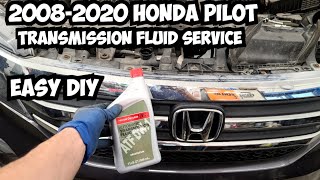
Typical fix: Perform a transmission fluid drain-and-fill. For issues related to TSB 23-073 on the 6-speed, a triple drain-and-fill and a PCM 🎬 Watch: 6-speed transmission fluid change walkthrough software update are required. Use ONLY Honda Genuine ATF DW-1 (P/N 08200-9008) for the 6-speed or Honda ATF Type 3.1 for the 9-speed.
Est. part cost: $50-$200 for fluid - Faulty Transmission Fluid Pressure Switch or Shift Solenoid 🟡 Medium Probability → Shop Transmission Valve Body Solenoids and pressure switches can fail electronically or become clogged with debris from aging fluid, preventing proper hydraulic control for gear engagement. For Honda platforms, a faulty 3rd clutch pressure switch (e.g., P/N 28610-RKE-004 on other models) is a known culprit for similar codes.
How to confirm: A professional scan tool (HDS) can monitor solenoid commands, test individual solenoids with a 'click test', and read fluid pressure data. Solenoids can also be tested for resistance with a multimeter; for the 6-speed, the expected resistance is 13.8–17.1 Ω.
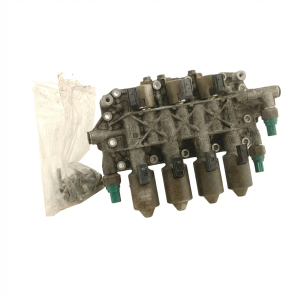
Typical fix: Replace the specific faulty solenoid or pressure switch. On the 6-speed transmission, 7 of the 8 solenoids are integrated into a single block called the 'secondary valve body' and are not sold individually.
Est. part cost: $60-$250 - Internal Transmission Failure (Worn Clutch Pack, Torque Converter) 🟡 Medium Probability → Shop Transmission Assembly If fluid maintenance is neglected, internal components like the 1st gear clutch pack can wear out, leading to slipping that the computer detects as an incorrect ratio. Torque converter issues are also a known, though less common, problem on this platform.
How to confirm: After ruling out fluid and electronic issues, a transmission pressure test is performed. If pressures are low or if significant metal shavings are found in the fluid/pan, it points to internal wear. An Acura service manual for a similar platform suggests this is the final step before replacement.
Typical fix: This is the most expensive repair, requiring either a complete transmission rebuild or replacement with a new or remanufactured unit.
Est. part cost: $3000-$6000+
Rare But Worth Checking
- Faulty Input/Output Speed Sensor: While less common than other causes, a failing speed sensor can send incorrect data to the TCM, tricking it into thinking there's a gear ratio problem when the mechanical parts are fine. A case study on a 2018 Honda Pilot with P0731 pointed to a faulty input speed sensor as the cause.
- Faulty Transmission Control Module (TCM) or Software Issue: → Shop Transmission Assembly Sometimes the control module itself can fail or have a software glitch. For the ZF 9-speed, software updates were extremely common in early years to fix shifting problems. Checking for TSBs related to TCM software updates is a crucial diagnostic step.
Diagnosis Steps
- Check and verify the transmission fluid level and condition. Note if it is low, dark, or smells burnt.
- Use an OBD-II scanner to check for any other transmission-related codes, especially P0700 or other P073x codes.
- If the fluid is low, top it off with the correct Honda-specific fluid, clear the code, and test drive. If the fluid is dirty, perform a drain-and-fill (or a 3x flush if indicated by TSBs).
- With a professional scan tool, monitor live data for the input and output speed sensors to ensure they are reading correctly and not dropping out.
- Check for any available Technical Service Bulletins (TSBs) for your vehicle's VIN. Pay close attention to TSB 23-073 for 6-speed models and any software updates for 9-speed models.
- Perform a transmission fluid pressure test at the designated ports for line pressure and 1st clutch pressure, comparing the readings to service manual specifications.
- If all external sensors, wiring, and fluid pressures are good, the problem is likely internal to the transmission (e.g., worn 1st gear clutch pack), requiring removal and inspection.
Parts You'll Likely Need
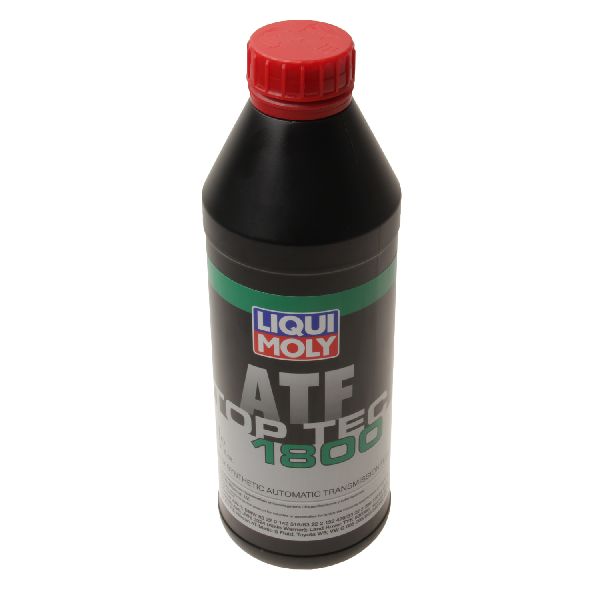
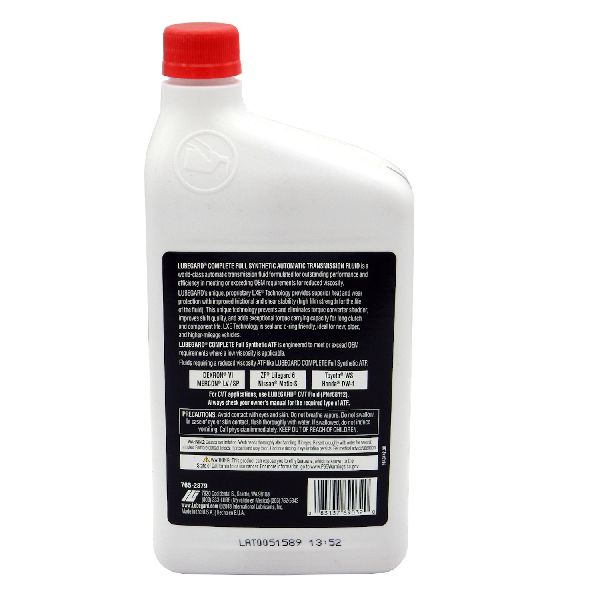
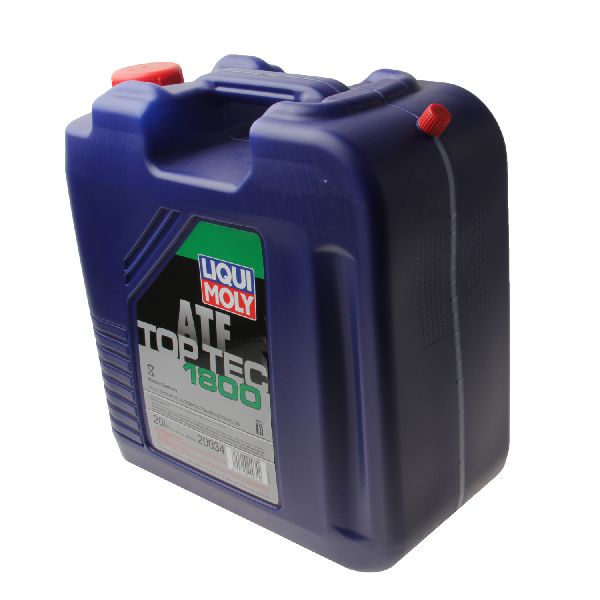
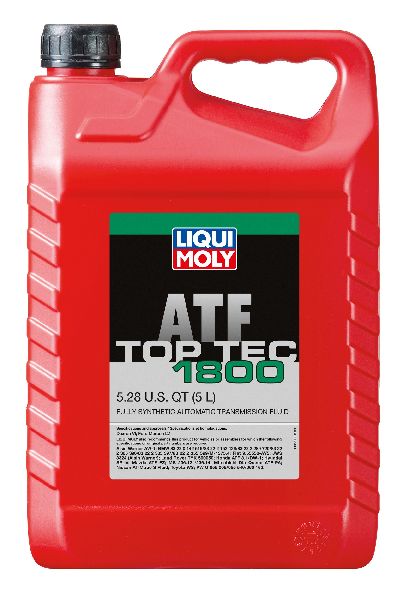
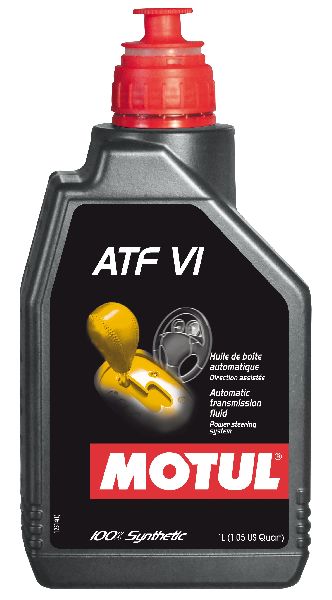
- Automatic Transmission Fluid
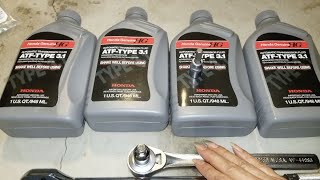
(OEM #08200-9008 (DW-1), 08268-P99-4EDAD (ATF Type 3.1))— Fluid is the most common cause and the first step in any diagnosis. Using the correct OEM fluid is critical for Honda transmissions. TSB 23-073 for the 6-speed requires up to 12 quarts for the flush procedure.
Trusted brands: Honda Genuine ATF DW-1 (6-speed), Honda Genuine ATF Type 3.1 (9-speed)
OEM price range: $15-$25 per quart - Shift Solenoid
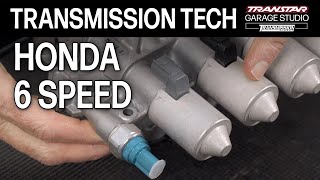
(OEM #27700-5B7-010 (6-speed solenoid block))— A specific shift solenoid can fail, causing an issue with only one gear. On the 6-speed, most solenoids are part of a non-serviceable block that must be replaced as a unit. 🎬 Watch: What to know about the Honda 6-speed solenoid block
Trusted brands: Honda OE
OEM price range: $150-$650
Aftermarket price range: $70-$400 - Remanufactured Automatic Transmission — In cases of severe internal wear (burnt clutches, damaged gears), replacing the entire unit is often more cost-effective than a rebuild. A class action lawsuit regarding the 9-speed transmission notes that internal gear failure often necessitates full replacement.
Trusted brands: Honda OE Remanufactured, Moveras, Jasper
OEM price range: $4000-$5500
Aftermarket price range: $3000-$4500
Related Codes That Often Appear With This One
- P0700 — This is a general 'Transmission Control System Malfunction' code. It's a generic code that illuminates the check engine light to let you know a more specific transmission code, like P0731, is stored in the TCM.
- P0732, P0733, etc. — These codes indicate incorrect ratios for other gears (2nd, 3rd, etc.). Seeing multiple ratio codes together strongly suggests a systemic problem like low fluid, a failing torque converter, or a clogged filter affecting the entire transmission.
- P0847 — This code indicates a fault with the 3rd clutch transmission fluid pressure switch. On some Honda platforms, this switch failure is a direct cause of gear ratio codes like P0731.
Technical Service Bulletins (TSBs) & Recalls
- 23-073: 2016-20 Pilot (6-speed A/T): Transmission Temp Too Hot Message on the MID. Caused by ATF deterioration, fix is a 3x fluid flush and software update.
- 20-100: Warranty Extension: MIL Comes On with DTC P0420/P0430, P030x, and/or P219A/B (With Software Update) for 2016-17 Pilot. Addresses faulty fuel injectors and includes a PCM software update.
Platform-Specific Known Issues
- Honda issued Service Bulletin 23-073 for 2016-2020 Pilots with the 6-speed transmission. It addresses a 'Transmission Temp Too Hot' message caused by ATF deterioration. The fix involves a PCM software update and flushing the ATF three times. This underlying fluid issue is a likely contributor to codes like P0731.
- The 6-speed automatic transmission does not use easily replaceable individual shift solenoids. Instead, 7 of the 8 solenoids are integrated into a single assembly that Honda calls the 'secondary valve body' (P/N 27700-5B7-010), which must be replaced as a unit if any of the internal solenoids fail.
- A class action lawsuit was filed concerning the ZF 9-speed transmission (2016-2022 models) for issues including harsh shifting, sudden acceleration/deceleration, and internal gear failure, which can manifest as a P0731 code.
Mechanic-Grade Diagnostic Values
- Shift Solenoid Resistance (for 6-Speed Transmission) — expected: 13.8 - 17.1 Ω. Failure: A reading outside this range (e.g., open circuit/infinite resistance or shorted/zero resistance) indicates a failed solenoid coil.
- Shift Solenoid Resistance (for older/other Honda models, for reference) — expected: 12 - 25 Ω. Failure: A reading outside this range indicates a bad solenoid.
Scan Tool Commands That Help
- Honda Diagnostic System (HDS): Shift Solenoid Valve HDS Function Test — Found in the 'Miscellaneous Test Menu', this command individually actuates each shift solenoid. A technician should listen for an audible 'click' from the transmission to confirm the solenoid is mechanically responding to the electrical command. Lack of a click points to a stuck or failed solenoid.
- N/A - Manual Procedure: TCM Adaptive Memory Reset (Pedal Procedure) — To clear learned shift patterns that may be causing harshness or hesitation. With the ignition ON (engine off), press the accelerator pedal to the floor for ~30 seconds. Turn ignition OFF, release the pedal, and wait 2 minutes before restarting. This can sometimes resolve minor software-related shift quality issues without a scan tool.
Wiring & Ground Locations
- G1 — Transmission housing. This is a primary ground point for the transmission itself. A loose or corroded G1 ground can cause a host of erratic electrical issues, including faulty sensor readings and incorrect solenoid operation that could trigger a P0731 code.
- TCM/PCM Connectors — Varies, but typically under the hood near the firewall or battery, or inside the cabin.. The main connectors for the Powertrain or Transmission Control Module are critical. Corrosion or backed-out pins on the CAN bus, sensor input, or solenoid output circuits can directly cause a P0731 code by interrupting communication or power.
Real Owner Repair Stories
- iCarsoft-us.com Case Study (2018 Honda Pilot) — P0731 code, erratic shifting, and limp mode.
❌ Tried (didn't work) Not specified, but sensor was diagnosed as the fault.
✅ What actually fixed it Replacement of a failing input speed sensor that was sending erratic signals to the TCM. - CarComplaints.com owner report (2020 Honda Pilot, 51,244 miles) — Loud clunking noise at low speeds, followed by transmission juddering and harsh shifting during acceleration.
❌ Tried (didn't work) A transmission fluid flush was performed after the dealer found the fluid was dark and low. However, the juddering and harsh shifting symptoms returned within 2-3 weeks, indicating the initial fluid service did not fix the underlying problem.
✅ What actually fixed it The story is unresolved but strongly points towards an impending internal transmission failure that a simple fluid service could not fix.
OEM Part Supersession History
08200-9017→08268-P99-4EDAD— Standard part number update for Honda ATF Type 3.1 fluid for the 9-speed transmission.27700-5B7-000→27700-5B7-010— Updated part for the 'Body Assembly, Secondary Valve' (solenoid block) on the 6-speed transmission.27000-5B7-000→27000-RT4-000— Updated part for the 'Main Valve Body Assembly' on the 6-speed transmission.
Model Year Variations Within This Range
- 2016-2020 (LX, EX, EX-L trims): These models use the Honda 6-speed automatic transmission. A key repair detail is that most of the shift solenoids are not individually replaceable; they are part of a single 'secondary valve body' assembly (solenoid block).
- 2016-2022 (Touring, Elite trims; all trims 2021-2022): These models use the ZF 9-speed (9HP) automatic transmission. Problems are more frequently related to software calibration and harsh shifting, with early model years (2016-2018) being more prone to issues that were later addressed by TSBs and software updates.
Diagnostic Flowchart
Other Known Issues on This Vehicle
Issues unrelated to this code that are worth knowing about as an owner of this generation:
- Faulty Fuel Injectors 🔴 High — Common enough to warrant a warranty extension. Can occur at various mileages. (Ref: TSB 20-100, TSB 21-010 (Warranty Extension to 10 years/150k miles).)
- Auto Start/Stop System Failure 🔴 High — Very common complaint across multiple model years, leading to stalling at intersections. NHTSA is investigating. (Ref: TSB 23-008, 23-009, 23-010; Engineering Search Message ID A10240E.)
- Infotainment System Glitches (Black Screen/Rebooting) 🟠 Medium — Frequently reported issue involving popping/crackling audio, black screens, or random reboots. (Ref: A recall was issued for 2019-2022 models for a loose MOST bus network connector causing some of these symptoms.)
- ZF 9-Speed Transmission Harsh Shifting/Logic 🟠 Medium → Shop Transmission Assembly — Common complaint on Touring/Elite trims, especially in earlier years (2016-2018). Characterized by jerky low-speed shifts and hesitation. (Ref: Multiple software updates were released by Honda and other manufacturers using this transmission to improve shift quality.)
- Engine Stalling/Hesitation (FI-ECU Software) 🔴 High — Affects later models in this generation (and newer), but is a significant software-related engine issue. (Ref: Recall for 2023-2025 models (outside this range, but related to platform) for FI-ECU reprogramming under TSB 25-014.)
Used vs. New Parts: Buying Guide for This Vehicle
When a used part is the smart pick: For external components like input/output speed sensors, a used part from a reputable salvage yard is a reasonable choice. A complete used transmission assembly can be a cost-effective alternative to a rebuild, but only if it's from a low-mileage, verified donor vehicle (e.g., a rear-end collision).
Donor-vehicle mileage cap: roughly under 60000 miles for the part to have meaningful remaining life.
What to inspect on the donor part:
- Verify the donor vehicle's VIN to confirm mileage and check for prior accident history.
- If possible, inspect the transmission fluid from the donor vehicle. It should be bright red and not smell burnt.
- Look for any signs of external leaks, damage to the case, or cut wiring harnesses.
- Obtain a warranty from the salvage yard (typically 30-90 days).
OEM-only on this vehicle (don't cheap out):
- Automatic Transmission Fluid (ATF): Never use generic or 'universal' fluid. Use only Honda Genuine ATF DW-1 (6-speed) or Type 3.1 (9-speed).
- Internal seals, clutches, and rebuild kits: For an internal rebuild, using OEM or OEM-supplier parts is critical for longevity.
- Transmission Control Module (TCM): While a used one can work, it will require programming by a dealer or specialized shop to match the vehicle's VIN and software calibration.
Brands owners have reported issues with on this vehicle:
- Unbranded or 'white box' sensors and solenoids from online marketplaces. These often have high failure rates and can cause more diagnostic headaches.
Real Owner Stories
Aggregated from forums and TSBs cited above. Mileages and costs reflect what owners reported in those sources.
2016 Honda Pilot 6-Speed
Symptoms: Transmission judder and fluid deterioration issues.
What fixed it: Performed the TSB 23-073 triple drain-and-fill procedure.
Source hint: piloteers.org thread titled 'Tranmission Fluid Level' on r/AskMechanics
2016-2017 Honda Pilot
Symptoms: MIL Comes On with DTCs present; related to fuel system and software.
What fixed it: PCM software update and replacement of faulty fuel injectors.
Source hint: TSB 20-100
Related OBD-II Codes
Frequently Asked Questions
Does TSB 23-073 apply to my 2016 Honda Pilot with the 6-speed transmission?
What specific transmission fluid should I use for my 9-speed Pilot to avoid P0731?
Is there a software update for the P0731 code on the 6-speed transmission?
Can I replace just one shift solenoid on my 2017 Pilot's 6-speed transmission?
Is the ZF 9-speed transmission in the 2016-2022 Pilot known for these gear ratio issues?
How do I check the transmission fluid level on my 9-speed Pilot?
Helpful Videos



Used OEM Parts in Stock
New Aftermarket Parts Available

The information in this article is provided for general reference and educational purposes only. Vehicle specifications, procedures, and part compatibility can vary by production date, trim level, and region. Always consult your vehicle's factory service manual and verify part numbers before purchasing or performing repairs. Safety-critical components such as airbags, seat belts, and braking systems should be installed by a qualified professional.
- Honda Pilot:
- 🧭 Diagnostic Flowchart
- 🎬 Helpful Videos
- 🛍️ Shop This Part
- What's Unique About the 2016-2022 Honda Pilot
- Symptoms You May Notice
- Most Likely Causes
- Rare But Worth Checking
- Diagnosis Steps
- Parts You'll Likely Need
- Related Codes That Often Appear With This One
- Technical Service Bulletins (TSBs) & Recalls
- Platform-Specific Known Issues
- Mechanic-Grade Diagnostic Values
- Scan Tool Commands That Help
- Wiring & Ground Locations
- Real Owner Repair Stories
- OEM Part Supersession History
- Model Year Variations Within This Range
- Other Known Issues on This Vehicle
- Used vs. New Parts: Buying Guide for This Vehicle
- Real Owner Stories
- 2016 Honda Pilot 6-Speed
- 2016-2017 Honda Pilot
- Related OBD-II Codes
- Frequently Asked Questions
- 🎟️ Get 5% Off