

P0731 on 2020-2023 Lincoln Aviator: Gear 1 Incorrect Ratio Causes and Fixes
On a 2020-2023 Lincoln Aviator, code P0731 almost always points to an internal transmission issue, specifically a faulty main control valve body or a failing CDF drum, as documented in multiple manufacturer TSBs. This is a complex, expensive repair requiring professional service and specialized tools.
- P0731 on a 2020-2023 Aviator is a serious code that points to a known mechanical or hydraulic issue with the 10-speed transmission.
- The most likely culprit is a faulty main control valve body, as identified in multiple manufacturer TSBs.
- Do not ignore symptoms like harsh shifting or delayed engagement, as they can lead to more severe and expensive transmission damage.
- This is not a DIY-friendly repair. Seek a qualified transmission specialist or a Lincoln dealership that is aware of the TSBs for this issue.
- Ensure any repair includes checking for the updated CDF drum if the transmission requires disassembly.
What's Unique About the 2020-2023 Lincoln AVIATOR
The 2020-2023 Aviator uses a 10-speed automatic transmission (10R60 or 10R80) that is known for specific mechanical and hydraulic issues. Ford and Lincoln have issued numerous Technical Service Bulletins (TSBs) acknowledging that symptoms like harsh shifts, delayed engagement, and gear ratio codes (including P0731) are often caused by sticking valves in the main control valve body or failures in the 'CDF' clutch drum. These are not isolated incidents but rather known failure points in this specific transmission family, which was a joint venture between Ford and GM.
🎬 Watch: A Ford technician explains common 10-speed transmission issues.Diagnostic Flowchart
Tap your situation to follow the diagnostic path that matches what you're seeing on this vehicle.
Symptoms You May Notice
- Harsh or delayed shifts, especially when accelerating from a stop.
- Delayed engagement when shifting from Park into Drive or Reverse.
- Check Engine Light or Malfunction Indicator Lamp (MIL) is illuminated.
- Vehicle may feel like it's slipping or losing power during initial acceleration.
- The transmission may enter a "limp mode," limiting available gears and vehicle speed to prevent further damage.
- A noticeable clunk or jerky shifts, sometimes felt in gears other than first as the problem progresses.
- Whining noise from the transmission pump area.
- Replacing only the transmission speed sensors without investigating the hydraulic and mechanical systems. The sensors are often reporting a real slip, not failing themselves.
- Assuming a simple fluid change will fix the problem when there is an underlying mechanical failure like a bad valve body or CDF drum.
- Replacing the valve body when the actual root cause is the CDF drum failure, leading to a repeat of the symptoms.
Most Likely Causes
- Faulty Main Control Valve Body 🔴 High Probability → Shop Transmission Valve Body Multiple TSBs from Ford/Lincoln (including 20-2403, 22-2102, and 23-2250) explicitly state that sticking valves in the main control valve body are a primary cause for these symptoms and codes. Debris or normal wear can cause valves, like the main pressure regulator or latch valves, to stick in their bores.
How to confirm: A technician will use Ford's diagnostic software (FDRS) to check for codes and follow TSB procedures. This may involve a software-based 'PCM - Transmission Accelerated Main Control Break In' routine to attempt to free the sticking valves. If this fails, the valve body requires service or replacement.
Typical fix: Replacement of the main control valve body assembly. In some cases, a technician may overhaul the existing valve body. Early TSBs focused on a 'break-in' procedure, while later ones more frequently recommend replacement.
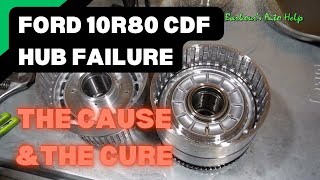
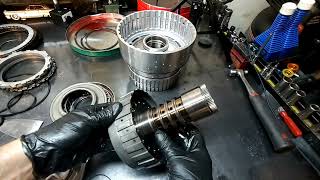
Est. part cost: $600-$1200 - Internal CDF Drum Failure 🔴 High Probability The 10R80 transmission family is known for a design flaw where an internal sleeve on the CDF (Clutch D/F) drum can slide out of position, uncovering hydraulic oil passages and causing a critical pressure loss. This leads to erratic shifting, slipping, and gear ratio faults. TSB 22-2428 and its successors directly acknowledge this as a cause for P0731. Ford has released an updated drum with a machined lip to prevent the sleeve from moving.
How to confirm: This requires transmission disassembly to visually inspect the CDF drum for a dropped sleeve. A technician may also perform a hydraulic circuit leak test as outlined in TSB 24-2252 to confirm pressure loss in the CDF clutch circuit before teardown. Metal shavings in the transmission pan are a strong indicator of this or other internal failures.
Typical fix: The transmission must be removed and completely disassembled to replace the CDF drum with the updated part. This is a major, labor-intensive repair.
Est. part cost: $200-$400 for the drum, but labor costs will be very high. - Low or Contaminated Transmission Fluid ⚪ Low Probability → Shop Transmission Assembly While this is a common cause for transmission issues on any vehicle, on the Aviator, the well-documented mechanical issues above are far more probable. However, it remains the first and easiest diagnostic check.
How to confirm: Check the transmission fluid level and condition according to the manufacturer's procedure. The fluid should be at the correct level, red in color, and not smell burnt. This transmission does not have a traditional dipstick, so the check must be performed by a technician with the vehicle at operating temperature (206ºF to 215ºF).
Typical fix: Perform a transmission fluid drain-and-fill or a full fluid exchange using the correct Motorcraft MERCON ULV fluid. This will not fix a mechanical fault but is a necessary first step.
Est. part cost: $150-$300 for fluid
Rare But Worth Checking
- Faulty Transmission Speed Sensor: → Shop Transmission Assembly While a failing input or output speed sensor can cause a gear ratio code, it's less common on this platform than the valve body or CDF drum issues. It's often misdiagnosed as the primary problem when the sensors are actually reporting a real slip.
- TCM Software Glitch: For some harsh shifting conditions without specific gear ratio codes, Ford has issued TSBs (like 20-2354 for the Hybrid model) to simply reprogram the PCM. However, with a persistent P0731 code, a software update alone is unlikely to be the root cause and is usually performed in conjunction with a mechanical repair.
Diagnosis Steps
- Verify the code with a professional OBD-II scanner that can read transmission-specific data (TCM/PCM).
- Check the transmission fluid level and condition. Note any burnt smell, discoloration, or glitter-like metal particles.
- Check for any applicable Technical Service Bulletins (TSBs) for the vehicle's VIN. The Aviator has a series of relevant TSBs (22-2102, 22-2428, 23-2250) that provide a detailed diagnostic path.
- Use a scan tool (like Ford's FDRS) to monitor live data from the input and output speed sensors while driving to confirm the slip in first gear.
- Follow the diagnostic procedures outlined in the relevant TSB. This may involve a specific 'Transmission Accelerated Main Control Break In' routine performed with the diagnostic tool.
- If the break-in routine fails or TSB guidance directs, perform a hydraulic circuit pressure/vacuum test on the CDF clutch circuit to check for leaks, which would confirm a CDF drum issue.
- If tests point to the valve body, it will be removed for inspection or replacement.
- If tests point to the CDF drum, the transmission must be removed and disassembled for inspection and replacement of the drum.
Parts You'll Likely Need
- Main Control Valve Body
(OEM #L1MZ-7A100-C)— This is the most common point of failure identified by Lincoln's own service bulletins for fixing harsh shifting and gear ratio codes like P0731.
Trusted brands: Motorcraft
OEM price range: $800-$1200
Aftermarket price range: $600-$900 - CDF Clutch Drum/Cylinder
(OEM #JL3Z-7H351-B)— This is the updated part from Ford that corrects a known design flaw in the 10R80 transmission where a sleeve walks out and causes hydraulic leaks, leading to slipping and shifting issues. Replacement requires a full transmission teardown.
Trusted brands: Motorcraft
OEM price range: $200-$400
Aftermarket price range: N/A - Automatic Transmission Fluid
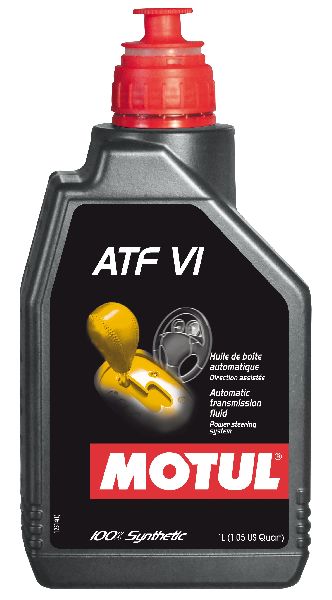
(OEM #XT-12-QULV)— Any repair involving the valve body or internal components will require draining and refilling the transmission with the correct fluid (Motorcraft MERCON ULV).
Trusted brands: Motorcraft
OEM price range: $15-$25 per quart
Aftermarket price range: $10-$20 per quart
Related Codes That Often Appear With This One
- P0729, P0732, P0733, P0734, P0735, P0736 — These are all incorrect gear ratio codes for other gears. Their presence alongside P0731 strongly indicates a systemic transmission problem, such as a failing valve body or major hydraulic leak from the CDF drum, affecting multiple gear circuits.
- P2700, P2701, P2702, P2703, P2704, P2705 — These codes relate to the timing and application of transmission clutch elements. They often appear with gear ratio codes and point directly to issues within the valve body or the clutch packs it controls, and are explicitly listed in the same TSBs as P0731.
Technical Service Bulletins (TSBs) & Recalls
- TSB 25-2302
- TSB 24-2252
- TSB 22-2428
- TSB 22-2102
- TSB 21-2434
- TSB 20-2403
Platform-Specific Known Issues
- TSB Progression (20-2403, 22-2102, 22-2428, 23-2250): Ford and Lincoln have released a series of evolving TSBs for 2020-2023 Aviators regarding harsh/delayed shifts and a host of transmission codes, including P0731. Early bulletins focused on a 'break-in' routine for the valve body. Later bulletins (like 22-2428 and its successors) identified the 'axial movement of the CDF clutch cylinder sleeve' as a primary cause, requiring transmission removal and overhaul to fix.
Mechanic-Grade Diagnostic Values
- Shift Solenoid Resistance — expected: 5.0 - 5.4 Ohms at 68°F (20°C). Failure: A reading outside this range indicates a faulty solenoid coil.
- Transmission Fluid Temperature (for fluid level check) — expected: 206°F - 215°F (96°C - 101°C). Failure: Checking the fluid level outside this temperature range will result in an inaccurate reading.
Scan Tool Commands That Help
- Ford FDRS (Ford Diagnostic & Repair System): PCM - Transmission Strategy Download — This function is mandatory after replacing the transmission or the main control valve body. It programs the unique 13-digit solenoid body strategy number from the new part into the PCM to ensure correct hydraulic pressures and shift timing.
- Ford FDRS/IDS: Transmission Characterization / Solenoid IDN — Used to read the currently stored 12-digit solenoid body ID and 13-digit strategy number from the TCM/PCM to compare against the tag on the transmission case or new valve body.
- Ford FDRS/IDS: Adaptive Learning Drive Cycle — After reprogramming the PCM or replacing major transmission components, this procedure must be performed. It allows the computer to relearn the transmission's parameters, which may otherwise result in firm or erratic shifts for several days.
Wiring & Ground Locations
- C175T — This is one of the main connectors at the Powertrain Control Module (PCM).. This connector contains the pins for critical transmission signals, including the Output Shaft Speed (OSS) sensor at Pin 25 (YE-OG wire) and the Turbine Shaft Speed (TSS) sensor at Pin 16 (WH-VT wire). A fault at these pins could directly cause gear ratio codes. It also carries signals for multiple shift solenoids.
- Transmission Main Connector (External) — Located on the driver's side of the transmission case.. This is the primary interface between the vehicle's wiring harness and the transmission's internal components, including all solenoids and sensors. Damage or corrosion at this connector can interrupt signals and cause various transmission faults, including P0731.
Real Owner Repair Stories
- Reddit user on r/f150 (2019 F-150 2.7L with 10R80 transmission) — Initially had harsh upshifts and downshifts. After a reflash and some parts swapped per a TSB, it developed a 2-3 second delay when shifting from Park to Drive/Reverse.
❌ Tried (didn't work) Initial TSB-guided reflash and minor part swap did not fully resolve long-term issues.
✅ What actually fixed it The delayed engagement was fixed by replacing the CDF drum. However, 900km later, the truck developed very hard shifts into 3rd gear, which was then resolved by replacing the main control valve body assembly. - Reddit user on r/f150 (2020 F-150 3.5L with 10R80 transmission, 40k miles) — Occasional clunking when shifting.
✅ What actually fixed it Based on concerns about known CDF drum issues and an expiring powertrain warranty, the owner took the vehicle to the dealer. The dealer confirmed the harsh shifting and replaced the CDF drum under warranty per a service bulletin, which resolved the clunking.
OEM Part Supersession History
HL3Z-7H351-A, JL3Z-7H351-A→JL3Z-7H351-B— The original CDF clutch drum/hub assembly was prone to failure due to a bushing/sleeve that could move out of position, causing a loss of hydraulic pressure. The updated part (JL3Z-7H351-B) has a machined lip to prevent this movement.
Helpful Videos


We Have This Part in Stock


The information in this article is provided for general reference and educational purposes only. Vehicle specifications, procedures, and part compatibility can vary by production date, trim level, and region. Always consult your vehicle's factory service manual and verify part numbers before purchasing or performing repairs. Safety-critical components such as airbags, seat belts, and braking systems should be installed by a qualified professional.
- Lincoln AVIATOR:
- 🧭 Diagnostic Flowchart
- 🎬 Helpful Videos
- 🛍️ Shop This Part
- What's Unique About the 2020-2023 Lincoln AVIATOR
- Symptoms You May Notice
- Most Likely Causes
- Rare But Worth Checking
- Diagnosis Steps
- Parts You'll Likely Need
- Related Codes That Often Appear With This One
- Technical Service Bulletins (TSBs) & Recalls
- Platform-Specific Known Issues
- Mechanic-Grade Diagnostic Values
- Scan Tool Commands That Help
- Wiring & Ground Locations
- Real Owner Repair Stories
- OEM Part Supersession History
- 🎟️ Get 5% Off