

P0732 on 2013-2015 GMC Sierra Denali: Gear 2 Incorrect Ratio Causes & Fixes
On a 2013-2015 Sierra Denali, P0732 most often points to a transmission problem caused by debris clogging the valve body, as noted in GM Technical Service Bulletins. The root cause is often a failing torque converter shedding material. A fluid/filter change is a first step, but expect a potential valve body or torque converter replacement, and in severe cases, a full rebuild.
- P0732 on a 2013-2015 Sierra Denali indicates a serious transmission slip in 2nd gear and should be addressed immediately to prevent catastrophic failure.
- The most likely cause is not a simple solenoid failure, but rather debris clogging the transmission valve body, as confirmed by GM Technical Service Bulletins.
- This debris often originates from a failing torque converter, a known issue with the 6L80 transmission.
- Diagnosis should begin with a fluid level and condition check. If the fluid contains debris, expect a more complex repair involving the valve body and potentially the torque converter.
- Due to the complexity and known issues, professional diagnosis and repair are highly recommended.
What's Unique About the 2013-2015 Gmc SIERRA DENALI
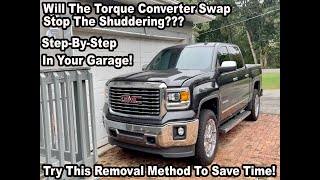
The 2013-2015 Sierra Denali, typically equipped with the 6L80 6-speed automatic transmission, has well-documented issues leading to this code. Manufacturer TSBs specifically mention that debris can block orifices in the valve body separator plate, causing this and other gear ratio errors. This debris often originates from a failing torque converter lock-up clutch, a widely known weak point in these transmissions that contaminates the entire system. A precursor to this failure is often a noticeable shudder during steady acceleration. 🎬 Watch: How to identify and fix torque converter shuddering issues Unlike some other GM transmissions, the fluid from the 6L80's torque converter can go directly to the transmission pump, quickly spreading contaminants to the valve body before they can be caught by the filter.
Diagnostic Flowchart
Tap your situation to follow the diagnostic path that matches what you're seeing on this vehicle.
Generation note: This range covers two generations. The 2013 model is the last year of the GMT900 platform, while the 2014-2015 models are the beginning of the K2XX platform. Both generations commonly use the 6L80 6-speed automatic transmission, making the causes and fixes for P0732 very similar between them.
Symptoms You May Notice
- Check Engine Light is on
- Vehicle enters "limp mode," limiting available gears
- Delayed or harsh shifting into second gear
- Transmission slipping while in gear, feeling like a loss of power
- Engine RPMs flare up without an increase in vehicle speed
- Inability to engage Drive or Reverse (as noted in TSB #PIP4379M and #PIP5100A)
- Shuddering or vibration during steady acceleration, especially at speeds of 40-60 mph
- Reduced fuel efficiency
- Replacing a shift solenoid when the root cause is a clogged valve body or failing torque converter. The solenoid itself may be functional, but debris is preventing it from working correctly.
- Replacing the TCM/TEHCM assembly when the root cause is mechanical wear (e.g., cracked piston, worn clutches) or contamination from a failing torque converter.
Most Likely Causes
- Low or Contaminated Transmission Fluid 🔴 High Probability → Shop Transmission Assembly Fluid can become contaminated with friction material from the known torque converter failure issue, which is the root cause of many other problems. Heavy use can also cause the fluid to break down and overheat.
How to confirm: Check the transmission fluid level and condition. The fluid should be bright red and clear, not dark, brown, or smelling burnt. The presence of metallic particles or black clutch material is a sign of severe internal wear.
Typical fix: Perform a transmission fluid and filter change. If the fluid is heavily contaminated, this is only a temporary diagnostic step before a more significant repair is performed.
Est. part cost: $75-$150 - Blocked Valve Body Separator Plate 🔴 High Probability → Shop Transmission Valve Body This is a well-documented issue cited in GM Technical Service Bulletins #PIP5100 and #PIP5100A for this vehicle platform. Debris from the torque converter clogs the small orifices and check balls in the plate, causing hydraulic pressure loss and preventing proper gear engagement.
How to confirm: After confirming fluid level is correct, the valve body must be removed and the separator plate inspected for blockage. TSB #PIP5100A specifically mentions looking for debris from an aftermarket spin-on filter as a possible cause. One common failure is the #1 check ball shrinking and blowing through the plate.
Typical fix: The valve body must be removed, disassembled, and cleaned. The separator plate is often replaced with an updated part. The check balls should also be inspected and replaced.
Est. part cost: $50-$150 - Failing Torque Converter 🟡 Medium Probability → Shop Automatic Transmission Torque Converter The lock-up clutch (TCC) within the stock 6L80 torque converter is a widely known failure point. It sheds friction material that contaminates the entire transmission, leading to a cascade of other issues.
How to confirm: Often diagnosed when a fluid change reveals excessive metallic or black debris. A common symptom preceding failure is a shudder under light to moderate acceleration. Other codes like P0741 (Torque Converter Clutch Circuit) are also strong indicators.
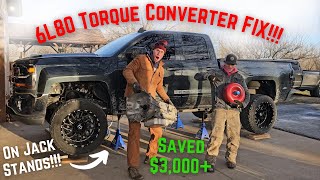
Typical fix: Replacement of the torque converter and a complete transmission fluid flush of the transmission and cooler lines. This is often done as part of a larger rebuild. 🎬 See this walkthrough on upgrading to a bulletproof torque converter
Est. part cost: $400-$800 - Faulty Shift Solenoid ⚪ Low Probability → Shop Transmission Valve Body
How to confirm: A professional scan tool can command the specific shift solenoid for 2nd gear on and off to test its electrical function. However, this won't detect a mechanical blockage from debris, which is a more common issue in the 6L80.
Typical fix: Replacement of the faulty solenoid, which is located inside the transmission oil pan as part of the TEHCM (valve body assembly).
Est. part cost: $40-$100
Rare But Worth Checking
- Cracked 1-2-3-4 Apply Piston: This is a known weak point in the 6L80 transmission that can cause a loss of hydraulic pressure for the clutch pack, leading to slipping. GM released an updated piston to address this issue. This failure can cause a no-forward movement condition.
- Worn Internal Clutch Packs: If the code is not resolved by fluid, solenoid, or valve body fixes, it may indicate the clutch plates themselves (particularly the 3-5-R clutch pack) are worn out, requiring a full transmission rebuild.
- Faulty Transmission Control Module (TCM): → Shop Transmission Assembly In rare cases, the TCM (which is integrated into the valve body on the 6L80) can fail or have software glitches, causing it to misinterpret sensor data. This should only be considered after all mechanical and hydraulic possibilities are eliminated.
Diagnosis Steps
- Verify the transmission fluid level is correct and check the fluid's condition. Look for a burnt smell or debris.
- Scan the TCM for all stored trouble codes to see if other gear ratio or solenoid codes (like P0731, P0741) are present.
- If the fluid is dirty, drop the transmission pan and inspect for excessive metal shavings or clutch material. This indicates the severity of the internal wear.
- Inspect the transmission filter; a cracked filter neck is a known issue on 6L80s that can cause pressure loss and fluid starvation.
- If accessible, use a professional scan tool to monitor input and output speed sensor data for erratic readings, which could indicate a sensor issue.
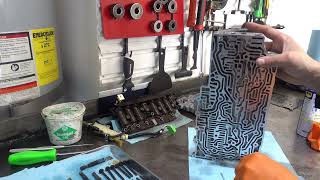
- Following the guidance in TSBs #PIP5100 and #PIP5100A, inspect the valve body and separator plate for blockage or scoring, particularly around the check ball seats. 🎬 Watch: A demonstration of the 6L80 valve body assembly
- If significant debris is found throughout the pan and valve body, the torque converter is the most likely source and should be inspected for replacement.
Parts You'll Likely Need
- Transmission Fluid and Filter Kit — This is the first step in diagnosis and repair. Contaminated fluid is a primary cause and symptom.
Trusted brands: ACDelco
OEM price range: $100-$150
Aftermarket price range: $60-$100 - Auto Trans Valve Body Separator Plate
(OEM #24272467)— Cited in GM TSBs as a common failure point due to clogging from debris. This part is often replaced during a valve body service.
Trusted brands: ACDelco
OEM price range: $50-$100
Aftermarket price range: $40-$80 - Torque Converter
(OEM #24256143)— Often the root cause of the debris that leads to the P0732 code in 6L80 transmissions.
Trusted brands: ACDelco, LuK
OEM price range: $500-$800
Aftermarket price range: $300
Related Codes That Often Appear With This One
- P0700 — This is a general code indicating the TCM has a fault stored. P0732 is the specific fault.
- P0731 — Incorrect Ratio in 1st Gear. Seeing multiple gear ratio codes strongly suggests a systemic problem like low fluid, a failing torque converter, or a bad valve body affecting multiple clutch packs.
- P0741 — Torque Converter Clutch Circuit Performance or Stuck Off. This code is a very strong indicator that the torque converter is failing and is the source of the debris causing P0732.
- P0751 — Shift Solenoid 'A' Performance/Stuck Off. This code can be a cause of P0732 or a symptom of widespread debris contamination affecting the solenoid's mechanical function.
- P0894 — Transmission Component Slipping. This is a direct confirmation of the slip that the P0732 code implies and often points toward torque converter issues in the 6L80.
Technical Service Bulletins (TSBs) & Recalls
- Provides information about vehicles that will not move forward or reverse and may set codes P0731, P0732, P0733, etc. It directs technicians to inspect the valve body separator plate orifices for blockage, noting that debris can come from an aftermarket spin-on filter.
- A general bulletin that lists a wide range of transmission codes, including P0732, related to various engagement issues like delays or no-drive/no-reverse. It advises technicians to follow standard diagnostic procedures. [Source: NHTSA Citation 1]
Platform-Specific Known Issues
- TSB #PIP5100A and #PIP5100 detail an issue where vehicles may not move and set codes like P0732 due to blockage in the valve body separator plate orifices, sometimes caused by material from an aftermarket spin-on filter.
- TSB #PIP4379M lists P0732 among codes that can result from various transmission engagement issues, directing technicians to follow standard service information.
- The 6L80 transmission used in these trucks is known for torque converter clutch failure, which sheds debris and causes a cascade of other problems, including clogged valve bodies and solenoids.
- A cracked 1-2-3-4 clutch apply piston is another documented failure point in the 6L80 that can directly cause slipping in 2nd gear and set a P0732 code.
Mechanic-Grade Diagnostic Values
- Shift Solenoid (On/Off type) Resistance — expected: 20-40 Ohms. Failure: Readings outside this range indicate a failed solenoid coil.
- Pressure Control Solenoid (PWM type) Resistance — expected: 3-8 Ohms. Failure: Readings outside this range indicate a failed solenoid coil. A more common spec is 5-6 Ohms.
- Transmission Line Pressure at Idle — expected: 45-80 PSI. Failure: Low pressure at idle can indicate a weak pump, clogged filter, or major internal leak.
- Transmission Line Pressure at Wide Open Throttle (WOT) — expected: Up to 300 PSI. Failure: Failure to build sufficient pressure under load points to pump, valve body, or clutch circuit issues. This test should be done briefly to avoid damage.
- Pressure Switch Diaphragm Resistance (Pressed) — expected: Approx. 10 Ohms. Failure: An open (OL) or incorrect reading when the switch diaphragm is manually pressed indicates a faulty switch within the TEHCM.
Scan Tool Commands That Help
- GDS2 / Tech 2: Service Fast Learn Adapts — This procedure is mandatory after replacing the valve body, TEHCM, or rebuilding the transmission. It allows the TCM to learn the hydraulic characteristics of the clutches to ensure proper shift quality.
- GDS2 / Tech 2: Solenoid Valve State / Output Controls — Allows a technician to command individual solenoids on and off to verify electrical and basic mechanical function, helping to isolate a faulty solenoid from a hydraulic blockage.
- GDS2 / Tech 2: Solenoid Cleaning Process — This function rapidly cycles all solenoids to attempt to dislodge small amounts of debris that may be causing a valve to stick. It can be a useful diagnostic step before committing to component replacement.
Wiring & Ground Locations
- G103 / G102 — On the lower left front of the engine block (driver's side).. This is a primary engine block ground. A poor connection here can cause erratic sensor readings and improper voltage references for the Engine Control Module (ECM) and Transmission Control Module (TCM), leading to false codes.
- G107 — On the transmission housing, typically near the oil filter housing area.. This is a dedicated ground for the transmission case and internal components. Corrosion or a loose connection here can directly impact the TCM's ability to control solenoids and interpret sensor data correctly.
- Underhood Fuse Block — On the driver's side of the engine bay, near the brake fluid reservoir.. For 2014-2015 models, this block contains fuses F40 (15A), F57/F58 (Micro3), and relays R70/R71 which supply power to the Transmission Control Module (TCM). A failure in this circuit will cause a loss of communication and control.
- TCM 80-Way Connector — This is the main electrical connector on the TEHCM (valve body assembly) inside the transmission oil pan.. All power, ground, and data signals for the transmission pass through this connector. Pin 69 (BK/WH wire) is a critical ground path, while Pin 70 (OG wire) provides battery voltage.
OEM Part Supersession History
24240950, 24245439, 24245721, 24261077→24272467— GM has released multiple updated versions of the 6L80 valve body separator plate to address issues with warping, cross-leaks, and check ball wear that cause various shift quality problems and DTCs.
Model Year Variations Within This Range
- 2014-2015 (K2XX Platform): The underhood fuse block layout and numbering for TCM-related fuses and relays changed from the 2013 GMT900 platform. For example, the TCM power fuse may be F57 on one year and F58 on the next, with a corresponding relay change from R70 to R71.
Helpful Videos
We Have This Part in Stock


The information in this article is provided for general reference and educational purposes only. Vehicle specifications, procedures, and part compatibility can vary by production date, trim level, and region. Always consult your vehicle's factory service manual and verify part numbers before purchasing or performing repairs. Safety-critical components such as airbags, seat belts, and braking systems should be installed by a qualified professional.
- Gmc SIERRA DENALI:
- 🧭 Diagnostic Flowchart
- 🎬 Helpful Videos
- 🛍️ Shop This Part
- What's Unique About the 2013-2015 Gmc SIERRA DENALI
- Symptoms You May Notice
- Most Likely Causes
- Rare But Worth Checking
- Diagnosis Steps
- Parts You'll Likely Need
- Related Codes That Often Appear With This One
- Technical Service Bulletins (TSBs) & Recalls
- Platform-Specific Known Issues
- Mechanic-Grade Diagnostic Values
- Scan Tool Commands That Help
- Wiring & Ground Locations
- OEM Part Supersession History
- Model Year Variations Within This Range
- 🎟️ Get 5% Off