

P0732 on 2016-2022 Honda Pilot: Gear 2 Incorrect Ratio Causes and Fixes
For 2016-2020 Pilots with the 6-speed automatic, P0732 is most often caused by degraded transmission fluid. The fix is a triple fluid flush per Honda TSB 23-073. For models with the 9-speed automatic, causes can include software issues or internal faults. Always check transmission fluid level and condition first.
- For a 2016-2022 Honda Pilot, the first step for P0732 is to identify if you have the 6-speed or 9-speed transmission.
- If you have the 6-speed (2016-2020 LX, EX, EX-L), the most probable cause is degraded transmission fluid. A triple fluid flush with Honda ATF DW-1 is the recommended first fix.
- If you have the 9-speed, the cause is more likely related to a software glitch or a more complex internal issue. Check with a dealer for any available software updates.
- Do not drive the vehicle. A slipping transmission can fail suddenly, leading to a dangerous situation and a much more expensive repair.
- Do not immediately replace speed sensors; this code indicates they are correctly detecting a mechanical or hydraulic problem.
What's Unique About the 2016-2022 Honda Pilot
The 2016-2022 Honda Pilot was equipped with two different automatic transmissions, and the likely cause of P0732 differs between them. Lower trim models from 2016-2020 used a Honda-built 6-speed automatic that is known to suffer from premature transmission fluid degradation, as acknowledged in technical service bulletin 23-073. This degraded fluid can foam and lose viscosity, causing a drop in hydraulic pressure that leads to clutch slippage and ratio codes. Higher trims (and all 2021-2022 models) used a ZF 9-speed automatic, which has a well-documented history of software-related shift quality problems. TSB 20-029 was released to update the TCM software to correct harsh or jerky upshifts that could be misinterpreted as a slip.
Symptoms You May Notice
- Check Engine Light is on
- Transmission warning light may be illuminated
- Delayed or harsh shifting, particularly into 2nd gear
- Transmission slipping (engine RPMs flare up without an increase in speed)
- Vehicle hesitates or has poor acceleration
- Transmission gets stuck in a lower gear (limp mode)
- Increased fuel consumption
- Vehicle may shudder or jerk during shifts
- Replacing the input or output speed sensors. This code indicates the sensors are working correctly and have detected a real slip; replacing them is almost never the fix.
- Replacing only one solenoid without addressing the root cause (dirty fluid). If contaminated fluid caused one solenoid to fail, others may soon follow.
- Performing only a single drain-and-fill on a 6-speed with known fluid degradation. The TSB-recommended triple flush is necessary to sufficiently dilute and remove the old, failed fluid.
Most Likely Causes
- Degraded or Low Automatic Transmission Fluid (ATF) 🔴 High Probability → Shop Transmission Assembly For the 6-speed automatic transmission, Honda issued TSB 23-073 for 2016-2020 Pilots, which states that the ATF can deteriorate, causing high foaming and low viscosity. This directly impacts the fluid's ability to create the hydraulic pressure needed to hold gears, causing slip codes like P0732. Many owners on forums have confirmed that a triple drain-and-fill resolves the issue.
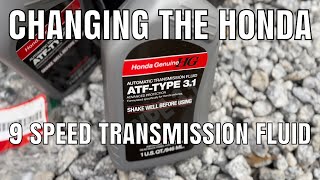
How to confirm: Check the transmission fluid level and condition. The fluid should be at the correct level on the dipstick (when hot) and be bright red. If the fluid is dark brown/black, smells burnt, or is low, this is the likely cause. Note that 9-speed models do not have a dipstick, requiring a technician to check the level via a fill plug procedure. 🎬 Watch: How to change ZF 9-speed transmission fluid
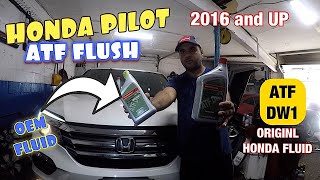
Typical fix: For the 6-speed automatic, perform a triple drain-and-fill using only Honda Genuine ATF DW-1 fluid 🎬 Watch: Step-by-step 6-speed transmission fluid change, as described in TSB 23-073. This involves draining the fluid, refilling, driving a short distance, and repeating the process two more times to replace a high percentage of the old fluid. For the 9-speed, a single drain-and-fill with the correct fluid (ZF Type 3.1) is a starting point.
Est. part cost: $80-$150 for 12 quarts of Honda ATF DW-1 - Transmission Control Module (TCM) Software Issue 🟡 Medium Probability → Shop Transmission Assembly The ZF 9-speed transmission, in particular, had several software updates to correct shift quality and performance issues. TSB 20-029 specifically addresses 'intermittent harsh or jerky upshifts' caused by abnormal TCM adaptation values. Outdated software can misinterpret sensor data or command incorrect hydraulic pressures, leading to ratio codes.
How to confirm: A Honda dealership or a well-equipped independent shop can check the current software version of the TCM and compare it against available updates listed in service bulletins like 20-029.
Typical fix: Update the TCM and/or PCM (Powertrain Control Module) software to the latest version. This is a dealer-level service. Owners on forums report a significant improvement in shift quality after the update.
Est. part cost: $0-$200 for a software update - Faulty Shift Solenoid or Pressure Switch ⚪ Low Probability → Shop Transmission Valve Body Solenoids control the flow of fluid to engage gears. A shift solenoid for 2nd gear (often called Shift Solenoid 'B') can become clogged with debris from dirty fluid or fail electrically. This is more likely to be a secondary failure resulting from not addressing a fluid quality issue promptly.
How to confirm: A technician can use a bi-directional scan tool to command the solenoid on and off to check its response. They can also test the solenoid's electrical resistance and check the wiring. This is an advanced diagnostic step after fluid and software have been ruled out.
Typical fix: Replace the faulty shift solenoid or pressure switch. This often involves removing the transmission pan or valve body.
Est. part cost: $50-$250
Rare But Worth Checking
- Internal Transmission Failure: → Shop Transmission Assembly If the fluid is clean and solenoids are functioning, the code likely indicates a mechanical failure inside the transmission, such as a worn-out 2nd gear clutch pack. This is the most expensive repair and requires a transmission rebuild or replacement.
- Torque Converter Failure: → Shop Automatic Transmission Torque Converter While more commonly associated with code P0741, a failing torque converter can create debris that clogs the valve body and solenoids, indirectly causing other gear ratio codes. Honda has extended the warranty for torque converters on some models (for P0741) due to manufacturing defects, highlighting a potential a source of contamination.
Diagnosis Steps
- Check the transmission fluid level and condition. This is the most critical first step. If low, top it off and check for leaks. If dark or burnt, a fluid flush is necessary.
- Scan for other DTCs. Note if other gear ratio or solenoid codes are present.
- For 6-speed models (2016-2020), perform the triple drain-and-fill procedure with Honda ATF DW-1 as per TSB 23-073. Also, have a dealer check if the PGM-FI software update from the TSB has been performed.
- For 9-speed models, have a dealer check for any available TCM or PCM software updates, specifically referencing TSB 20-029 for shift quality issues.
- If fluid and software are correct, have a professional test the shift solenoids and pressure switches for proper electrical and mechanical function using a bi-directional scanner.
- If solenoids are functional, a technician should perform a line pressure test to check for low hydraulic pressure, which could indicate a weak pump or internal leaks.
- If all other tests pass, the issue is likely an internal mechanical failure (e.g., 2nd gear clutch pack), requiring transmission disassembly.
Parts You'll Likely Need
- Automatic Transmission Fluid (ATF)
(OEM #08200-9008 (DW-1 for 6-speed))— Degraded fluid is the most common cause of this code on the 6-speed Pilot. A triple flush is the official Honda procedure to resolve related issues. TSB 23-073 specifies needing 12 quarts for this procedure.
Trusted brands: Honda Genuine ATF DW-1
OEM price range: $10-$15 per quart
Aftermarket price range: N/A (Use OEM fluid only) - Shift Solenoid 'B' — If the problem is not fluid-related, the solenoid responsible for the 2nd gear shift may have failed, typically due to contamination from old fluid. 🎬 See this dual linear shift solenoid replacement walkthrough
Trusted brands: Honda Genuine, Rostra
OEM price range: $100-$200
Aftermarket price range: $50-$120
Related Codes That Often Appear With This One
- P0730 — Incorrect Gear Ratio. This is a general slip code that may accompany a more specific gear code like P0732.
- P0731, P0733, P0734, etc. — Incorrect ratio codes for other gears. Multiple ratio codes strongly suggest a systemic problem like low fluid level, a failing torque converter, or a clogged filter.
- P0700 — Transmission Control System Malfunction. This is a generic code indicating the TCM has stored a fault; it will always be present with any specific transmission code like P0732.
Technical Service Bulletins (TSBs) & Recalls
- A23-073 (NHTSA ID 10242219): 2016-20 Pilot: Transmission Temp Too Hot Message on the MID. Corrective action is to update ECU software and flush the ATF 3 times.
Platform-Specific Known Issues
- Honda TSB 23-073 was issued for 2016-2020 Pilots with the 6-speed automatic due to ATF deterioration causing foaming, low viscosity, and potential overheating. While the TSB title mentions a 'Transmission Temp Too Hot' message, the underlying conditions (foaming, low viscosity) are a direct cause of internal slipping that triggers ratio codes like P0732. The fix includes a PGM-FI software update and a triple ATF flush.
- The ZF 9-speed transmission used in higher trims and later years has been subject to numerous software updates to address harsh shifting, which can be misidentified as a slip. TSB 20-029 is a key example.
Mechanic-Grade Diagnostic Values
- Shift Solenoid Resistance (Honda 6-Speed AT) — expected: 12 - 25 Ohms. Failure: A reading of 0 Ohms indicates a short, while an infinite reading (OL) indicates an open circuit. Any reading outside the specified range suggests a faulty solenoid.
- Proportional Clutch Solenoid Resistance (ZF 9-Speed AT) — expected: ~5.3 Ohms. Failure: Significant deviation from this value indicates a faulty solenoid. These solenoids control clutches B, C, D, and E.
- Proportional Dog Clutch Solenoid Resistance (ZF 9-Speed AT) — expected: ~11 Ohms. Failure: Significant deviation from this value indicates a faulty solenoid.
- A/T Clutch Pressure Control Solenoid 'A' Resistance (Honda 6-Speed AT) — expected: 4.7 - 5.9 Ohms. Failure: A reading outside this range indicates a faulty solenoid. While this is for solenoid 'A', it provides a reference for other pressure control solenoids on the valve body.
Scan Tool Commands That Help
- Honda Diagnostic System (HDS): Solenoid Test (e.g., Shift Solenoid A, B, C, and Lockup Solenoid Test) — After checking fluid, use this function from the 'Miscellaneous Test Menu' to command a specific solenoid on and off. A healthy solenoid will produce an audible 'click' from the transmission case, confirming electrical activation. Lack of a click points to a bad solenoid or wiring issue.
- Honda Diagnostic System (HDS): Clear All DTCs — Used to clear the code after a repair. A test drive must be performed afterward, specifically operating the vehicle in second gear at speeds over 7 mph (12 km/h) for at least 12 seconds to see if the P0732 code returns as pending or confirmed.
- Honda Diagnostic System (HDS): Live Data / Data List — Monitor PIDs for Input Shaft Speed, Output Shaft Speed, and Commanded Gear while driving. A slip is confirmed when the TCM commands 2nd gear, but the ratio of input speed to output speed does not match the expected value for 2nd gear.
Wiring & Ground Locations
- PCM (Powertrain Control Module) — Located in the front right-hand (passenger side) of the engine compartment.. The PCM (also called TCM) is the brain that controls the transmission. All solenoid and sensor circuits terminate here. Voltage and continuity checks are performed at its connectors.
- PCM Connector B (51P) — This is one of the main connectors at the PCM module.. The circuit for Shift Solenoid 'B' (SHB wire) runs to Pin 4 of this connector. A technician can test for continuity between this pin and the solenoid connector to diagnose an open or shorted wire.
- Ground Point G101 — Located on the left side of the engine compartment, often on or near the thermostat housing on many Honda V6 engines.. This is a critical ground point for multiple transmission components, including Shift Solenoid 'B' and 'C'. A corroded or loose G101 can cause intermittent and difficult-to-diagnose solenoid codes.
- Main Chassis Ground — The main ground wire from the negative battery terminal to the vehicle's chassis, near the battery.. On 3rd generation Pilots, this ground connection is often made to a painted surface from the factory, creating a poor ground path. This can cause a variety of seemingly unrelated electrical issues, including erratic module behavior. Cleaning the paint off this connection point and upgrading the ground wire is a known preventative fix.
Model Year Variations Within This Range
- 2016-2020 (LX, EX, EX-L): These trims use the Honda 6-speed automatic. The primary cause of P0732 is fluid degradation addressed by TSB 23-073. If a hard part fails, it is likely Shift Solenoid 'B', OEM part number 28400-P6H-013.
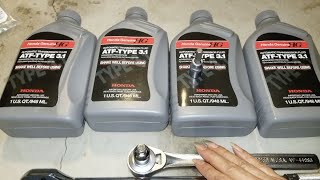
- 2016-2020 (Touring, Elite) & 2021-2022 (All Trims): These trims use the ZF 9-speed (ZF9HP48) automatic. P0732 is more likely related to software or internal valve body/solenoid issues. Solenoids are typically sold as a complete 9 or 10-piece kit, and the correct version must be verified with the vehicle's VIN. The fluid is Honda ATF Type 3.1.
Diagnostic Flowchart
Other Known Issues on This Vehicle
Issues unrelated to this code that are worth knowing about as an owner of this generation:
- Fuel Injector Failures 🔴 High — Widespread enough to trigger a warranty extension to 10 years / 150,000 miles for many 2016-2019 models. Symptoms include misfires (P0300-P0306) and catalyst codes (P0420/P0430). (Ref: TSB 20-100, TSB 21-010)
- Auto Idle-Stop Failure to Restart 🔴 High — Common on 2016-2020 models, leading to vehicles stalling at stops and not restarting. This prompted a class-action lawsuit and numerous NHTSA complaints. (Ref: TSB 23-008, TSB 23-009, TSB 23-010)
- Infotainment Blackouts / Popping Noises (MOST Bus) 🟠 Medium — Extremely common on 2019-2022 models, with over 270,000 warranty claims filed. Symptoms include a black screen, popping/crackling audio, and loss of the rearview camera. (Ref: Safety Recall / TSB 23-047)
- ZF 9-Speed Transmission Harsh Shifting 🟠 Medium → Shop Transmission Assembly — A very common complaint on Touring/Elite trims and 2021+ models. It is often described as jerky or clunky shifts, particularly at low speeds. (Ref: TSB 20-029 (Software Update))
- Connecting Rod Bearing Failure (2016 models) 🔴 High — The 2016 model year, in particular, had a high number of complaints regarding engine knocking that led to catastrophic engine failure, though this was covered by a recall. (Ref: Recall)
Used vs. New Parts: Buying Guide for This Vehicle
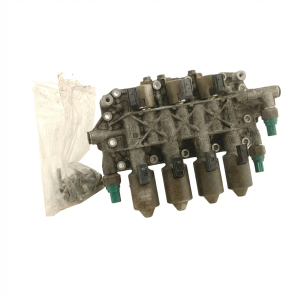
When a used part is the smart pick: For the 6-speed transmission, a used shift solenoid assembly from a low-mileage donor vehicle can be a cost-effective repair if the original has failed electrically. For the 9-speed, purchasing a complete used valve body with solenoids can be viable, but carries risk due to the complexity and software pairing requirements.
Donor-vehicle mileage cap: roughly under 60000 miles for the part to have meaningful remaining life.
What to inspect on the donor part:
- Verify the donor vehicle was not in a severe front-end collision that could have damaged the transmission.
- If possible, check the service history of the donor for regular transmission fluid changes.
- For a used valve body, ensure there is no visible sludge, debris, or scoring on the valve bores.
- When buying individual solenoids, check that the electrical connectors are clean, free of corrosion, and not cracked.
OEM-only on this vehicle (don't cheap out):
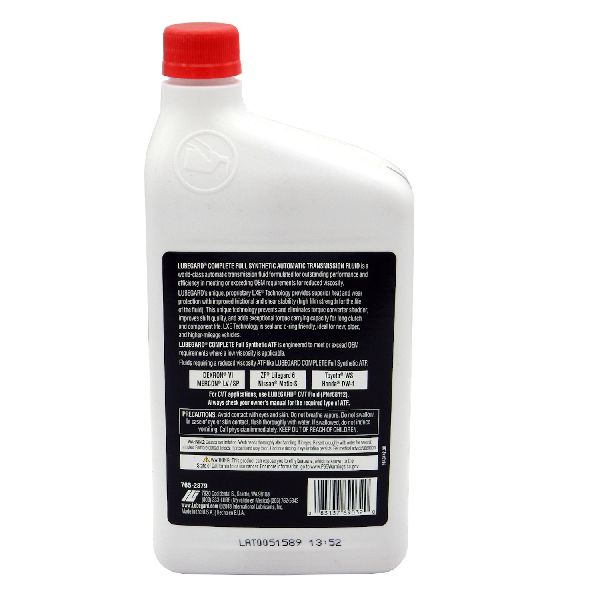
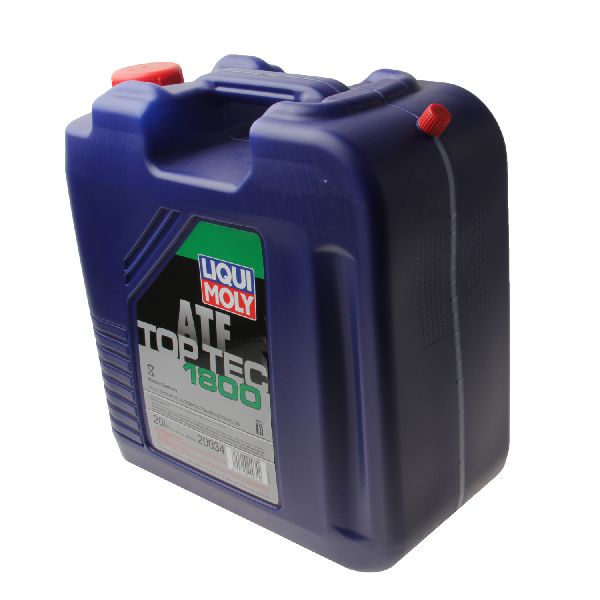
- Automatic Transmission Fluid (ATF): Always use Honda Genuine DW-1 for the 6-speed or Honda ATF Type 3.1 for the 9-speed. Aftermarket fluids can cause shifting problems.
- Transmission Control Module (TCM/PCM): A new or used module requires VIN-specific programming with dealer-level tools to function. An incorrectly programmed module will prevent the vehicle from starting.
Aftermarket brands forum-validated for this vehicle:
- Rostra
- Standard Motor Products (SMP)
- Beck/Arnley
Brands owners have reported issues with on this vehicle:
- Unbranded, no-name solenoids from online marketplaces are a significant risk and often fail prematurely or are dead-on-arrival.
Real Owner Stories
Aggregated from forums and TSBs cited above. Mileages and costs reflect what owners reported in those sources.
2016-2020 Honda Pilot (6-Speed Automatic)
Symptoms: Transmission fluid deterioration leading to high foaming and low viscosity, resulting in a 'Transmission Temp Too Hot' message and internal slipping.
What fixed it: Triple drain-and-fill using Honda Genuine ATF DW-1 and a PGM-FI software update as prescribed by TSB 23-073.
Source hint: TSB 23-073 (NHTSA ID 10242219)
2019 Honda Pilot Elite (9-Speed Automatic)
Symptoms: Intermittent harsh or jerky upshifts and abnormal adaptation values in the Transmission Control Module.
What fixed it: TCM and PCM software update to the latest version.
Source hint: TSB 20-029 and Reddit r/hondapilot thread '2019 Elite transmission software update'
2016-2020 Honda Pilot
Symptoms: P0732 and P0733 error codes appearing together, indicating incorrect ratios for multiple gears.
What fixed it: Triple drain-and-fill of the transmission fluid.
Source hint: Piloteers.org thread titled 'p0732-and-p0733-error-codes'
Related OBD-II Codes
Frequently Asked Questions
Does TSB 23-073 apply to my 2016-2020 Honda Pilot with the 6-speed transmission?
My 2019 Pilot Elite is shifting harshly into 2nd gear; is there a software fix?
What specific transmission fluid should I use for the triple drain-and-fill on my 6-speed Pilot?
Is the P0732 code related to the fuel injector warranty extension on my 2017 Pilot?
Can I check the transmission fluid level myself on a 9-speed Honda Pilot?
Helpful Videos


Used OEM Parts in Stock
New Aftermarket Parts Available


The information in this article is provided for general reference and educational purposes only. Vehicle specifications, procedures, and part compatibility can vary by production date, trim level, and region. Always consult your vehicle's factory service manual and verify part numbers before purchasing or performing repairs. Safety-critical components such as airbags, seat belts, and braking systems should be installed by a qualified professional.
- Honda Pilot:
- 🧭 Diagnostic Flowchart
- 🎬 Helpful Videos
- 🛍️ Shop This Part
- What's Unique About the 2016-2022 Honda Pilot
- Symptoms You May Notice
- Most Likely Causes
- Rare But Worth Checking
- Diagnosis Steps
- Parts You'll Likely Need
- Related Codes That Often Appear With This One
- Technical Service Bulletins (TSBs) & Recalls
- Platform-Specific Known Issues
- Mechanic-Grade Diagnostic Values
- Scan Tool Commands That Help
- Wiring & Ground Locations
- Model Year Variations Within This Range
- Other Known Issues on This Vehicle
- Used vs. New Parts: Buying Guide for This Vehicle
- Real Owner Stories
- 2016-2020 Honda Pilot (6-Speed Automatic)
- 2019 Honda Pilot Elite (9-Speed Automatic)
- 2016-2020 Honda Pilot
- Related OBD-II Codes
- Frequently Asked Questions
- 🎟️ Get 5% Off