

P0732 on 2018-2023 Lincoln Navigator: Gear 2 Incorrect Ratio Causes and Fixes
On a 2018-2023 Lincoln Navigator, code P0732 is most often caused by a known internal failure of the 10R80 transmission's CDF clutch drum assembly. A bushing within the drum migrates out of position, causing a hydraulic leak. This is not a simple DIY fix and typically requires professional transmission repair to install an updated drum assembly, which can be costly.
- P0732 on a 2018-2023 Navigator is a serious code that strongly points to a known mechanical flaw in the 10R80 transmission's CDF clutch drum.
- Always check the transmission fluid level and condition first, as low or dirty fluid can cause shifting problems, but be prepared for a more complex issue.
- This is not a typical DIY repair. It requires professional diagnosis and likely involves removing and disassembling the transmission.
- Repair costs can be high, often ranging from $1,200 to over $4,500, depending on whether the transmission can be repaired or needs to be replaced.
- Ensure any repair shop is aware of Ford's TSBs regarding the 10R80 transmission and uses the updated CDF clutch drum part if a replacement is necessary.
What's Unique About the 2018-2023 Lincoln NAVIGATOR
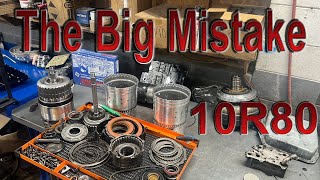
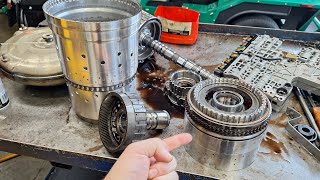
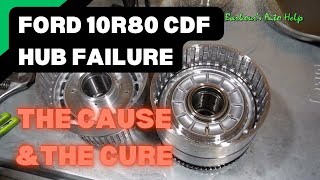
The 2018-2023 Lincoln Navigator uses the Ford 10R80 10-speed automatic transmission. This specific transmission is known to have a design flaw related to a component called the CDF clutch drum. A sleeve/bushing within this drum can move axially ('walk out') from its intended position, which uncovers hydraulic fluid passages and causes a significant pressure loss to the clutch packs. This fluid loss prevents clutches from engaging properly, leading to harsh shifting, delayed engagement, and various gear ratio error codes, including P0732. Ford has issued multiple Technical Service Bulletins (TSBs) addressing this specific mechanical flaw, making it a primary suspect when this code appears. 🎬 Watch: Understanding the CDF clutch drum design flaw The updated replacement drum features a machined lip to prevent the bushing from moving.
Diagnostic Flowchart
Tap your situation to follow the diagnostic path that matches what you're seeing on this vehicle.
Symptoms You May Notice
- Harsh, jerky, or delayed shifts, particularly involving 2nd gear.
- Transmission slipping, where engine RPMs increase without a corresponding increase in speed.
- Vehicle hesitates or lunges during acceleration, sometimes feeling like it's starting in the wrong gear.
- Check Engine Light or transmission warning lamp (wrench icon) is illuminated.
- Transmission may enter "limp mode," locking in a single gear.
- A whining noise may be heard during shifts in lower gears.
- Replacing only the transmission speed sensors without investigating the fluid condition or the known mechanical issues with the 10R80 transmission.
- Mistaking a major internal mechanical failure for a simple solenoid problem. Some owners have replaced the valve body only to find the issue persists, indicating the problem was the CDF drum all along.
Most Likely Causes
- Internal Failure of the CDF Clutch Drum Assembly 🔴 High Probability → Shop Transmission Assembly The 10R80 transmission in these Navigators has a well-documented design flaw with a bushing in the CDF clutch drum that can walk out of position, causing hydraulic pressure loss. TSBs #TSB 24-2254 and others directly link this failure, described as "axial movement of the CDF clutch cylinder sleeve," to P0732 and other gear ratio codes.
How to confirm: A technician will likely perform a hydraulic pressure test on the transmission circuits. A pressure test on the 'C' clutch port with a blow gun can sometimes confirm a leak. However, definitive confirmation requires transmission disassembly to visually inspect the CDF clutch drum and its bushing for movement.
Typical fix: The transmission must be removed and disassembled to replace the faulty CDF clutch drum with an updated part (OEM Part No. JL3Z-7H351-B). This is a major repair that involves a partial or full transmission rebuild. An aftermarket alternative is the Sonnax CDF Drum Saver Kit (129910-01K), which installs a new, more secure sleeve into the existing drum.
Est. part cost: $300-$600 for the drum assembly, plus seals and gaskets. - Low or Contaminated Transmission Fluid 🟡 Medium Probability → Shop Transmission Assembly
How to confirm: Check the transmission fluid level and condition. The fluid should be at the correct level and bright red. If it is dark, brown, or smells burnt, it is contaminated, which could indicate internal component wear.
Typical fix: If low, top off with the correct Motorcraft ULV fluid. If dirty, a complete fluid flush and filter replacement may help, but if internal damage has already occurred, this will not solve the root problem.
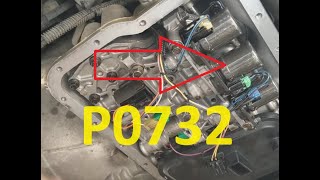
Est. part cost: $150-$300 for fluid and filter. - Faulty Main Control Valve Body or Solenoids 🟡 Medium Probability → Shop Transmission Valve Body Sticking valves or faulty solenoids in the valve body are another potential cause cited in Ford's TSBs for the 10R80 transmission. Debris from internal wear (often from the failing CDF drum) can clog solenoid screens or cause valves to stick.
How to confirm: A professional scan tool can command solenoids on and off to check for response. The valve body can be removed and inspected for sticking valves or contamination. In some forum cases, a valve body replacement was the reported fix.
Typical fix: Cleaning or replacing the entire valve body assembly or the specific shift solenoid for 2nd gear. A valve body replacement is often attempted before a full transmission teardown.
Est. part cost: $500-$1200 for a valve body assembly. - Faulty Powertrain/Transmission Control Module (PCM/TCM) ⚪ Low Probability → Shop Transmission Assembly
How to confirm: This is typically a diagnosis of exclusion. If all mechanical and hydraulic systems are confirmed to be working correctly, the control module may be at fault. Checking for available software updates should be the first step.
Typical fix: Reprogramming the module with the latest software. If that fails, the module must be replaced and programmed to the vehicle.
Est. part cost: $800-$1500 for a new module.
Rare But Worth Checking
- Damaged Transmission Speed Sensors or Wiring: → Shop Transmission Assembly While less common than internal failures on this platform, faulty input or output speed sensors can provide incorrect data to the TCM, causing it to falsely trigger a gear ratio code. Always inspect the wiring harness for damage before condemning the transmission.
Diagnosis Steps
- Check and verify the transmission fluid level and condition. Ensure the correct Motorcraft ULV fluid is being used. The level must be checked with the fluid temperature between 206-215°F (97-102°C).
- Use a professional OBD-II scanner to check for any other transmission-related trouble codes. Note any codes related to other gears or clutch performance.
- Review available Technical Service Bulletins (TSBs) for the vehicle, paying close attention to those related to the 10R80 transmission, such as TSB 24-2254.
- With an advanced scan tool, monitor live data for the transmission input speed sensor (ISS) and output speed sensor (OSS) to confirm they are reading correctly.
- Perform a transmission pressure test to check for hydraulic leaks in the 2nd gear circuit. A simple air pressure test at the valve body's 'C' clutch port can also indicate a leak in the CDF drum circuit.
- If pressure tests indicate a leak or are inconclusive, inspect the main control valve body for sticking valves or debris. Test solenoid resistance; it should be 5.0-5.4 ohms at 68°F (20°C).
- If other tests are inconclusive, the final step is to remove and disassemble the transmission to inspect the CDF clutch drum assembly for the known bushing failure.
Parts You'll Likely Need
- CDF Clutch Cylinder Assembly
(OEM #JL3Z-7H351-B (supersedes JL3Z-7H351-A and HL3Z-7H351-A))— This is the most common point of failure in the 10R80 transmission that leads to code P0732. The internal bushing fails, causing a loss of hydraulic pressure. The 'B' revision is the updated part with a lip to prevent the failure.
Trusted brands: Motorcraft
OEM price range: $400-$600
Aftermarket price range: $250-$500 - Automatic Transmission Fluid
(OEM #Motorcraft ULV (XT-12-QULV))— The transmission must be refilled with the correct fluid after any repair. Using the wrong fluid can cause severe damage.
Trusted brands: Motorcraft
OEM price range: $15-$25 per quart - Main Control Valve Body — Sticking valves or faulty solenoids within the valve body can cause this code and may need to be replaced if cleaning is not effective or if it has been damaged by debris.
Trusted brands: Motorcraft
OEM price range: $800-$1200
Aftermarket price range: $600-$900 - Sonnax CDF Drum Saver Kit
(OEM #129910-01K)— An aftermarket solution that repairs a failed original CDF drum by installing a new, more robust sleeve with a locking mechanism, potentially avoiding the cost of a new drum.
Trusted brands: Sonnax
Aftermarket price range: $100-$150
Related Codes That Often Appear With This One
- P0731, P0733, P0734, P0735 — These are incorrect gear ratio codes for other gears. When the CDF clutch drum fails, it often affects multiple clutch packs and can cause ratio errors in several gears, not just 2nd.
- P2700, P2701, P2702, etc. — These codes relate to clutch apply time and performance. They are frequently stored alongside gear ratio codes when the CDF clutch drum issue is present, as noted in TSB 24-2254 and others.
Technical Service Bulletins (TSBs) & Recalls
- TSB 24-2254: Mentions P0732 and points to axial movement of the CDF clutch cylinder sleeve as a potential cause, providing detailed diagnostic steps for technicians.
- TSB 23-2250: A comprehensive TSB that also lists P0732 among a wide range of DTCs related to transmission shifting issues, attributing them to software, the valve body, or the CDF clutch cylinder sleeve.
Platform-Specific Known Issues
- The 10R80 transmission is subject to multiple Technical Service Bulletins (TSBs) for harsh shifting and gear ratio faults. TSB 24-2254 specifically mentions that DTC P0732 may be caused by axial movement of the CDF clutch cylinder sleeve.
Mechanic-Grade Diagnostic Values
- Shift Solenoid Resistance — expected: 5.0 - 5.4 Ohms at 20°C (68°F). Failure: Readings outside this range indicate a faulty solenoid coil.
- Transmission Fluid Temperature for Level Check — expected: 206°F - 215°F (97°C - 102°C). Failure: Checking the fluid level outside this temperature range will result in an incorrect reading, leading to under- or over-filling.
Scan Tool Commands That Help
- Ford IDS (or equivalent professional scanner): Clear Transmission Adaptive Tables — This must be performed after replacing major components like the valve body or the entire transmission to force the TCM to relearn shift pressures and timing. Failing to do so can result in continued poor shift quality.
- Ford IDS (or equivalent professional scanner): Transmission Strategy Download — Required when replacing the valve body or TCM. This procedure programs the unique calibration data from the new component into the vehicle's control module.
- Ford IDS (or equivalent professional scanner): Monitor Transmission Fluid Temperature (TFT) PID — Essential for accurately checking the transmission fluid level, which must be done within a specific temperature window.
Wiring & Ground Locations
- Rear Fuse Box - Fuse 28 — In the passenger compartment, specific location varies but often accessible from the passenger side.. This 10A fuse provides power to the Transmission Control Module (TCM). A loss of power here will cause a complete loss of transmission control and multiple codes.
- Engine Fuse Box - Fuse 14 — In the engine compartment fuse box.. This 15A fuse powers the Transmission Coil Module, which is responsible for operating the solenoids. A failure of this fuse can prevent proper gear engagement.
- Main Transmission Case Connector — On the side of the transmission case, where the main vehicle harness connects to the transmission's internal wiring.. This is the primary electrical interface for all sensors and solenoids. Corrosion or damage to pins in this connector can cause intermittent or total failure of transmission functions, leading to ratio codes. The connector shell is often composed of two different colored halves (e.g., brown and blue).
Real Owner Repair Stories
- Reddit user Particular_Mine8311 on r/f150 (2018 Ford F-150 XLT 5.0L with 148,000 miles) — Wrench light illuminated, vehicle would hesitate and not engage 2nd gear when pulling out onto a main road, throwing code P0732.
❌ Tried (didn't work) Initial diagnosis feared a full transmission rebuild due to the common CDF drum issue.
✅ What actually fixed it The dealership determined the cause was a faulty solenoid within the valve body. The entire valve body assembly was replaced, which resolved the issue. - Reddit user on r/f150 (2019 Ford F-150 Lariat 2.7L) — Initial issue was harsh upshifts/downshifts. Later developed a 2-3 second delay when shifting from Park to Drive/Reverse.
❌ Tried (didn't work) A software reflash per a TSB did not resolve the issues long-term.
✅ What actually fixed it The delayed engagement was fixed by replacing the CDF drum under warranty. However, this was followed by a new issue of very hard shifts into 3rd gear, which then required a valve body replacement to fully resolve.
OEM Part Supersession History
HL3Z-7H351-A, JL3Z-7H351-A→JL3Z-7H351-B— The original CDF clutch drum assembly used a press-fit internal sleeve that could 'walk out' or move from its position, uncovering hydraulic passages and causing pressure loss. The updated 'B' revision features a machined lip that physically prevents the sleeve from moving, providing a permanent fix to the design flaw.
Model Year Variations Within This Range
- 2018-2022: Vehicles produced before December 23, 2022, are highly susceptible to the original CDF drum failure. Vehicles produced after this date likely contain the updated drum (JL3Z-7H351-B) from the factory, making the failure less probable but not impossible.
- 2018-2020: Models in this range were typically equipped with an auxiliary transmission cooler that was reportedly removed from some non-V8 models starting in 2021. This may slightly alter the service procedure for draining fluid or accessing the transmission.
Helpful Videos
We Have This Part in Stock


The information in this article is provided for general reference and educational purposes only. Vehicle specifications, procedures, and part compatibility can vary by production date, trim level, and region. Always consult your vehicle's factory service manual and verify part numbers before purchasing or performing repairs. Safety-critical components such as airbags, seat belts, and braking systems should be installed by a qualified professional.
- Lincoln NAVIGATOR:
- 🧭 Diagnostic Flowchart
- 🎬 Helpful Videos
- 🛍️ Shop This Part
- What's Unique About the 2018-2023 Lincoln NAVIGATOR
- Symptoms You May Notice
- Most Likely Causes
- Rare But Worth Checking
- Diagnosis Steps
- Parts You'll Likely Need
- Related Codes That Often Appear With This One
- Technical Service Bulletins (TSBs) & Recalls
- Platform-Specific Known Issues
- Mechanic-Grade Diagnostic Values
- Scan Tool Commands That Help
- Wiring & Ground Locations
- Real Owner Repair Stories
- OEM Part Supersession History
- Model Year Variations Within This Range
- 🎟️ Get 5% Off