

P0733 on 2001-2005 Chevrolet Silverado: Gear 3 Incorrect Ratio Causes and Fixes
P0733 on a 2001-2005 Silverado indicates the transmission is slipping in third gear. While you should check for low or dirty transmission fluid first, the most common cause is a worn-out 3-4 clutch pack in the 4L60E transmission, a repair that often requires a transmission rebuild or replacement.
- P0733 means your Silverado's transmission is slipping in third gear.
- The first and easiest step is to check the transmission fluid level and condition.
- On this specific truck, the most likely cause is a worn-out 3-4 clutch pack, a known weak point of the 4L60E transmission.
- This is not a DIY-friendly fix for most home mechanics as it requires transmission removal and disassembly.
- Do not ignore this code; continued driving will lead to more extensive and expensive transmission damage.
What's Unique About the 2001-2005 Chevrolet SILVERADO
The 2001-2005 Silverado predominantly uses the 4L60E or 4L65E automatic transmission. This transmission family is widely known for a specific weak point: the 3-4 clutch pack. This clutch pack is prone to wearing out, leading to slippage specifically in third and fourth gear. As a result, P0733 is a very common and well-documented code for this truck, and experienced technicians will often suspect this internal mechanical failure immediately after ruling out fluid issues. Many rebuilds focus on installing upgraded clutch packs, like the Raybestos Z-Pak or Sonnax kits, to provide more clutch surface area and prevent repeat failures.
Diagnostic Flowchart
Tap your situation to follow the diagnostic path that matches what you're seeing on this vehicle.
Symptoms You May Notice
- Check Engine Light is on
- Transmission slipping, causing engine RPMs to flare up without an increase in speed, especially during the 2-3 shift.
- Harsh or delayed shifting into or out of third gear
- Failure to shift into third gear, getting stuck in second.
- Vehicle enters "limp mode," often locking it in 2nd or 3rd gear
- Reduced fuel efficiency
- A feeling of a loss of power or hesitation during acceleration in the 25-45 mph range.
- Replacing the input or output speed sensors when the root cause is a mechanical failure like a worn clutch pack. The sensors are correctly reporting the slip, they are not the cause of it.
- Replacing only the shift solenoids when the transmission fluid is full of clutch material. The new solenoids will likely fail quickly due to contamination.
Most Likely Causes
- Low or Contaminated Transmission Fluid 🔴 High Probability → Shop Transmission Assembly Fluid leaks or neglecting service intervals can lead to low levels or fluid breakdown, reducing the hydraulic pressure needed to engage clutches.
How to confirm: Check the transmission fluid level with the dipstick (engine running, in Park, on a level surface). Note the fluid's color and smell; it should be bright red and not smell burnt. Dark brown or black fluid with a burnt smell indicates a problem, often pointing to burnt clutch material.
Typical fix: If low, top off with the correct fluid (DEXRON-VI is the modern replacement for the original DEXRON-III). If dirty or burnt, perform a transmission fluid and filter change. However, if the fluid is very dark and full of debris, a simple fluid change will not fix the underlying mechanical damage.
Est. part cost: $50-$150 - Worn or Failed 3-4 Clutch Pack 🔴 High Probability This is a well-known weak point in the 4L60E/4L65E transmission used in these trucks. The friction material on the clutch plates wears away over time, preventing them from holding pressure.
How to confirm: Dropping the transmission pan and finding significant friction material (looks like black sludge or sand) or metal shavings is a strong indicator. A transmission pressure test may also show low pressure during 3rd gear engagement.
Typical fix: This requires a transmission rebuild to replace the 3-4 clutch pack, steels, and associated seals. Often, a complete rebuild kit with upgraded components (e.g., Raybestos GPZ-105 frictions, Sonnax Smart-Tech Input Drum) is used 🎬 Learn how to set up and upgrade your 3-4 clutch pack. to address other potential wear items and strengthen the weak point. A remanufactured transmission is also a common solution.
Est. part cost: $200-$800 for a high-quality rebuild kit, $1800-$3500 for a remanufactured transmission. - Failed Shift Solenoid 🟡 Medium Probability → Shop Transmission Valve Body Solenoids are electro-hydraulic valves that can fail electrically or become clogged with debris over time, preventing them from directing fluid to engage a gear.
How to confirm: A professional scan tool can be used to command the solenoids on and off to test their function. Resistance can also be checked with a multimeter once the transmission pan is removed; the 1-2 and 2-3 shift solenoids should measure between 20-30 ohms.
Typical fix: Drop the transmission pan and replace the faulty solenoid. It is often recommended to replace both A and B shift solenoids 🎬 Watch: Step-by-step guide to replacing your shift solenoids. (Part #24230298) at the same time as they are identical and have experienced the same wear.
Est. part cost: $30-$80 per solenoid. - Faulty Valve Body ⚪ Low Probability → Shop Transmission Valve Body The valve body can develop cracks, stuck valves, or have check balls wear through the separator plate, leading to incorrect fluid pressure and flow.
How to confirm: After removing the valve body, it can be visually inspected for cracks, scoring on valves, or damage to the separator plate. Testing requires specialized equipment.
Typical fix: Replacement with a new or remanufactured valve body. Aftermarket companies like Sonnax offer kits to repair and upgrade specific known failure points within the valve body.
Est. part cost: $250-$600
Rare But Worth Checking
- Faulty Input or Output Speed Sensor: While possible, it's less common for this code than internal mechanical failure. This would typically be accompanied by other speed sensor-specific codes.
- Damaged Internal Wiring Harness: → Shop Transmission Wiring Harness The wiring inside the transmission can become brittle from heat and age, leading to intermittent connections for solenoids and sensors.
- Faulty Transmission Control Module (TCM): → Shop Transmission Assembly This is very rare. The TCM should only be considered after all other mechanical, hydraulic, and electrical possibilities have been exhaustively ruled out.
Diagnosis Steps
- Check the transmission fluid level and condition. If low, fill to the proper level and check for leaks. If dark or burnt, proceed with caution as this indicates internal wear.
- Use an OBD-II scanner to check for other transmission-related codes, especially P0700, P0894, and P0734.
- Drop the transmission oil pan and inspect for metal shavings or excessive clutch material. A small amount of fine grey material on the magnet is normal, but chunks of metal or a thick layer of black sludge are signs of serious internal failure.
- If the pan is relatively clean, inspect and test the shift solenoids (A and B) and internal wiring harness. Check solenoid resistance with a multimeter; it should be between 20-30 ohms.
- If solenoids test good, the next step is to perform a line pressure test with a transmission pressure gauge to check for adequate hydraulic pressure in all gears.
- If pressure is low in 3rd gear or the pan was full of debris, the transmission must be removed for inspection and rebuild, focusing on the 3-4 clutch pack and potential valve body issues.
Parts You'll Likely Need
- Transmission Filter and Gasket Kit
(OEM #24208576)— Required for any service that involves dropping the transmission pan, such as a fluid change or solenoid replacement.
Trusted brands: ACDelco, Wix, ATP
OEM price range: $30-$60
Aftermarket price range: $15-$30 - 3-4 Clutch Pack Rebuild Kit — This is the most common mechanical failure point for a P0733 code on a 4L60E transmission. Upgraded kits are highly recommended over OEM-style replacements.
Trusted brands: Raybestos Powertrain (GPZ105 frictions), Sonnax (Smart-Tech Input Housing), Alto (Red Eagle clutches)
OEM price range: N/A (sold as components)
Aftermarket price range: $100-$350 for clutch kits, up to $800 for complete drum assemblies - Shift Solenoid (A or B)
(OEM #24230298)— A potential electrical cause for the shifting issue. Both A (1-2) and B (2-3) solenoids are identical and often replaced in pairs.
Trusted brands: ACDelco, Rostra, Delphi
OEM price range: $40-$60
Aftermarket price range: $20-$40 - Automatic Transmission Fluid
(OEM #10-9395 (ACDelco DEXRON-VI))— Required for any transmission service. DEXRON-VI is the correct modern fluid and is backward-compatible with the original DEXRON-III specification for these trucks.
Trusted brands: ACDelco, Valvoline, Castrol
Related Codes That Often Appear With This One
- P0700 — This is a generic transmission fault code that simply indicates the TCM has requested the Check Engine Light be turned on. It will almost always be present with any specific transmission code like P0733.
- P0894 — This code means 'Transmission Component Slipping.' It is a more general slip code that frequently accompanies a specific gear ratio error code like P0733.
- P0734 — This code is for 'Gear 4 Incorrect Ratio.' Since the 3-4 clutch pack is used for both 3rd and 4th gears in the 4L60E, it is very common to see both P0733 and P0734 together when this pack fails.
Technical Service Bulletins (TSBs) & Recalls
- PIP4379K: This is a general preliminary information bulletin from GM that lists a wide array of transmission-related DTCs, including P0733. It doesn't point to a specific cause but serves as a diagnostic starting point for technicians encountering issues like delayed engagement or range inhibit faults. It confirms that P0733 is part of a known group of potential transmission problems.
Platform-Specific Known Issues
- The Inevitable 3-4 Clutch Pack: Forums and mechanic discussions are saturated with stories of the 3-4 clutch pack failing on the 4L60E in these trucks. The question is often not 'if' but 'when' it will fail, especially on trucks with over 100,000-120,000 miles. Many owners who experience P0733 and confirm the fluid is clean will often skip solenoid replacement and go straight to budgeting for a rebuild or replacement, as experience has shown this is the most probable outcome.
Mechanic-Grade Diagnostic Values
- 4L60E Line Pressure at Idle — expected: In Drive (D): 55-65 PSI. In Reverse (R): 64-75 PSI.. Failure: Significantly lower pressure indicates a weak pump, clogged filter, or major internal leak.
- 4L60E Line Pressure at Wide Open Throttle (WOT) — expected: In Drive (D): 170-190 PSI. In Reverse (R): 300-325 PSI.. Failure: Failure to reach maximum pressure under load points to a worn pump, faulty pressure control solenoid (PCS), or leaking seals in the clutch circuit.
- Shift Solenoid A (1-2) & B (2-3) Resistance — expected: 20 - 40 Ohms at 68°F (20°C). Failure: A reading outside this range (open circuit or short) indicates a failed solenoid coil.
- Electronic Pressure Control (EPC/PCS) Solenoid Resistance — expected: 3.5 - 8.0 Ohms at 68°F (20°C). Failure: An out-of-spec reading suggests the solenoid responsible for controlling line pressure is electrically faulty.
- Main Connector Voltage Supply (Pin E) — expected: 12V+ with key on. Failure: No voltage or low voltage at Pin E indicates a problem with the power supply to the transmission, such as a blown fuse or damaged wiring harness between the fuse box and transmission.
Scan Tool Commands That Help
- Tech 1 / Tech 2: PCS Control Test — This function allows a technician to manually command the Pressure Control Solenoid (PCS) current in 0.1 Amp increments while monitoring line pressure with a gauge. It is used to verify if the PCS is responding correctly to commands and if the transmission's hydraulic system can produce the correct pressures, isolating electrical from hydraulic faults.
Wiring & Ground Locations
- Main Transmission Connector (C157 / 431) — On the passenger side of the transmission case, it is a large, round 20-pin connector.. This is the primary electrical interface for the entire transmission. Specifically, Pin E (Pink wire) should have 12V+ power with the key on. A loss of power here will disable all solenoids and cause the transmission to enter limp mode, often with multiple electrical fault codes. Technicians frequently test this pin first to rule out a power supply issue.
Real Owner Repair Stories
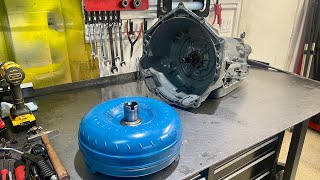
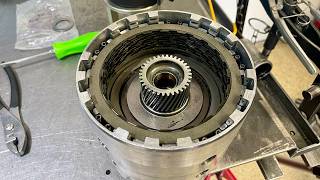
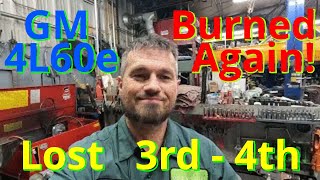
- YouTube Channel 'Precision Transmission' (GM vehicle with 4L60E (similar to Silverado application)) — Slipping in 3rd gear with burnt 3-4 clutches, even after a recent rebuild.
❌ Tried (didn't work) A previous transmission rebuild that only replaced the clutches and seals did not last.
✅ What actually fixed it The technician performed an air pressure test on the input drum on the bench and discovered a hairline crack. The crack was leaking hydraulic pressure intended for the 3-4 clutch pack, causing it to slip and burn up prematurely. Replacing the entire input drum and then rebuilding the clutch pack permanently solved the issue.
"I Checked Everything" — The Actual Cause
- A common scenario analogous to a 'smoke test clean' for this code is when the transmission fluid is clean and full, and the shift solenoids test good for resistance, yet the P0733 code persists. In these cases, the root cause is often a hidden mechanical or hydraulic issue. A prime example is a hairline crack in the 3-4 clutch area of the input drum, which is not visible on inspection and only found by air-checking the drum on a workbench. Another cause is internal wear in the 3-4 accumulator bore inside the transmission case, which creates a hydraulic leak that starves the clutch pack of pressure.
OEM Part Supersession History
Various (pre-2001)→GM 24221190 (heat-treated), then 24229853, final P/N 24243878— The original reaction sun shell was a major weak point, prone to the splines stripping out, causing a loss of reverse and other gears. GM released several updated, heat-treated versions to improve durability.
Heads up: Retrofitting the latest GM shell or an aftermarket version like the Sonnax Smart Shell (77749-02K) to an early-style transmission may also require changing the reaction carrier shaft and using a thrust bearing instead of a washer to be fully compatible.
Model Year Variations Within This Range
- 2001-2005: Within this range, Silverados could be equipped with either the 4L60E or the heavy-duty 4L65E. The 4L65E was typically paired with larger engines like the 6.0L V8. Key differences in the 4L65E include five-pinion planetary gearsets (vs. four-pinion in the 4L60E), a shot-peened and induction-hardened input shaft, and a different torque converter (300mm). While the P0733 failure of the 3-4 clutch is common to both, ordering a rebuild kit or replacement transmission requires confirming which model is in the truck, as hard parts like the planetary sets and torque converter are not interchangeable.
Helpful Videos

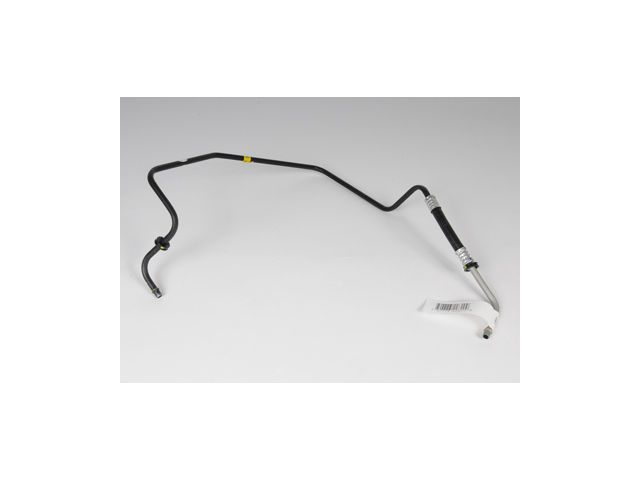
We Have This Part in Stock
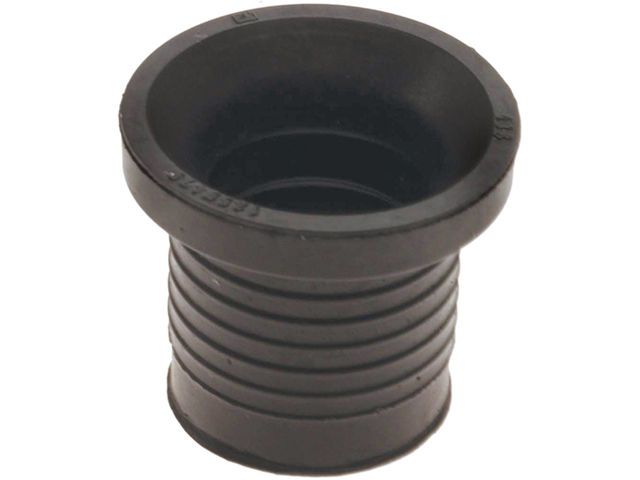

The information in this article is provided for general reference and educational purposes only. Vehicle specifications, procedures, and part compatibility can vary by production date, trim level, and region. Always consult your vehicle's factory service manual and verify part numbers before purchasing or performing repairs. Safety-critical components such as airbags, seat belts, and braking systems should be installed by a qualified professional.
- Chevrolet SILVERADO:
- 🧭 Diagnostic Flowchart
- 🎬 Helpful Videos
- 🛍️ Shop This Part
- What's Unique About the 2001-2005 Chevrolet SILVERADO
- Symptoms You May Notice
- Most Likely Causes
- Rare But Worth Checking
- Diagnosis Steps
- Parts You'll Likely Need
- Related Codes That Often Appear With This One
- Technical Service Bulletins (TSBs) & Recalls
- Platform-Specific Known Issues
- Mechanic-Grade Diagnostic Values
- Scan Tool Commands That Help
- Wiring & Ground Locations
- Real Owner Repair Stories
- "I Checked Everything" — The Actual Cause
- OEM Part Supersession History
- Model Year Variations Within This Range
- 🎟️ Get 5% Off