

P0733 on 2011-2013 Chevrolet Silverado: Causes and Fixes for Gear 3 Incorrect Ratio
On a 2011-2013 Silverado, P0733 usually means the transmission is slipping in 3rd gear. The most common root cause is a failing torque converter shedding metallic debris that clogs the valve body separator plate, as cited in GM TSBs. This leads to pressure loss and failure of the 3-5-R clutch pack. A fluid check is a first step, but internal repairs are often necessary.
- P0733 on a 2011-2013 Silverado indicates a serious transmission slip in 3rd gear that should be addressed immediately to prevent further damage.
- Always start diagnosis by checking the transmission fluid level and condition; this is the simplest and most common starting point.
- Be aware of the specific TSBs for this truck; a blocked valve body separator plate is a known issue and a likely culprit.
- This is not a DIY-friendly repair for most home mechanics. Due to the need for special tools and the complexity of internal transmission work, professional service is strongly recommended.
What's Unique About the 2011-2013 Chevrolet SILVERADO
The 2011-2013 Silverado primarily uses the 6-speed 6L80 automatic transmission. This transmission is known for a specific cascade of failures that lead to P0733. The stock torque converter clutch is a frequent failure point, shedding metallic debris often described as looking like 'coffee grounds' into the fluid. This debris clogs the transmission filter and, critically, blocks small orifices in the valve body separator plate, a problem identified in GM TSB #PIP5100. [NHTSA data] This blockage starves the 3-5-R clutch pack of hydraulic pressure, causing it to slip and burn out, triggering the P0733 code.
Diagnostic Flowchart
Tap your situation to follow the diagnostic path that matches what you're seeing on this vehicle.
Symptoms You May Notice
- Check Engine Light is on
- Transmission slipping or delayed shifts, especially into 3rd gear
- Engine RPM flares up during the 2-3 shift without a corresponding increase in speed
- Harsh or jerky shifting
- Shuddering or vibration at steady speeds (a sign of torque converter issues)
- Vehicle will not move in forward or reverse [Bulletin #PIP5100, #PIP5100A]
- Delayed engagement into Drive or Reverse [Bulletin #PIP4379K]
- Transmission may be stuck in one gear (limp mode)
- Reduced fuel efficiency
- Replacing input or output speed sensors when no specific sensor codes are present. P0733 is typically a mechanical or hydraulic fault, not a sensor fault.
- Immediately replacing the entire transmission without first inspecting the valve body for the known TSB-related issues.
- Replacing the valve body separator plate without also replacing the failing torque converter that is generating the debris, leading to a repeat failure.
Most Likely Causes
- Failing Torque Converter 🔴 High Probability → Shop Automatic Transmission Torque Converter The lock-up clutch in the stock 6L80 torque converter is a well-documented weak point that wears and sheds metallic debris. This is the primary source of the contamination that causes downstream failures.
How to confirm: Dropping the transmission pan and finding a significant amount of metallic, gritty debris (often looking like coffee grounds or a gray paste) on the magnet and in the fluid is a strong indicator. A scan tool may also show excessive Torque Converter Clutch (TCC) slip or a P0741 code.
Typical fix: Replace the torque converter. It is critical to thoroughly flush the transmission and cooler lines to remove all debris before installing a new converter. Many owners opt for a more durable aftermarket converter with a billet front cover. This is often done as part of a larger transmission rebuild.
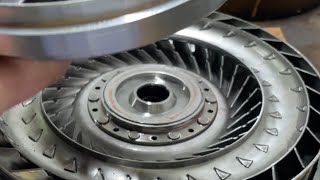
Est. part cost: $250-$800 - Blocked Valve Body Separator Plate Orifices 🔴 High Probability → Shop Transmission Valve Body GM has issued multiple Technical Service Bulletins (#PIP5100, #PIP5100A) for this issue. Debris from the failing torque converter or, as noted in TSB #PIP5100A, from aftermarket filters, directly clogs 🎬 See how converter failure leads to total filter destruction. the small orifices, starving clutches of pressure.
How to confirm: This requires removing the transmission pan and valve body for visual inspection of the separator plate orifices for blockage. [Bulletin #PIP5100]
Typical fix: Clean or replace the valve body separator plate with an updated design. A full fluid and filter change is required. This repair will fail again if the source of the debris (usually the torque converter) is not also addressed.
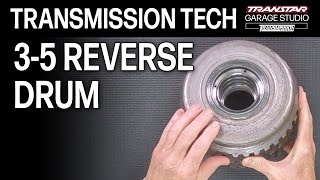
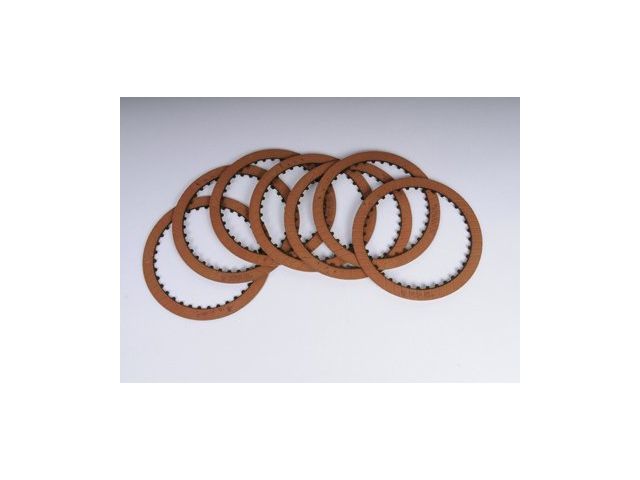
Est. part cost: $50-$200 - Worn 3-5-R Clutch Pack / Broken Wave Plate 🟡 Medium Probability This clutch pack applies 3rd, 5th, and Reverse gears. It fails due to pressure loss from a clogged separator plate or a cracked clutch housing. Additionally, 🎬 Watch: Inspecting the 3-5-Reverse drum for cracks and wear. the wave plate within the clutch pack is known to break, sending debris through the transmission and causing a loss of these gears.
How to confirm: This is a diagnosis of exclusion after hydraulic causes are ruled out. A transmission pressure test may show low pressure to the clutch circuit. Definitive confirmation requires transmission disassembly to inspect the clutch frictions, steels, and wave plate.
Typical fix: The transmission must be removed and rebuilt or replaced. This involves replacing the worn 3-5-R clutch pack, seals, wave plate, and any other damaged components.
Est. part cost: $500-$2000+ - Low or Contaminated Transmission Fluid 🟡 Medium Probability → Shop Transmission Assembly Trucks used for towing experience high temperatures that break down fluid faster. However, on the 6L80, contaminated fluid is more often a symptom of torque converter failure than the initial cause.
How to confirm: The 6L80 has no dipstick. The fluid level must be checked via a fill plug on the side of the transmission with the fluid at a specific temperature (97-115°F). Fluid should be red; dark, burnt, or debris-filled fluid indicates a serious internal problem.
Typical fix: A fluid and filter change. If the fluid is full of debris, this is only a temporary measure as the component generating the debris will continue to fail.
Est. part cost: $80-$150
Rare But Worth Checking
- Faulty Transmission Control Module (TCM/TEHCM): → Shop Transmission Assembly On 6L80 transmissions, the TCM (also called TEHCM) is integrated with the valve body solenoids. While less common, electronic failure or a stuck solenoid within the TEHCM can cause this code. It's usually replaced as a complete valve body/TEHCM unit and requires programming.
- Cracked 1-2-3-4 Clutch Piston/Housing: A known issue on some 6L80 transmissions is a crack in the 1-2-3-4 clutch housing or piston, which causes a pressure loss leading to slips or delayed engagement. This was documented in a 'Transmission Bench' repair video as a cause for a no-move condition.
- Faulty External Thermal Bypass Valve (TBV): Per TSB 22-NA-182, the external TBV can stick closed, preventing fluid from reaching the cooler. This causes the transmission to overheat, which rapidly degrades fluid and accelerates wear on all internal components, including the torque converter and clutches.
Diagnosis Steps
- Check the transmission fluid level and condition. This requires the vehicle to be level and the fluid to be at a specific temperature. Dark, burnt, or metallic fluid is a sign of major internal wear.
- Use a professional OBD-II scanner to check for other codes, especially P0741 (TCC) or other ratio codes.
- With the scan tool, monitor real-time data for TCC slip, commanded vs. actual gear, and input/output speed sensor readings to confirm the slip in 3rd gear.
- Drop the transmission pan. Inspect the magnet and pan bottom for the type and amount of debris. A fine gray paste or metallic 'coffee grounds' strongly suggests torque converter failure.
- Perform a transmission fluid pressure test to check for low hydraulic pressure, which could indicate a worn pump, internal leak, or clogged filter.
- Following TSB #PIP5100, remove and inspect the valve body and its separator plate for blockages or debris, especially if the pan was full of contaminants.
- If the separator plate is clogged, the torque converter is the likely source and should be replaced along with a full system flush.
- If all other steps fail to find the cause, the issue is a deeper internal mechanical failure, such as a worn/broken 3-5-R clutch pack or cracked housing, requiring transmission removal and teardown.
Parts You'll Likely Need
- Transmission Fluid and Filter Kit
(OEM #ACDelco 24236933)— This is required for any service. The filter is often clogged with debris from the root cause failure.
Trusted brands: ACDelco
OEM price range: $80-$120
Aftermarket price range: $50-$90 - Torque Converter — Often the root cause of the problem. The original unit fails and contaminates the entire transmission with debris.
Trusted brands: ACDelco, Monster Transmission (Billet Cover), Circle D
OEM price range: $300-$500
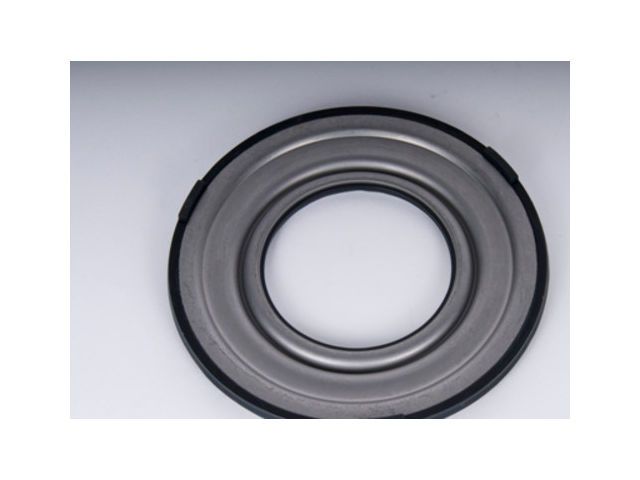
Aftermarket price range: $250-$800 - Valve Body Separator Plate
(OEM #Varies, verify by VIN (e.g., 24245720))— As cited in GM TSBs, the original plate's orifices become blocked by debris. An updated or cl
Related Codes That Often Appear With This One
- P0741 — This code for 'Torque Converter Clutch Circuit Performance or Stuck Off' often appears with P0733 because a failing TCC is the root cause of the debris that leads to the ratio error.
- P0894 — This code means 'Transmission Component Slipping' and is a general confirmation of the slip detected in a specific gear by codes like P0733.
- P0729, P0735 — Incorrect ratio codes for other gears (P0729 for 6th, P0735 for 5th). Seeing these with P0733 strongly points to a failure in the 3-5-R clutch pack or a systemic hydraulic issue affecting multiple circuits.
Technical Service Bulletins (TSBs) & Recalls
- PIP5100 / PIP5100A
- PIP4379K
- 22-NA-182
Platform-Specific Known Issues
- TSB #PIP5100 and #PIP5100A specifically call out inspecting the valve body separator plate orifices for blockage on vehicles that won't move or have set codes like P0733. This points to a known design sensitivity to fluid contamination.
- The root of the issue is often the torque converter clutch. Per multiple transmission specialists, the factory TCC programming allows for constant slip, which generates heat and debris, inevitably leading to failure and contaminating the system.
Mechanic-Grade Diagnostic Values
- Transmission Line Pressure (at test port) — expected: 45-80 PSI at idle in Park/Neutral. Rises with throttle, up to 190-210 PSI at WOT. Some sources state up to 300 PSI is possible but may risk damage.. Failure: Significantly lower pressure than specified indicates a worn pump, clogged filter, or major internal leak.
- TEHCM On/Off Shift Solenoid Resistance — expected: 20-40 Ohms. Failure: A reading outside this range indicates a failed solenoid coil, requiring TEHCM replacement.
- TEHCM PWM Pressure Control Solenoid Resistance — expected: 3-8 Ohms. Failure: A reading outside this range indicates a failed solenoid coil, requiring TEHCM replacement.
- TEHCM PWM Pressure Control Solenoid Current — expected: 1.5 - 4.0 Amps at 12V. Failure: Incorrect amperage draw points to a faulty solenoid within the TEHCM.
- Gear 3 Ratio (Scan Tool PID) — expected: Approximately 1.53:1. Failure: The TCM will set P0733 if the calculated ratio deviates significantly (e.g., >8-10%) from the expected value, indicating a slip.
Scan Tool Commands That Help
- GDS2 / Tech2 (or equivalent professional scanner): Service Fast Learn Adapts — Required after replacing the TEHCM, valve body, or entire transmission, or after a TCM software update. This procedure allows the TCM to learn the hydraulic characteristics of the clutches to ensure smooth shifting and prevent setting false codes.
- GDS2 / Tech2: Solenoid Cleaning Process — If a solenoid performance code is present or a solenoid is suspected of sticking due to debris. This automated function rapidly cycles all solenoids to dislodge contaminants and can sometimes resolve an issue without replacing the TEHCM.
- GDS2 / Tech2: Output Controls - Solenoid On/Off — To individually test the electrical circuit and mechanical function of each on/off shift solenoid. A technician can command a solenoid 'on' and listen for an audible click from the transmission pan, helping to isolate a specific faulty solenoid within the TEHCM.
Wiring & Ground Locations
- Line Pressure Test Port — On the passenger's side of the transmission case, located behind the bell housing.. This is the physical access point for connecting a pressure gauge to perform a line pressure test. Verifying correct hydraulic pressure is a fundamental step in diagnosing any slip-related code like P0733.
- TEHCM Main Connector — External connector on the passenger side of the transmission case. It connects the vehicle wiring harness to the internal TEHCM.. While less common than internal failures for this code, damage or corrosion at this main connector or its wiring can cause a loss of communication or power to the TEHCM, leading to various shifting faults and codes.
OEM Part Supersession History
Various (e.g., 24252114 for early Gen 1)→Various (e.g., 24256861, 24256863 for 2010-2013 models)— Hardware and software updates to improve solenoid performance and pressure switch reliability.
Heads up: TEHCMs are NOT backward or forward compatible between major design generations (e.g., a 2014+ TEHCM will not work in a 2011-2013 truck). The module must be correct for the vehicle's year range and MUST be reprogrammed with the vehicle's VIN using a tool like GDS2 to function.Varies by year (Type 1 plate used 2006-2009)→24245720 (This is a 'Type 2' plate used ~2010-2014)— Design changes to orifice sizing and check ball locations to improve shift quality and address hydraulic issues.
Heads up: There are three distinct separator plate designs. The 2011-2013 Silverado uses a 'Type 2' plate. While a newer 'Type 3' plate (2014+) may physically fit, it has different orifice sizes designed for an 8th check ball and different valve body calibrations. Installing the wrong plate without corresponding valve body modifications can cause new shifting problems and codes.
Model Year Variations Within This Range
- 2011-2013: This range uses a 'Type 2' valve body separator plate and a specific generation of TEHCM (e.g., part numbers like 24256861). While the core 6L80 transmission is similar across many years, a direct replacement transmission should ideally come from a 2010-2013 donor vehicle. Using a transmission from outside this range would necessitate swapping the original TEHCM/valve body assembly into the donor transmission and performing a full relearn procedure.
Helpful Videos
We Have This Part in Stock


The information in this article is provided for general reference and educational purposes only. Vehicle specifications, procedures, and part compatibility can vary by production date, trim level, and region. Always consult your vehicle's factory service manual and verify part numbers before purchasing or performing repairs. Safety-critical components such as airbags, seat belts, and braking systems should be installed by a qualified professional.
- Chevrolet SILVERADO:
- 🧭 Diagnostic Flowchart
- 🎬 Helpful Videos
- 🛍️ Shop This Part
- What's Unique About the 2011-2013 Chevrolet SILVERADO
- Symptoms You May Notice
- Most Likely Causes
- Rare But Worth Checking
- Diagnosis Steps
- Parts You'll Likely Need
- Related Codes That Often Appear With This One
- Technical Service Bulletins (TSBs) & Recalls
- Platform-Specific Known Issues
- Mechanic-Grade Diagnostic Values
- Scan Tool Commands That Help
- Wiring & Ground Locations
- OEM Part Supersession History
- Model Year Variations Within This Range
- 🎟️ Get 5% Off