

P0733 on 2009-2010 Chevrolet Silverado 2500: 3rd Gear Ratio Error Causes & Fixes
P0733 means the transmission is slipping in 3rd gear. On the 2009-2010 Silverado 2500 with the 6L90 transmission, this is often caused by low/dirty fluid. If a fluid/filter change doesn't fix it, the issue is likely internal. Common culprits include a failed Transmission Electro-Hydraulic Control Module (TEHCM), which houses the solenoids, or a cracked 1-2-3-4 / 3-5-R clutch housing, requiring professional repair.
- P0733 indicates a serious transmission slip in 3rd gear that should be addressed immediately to prevent catastrophic failure.
- Always start by checking the transmission fluid level and condition, as low or degraded fluid is a common cause.
- For the 6L90 transmission in the 2009-2010 Silverado 2500, common internal failures include the TEHCM (solenoid body) and a cracked 3-5-R clutch housing (per TSB 09-07-30-004J).
- Due to the need for special tools and programming, repairs beyond a fluid service are best left to a professional transmission shop.
What's Unique About the 2009-2010 Chevrolet SILVERADO 2500
The 2009-2010 Silverado 2500 typically uses the heavy-duty 6-speed 6L90 automatic transmission (RPO code MYD). While universal causes like fluid issues apply, the 6L80/6L90 family has specific, well-documented failure points that lead to P0733. A primary culprit is the Transmission Electro-Hydraulic Control Module (TEHCM), which integrates the TCM and all shift solenoids into a single unit inside the pan. Another known issue, detailed in TSB 09-07-30-004J, is a cracked 1-2-3-4 / 3-5-R clutch housing, which causes a hydraulic leak and prevents the clutch from engaging properly, leading to a slip in 3rd gear. A failing torque converter shedding debris that clogs the valve body is another common problem for this platform.
Diagnostic Flowchart
Tap your situation to follow the diagnostic path that matches what you're seeing on this vehicle.
Symptoms You May Notice
- Check Engine Light is on
- Transmission slipping or engine RPMs flaring when shifting into 3rd gear.
- Harsh or jerky shifting, particularly the 2-3 shift.
- Delayed acceleration or a feeling of power loss.
- Vehicle enters 'limp mode' (stuck in one gear).
- Delayed engagement when shifting into Drive or no Reverse, as noted in TSB #PIP4379N.
- A shudder or surging sensation at steady speeds.
- Replacing the input or output speed sensors. While sensor failure is possible, it typically triggers a specific sensor code (like P0717 or P0722). P0733 is almost always a hydraulic or mechanical problem within the transmission, which the sensors are correctly reporting.
Most Likely Causes
- Low or Dirty Transmission Fluid 🔴 High Probability → Shop Transmission Assembly These are heavy-duty trucks often used for towing and hauling, which accelerates fluid breakdown and can lead to overheating. The 6L90 transmission's thermal bypass valve (TBV) can also malfunction, causing higher-than-normal operating temperatures which degrades the fluid faster.
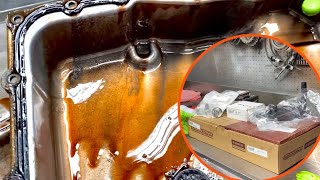
How to confirm: Check the transmission fluid level and condition. The 6L90 transmission does not have a traditional dipstick; the level must be checked via a plug on the side of the transmission while it is at a specific operating temperature 🎬 Watch: How to check and refill fluid with no dipstick. (typically 100-122°F or 86-122°F). The fluid should be red and not smell burnt. Dark, burnt fluid indicates internal wear.
Typical fix: Perform a transmission fluid and filter change using the correct fluid type (ACDelco DEXRON-VI).
Est. part cost: $75-$150 - Faulty Transmission Electro-Hydraulic Control Module (TEHCM) 🟡 Medium Probability → Shop Transmission Assembly The TEHCM, which contains the TCM and all shift solenoids, is a known failure point on 6L80/6L90 transmissions. The solenoids within the module can fail electrically or mechanically, preventing proper hydraulic pressure from being routed to engage 3rd gear.
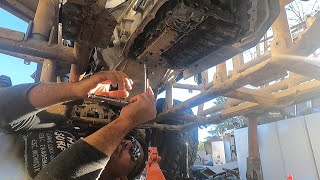
How to confirm: A professional scan tool can check for solenoid-specific trouble codes (e.g., P0756, P0776) that often accompany P0733. The TEHCM is located inside the transmission pan. 🎬 See this walkthrough on removing the TCM and valve body. Solenoids can be bench-tested with a DVOM; on/off solenoids should read 20-40 ohms, and PWM solenoids should read 3-8 ohms.
Typical fix: Replace the entire TEHCM assembly. The new module must be programmed to the vehicle's VIN. It is often sold as a complete unit with the valve body.
Est. part cost: $400-$900 - Cracked 1-2-3-4 / 3-5-R Clutch Housing 🟡 Medium Probability As detailed in GM TSB 09-07-30-004J, the weld on the 1-2-3-4 / 3-5-R clutch housing is a known weak point that can crack. This crack causes a loss of hydraulic pressure to the 3-5-R clutch pack, resulting in a slip specifically in 3rd, 5th, and Reverse gears.
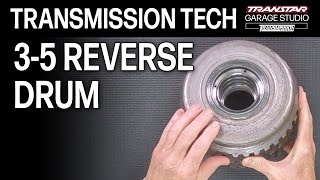
How to confirm: This is a diagnosis of exclusion after fluid and electronic issues are ruled out. The transmission must be removed and disassembled to inspect the housing. A soap and compressed air test on the weld area can reveal the crack. 🎬 Watch: Inspecting the 3-5-Reverse drum for common failure points.
Typical fix: Requires a complete transmission rebuild to replace the cracked clutch housing and any other damaged components (clutches, seals). This is a job for a transmission specialist.
Est. part cost: $500-$2000+ (for parts during a rebuild)
Rare But Worth Checking
- Failing Torque Converter: → Shop Automatic Transmission Torque Converter A failing torque converter lock-up clutch can shed metallic debris into the transmission fluid. This debris clogs the fine passages in the valve body and can damage solenoids, leading to pressure loss and slipping conditions. Finding excessive metallic debris in the pan is a strong indicator.
- Clogged Valve Body Separator Plate: → Shop Transmission Valve Body Debris from a failing torque converter or normal wear can clog the small orifices in the valve body separator plate, restricting fluid flow to the 3rd gear clutch circuit. Aftermarket kits from brands like TransGo are available to address valve body wear issues.
- Faulty Transmission Control Module (TCM) or Wiring: → Shop Transmission Assembly While the solenoids are more common failures, the integrated TCM within the TEHCM can also fail. Damaged wiring or a poor connection at the main transmission harness connector can also cause intermittent communication issues and trigger false codes.
Diagnosis Steps
- Check the transmission fluid level and condition. This is the first and most crucial step. Ensure the check is performed at the correct fluid temperature.
- Scan the TCM for any other trouble codes. Codes for other gears or for specific solenoids (like P0776) can help pinpoint the issue.
- With a professional scan tool, monitor the input and output speed sensors in real-time to confirm the slip is occurring in 3rd gear.
- Inspect the transmission wiring harness and the main connector at the transmission case for any visible damage, corrosion, or loose connections.
- Perform a transmission fluid pressure test to check for issues with the pump or hydraulic circuits. Low pressure can confirm an internal leak. A scan tool can be used to command EPC solenoid pressure for testing; without a scan tool, expect 45-80 psi at idle.
- Drop the transmission pan and inspect the fluid and pan for excessive metal shavings or clutch material. A large amount of metallic debris points towards torque converter or other hard part failure.
- If the pan is clean, the issue is likely with the TEHCM/valve body or a cracked internal component like the 3-5-R clutch housing, requiring further disassembly and inspection.
Parts You'll Likely Need
- Transmission Filter and Gasket Kit
(OEM #24236933)— Required for a fluid service, which is the first step in diagnosis. A clogged filter can cause pressure issues.
Trusted brands: ACDelco, Wix, ATP
OEM price range: $40-$70
Aftermarket price range: $25-$50 - Automatic Transmission Fluid (DEXRON-VI)
(OEM #10-9395 (ACDelco))— Topping off or replacing low/dirty fluid can resolve slipping issues caused by low hydraulic pressure or poor lubrication.
Trusted brands: ACDelco
OEM price range: $8-$12 per quart
Aftermarket price range: $7-$10 per quart - Transmission Electro-Hydraulic Control Module (TEHCM)
(OEM #24256861 (Check VIN for specific compatibility))— This assembly contains the shift solenoids, which are a common failure point causing P0733. It is replaced as a single unit and requires programming.
Trusted brands: ACDelco (GM Genuine)
OEM price range: $400-$900
Aftermarket price range: N/A (Remanufactured units available) - 1-2-3-4 and 3-5-R Clutch Housing — Replaced during a rebuild if found to be cracked, which is a known cause of P0733 per TSB 09-07-30-004J.
Trusted brands: GM Genuine
OEM price range: $150-$300
Aftermarket price range: $100-$200
Related Codes That Often Appear With This One
- P0700 — P0700 is a generic code indicating the TCM has requested the Check Engine Light. It almost always appears with more specific transmission codes like P0733.
- P0731, P0732, P0734, P0735 — These are incorrect ratio codes for other gears (1st, 2nd, 4th, 5th). If multiple ratio codes are present, it points to a more widespread problem like low fluid, a clogged filter, or a failing TEHCM, rather than a single component failure.
- P0776, P2715 — These codes are specifically mentioned in TSB 09-07-30-004J alongside P0733 as being related to the cracked 1-2-3-4 / 3-5-R clutch housing issue. They point to pressure control solenoid 'B' (P0776) and 'D' (P2715) problems.
Technical Service Bulletins (TSBs) & Recalls
- PIP4379N: Addresses conditions of delayed or no engagement into drive/reverse and various transmission trouble codes, including P0733. It advises technicians to follow published service information for diagnosis.
- 09-07-30-004J: Details a slip in 3rd or Reverse gear caused by a cracked 1-2-3-4 / 3-5-R clutch housing, a known issue for the 6L80/6L90 transmission.
Platform-Specific Known Issues
- TSB #PIP4379N: Notes that a group of transmission codes, including P0733, can be set along with symptoms like delayed engagement into drive or no reverse. This suggests a potential hydraulic prime or control issue that should be diagnosed according to service procedures before replacing major components.
- TSB #09-07-30-004J: Specifically identifies a slip in 3rd or Reverse, potentially with codes P0776 or P2715, as being caused by a cracked 1-2-3-4 / 3-5-R clutch housing in 6L80/6L90 transmissions.
Mechanic-Grade Diagnostic Values
- TEHCM On/Off Shift Solenoid Resistance — expected: 20-40 Ohms. Failure: A reading outside this range indicates a failed solenoid within the TEHCM.
- TEHCM PWM (Pressure Control) Solenoid Resistance — expected: 3-8 Ohms. Failure: A reading outside this range indicates a failed solenoid within the TEHCM.
- Transmission Line Pressure at Idle (in Park/Neutral) — expected: 45-80 psi. Failure: Pressure significantly below this range indicates a potential pump issue, internal leak, or clogged filter.
- Transmission Line Pressure at Wide Open Throttle (WOT) in Gear — expected: Up to 300 psi. Failure: Failure to reach high pressure under load points to a severe hydraulic issue. This test should be done briefly to avoid damage.
Scan Tool Commands That Help
- GDS2 / Tech2: Transmission Service Fast Learn — After replacing the TEHCM, valve body, or rebuilding the transmission, this procedure is required to relearn clutch apply pressures and shift timing.
- GDS2 / Tech2: Solenoid Valve State / Pressure Control — Allows a technician to command individual solenoids on and off to verify their mechanical function while monitoring pressure, helping to isolate a stuck or failed solenoid within the TEHCM.
- GDS2 / Tech2: Solenoid Automated Cleaning Process — If a solenoid performance DTC is present, this function cycles all solenoids in an attempt to flush out minor debris that may be causing it to stick. This can be attempted before replacing the TEHCM.
Wiring & Ground Locations
- G102 / G103 — G102 is on the front of the right-side cylinder head. G103 is on the rear of the left-side cylinder head.. These are primary engine block grounds. A poor connection here can cause erratic sensor readings and communication issues between the ECM and the internally-housed TCM.
- Transmission 16-Way Connector (X184) — On the passenger side of the transmission case.. This is the main electrical interface for the entire transmission, including the TEHCM. All power, ground, and communication signals pass through here. Corrosion or a loose connection can cause a wide range of transmission codes, including P0733.
- Frame Grounds — Multiple locations along the frame rails, particularly under the driver's door area (G300) and near the battery.. The entire vehicle electrical system relies on clean chassis grounds. A corroded frame ground can create voltage drops and electrical noise that may affect TCM operation and cause false codes.
Real Owner Repair Stories
- GM-Trucks.com forum user (2010 GMC Sierra 2500HD with 6L90) — P0733 and P0735 codes (Incorrect ratio in 3rd and 5th), slipping in those gears.
❌ Tried (didn't work) Fluid and filter change.
✅ What actually fixed it The transmission was rebuilt. The cause was a cracked 3-5-R wave plate and a cracked 3-5-R drum (clutch housing). This is a known failure pattern that causes slips in 3rd, 5th, and Reverse.
OEM Part Supersession History
24256861→19435614, then 19434978— GM periodically updates electronic components to improve reliability and address known failure points like pressure switch degradation.
Heads up: TEHCMs are not backward or forward compatible. The correct part number for the vehicle's specific year and calibration must be used, and it must be programmed to the VIN after installation or the vehicle will not start or shift correctly.
Model Year Variations Within This Range
- 2009 vs 2010+: While the core transmission is the same, GM made running changes to the TEHCM. The 2009 models may use an earlier TEHCM (e.g., 24241350/24252114) known for pressure switch issues, while 2010 models typically use the updated 24256861 with improved solenoids. It is critical to verify the specific part number by the vehicle's VIN.
Helpful Videos
We Have This Part in Stock

The information in this article is provided for general reference and educational purposes only. Vehicle specifications, procedures, and part compatibility can vary by production date, trim level, and region. Always consult your vehicle's factory service manual and verify part numbers before purchasing or performing repairs. Safety-critical components such as airbags, seat belts, and braking systems should be installed by a qualified professional.
- Chevrolet SILVERADO 2500:
- 🧭 Diagnostic Flowchart
- 🎬 Helpful Videos
- 🛍️ Shop This Part
- What's Unique About the 2009-2010 Chevrolet SILVERADO 2500
- Symptoms You May Notice
- Most Likely Causes
- Rare But Worth Checking
- Diagnosis Steps
- Parts You'll Likely Need
- Related Codes That Often Appear With This One
- Technical Service Bulletins (TSBs) & Recalls
- Platform-Specific Known Issues
- Mechanic-Grade Diagnostic Values
- Scan Tool Commands That Help
- Wiring & Ground Locations
- Real Owner Repair Stories
- OEM Part Supersession History
- Model Year Variations Within This Range
- 🎟️ Get 5% Off