

P0733 on 2014-2021 Dodge Durango: Gear 3 Incorrect Ratio Causes and Fixes
On a 2014-2021 Dodge Durango, code P0733 almost always points to an internal transmission issue, specifically with the 'D' clutch pack. Dodge has issued a Technical Service Bulletin (TSB 21-009-25) for this known problem, which involves replacing the clutch rather than the entire transmission. This is a complex, professional repair, but it is a targeted and well-documented fix.
- P0733 on a 2014-2021 Durango indicates a serious transmission problem, most likely a slipping 3rd gear.
- This is a known issue. Do NOT immediately agree to a full transmission replacement. Dodge has issued TSBs detailing a more specific and less costly repair.
- The most probable cause is a failed 'D' clutch pack, a known weak point.
- This is not a DIY-friendly repair. It requires professional-level skill and specialized tools to perform the internal transmission work.
- Always check for related codes like P1DA8 and P1D92, as they reinforce the diagnosis of a failed clutch pack.
What's Unique About the 2014-2021 Dodge DURANGO

The 8-speed automatic transmissions (like the 850RE and 8HP series) used in this generation of Durango are known to have a specific weakness that can trigger P0733. The manufacturer, Stellantis (formerly FCA), has acknowledged this by issuing multiple Technical Service Bulletins (TSBs). These bulletins explicitly state that for code P0733, a full transmission replacement is NOT necessary and that a specific internal component, the 'D' clutch, is the intended fix. This is a crucial distinction from generic advice, as it points to a targeted, less expensive repair.
Diagnostic Flowchart

Tap your situation to follow the diagnostic path that matches what you're seeing on this vehicle.
Symptoms You May Notice
- Check Engine Light is on.
- "Service Transmission" message on the dashboard.
- Transmission slips, especially when shifting.
- Harsh or erratic shifting, sometimes described as a 'bump' or 'clunk'.
- Rough shifts particularly when the transmission is cold.
- Vehicle may get stuck in a single gear (limp mode).
- Inability to shift higher than third gear.
- Vehicle may not move in reverse.
- Reduced fuel economy.
- Replacing the entire transmission. The manufacturer explicitly advises against this in TSB 9100534, stating a specific repair is available and that full unit replacements for this code may be subject to chargeback.
Most Likely Causes

- Worn or Defective 'D' Clutch Pack 🔴 High Probability This is a known issue acknowledged by the manufacturer in TSB 21-009-25 and its multiple revisions. The bulletin outlines a specific procedure to replace this clutch pack to resolve P0733, often accompanied by P1DA8 and P1D92.
How to confirm: A professional technician will need to follow the diagnostic procedures outlined in the TSB, which may include a clutch pressure test. This is not a simple visual inspection and requires transmission disassembly. A high-end scan tool can also be used to monitor the Clutch Volume Index (CVI) for the D-clutch; a high value indicates wear.
Typical fix: Replace the 'D' clutch assembly inside the transmission. This is an internal repair that requires removing the valve body and other components.
Est. part cost: $200-$400 for the clutch kit - Low or Dirty Transmission Fluid 🟡 Medium Probability → Shop Transmission Assembly These transmissions are 'sealed for life' and do not have a dipstick for easy owner checks. Fluid level can only be accurately checked by a specific, complex procedure, making it prone to neglect or incorrect service.
How to confirm: A technician must raise the vehicle while level and check the fluid level via the fill plug with the engine running and the transmission fluid temperature between 30°C (86°F) and 50°C (122°F). The fluid condition (color, smell) should be noted, though Dodge states fluid color is not a definitive indicator of transmission health.
Typical fix: Perform a transmission fluid drain and fill, or a full fluid exchange, using the correct Mopar ZF 8&9 Speed ATF or an equivalent approved fluid.
Est. part cost: $150-$300 for fluid - Faulty Transmission Valve Body or Solenoids ⚪ Low Probability → Shop Transmission Valve Body While less common than the clutch issue for this specific code, the valve body (mechatronic unit) and its integrated solenoids can fail, causing pressure issues that lead to slipping. Debris or wear can cause valves to stick.
How to confirm: A technician would use a high-level scan tool to monitor solenoid performance and hydraulic pressures. If pressures are incorrect despite correct fluid levels and a confirmed good D-clutch, the valve body is suspect.
Typical fix: Replace the entire transmission valve body assembly and program the new module to the vehicle.
Est. part cost: $800-$1500
Rare But Worth Checking
- Faulty Transmission Control Module (TCM) Software: → Shop Transmission Assembly Sometimes, the TCM's calibration is too sensitive and may incorrectly flag a ratio error. A software update (flash) can resolve the issue without replacing any parts. TSB 21-007-20 addresses this for some 2020 models where the logic for setting P0733 was improved.
- Failed Input or Output Speed Sensor: A faulty speed sensor can send incorrect data to the TCM, causing it to think there's a ratio problem when there isn't. This will usually be accompanied by other specific sensor-related trouble codes.
Diagnosis Steps
- Verify the code with a quality OBD-II scanner.
- Check for any accompanying codes, especially P1DA8 and P1D92.
- Check for any applicable Technical Service Bulletins (TSBs) for your vehicle's VIN. Specifically look for TSB 21-009-25 and its revisions.
- Have a qualified technician check the transmission fluid level and condition. This is a complex procedure on these sealed transmissions that must be done with the engine running and the fluid between 30°C (86°F) and 50°C (122°F).
- Using a dealer-level scan tool (like wiTECH), check the Clutch Volume Index (CVI) values. A high CVI number for the 'D' clutch indicates excessive wear and is a strong confirmation of the common failure.
- If fluid is correct, follow the diagnostic path in TSB 21-009-25, which will likely lead to testing and confirming the failure of the 'D' clutch.
- If no mechanical faults are found, check if a TCM software update is available, especially for 2020 models.
- If other codes are present, diagnose them accordingly. For example, speed sensor codes would lead to testing those sensors and their wiring.
Parts You'll Likely Need

- Transmission D-Clutch Assembly Kit
(OEM #68527972AA)— This is the specific component identified by Dodge in TSB 21-009-25 as the primary fix for code P0733 on this platform.
Trusted brands: Mopar
OEM price range: $200-$400
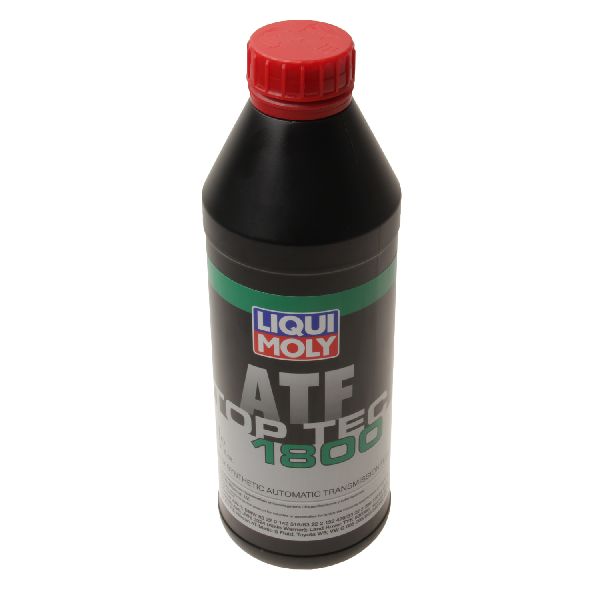
Aftermarket price range: $150-$300 - Mopar ZF 8&9 Speed Automatic Transmission Fluid
(OEM #68218925AB)— This is required when performing any internal transmission service, including the D-clutch replacement.
Trusted brands: Mopar
OEM price range: $25-$40 per quart
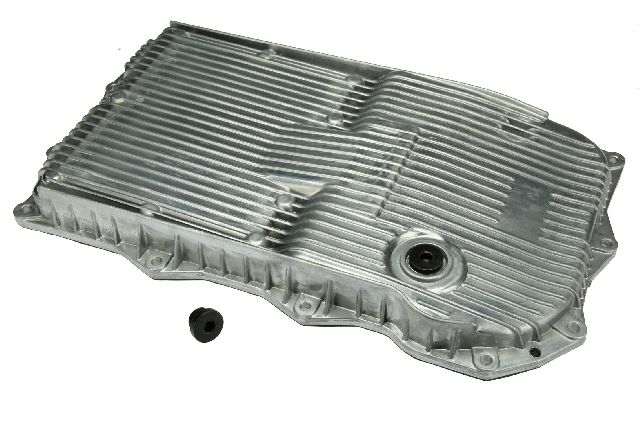
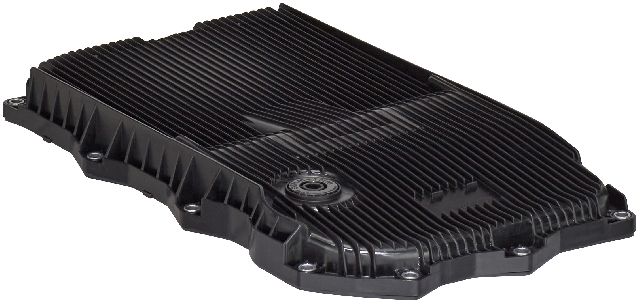
Aftermarket price range: $20-$30 per quart - Transmission Oil Pan and Gasket
(OEM #68225344AA)— The pan must be removed for the repair. The filter is integrated into the pan. While the gasket may be reusable if not damaged, it is often recommended to replace the pan/filter assembly.
Trusted brands: Mopar
OEM price range: $100-$180
Aftermarket price range: $70-$120
Related Codes That Often Appear With This One
- P1DA8-00 — Incorrect Gear Ratio Clutch A, B, or D Defective. This code is often seen with P0733 and is part of the same TSB for the D-clutch replacement.
- P1D92-00 — Incorrect Gear Ratio - Clutch 4 Defective. This is another code listed in the same TSB for the D-clutch repair, pointing to the same root cause.
Technical Service Bulletins (TSBs) & Recalls

- 21-009-25 REV. C: Defines the code as 'Gear 3 Shift Incorrect Ratio' and specifies the repair is to replace the D clutch. [Bulletin #21-009-25 REV. C]
- 9100534 Rev 1: States that for DTC P0733-00, a repair is available and transmission replacement is NOT required, referencing TSB 21-009-25. [Bulletin #9100534 Rev 1]
- S2621000003: Lists P0733 among a group of fault codes affecting various 8-speed transmissions in the Stellantis lineup and directs technicians to follow the D-clutch TSB first before considering a valve body replacement. [Bulletin #S2621000003]
- 21-007-20: Addresses a software issue on some 2020 Ram 1500s that could prematurely set code P0733 and provides a TCM flash to improve logic.
Platform-Specific Known Issues
- Dodge has issued multiple TSBs (including #9100534 and #21-009-25 Rev. C) regarding P0733 on these vehicles. They confirm a repair is available that does not require transmission replacement and specifically points to replacing the 'D' clutch. [Bulletin #9100534 Rev 1, Bulletin #21-009-25 REV. C]
- The TSB for the D-clutch repair applies only to vehicles that have at least 7,000 miles (11,265 km). [Bulletin #21-009-25 REV. C]
- A real-world owner of a Jeep Gladiator (platform mate) with a similar issue reported a repair cost of just under $1,700 for the TSB D-clutch replacement, which was mostly covered by an extended warranty.
Mechanic-Grade Diagnostic Values
- Clutch Volume Index (CVI) — expected: Varies by clutch pack, but a value that is high or out of the specified range indicates wear. A value of zero indicates a significant leak in that clutch's hydraulic circuit.. Failure: A CVI value on the high side of the acceptable range, or completely out of range, points to a worn clutch pack that requires a larger volume of fluid to apply. For example, a reading of 255 on a clutch circuit is exceptionally high and indicates a problem.
Scan Tool Commands That Help
- wiTECH or equivalent (AlfaOBD, Autel): Reset Adaptive Values — This must be performed after replacing the transmission, valve body (mechatronic), or any internal components like the D-clutch. It clears the learned values the TCM has stored for clutch fill times and pressures.
- wiTECH or equivalent (AlfaOBD): Quick Learn / Static Adaptation (STADA) — This procedure is run immediately after 'Reset Adaptive Values'. With the vehicle stationary, the tool commands the TCM to cycle through the clutches to establish a new baseline for clutch engagement. This is required to prevent poor shift quality after a repair.
- wiTECH or equivalent: Adaptation Drive Learn Procedure — If a 'Quick Learn' is not available or does not resolve shift quality issues, a specific road test procedure is required. The technician drives the vehicle under specific load, speed, and temperature conditions while monitoring the scan tool to allow the TCM to dynamically learn the new clutch characteristics.
Wiring & Ground Locations
- G906a / G907a — Located in the right front of the engine compartment.. These are primary engine compartment grounds. While not directly linked to P0733 in documentation, poor grounding can cause a host of erratic electronic behaviors in modules like the TCM, potentially leading to incorrect sensor readings or solenoid function.
- Transmission Main Connector — On the side of the transmission case, where the main vehicle harness connects to the transmission's internal wiring and mechatronic unit.. This connector carries all signals for speed sensors, solenoids, and temperature. Corrosion or a loose connection here can directly cause incorrect ratio codes by interrupting the data stream between the sensors and the TCM. A pinout diagram is required for testing specific circuits.
Real Owner Repair Stories
- Jeep Gladiator Forum user 'Planerdude' (Jeep Gladiator (platform mate with same 850RE transmission), failed at 4 years and 45,000 miles) — Check engine light, hard shift between 3rd and 4th, sometimes would not go into reverse.
❌ Tried (didn't work) Not specified; owner took it to the dealer.
✅ What actually fixed it The dealer performed the D-clutch assembly replacement as outlined in TSB 21-009-25 Rev. B. The repair took 6 weeks but resulted in the transmission shifting 'as new'. The total cost was just under $1,700, mostly covered by an extended warranty.
OEM Part Supersession History
Unknown, multiple revisions→68527972AA (D-Clutch Kit)— The TSB for this repair has gone through multiple revisions (A, B, C, etc.), indicating potential improvements to the repair procedure or the parts included in the kit to increase the repair's durability.
Model Year Variations Within This Range
- 2014: For 2014 models with the 845RE transmission, the TCM may require a software update to the latest level to even enable the 'Quick Learn' scan tool procedure, which is standard on 2015+ models.
Helpful Videos
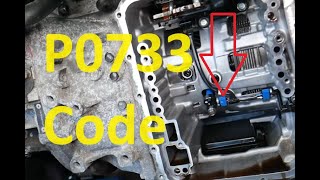

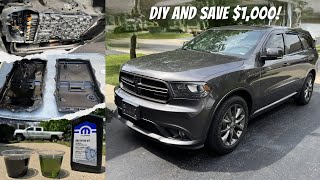
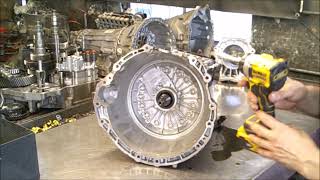
![How to Check and Fill Fluids [COMPLETE GUIDE] - Dodge Durango (2011-2023)](https://img.youtube.com/vi/hTdOpnPv744/mqdefault.jpg)

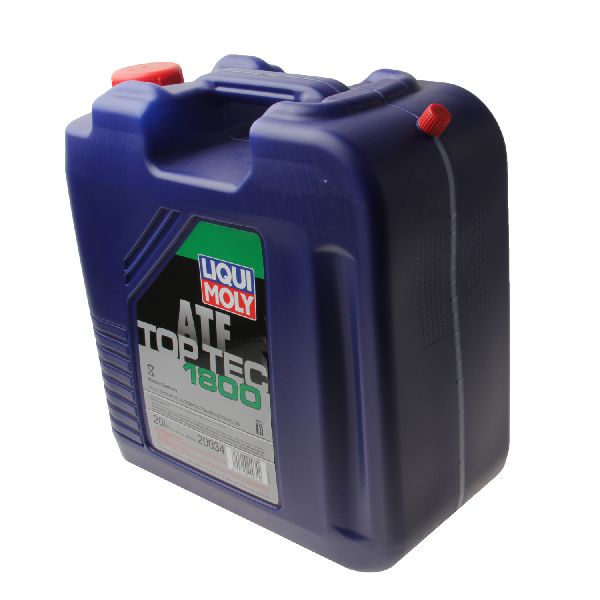
We Have This Part in Stock


The information in this article is provided for general reference and educational purposes only. Vehicle specifications, procedures, and part compatibility can vary by production date, trim level, and region. Always consult your vehicle's factory service manual and verify part numbers before purchasing or performing repairs. Safety-critical components such as airbags, seat belts, and braking systems should be installed by a qualified professional.
- Dodge DURANGO:
- 🧭 Diagnostic Flowchart
- 🎬 Helpful Videos
- 🛍️ Shop This Part
- What's Unique About the 2014-2021 Dodge DURANGO
- Symptoms You May Notice
- Most Likely Causes
- Rare But Worth Checking
- Diagnosis Steps
- Parts You'll Likely Need
- Related Codes That Often Appear With This One
- Technical Service Bulletins (TSBs) & Recalls
- Platform-Specific Known Issues
- Mechanic-Grade Diagnostic Values
- Scan Tool Commands That Help
- Wiring & Ground Locations
- Real Owner Repair Stories
- OEM Part Supersession History
- Model Year Variations Within This Range
- 🎟️ Get 5% Off