

P0733 on 2011-2013 GMC Sierra: Gear 3 Incorrect Ratio Causes and Fixes
On a 2011-2013 GMC Sierra, P0733 means the transmission is slipping in 3rd gear. This is often due to internal issues like a failing torque converter causing debris to clog the valve body, as noted in GM TSBs. This is a complex, professional-level repair that can range from valve body service to a full transmission rebuild.
- P0733 on a 2011-2013 Sierra indicates a serious internal transmission problem, specifically slipping in third gear.
- Do not continue to drive the vehicle. Driving with a slipping transmission can cause catastrophic failure and significantly increase repair costs.
- The most common causes are not simple fixes; they involve a failing torque converter shedding debris, a clogged valve body, or failed internal clutch packs.
- Diagnosis and repair should be left to a professional transmission specialist due to the complexity and need for special tools.
- Simply changing the fluid and filter is unlikely to solve the problem and may only be a temporary measure if the fluid is not severely burnt or full of debris.
What's Unique About the 2011-2013 Gmc SIERRA
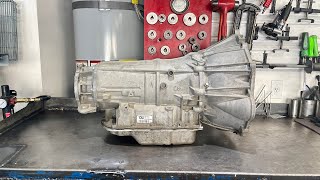
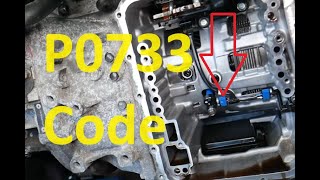
The 2011-2013 Sierra, part of the GMT900 generation, primarily uses the 6-speed 6L80 automatic transmission (RPO code MYC). For this specific platform, code P0733 is frequently linked to known issues beyond simple wear and tear. 🎬 Watch: A breakdown of common causes for the P0733 code. A primary failure point is the torque converter lock-up clutch, which wears and sheds metallic debris throughout the transmission. This debris contaminates the fluid, clogs orifices in the valve body separator plate, and can lead to a cracked 1-2-3-4 / 3-5-R clutch housing, all of which cause hydraulic pressure loss and trigger this code. These issues are well-documented in GM Technical Service Bulletins.
Diagnostic Flowchart
Tap your situation to follow the diagnostic path that matches what you're seeing on this vehicle.
Symptoms You May Notice
- Check Engine Light is on
- Transmission slipping, especially during the 2-3 shift
- Delayed or harsh engagement into Drive or Reverse
- Vehicle enters "limp mode" (stuck in a single gear)
- Inability to shift into or hold third gear
- Vehicle will not move in forward or reverse [PIP5100]
- Delayed acceleration or engine RPMs flare up without an increase in speed
- Shuddering or vibration during light acceleration, often between 35-55 mph, indicating torque converter clutch failure
- Replacing input or output speed sensors. These sensors are almost always accurately reporting a real mechanical slip, not failing themselves.
- Replacing only the shift solenoids. If the root cause is debris from a failing torque converter or clutch, the new solenoid will quickly become clogged and fail as well. On a 6L80, the solenoids are part of the TEHCM, making this an expensive misdiagnosis.
Most Likely Causes
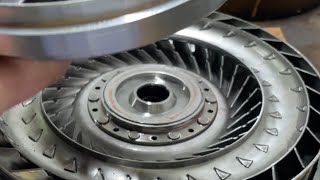
- Failing Torque Converter 🔴 High Probability → Shop Automatic Transmission Torque Converter The torque converters in the 6L80 transmission are a notorious failure point. The lock-up clutch (TCC) can wear, glaze, or 'balloon' under heat and load, shedding metallic debris throughout the transmission fluid. This is often the root cause of most other transmission failures. 🎬 See why these torque converters fail and what to look for.
How to confirm: A transmission professional will check for excessive metal 'glitter' in the transmission pan and fluid. A scan tool can also monitor torque converter clutch (TCC) slip RPM to identify slippage before total failure.
Typical fix: Replace the torque converter, perform a complete transmission fluid flush, and replace the transmission cooler. Due to widespread contamination, this repair often includes servicing or replacing the valve body and potentially rebuilding the entire transmission.
Est. part cost: $400-$1500 - Debris in Valve Body / Blocked Separator Plate 🔴 High Probability → Shop Transmission Valve Body As noted in GM TSBs #PIP5100 and #PIP5100A, debris (often from a failing torque converter or clutches) can block the small orifices in the valve body separator plate, causing a loss of hydraulic pressure to the clutch packs needed for 3rd gear. Worn valve bores can also cause pressure loss.
How to confirm: Requires removing the transmission pan and valve body for a physical inspection of the separator plate and its orifices for blockage. A technician may also vacuum test the valve body to check for wear.
Typical fix: Clean or replace the valve body and separator plate. Aftermarket solutions like the Sonnax Zip Kit (Part #6L45-6L90-ZIP) are designed to seal worn bores and prevent pressure loss. The source of the debris must also be identified and corrected.
Est. part cost: $300-$800 - Low or Burnt Transmission Fluid 🟡 Medium Probability → Shop Transmission Assembly Low fluid level prevents proper hydraulic pressure, while burnt fluid indicates excessive heat and internal component wear, losing its ability to lubricate and cool. This is often a symptom of a larger problem like a failing torque converter or slipping clutches.
How to confirm: The 6L80 does not have a traditional dipstick. The fluid level must be checked via a service plug on the side of the transmission when the fluid is at a specific temperature (typically 100-122°F), a procedure best left to a professional. Fluid should be red (Dexron VI) and not smell burnt.
Typical fix: Perform a transmission fluid and filter change. If the fluid is very dark or contains metal, it's a clear sign of a larger internal problem that a simple fluid change won't fix.
Est. part cost: $50-$200 - Failed 3-5-R Clutch Pack or 1-2-3-4 Clutch Drum 🟡 Medium Probability Internal hydraulic leaks caused by worn seals or cracks in clutch drums can lead to pressure loss for the clutches responsible for 3rd gear. A broken 3-5-R wave plate is another known failure that sends debris through the system. TSB 09-07-30-004J specifically points to inspecting the 1-2-3-4 / 3-5-R housing for cracks. The 1-2-3-4 clutch is one of the required components for 3rd gear.
How to confirm: This requires a complete transmission teardown and inspection by a professional, often after other causes have been ruled out.
Typical fix: A complete transmission rebuild or replacement.
Est. part cost: $1500-$4500
Rare But Worth Checking
- Faulty Shift Solenoid: → Shop Transmission Valve Body While a solenoid can fail, it's more often a victim of debris from another failure rather than the root cause. On the 6L80, solenoids are integrated into the TEHCM and are not serviced separately. Replacing a TEHCM without addressing the debris will likely lead to a repeat failure.
- Worn Stator Support Shaft Seals: Worn seals or bushings on the stator support can cause a critical loss of hydraulic pressure to the 1-2-3-4 clutch pack, leading to slipping. The OE aluminum bushings are known to wear prematurely, and aftermarket bronze bushings are a common upgrade during a rebuild.
Diagnosis Steps
- Check the transmission fluid level and condition. This must be done at a specific temperature via the side fill plug. If it is low, top it off and check for leaks. If it is dark, burnt, or contains metallic particles, this indicates a serious internal problem.
- Use a professional scan tool to check for other transmission-related codes and to view live data, such as commanded gear vs. actual gear, and torque converter slip RPM.
- If fluid is dark or contains debris, drop the transmission pan to inspect for metal debris. A small amount of fine grey material is normal, but large flakes or chunks of 'glitter' are a sign of catastrophic failure, usually from the torque converter.
- Inspect the valve body and separator plate for blockages or debris, as indicated by TSBs #PIP5100 and #PIP5100A.
- If no external or valve body issues are found, perform hydraulic pressure tests to check for internal leaks. Line pressure at idle in drive should be approximately 45-80 PSI.
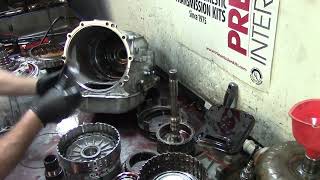
- If pressure tests fail, a full transmission teardown is likely necessary to inspect clutch packs, drums (especially the 1-2-3-4/3-5-R housing for cracks), and internal seals.
Parts You'll Likely Need
- Remanufactured Transmission — Due to the high likelihood of widespread contamination from a torque converter or clutch failure, replacing the entire unit is often the most reliable and time-effective repair.
Trusted brands: ACDelco, Jasper, Monster Transmission
OEM price range: $3000-$4500
Aftermarket price range: $2500-$4000 - Torque Converter
(OEM #ACDelco 24298483 (check VIN for exact fitment))— This is a primary failure point on the 6L80 transmission that causes P0733 by sending debris through the system. It should always be replaced if there is evidence of internal debris.
Trusted brands: ACDelco, Sonnax, Precision of New Hampton
OEM price range: $500-$800
Aftermarket price range: $300-$600 - Transmission Valve Body — The valve body can become clogged with debris or solenoids can fail. It is often replaced or repaired with a kit during a major transmission service for this code. On the 6L80, this assembly is the TEHCM (Transmission Electro-Hydraulic Control Module).
Trusted brands: ACDelco, Sonnax (offers Zip Kits and remanufactured TEHCMs)
OEM price range: $800-$1200
Aftermarket price range: $500-$900
Related Codes That Often Appear With This One
- P0700 — This is a general Transmission Control System Malfunction code that is set to alert the main ECU that the TCM has stored a specific fault, like P0733.
- P0731, P0732, P0734, P0735 — These are incorrect ratio codes for other gears. When seen with P0733, it often points to a widespread hydraulic issue, like a failing torque converter, clogged valve body, or low fluid affecting the entire transmission. [PIP4379K]
- P0894 — This code indicates Transmission Component Slipping. It's a more general slipping code that often accompanies specific gear ratio codes like P0733, confirming the TCM is detecting slip. [PIP4379K]
- P0741 — This code for Torque Converter Clutch (TCC) Circuit Performance/Stuck Off often appears alongside P0733, strongly indicating the torque converter is the root cause of the problem.
Technical Service Bulletins (TSBs) & Recalls
- PIP4379K: General TSB for various transmission codes including P0733, related to delayed engagement or no reverse, advising technicians to check fluid levels and follow standard diagnostics.
- PIP5100 / PIP5100A: Specifically points to debris blocking orifices in the valve body separator plate as a cause for no-move conditions and various gear-related DTCs, including P0733.
- 09-07-30-004J: Addresses slips in 3rd or Reverse, harsh 2-3 shifts, and DTCs like P0776, P2715, and P2723 (related to clutch pressure) on 6L80 transmissions. It instructs technicians to inspect the 1-2-3-4 / 3-5-R housing for cracks, a direct mechanical failure that can cause P0733.
Platform-Specific Known Issues
- Torque Converter Failure: The lock-up clutch inside the torque converter is known to fail, contaminating the entire transmission with metallic debris.
- Blocked Valve Body Separator Plate: GM TSB #PIP5100 specifically calls out inspecting the valve body separator plate orifices for blockage from debris, which causes hydraulic pressure loss and shifting problems. [PIP5100]
Mechanic-Grade Diagnostic Values
- Shift Solenoid (On/Off type) Resistance — expected: 20-40 Ohms. Failure: A reading significantly outside this range indicates a failed solenoid coil, requiring TEHCM replacement.
- Pressure Control (PWM) Solenoid Resistance — expected: 3-8 Ohms (some sources state a tighter 5-6 Ohm range). Failure: Readings outside this range point to a failed solenoid coil within the TEHCM.
- Transmission Fluid Pressure Switch State — expected: Normally closed circuit (low resistance, ~10 ohms when pressed with an eraser).. Failure: Switch reads open circuit (OL) when not pressed, or does not change state when pressure is applied. This requires TEHCM replacement.
- Main Line Pressure at Idle (in Drive) — expected: 45-80 PSI. Failure: Significantly lower pressure indicates a worn pump, clogged filter, or major internal leaks.
Scan Tool Commands That Help
- GDS2 / Tech 2: Transmission Service Fast Learn — After replacing the TEHCM, valve body, or rebuilding the transmission, this procedure must be run to reset and relearn clutch apply pressures and shift timing. Failure to do so can result in harsh or erratic shifting even if the mechanical repair was successful.
- GDS2 / Tech 2: Transmission Output Controls / Solenoid Test — Allows a technician to command individual solenoids on and off to verify hydraulic and mechanical response. This can help isolate a stuck valve or failed solenoid within the TEHCM.
- GDS2: TCC Control (Enabled/Disabled) — To diagnose a suspected torque converter shudder, a technician can use GDS2 to command the TCC lock-up clutch on and off during a test drive to see if the symptom disappears, isolating the issue to the TCC.
- GDS2: Session Log with Bookmark — When test-driving to replicate an intermittent slip or harsh shift, a technician can press the 'Add Bookmark' button in GDS2 at the exact moment the issue occurs. This marks the data log, making it easier to review the specific sensor readings and commanded states during the failure event.
Wiring & Ground Locations
- Line Pressure Test Port — On the passenger's side of the transmission case, behind the bell housing.. This is the port where a technician connects a pressure gauge to measure main line pressure, a critical first step in diagnosing any internal hydraulic fault like slipping.
- G103 — On the right rear of the engine block.. This is a primary engine-to-chassis ground. While the TEHCM is grounded inside the transmission, a poor engine ground can cause erratic sensor readings and unpredictable behavior from the main ECU, which communicates with the TEHCM.
Real Owner Repair Stories
- YouTube channel 'Transmission Bench' (Vehicle with 6L80E transmission) — No forward movement at all, which can be an extreme symptom related to the P0733 hydraulic failure.
❌ Tried (didn't work) Initial diagnosis considered a valve body issue or a shrunken checkball.
✅ What actually fixed it A complete teardown revealed the 1-2-3-4 / 3-5-R clutch drum housing was cracked. This is a common failure point that causes a major hydraulic pressure loss, preventing clutches from applying.
OEM Part Supersession History
Varies by year (e.g., 24256939)→Multiple revisions exist (e.g., Sonnax GM6L-TEHCM-C6)— GM and aftermarket manufacturers have made several revisions to the TEHCM to address common failures like cracked pressure switch diaphragms and faulty solenoids.
Heads up: TEHCMs are year- and model-specific. Installing a TEHCM with the wrong hardware or software calibration (identified by a Tag ID) can result in a no-start condition, immediate limp mode, or shifting problems. The TEHCM must be programmed to the vehicle's VIN using a J2534 pass-through device after installation.
Model Year Variations Within This Range
- Mid-2014 and later (affects service parts for earlier models): Starting mid-2014, GM began adding an 8th check ball (#8) to the 6L80/6L90 valve body and updated the separator plate to resolve a clunking issue. Service kits for earlier models may include this updated plate and extra check ball. A technician rebuilding an earlier 2011-2013 unit may choose to install the updated components.
Helpful Videos
We Have This Part in Stock


The information in this article is provided for general reference and educational purposes only. Vehicle specifications, procedures, and part compatibility can vary by production date, trim level, and region. Always consult your vehicle's factory service manual and verify part numbers before purchasing or performing repairs. Safety-critical components such as airbags, seat belts, and braking systems should be installed by a qualified professional.
- Gmc SIERRA:
- 🧭 Diagnostic Flowchart
- 🎬 Helpful Videos
- 🛍️ Shop This Part
- What's Unique About the 2011-2013 Gmc SIERRA
- Symptoms You May Notice
- Most Likely Causes
- Rare But Worth Checking
- Diagnosis Steps
- Parts You'll Likely Need
- Related Codes That Often Appear With This One
- Technical Service Bulletins (TSBs) & Recalls
- Platform-Specific Known Issues
- Mechanic-Grade Diagnostic Values
- Scan Tool Commands That Help
- Wiring & Ground Locations
- Real Owner Repair Stories
- OEM Part Supersession History
- Model Year Variations Within This Range
- 🎟️ Get 5% Off