

P0733 on 2001-2008 GMC Sierra 2500: 3rd Gear Incorrect Ratio Causes & Fixes
P0733 on a 2001-2008 GMC Sierra 2500 means the transmission is slipping in 3rd gear. The most common causes are low or dirty transmission fluid, a failing shift solenoid, or internal transmission wear, specifically in the clutch pack responsible for 3rd gear. Start by checking the fluid level and condition. If it's low or burnt, a fluid and filter change is the first step. If that doesn't resolve the issue, testing the shift solenoids and potentially internal repairs are likely needed.
- P0733 indicates a slip in 3rd gear, which is a serious issue that can lead to major transmission damage if ignored.
- For the 2001-2008 GMC Sierra 2500, the first and most important diagnostic step is to check the transmission fluid level and condition, as low fluid is a known issue cited in a TSB.
- Common fixes range from a simple fluid and filter change to replacing a shift solenoid.
- If the fluid and solenoids are good, the problem is likely internal, such as a worn 3rd gear clutch pack, which requires a costly transmission rebuild.
- Do not immediately assume the TCM is faulty; this is rarely the cause for this specific code on these trucks.
What's Unique About the 2001-2008 Gmc SIERRA 2500
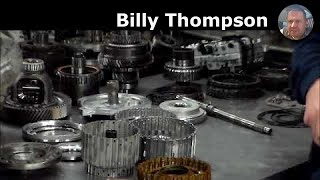
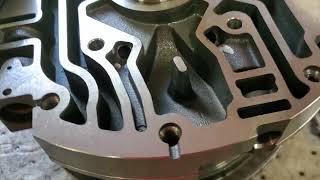
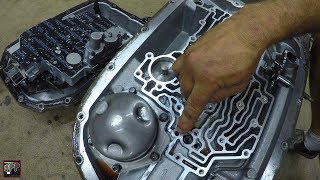
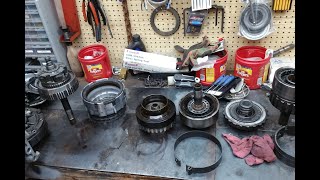
The 2001-2008 GMC Sierra 2500 was equipped with two primary heavy-duty transmissions: the Allison 1000 (typically with Duramax diesel engines) and the GM 4L80-E (with gasoline V8s). While the P0733 code's meaning is the same for both, the specific internal components that fail are different. For the Allison 1000, P0733 often points to a failure in the C2 clutch pack. 🎬 Watch: Mechanic explains Allison C2 clutch failure and electrical issues. For the 4L80-E, the issue is commonly with the 'Direct' clutch pack. A key factor for these trucks, especially those with the Allison transmission, is ensuring the correct fluid level and condition. A Technical Service Bulletin (TSB PIP4379N) highlights that low fluid can cause a loss of pump prime, leading to various gear ratio codes, including P0733, particularly during cold starts.
Diagnostic Flowchart
Tap your situation to follow the diagnostic path that matches what you're seeing on this vehicle.
Generation note: This range covers two generations: the first-generation GMT800 (2001-2007 'Classic') and the second-generation GMT900 (2007-2008). While the P0733 code has the same meaning for both, the specific transmission models (Allison 1000, 4L80-E) and their potential failure points can differ slightly. The provided TSB PIP4379N specifically covers models up to 2015, encompassing this entire year range and confirming the prevalence of fluid-level-related issues.
Symptoms You May Notice
- Check Engine Light is on
- Transmission slipping, especially when shifting to or driving in 3rd gear
- Engine RPMs rise without a corresponding increase in speed (flaring between shifts)
- Harsh, jerky, or delayed shifting, particularly the 2-3 shift
- Vehicle may get stuck in one gear (limp mode)
- Delayed or no engagement into Drive or Reverse, especially when cold
- Reduced fuel economy
- A ticking noise may be heard in 3rd gear, which could indicate a mis-machined reaction carrier as described in TSB PIP5065.
- Replacing the Transmission Control Module (TCM) first. As noted in TSB PIP4379N, this is rarely the cause of the problem and an expensive incorrect guess.
- Replacing input/output speed sensors without proper testing. While a sensor can fail, it's more common for them to accurately report a real mechanical slip. A sensor failure will often set its own specific code (e.g., P0717, P0722).
Most Likely Causes
- Low or Dirty Transmission Fluid 🔴 High Probability → Shop Transmission Assembly TSB PIP4379N specifically calls out low fluid level as a cause for P0733 on these trucks, as it can lead to a loss of pump prime, especially after a fluid service or during cold weather. Dirty or burnt fluid loses its hydraulic properties and can contain clutch debris, clogging filters and passages.
How to confirm: Check the transmission fluid dipstick for level and condition. Follow the manufacturer's procedure (often when warm, idling in Park or Neutral). Fluid should be bright red and not smell burnt. Dark, brown, or black fluid with a burnt smell indicates a problem.
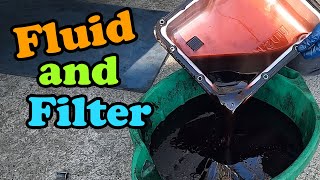
Typical fix: Perform a transmission fluid and filter change. Use the correct fluid type specified for your transmission (e.g., DEXRON-VI for 4L80-E, Allison-approved fluid for the Allison 1000).
Est. part cost: $50-$150 - Faulty Shift Solenoid 🟡 Medium Probability → Shop Transmission Valve Body Solenoids are electro-mechanical valves that control fluid flow to engage gears. For the 4L80-E, the 'B' or '2-3' shift solenoid is responsible. For the Allison 1000, it is often the 'E' shift solenoid. These can fail electrically or become clogged with debris, preventing proper engagement of the 3rd gear clutch pack.
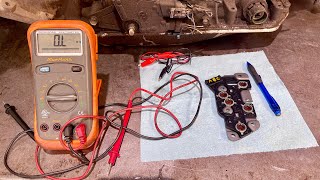
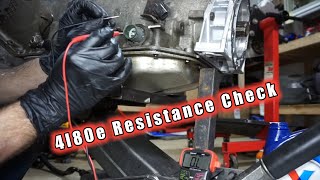
How to confirm: A professional scan tool can command the solenoid on and off to test its function. Resistance can also be checked with a multimeter across the solenoid's pins. Often accompanied by solenoid-specific codes (e.g., P0777 for a stuck-on 'B' solenoid).
Typical fix: Replace the faulty shift solenoid. This is located inside the transmission oil pan, attached to the valve body.
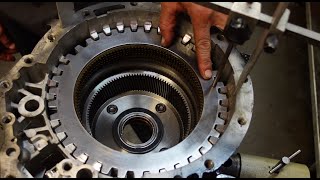
Est. part cost: $40-$110 - Internal Transmission Failure (Worn Clutch Pack) 🟡 Medium Probability → Shop Transmission Assembly This is a primary mechanical failure. In the 4L80-E, the 'Direct' clutch pack is used for 3rd gear and is a known wear item. In the Allison 1000, the 'C2' clutch pack is responsible for 3rd, 4th, and 5th gears and is a common failure point, especially in tuned or heavy-towing trucks.
How to confirm: This is diagnosed after external causes are ruled out. Finding significant metallic or black friction material in the transmission pan during a fluid change is a strong indicator of clutch failure. A transmission pressure test may also show low pressure in the 3rd gear circuit.
Typical fix: Requires a partial or complete transmission rebuild to replace the worn clutch pack, steels, and seals. Upgraded aftermarket clutch kits are available to address OEM weaknesses.
Est. part cost: $500-$2500 (for rebuild kits and hard parts) - Faulty Valve Body ⚪ Low Probability → Shop Transmission Valve Body The valve body is the hydraulic control center. Bores for the valves can wear over time, causing pressure leaks. Check balls can degrade, and small passages can become clogged with debris from failing clutches.
How to confirm: Requires removal and inspection by a transmission specialist. Sometimes, aftermarket kits (e.g., Sonnax) are available to fix common wear points without replacing the entire valve body.
Typical fix: Repairing or replacing the valve body. This is often done during a transmission rebuild.
Est. part cost: $300-$800
Rare But Worth Checking
- Wiring or Connector Issues: Transmission fluid can leak through the main electrical connector's seals and contaminate the harness, causing short circuits and erratic behavior. Always inspect the main connector for fluid intrusion or corrosion before condemning internal parts. On some Allison models, the TCM harness can rub against the engine accessory drive belt, causing damage.
- Faulty Transmission Control Module (TCM): → Shop Transmission Assembly While possible, this is rare. The TSB for these trucks specifically states that replacing the TCM is unlikely to correct this code, pointing towards hydraulic or mechanical issues instead.
- Cracked Internal Hard Parts: In the 4L80-E, the forward clutch hub is known to be a weak point and can crack, leading to various shift problems. In the Allison 1000, the C2 hub can also fail under high stress.
Diagnosis Steps
- Check the transmission fluid level and condition per the owner's manual. If low, top it off and check for leaks. If it's dark, burnt, or contains debris, drop the pan to inspect for excessive metal or clutch material.
- Use a professional OBD-II scanner to check for other transmission-related codes. Note any solenoid or sensor-specific codes.
- Inspect the main transmission electrical connector for damage, corrosion, or fluid intrusion. Repair as needed.
- If fluid and electricals are good, test the relevant shift solenoid ('B' for 4L80-E, 'E' for Allison). This can be done with a scan tool that allows for component actuation or by checking resistance values with a multimeter.
- Perform a transmission line pressure test. Low pressure in Drive when commanding 3rd gear can confirm an internal hydraulic leak in that circuit.
- If a specific clutch pack is suspected (Direct for 4L80-E, C2 for Allison), an air test can be performed with the valve body removed to check the integrity of the clutch seals.
- If all other tests are inconclusive, the issue is internal to the transmission (worn clutches, damaged hard parts, valve body issues), requiring removal and teardown for inspection and repair.
Parts You'll Likely Need
- Transmission Fluid and Filter Kit — This is the first and most crucial step in troubleshooting. Low or contaminated fluid is a very common cause of P0733, as highlighted by TSB PIP4379N.
Trusted brands: ACDelco
OEM price range: $80-$120
Aftermarket price range: $50-$90 - 2-3 Shift Solenoid 'B' (4L80-E)
(OEM #24230289 / 1)— This solenoid controls the 2-3 shift. It can fail electrically or become clogged with debris, preventing 3rd gear from engaging properly.
Trusted brands: ACDelco, Rostra
OEM price range: $45
Aftermarket price range: $25
Related Codes That Often Appear With This One
- P0700 — P0700 is a generic code indicating the Transmission Control Module (TCM) has stored a fault. It's a 'heads-up' to check the TCM for more specific codes like P0733.
- P0731, P0732, P0734, P0735 — These are incorrect gear ratio codes for 1st, 2nd, 4th, and 5th gears, respectively. Seeing them together with P0733 strongly suggests a systemic problem like low fluid, a failing pump, a clogged filter, or a major internal failure affecting multiple gear sets.
- P0894 — This code for 'Transmission Component Slipping' often accompanies gear ratio codes and points towards a hydraulic or mechanical failure, such as worn clutches or seals.
Technical Service Bulletins (TSBs) & Recalls
- PIP4379N: Addresses delayed or no engagement and various gear ratio DTCs (including P0733) which can be caused by a loss of pump prime, often due to low fluid levels.
Platform-Specific Known Issues
- 4L80-E: Direct Clutch Failure: The most common internal failure for P0733 on trucks with the 4L80-E is the burning of the direct clutch pack. The seals on the direct clutch piston can harden and fail, causing a pressure loss that prevents the clutch from fully applying, leading to slippage in 3rd gear. Finding dark, burnt fluid with black material in the pan is a classic sign.
- Allison 1000: C2 Clutch Pack and Hub Failure: For the Allison transmission, the C2 clutch pack is the weak link related to P0733. These clutches are applied for 3rd, 4th, and 5th gear. They are known to wear prematurely, especially under heavy loads or with increased engine power. The C2 hub that holds the clutches can also crack or fail under stress.
- Allison 1000: Loss of Pump Prime: As detailed in TSB PIP4379N, the Allison is particularly sensitive to low fluid levels, which can cause the pump to lose its prime, especially on a cold start. This results in a complete lack of hydraulic pressure, setting multiple gear ratio codes at once, including P0733. Simply correcting the fluid level can sometimes resolve the issue if no hard parts were damaged.
Mechanic-Grade Diagnostic Values
- 4L80-E Shift Solenoid A/B Resistance — expected: 20-40 Ohms (early models) or 21-22 Ohms (later models). Failure: A reading outside of this range indicates a failed solenoid coil.
- 4L80-E EPC (Pressure Control) Solenoid Resistance — expected: 3.5-8.0 Ohms. Failure: A reading outside this range suggests a faulty EPC solenoid.
- Allison 1000 Shift Solenoid (SSC, SSD, SSE) Resistance — expected: 22-24.5 Ohms. Failure: A reading outside this range indicates a faulty solenoid.
- Allison 1000 Trim Solenoid (A, B) Resistance — expected: 5.5-6.5 Ohms. Failure: A reading outside this range indicates a faulty trim solenoid.
- Allison 1000 C2 Clutch Pack Clearance — expected: .070" to .080". Failure: Excessive clearance indicates worn clutches or steels; insufficient clearance can cause dragging and premature wear.
- 4L80-E Direct Clutch Pack Air Test — expected: A solid 'thud' with no audible air leaks when applying ~75 PSI to the direct clutch feed passage.. Failure: Audible hissing or failure of the clutch to apply indicates leaking piston seals or a cracked drum.
- Allison 1000 C2 Clutch Air Test (on bench) — expected: A clear 'pop' of air and clutch application when applying air to the C2 feed hole in the stator support.. Failure: Hissing or failure to apply indicates cut or improperly installed seals on the C1/C2 input drum.
Scan Tool Commands That Help
- Tech2 / GDS2: Transmission Data / Live Data — Use this to monitor 'Commanded Gear' vs. 'Actual Gear' and compare Input (ISS) vs. Output (OSS) speed sensor data while driving. A slip in 3rd will show ISS RPMs flaring up while OSS RPMs do not increase proportionally, and the 'Actual Gear' may not match the 'Commanded Gear'.
- Tech2 / GDS2 / J2534 device: Transmission Service Fast Learn / Reset Adapts — This procedure is mandatory after replacing a TEHCM (on later models), rebuilding the transmission, or replacing major components like the valve body. It allows the TCM to learn the volume of fluid needed to apply each clutch (clutch fill time), ensuring smooth shifts and preventing premature wear.
- Scan Tool with Bidirectional Control: Solenoid Output Control — This allows the technician to command each shift solenoid on and off while the vehicle is stationary to check for an electrical response from the solenoid (audible click). This helps isolate a failed solenoid without removing the transmission pan initially.
Wiring & Ground Locations
- Transmission Main Connector (Pass-through) — On the passenger side of the transmission case for both 4L80-E and Allison models.. This is the single point of connection for all electronic controls. Fluid can wick past the internal o-rings and contaminate the pins, causing short circuits or poor connections for the shift solenoids. It is a critical inspection point. Pin E is the 12-volt power feed for the shift solenoids on a 4L80-E.
- G103 / G104 — On the rear of the passenger side cylinder head (gas engines) or a similar location on the back of the engine block.. These are the primary engine-to-chassis grounds. A poor ground connection here can cause erratic voltage signals and unpredictable behavior from the TCM and transmission solenoids, potentially leading to incorrect ratio codes.
OEM Part Supersession History
Early 4L80-E Cast Aluminum Direct Clutch Piston→Later 4L80-E Molded Rubber/Steel Bonded Piston (e.g., ACDelco 24204961)— The later bonded piston design provides better sealing and durability compared to the early cast aluminum piston with separate seals.
Heads up: While the later piston can be used in earlier drums, aftermarket performance kits often use a modified TH400 piston or a custom billet aluminum piston to allow for an additional clutch and steel, increasing the clutch pack count from five to six for greater holding power.
Model Year Variations Within This Range
- 2001-2005: Trucks in this range with the Duramax engine were equipped with the 5-speed Allison 1000 transmission.
- 2006-2008: Starting in the 2006 model year, the Allison 1000 was upgraded to a 6-speed transmission. While the gear ratios for gears 1-5 are identical to the 5-speed, the 6-speed added a second overdrive gear. The internal hard parts are largely similar, but the valve body and TCM are different to accommodate the extra gear.
Helpful Videos
We Have This Part in Stock

The information in this article is provided for general reference and educational purposes only. Vehicle specifications, procedures, and part compatibility can vary by production date, trim level, and region. Always consult your vehicle's factory service manual and verify part numbers before purchasing or performing repairs. Safety-critical components such as airbags, seat belts, and braking systems should be installed by a qualified professional.
- Gmc SIERRA 2500:
- 🧭 Diagnostic Flowchart
- 🎬 Helpful Videos
- 🛍️ Shop This Part
- What's Unique About the 2001-2008 Gmc SIERRA 2500
- Symptoms You May Notice
- Most Likely Causes
- Rare But Worth Checking
- Diagnosis Steps
- Parts You'll Likely Need
- Related Codes That Often Appear With This One
- Technical Service Bulletins (TSBs) & Recalls
- Platform-Specific Known Issues
- Mechanic-Grade Diagnostic Values
- Scan Tool Commands That Help
- Wiring & Ground Locations
- OEM Part Supersession History
- Model Year Variations Within This Range
- 🎟️ Get 5% Off