

P0733 on 2009-2010 GMC Sierra 2500: Gear 3 Incorrect Ratio Causes and Fixes
P0733 on a 2009-2010 Sierra 2500 means the transmission is slipping in third gear. The most common causes are low/dirty fluid or serious internal issues like a failed 3-5-R clutch pack, a broken wave plate, or torque converter failure in the 6L90 transmission. A fluid check is the first step, but professional diagnosis is highly recommended as internal repairs or a transmission rebuild are often necessary.
- P0733 indicates a serious transmission slip in 3rd gear that should be addressed immediately.
- Do not continue to drive the vehicle, as you risk severe and costly damage to the transmission.
- Always start your diagnosis by checking the transmission fluid level and condition; this is the simplest first step.
- The most common fixes involve either a transmission fluid/filter service or, more likely, a major internal repair like a clutch pack replacement or a full transmission rebuild/replacement.
- This code almost always points to a mechanical or hydraulic fault inside the transmission, not a bad sensor or computer.
What's Unique About the 2009-2010 Gmc SIERRA 2500
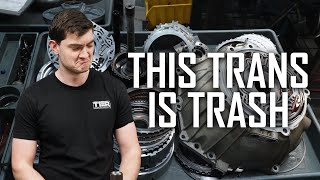
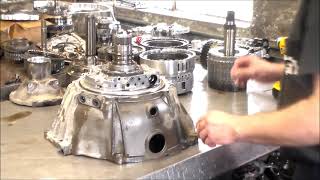
🎬 Watch: Common 6L90 problems that lead to transmission destructionThe 2009-2010 GMC Sierra 2500 HD trucks were typically equipped with either the 6-speed GM 6L90 or the Allison 1000 automatic transmission. While the P0733 code means '3rd gear slip' for both, the specific internal parts that fail can differ. For the 6L90, this code frequently points to a failing 3-5-R clutch pack, a broken 3-5-R wave plate 🎬 See a teardown and how to fix these common failures, or issues with the torque converter lockup clutch disintegrating and sending debris through the system. For trucks with the Allison transmission, TSB #PIP4379N points towards broader hydraulic circuit issues that can cause engagement problems and set this code.
Diagnostic Flowchart
Tap your situation to follow the diagnostic path that matches what you're seeing on this vehicle.
Symptoms You May Notice
- Check Engine Light is on.
- Transmission slipping, or failing to shift into 3rd gear.
- Engine RPMs flare up during the 2-3 shift without an increase in vehicle speed.
- Harsh, delayed, or jerky shifts.
- Vehicle enters 'limp mode' (stuck in a single gear).
- Reduced fuel economy.
- Transmission overheating warning light may come on.
- A burnt smell from the transmission fluid.
- Replacing input or output speed sensors. These sensors are usually accurately reporting the slip; they are not the cause of it.
- Replacing the Transmission Control Module (TCM/TEHCM) without a thorough diagnosis. As noted in TSBs and owner forums, this is rarely the root cause and is often a casualty of debris from a separate mechanical failure.
Most Likely Causes
- Low or Dirty Transmission Fluid 🔴 High Probability → Shop Transmission Assembly Fluid is the hydraulic lifeblood of the transmission. Low levels due to leaks or fluid that is burnt or contaminated with clutch material cannot provide the necessary pressure to actuate clutches properly, causing slippage.
How to confirm: Check the transmission fluid level and condition via the dipstick (if equipped) or service plug. The fluid should be at the correct level, red in color, and not smell burnt. Dark, murky, or burnt-smelling fluid indicates a serious internal problem, often from a failing clutch pack or torque converter.
Typical fix: If the fluid is low, top it off and check for leaks. If the fluid is dirty or burnt, a fluid and filter change is a starting point, but this is often a temporary fix that will not solve an underlying mechanical issue.
Est. part cost: $80-$150 for an ACDelco fluid and filter kit. - Internal Transmission Failure (Worn/Broken 3-5-R Clutch Pack) 🔴 High Probability → Shop Transmission Assembly On 6L90 transmissions, the 3-5-R (and 1-2-3-4) clutch pack is a common failure point. A stamped steel wave plate within the clutch pack is known to fracture, sending metal fragments throughout the transmission. This wear or breakage prevents the clutch from holding hydraulic pressure, causing the slip in 3rd gear.
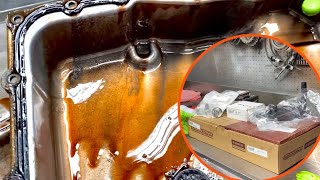
How to confirm: This is confirmed by a professional diagnosis that includes checking line pressures and observing live data with a scan tool. Finding metallic debris or clutch material in the transmission pan is a definitive indicator. Ultimately, visual inspection during a transmission teardown provides absolute proof.
Typical fix: This requires a partial or complete transmission rebuild to replace the worn clutches, steels, seals, and often the broken wave plate. Upgraded aftermarket clutch packs (e.g., Raybestos Z-Pak) are available to improve durability. Often, a remanufactured transmission is a more time-efficient option. 🎬 Watch: How experts professionally fix GM transmission failures
Est. part cost: $300-$600 for a rebuild kit; $2500-$5000+ for a remanufactured transmission. - Faulty Shift Solenoid / TEHCM ⚪ Low Probability → Shop Transmission Valve Body The 6L90 transmission uses a TEHCM (Transmission Electro-Hydraulic Control Module) which combines the solenoids and control module into one unit inside the pan. While a solenoid can fail electrically, it's more often a victim of debris from other failing components (like a torque converter or clutch) clogging its passages and causing pressure loss. A P0733 code without any solenoid-specific codes makes a primary TEHCM failure less likely.
How to confirm: A professional can command the solenoid on and off with a high-end scan tool to check its response. The TEHCM's internal pressure switches can also be tested. However, if debris is present in the pan, the TEHCM is likely a symptom, not the root cause.
Typical fix: Replace the faulty TEHCM. This requires draining the fluid and removing the transmission pan and valve body. The new TEHCM must be programmed to the vehicle.
Est. part cost: $400-$800 for a new TEHCM.
Rare But Worth Checking
- Torque Converter Failure: → Shop Automatic Transmission Torque Converter The lockup clutch inside the torque converter can fail and disintegrate, sending a large amount of metallic debris into the transmission fluid. This debris clogs the filter, valve body passages, and solenoids, leading to a loss of hydraulic pressure and causing slippage codes like P0733. In this scenario, simply replacing the transmission without also replacing the torque converter and flushing the cooler lines will lead to a repeat failure.
- Clogged Valve Body: → Shop Transmission Valve Body Debris from a failing torque converter or worn clutches can clog the small passages in the valve body, preventing the correct hydraulic pressure from reaching the 3rd gear clutch pack. Aftermarket companies like Sonnax offer remanufactured valve bodies and 'Zip Kits' with improved components to seal worn bores and restore hydraulic integrity.
- Worn Stator Support Shaft Seals: As seen in a forum repair story, worn seals on the stator support shaft (located in the torque converter housing) can cause a critical loss of hydraulic pressure to the clutch packs, leading to slippage and a P0733 code even if the clutches themselves are not worn out.
Diagnosis Steps
- Check the transmission fluid level and condition. Ensure the fluid is full, clean, and not smell burnt. Burnt fluid or fluid with a glittery/metallic appearance confirms an internal mechanical failure.
- Scan the TCM for any other pending or active trouble codes. Multiple gear ratio codes suggest a significant internal issue.
- Use a professional scan tool to monitor real-time data from the input and output speed sensors to confirm the slippage in 3rd gear.
- Perform a transmission line pressure test to check for adequate hydraulic pressure from the pump. Low pressure indicates a problem with the pump, a clogged filter, or a major internal leak.
- Drop the transmission pan to inspect for debris. The presence of metal shavings or clutch friction material confirms an internal mechanical failure requiring a teardown.
- If the pan is clean, inspect the valve body and TEHCM for issues. Test solenoid function with a scan tool.
- If all external checks pass, the issue is internal to the transmission (e.g., worn clutches, failing seals, cracked drum), requiring removal and disassembly for inspection and repair.
Parts You'll Likely Need
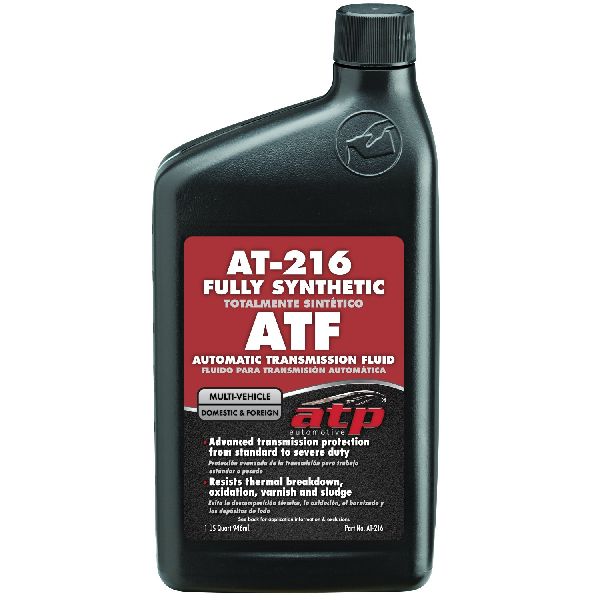
- Transmission Fluid and Filter Kit — This is the first and most basic step. Low or contaminated fluid is a common cause of shifting problems.
Trusted brands: ACDelco
OEM price range: $80-$150
Aftermarket price range: $50-$100 - Transmission Rebuild Kit — If the code is caused by a worn internal 3-5-R clutch pack, a full rebuild kit is needed to replace all clutches, steels, and seals.
Trusted brands: Raybestos (e.g., RZP-005 Z Pak), Sonnax, Alto
OEM price range: $300-$600
Aftermarket price range: $250-$500 - Remanufactured Transmission — For severe internal damage or as a time-saving alternative to a rebuild, a complete remanufactured transmission is often the most practical solution.
Trusted brands: Monster Transmission, Jasper Engines & Transmissions
OEM price range: $3500-$5000+
Aftermarket price range: $2500-$4500
Related Codes That Often Appear With This One
- P0700 — This is a general Transmission Control System Malfunction code that requests the check engine light. It almost always accompanies specific transmission codes like P0733.
- P0894 — This code indicates Transmission Component Slipping and is often stored along with specific gear ratio error codes like P0733, as it points to the same underlying problem. It is also mentioned in TSB #PIP4379N.
- P0731 — Incorrect Ratio in 1st gear. If multiple gear ratio codes are present, it points to a more widespread internal transmission problem, likely a major hydraulic leak or failure of a clutch pack common to multiple gears.
- P0732 — Incorrect Ratio in 2nd gear. Seeing this with P0733 suggests a problem affecting the 1-2-3-4 clutch pack or a significant loss of line pressure.
Technical Service Bulletins (TSBs) & Recalls
- PIP4379N: Mentions P0733 in a list of codes related to delayed or no transmission engagement. It advises technicians to follow standard diagnostics and implies the cause is likely hydraulic or mechanical rather than electronic, noting that TCM replacement is unlikely to be the fix.
Platform-Specific Known Issues
- 6L90 - Broken 3-5-R Wave Plate: A very common failure point in the 6L80/6L90 transmission is the fracturing of the stamped-steel wave plate within the 3-5-R clutch pack. When it breaks, the pieces can travel through the transmission, damaging other components and clogging the valve body. This failure directly causes a loss of apply pressure for 3rd and 5th gears.
- 6L90 - Torque Converter Failure & Debris: → Shop Automatic Transmission Torque Converter The lock-up clutch within the torque converter is known to fail, shedding metallic debris throughout the transmission. This debris contaminates the fluid, clogs the filter, wears out seals, and sticks solenoids in the TEHCM/valve body, leading to widespread pressure loss and multiple fault codes, including P0733.
Mechanic-Grade Diagnostic Values
- Shift Solenoid (On/Off type) resistance — expected: 20-40 ohms. Failure: Readings outside this range indicate a failed solenoid coil.
- Shift and Line Pressure Solenoid (PWM type) resistance — expected: 3-8 ohms. Failure: Readings outside this range indicate a failed solenoid coil.
- Sonnax Vacuum Test on Valve Body Bores (e.g., Pressure Regulator) — expected: Minimum of 18-20 in-Hg. Failure: A reading below the minimum indicates excessive wear in the valve body bore, causing hydraulic leaks.
- Transmission Cooler Line Pressure — expected: Varies, typically 20-50 PSI. Failure: Pressure is a byproduct of restriction; diagnosis is more accurately done by measuring volume (gallons per minute). Extremely high pressure (over 210 PSI) can indicate a major internal issue.
Scan Tool Commands That Help
- GM GDS2/Tech2 or equivalent J2534 device: Service Fast Learn Adapts — This procedure must be performed after replacing the TEHCM or the entire transmission to reset and relearn clutch apply pressures and shift timing. Failure to do so will result in poor shift quality.
- GM GDS2/Tech2 or equivalent J2534 device: Solenoid Cleaning Procedure — If debris is suspected of causing a solenoid to stick, a scan tool can be used to cycle all solenoids to attempt to flush the debris. This is a diagnostic step, not a permanent fix if the source of debris is not addressed.
- GM GDS2/Tech2 or equivalent J2534 device: Reset Transmission Adapts — After any major transmission repair, resetting the adaptive learn values is necessary. The vehicle will then need to be driven through specific cycles (light throttle upshifts, coast-downs) for the TCM to relearn shift points.
Wiring & Ground Locations
- Engine Block to Chassis Ground — A ground strap located on the driver's side, at the rear of the engine block, connecting to the firewall/chassis. It is often difficult to see and access.. A corroded or broken main engine ground can cause a host of electrical issues, including erratic sensor readings and improper module function. The TCM/TEHCM may not receive stable voltage or ground, leading to incorrect calculations and fault codes.
- G110 / G114 — These are specific ground points for the body and engine harnesses. On some GM trucks, they are located on the frame near the front of the vehicle.. Loose connections at these specific ground points are a known issue that can cause various electrical faults. A poor ground for the engine harness can directly impact the transmission control system's stability.
- TEHCM Main Connector — The 16-pin connector on the side of the TEHCM, accessible after removing the transmission pan.. All data to and from the vehicle's main computers flows through this connector. Checking for corrosion, bent pins, or fluid intrusion is a critical step when diagnosing TEHCM-related codes.
Real Owner Repair Stories
- gm-trucks.com forum user (2009 GMC Sierra w/ 4L60-E (Note: While the primary vehicle is a 2500 w/6L90, this story on a similar platform is relevant)) — Check engine light with codes P0733 and P0734 (Gear 4 Incorrect Ratio). Transmission would shift 1-2, but then the engine would flare as if in neutral instead of engaging 3rd gear.
❌ Tried (didn't work) Replaced both the 1-2 and 2-3 shift solenoids.
✅ What actually fixed it A complete transmission rebuild was required. The teardown confirmed the 3-4 clutch pack was completely worn out.
OEM Part Supersession History
24241350→24252114 (and subsequent numbers)— Hardware and software revisions to address common failure points like pressure switch degradation.
Heads up: TEHCMs are not backward or forward compatible. The correct part number/Tag ID for the specific model year and VIN must be used and programmed to the vehicle, or it will result in a no-start or immediate limp mode.
Model Year Variations Within This Range
- 2006-2009 vs 2010-2014: The valve body separator plate design changed in 2010. Type 1 plates were used from 2006-2009, and Type 2 from 2010-2014. Using the wrong plate can cause hydraulic leaks or blocked passages.
- Pre-2008 vs 2008+: In the 2008 model year, the 3-5-Reverse clutch piston was updated to reduce oil capacity by 20%, requiring less fluid to apply the clutch. This change was paired with a new TCM calibration and the parts do not back-service previous model years.
- Mid-2009: A design change was implemented for the pump cover, which received deeper grooves for O-rings under the seals to address 2-3 shift complaints.
Helpful Videos
We Have This Part in Stock


The information in this article is provided for general reference and educational purposes only. Vehicle specifications, procedures, and part compatibility can vary by production date, trim level, and region. Always consult your vehicle's factory service manual and verify part numbers before purchasing or performing repairs. Safety-critical components such as airbags, seat belts, and braking systems should be installed by a qualified professional.
- Gmc SIERRA 2500:
- 🧭 Diagnostic Flowchart
- 🎬 Helpful Videos
- 🛍️ Shop This Part
- What's Unique About the 2009-2010 Gmc SIERRA 2500
- Symptoms You May Notice
- Most Likely Causes
- Rare But Worth Checking
- Diagnosis Steps
- Parts You'll Likely Need
- Related Codes That Often Appear With This One
- Technical Service Bulletins (TSBs) & Recalls
- Platform-Specific Known Issues
- Mechanic-Grade Diagnostic Values
- Scan Tool Commands That Help
- Wiring & Ground Locations
- Real Owner Repair Stories
- OEM Part Supersession History
- Model Year Variations Within This Range
- 🎟️ Get 5% Off