

P0733 on 2013-2015 GMC Sierra Denali: Gear 3 Incorrect Ratio Causes & Fixes
P0733 on a 2013-2015 Sierra Denali means the transmission is slipping in 3rd gear. This is often caused by low/dirty fluid, but more serious causes include a failing torque converter shedding debris, a blocked valve body separator plate, or internal 3-5-R clutch failure, especially in the 6L80 transmission. A fluid check is the first step, but professional diagnosis is highly recommended as this usually indicates a major internal failure is imminent.
- P0733 indicates a serious 3rd gear slip that should be addressed immediately to prevent further, more costly transmission damage.
- Always start by checking the transmission fluid level and condition, as low or dirty fluid is a common cause.
- On this specific truck, a likely culprit is a blocked valve body separator plate, often caused by debris from a failing torque converter.
- Due to the complexity of the 6L80 transmission and the nature of the likely repairs, this code almost always requires diagnosis and repair by a professional transmission technician.
What's Unique About the 2013-2015 Gmc SIERRA DENALI
This year range covers two different Sierra generations: the 2013 model (GMT900 platform) and the 2014-2015 models (K2XX platform). Both typically use the 6L80 6-speed automatic transmission. A key issue, referenced in GM Technical Service Bulletins (TSBs), is that the torque converter lock-up clutch is a primary failure point. It is programmed to slip slightly under certain conditions for smoothness, which accelerates wear. This failing converter sheds metallic debris that looks like 'coffee grounds' into the fluid, clogging small orifices in the valve body separator plate and causing pressure loss that triggers P0733. [PIP5100A, PIP5100, 16] Additionally, the 3-5-R clutch pack is a known wear item in the 6L80 that can cause this specific code when it fails.
Diagnostic Flowchart
Tap your situation to follow the diagnostic path that matches what you're seeing on this vehicle.
Generation note: The 2013 model year is the last of the second-generation (GMT900) Sierra, while 2014-2015 models are the start of the third generation (K2XX). Both generations in this range commonly use the 6L80 6-speed automatic transmission, so the causes and fixes for P0733 are largely similar. The TSBs provided apply to the 2013 model but the underlying issues with the 6L80 transmission, particularly torque converter failure, are relevant to all years in this range and across multiple GM platforms. The 2014+ K2XX models received updated TEHCM software calibrations from the factory to alter shift logic, but the mechanical failure points remain the same.
Symptoms You May Notice
- Check Engine Light is on
- Transmission slipping or hesitating when shifting into 3rd gear
- Engine RPMs flare up without an increase in speed
- Harsh or delayed shifting, sometimes described as a violent 'clunk'.
- Vehicle enters 'limp mode' (stuck in a single gear)
- Delayed or no engagement into Drive or Reverse. [PIP4379M]
- Vehicle will not move in forward or reverse. [PIP5100A, PIP5100]
- Shudder or vibration, sometimes described as a 'rumble strip' feeling, especially between 40-60 mph.
- Dark, burnt, or metallic-looking transmission fluid ('coffee grounds' in the pan).
- Replacing only the input or output speed sensors. These sensors are usually accurately reporting a real mechanical slip, and sensor failure is less common for this specific code.
- Replacing a shift solenoid without addressing the debris that caused it to fail. If the fluid is contaminated with metallic particles, the new solenoid will likely fail as well.
- Performing only a fluid and filter change when significant debris is found. This is a temporary fix at best and does not address the underlying mechanical component (like the torque converter) that is failing and generating the debris.
Most Likely Causes
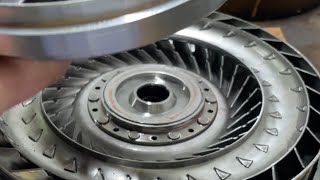
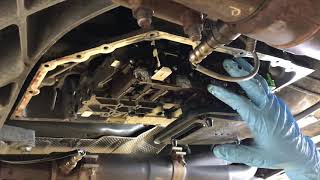
- Failing Torque Converter 🔴 High Probability → Shop Automatic Transmission Torque Converter The lock-up clutch inside the stock 6L80 torque converter is a well-documented weak point. It sheds metallic debris that contaminates the fluid, clogs the filter and valve body passages, leading to pressure loss and triggering P0733 and often P0741. This is considered the #1 cause of 6L80 failure. 🎬 Watch: A deep dive into the real causes of 6L80 failure.
How to confirm: A large amount of metallic, glittery, or paste-like debris in the transmission pan is a strong indicator. A scan tool can monitor Torque Converter Clutch (TCC) slip speed; excessive slip confirms the issue. A P0741 code is often present.
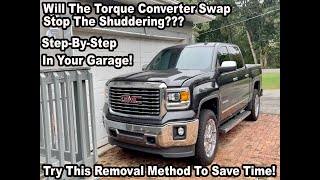
Typical fix: Replace the torque converter, flush the transmission and cooler lines thoroughly, and replace the transmission fluid and filter. Many owners opt for an aftermarket converter with a billet cover for improved durability. 🎬 See this walkthrough on replacing a shuddering Sierra torque converter. Failing to flush the cooler lines will cause debris to destroy the new parts.
Est. part cost: $250-$800 - Blocked Valve Body Separator Plate 🔴 High Probability → Shop Transmission Valve Body As noted in GM TSBs #PIP5100A and #PIP5100, debris from a failing torque converter is the primary culprit. This debris clogs the small orifices in the separator plate, causing hydraulic pressure loss to the 3-5-R clutch pack and preventing gears from engaging correctly. [PIP5100A, PIP5100]
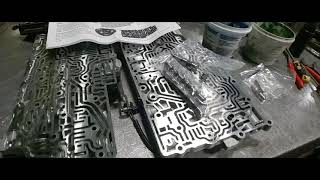
How to confirm: After dropping the transmission pan and finding excessive metallic debris, the valve body must be removed to visually inspect 🎬 Watch: How to safely remove the 6L80 valve body for inspection. the separator plate for blockages.
Typical fix: Replace the valve body separator plate with an updated OE or aftermarket version. The source of the debris (usually the torque converter) must also be replaced, and the transmission cooler and lines must be flushed or replaced.
Est. part cost: $50-$150 for the plate, but much higher if the torque converter also needs replacement. - Worn or Failed 3-5-R Clutch Pack 🟡 Medium Probability The 3-5-R (3rd, 5th, and Reverse) clutch pack is a known wear point in the 6L80 transmission. The internal wave plate can break, or the friction material can wear off due to pressure loss from a clogged separator plate or failing seals, causing slippage specifically in those gears.
How to confirm: This is an internal failure confirmed by finding excessive black clutch material (not metallic) in the transmission pan and by transmission disassembly and inspection.
Typical fix: A partial or complete transmission rebuild is required to replace the worn clutch pack, wave plate, seals, and any other damaged components. This is often done in conjunction with a torque converter replacement.
Est. part cost: $300-$800 for a master rebuild kit. - Failed Shift Solenoid / TEHCM ⚪ Low Probability → Shop Transmission Valve Body A solenoid can fail electrically or become stuck due to debris in the fluid. However, it's more often a symptom of debris from another failure (like the torque converter) rather than the root cause. The entire solenoid assembly is part of the Transmission Electro-Hydraulic Control Module (TEHCM), which can also fail.
How to confirm: A professional scan tool can command the solenoids to check for response. Resistance can also be checked with a multimeter after removing the transmission pan. Specific solenoid performance codes may be present.
Typical fix: Replace the faulty solenoid or the entire TEHCM. This requires removing the transmission pan and valve body. A new TEHCM must be programmed to the vehicle's VIN. If debris is present, the source must be addressed to prevent repeat failure.
Est. part cost: $40-$100 for a single solenoid, $400-$800 for a TEHCM.
Rare But Worth Checking
- Cracked 1-2-3-4 / 3-5-R Clutch Housing:
Diagnosis Steps
- Check the transmission fluid level and condition. Ensure it is at the correct level and is not dark, burnt, or full of debris. Dark fluid with a burnt smell indicates clutch wear; metallic particles (like coffee grounds) point to torque converter or other hard part failure.
- Use a professional scan tool to check for any other transmission-related codes, especially P0700, P0741, and P0894. Review freeze-frame data to see the conditions when the code was set.
- Perform a road test while monitoring transmission data with a scan tool. Observe the commanded gear vs. actual gear, and monitor the input/output speed sensors and TCC slip RPM to confirm slippage when 3rd gear is commanded.
- Drop the transmission oil pan and inspect for debris. A fine gray paste is normal wear, but large metal shavings or excessive black clutch material indicates a serious internal failure.
- If significant metallic debris is found, the torque converter is the most likely cause. The valve body and separator plate should also be inspected for clogged orifices, as mentioned in TSBs #PIP5100A and #PIP5100.
- If the valve body is clean and the fluid was clear, test the shift solenoids for proper electrical function using the scan tool's command functions.
- If the cause is still not found, internal transmission inspection by a professional is necessary to check for clutch pack wear or cracked hard parts like the 3-5-R drum.
Parts You'll Likely Need
- Torque Converter — The most common root cause of P0733 in the 6L80. The original unit is prone to shedding debris that contaminates the entire transmission. Replacement is critical to prevent repeat failures.
Trusted brands: ACDelco, Monster Transmission (Billet), Circle D
OEM price range: $400-$600
Aftermarket price range: $250-$800 - Valve Body Separator Plate
(OEM #ACDelco 24254909 (check vehicle specific application))— A known failure point according to GM TSBs. Debris clogs the plate's orifices, causing pressure loss and gear ratio errors. Often replaced with an updated design during repair.
Trusted brands: ACDelco, Sonnax
OEM price range: $70-$120
Aftermarket price range: $50-$90 - Sonnax Zip Kit
(OEM #6L45-6L90-ZIP)— A popular aftermarket solution that addresses multiple known wear points and pressure leaks in the 6L80 valve body. It includes upgraded valves, seals, and plugs to restore hydraulic integrity, often installed when the separator plate is replaced.
Trusted brands: Sonnax
Aftermarket price range: $200-$250 - Transmission Rebuild Kit — Required if internal components like the 3-5-R clutch pack have failed. A master kit includes all necessary clutches, steels, seals, and gaskets for a complete overhaul.
Trusted brands: Raybestos, Alto, ACDelco
OEM price range: $500-$800
Aftermarket price range: $300-$600 - Transmission Fluid and Filter Kit — Essential for any transmission service. Contaminated fluid is a primary symptom and contributor to shifting problems. Use only DEXRON VI fluid.
Trusted brands: ACDelco
OEM price range: $100-$175
Aftermarket price range: $75-$125
Related Codes That Often Appear With This One
- P0700 — This is a general transmission fault code, indicating that the TCM has stored one or more specific codes, like P0733.
- P0894 — This code means 'Transmission Component Slipping' and is often stored alongside a specific gear ratio code like P0733 to confirm a slip is detected. [PIP4379M]
- P0741 — This code indicates a problem with the Torque Converter Clutch (TCC) circuit performance. A failing TCC is a common source of the debris that can cause the P0733 code in 6L80 transmissions.
- P0731, P0732, P0734, P0735 — These are incorrect ratio codes for other gears. Seeing multiple ratio codes together often points to a widespread hydraulic issue like low fluid, a clogged filter, or a major internal failure affecting multiple clutch packs. [PIP5100A, 26]
Technical Service Bulletins (TSBs) & Recalls
- PIP4379M: Discusses various gear ratio codes and engagement issues, pointing to potential hydraulic problems.
- PIP5100A / PIP5100: Specifically instructs technicians to inspect valve body separator plate orifices for blockage when no-move or multiple gear ratio codes (including P0733) are present.
- 22-NA-182: Notes that a faulty external Thermal Bypass Valve (TBV) can cause overheating, which accelerates fluid breakdown and wear on internal components like clutches and the torque converter.
Platform-Specific Known Issues
- TSB #PIP5100A and #PIP5100 note that vehicles may not move and may set codes like P0733 due to the valve body separator plate orifices being blocked by debris. [PIP5100A, PIP5100]
- TSB #PIP4379M lists P0733 among a wide range of codes that can be set due to various transmission engagement issues, directing technicians to follow standard service information for diagnosis. [PIP4379M]
Mechanic-Grade Diagnostic Values
- Shift Solenoid (On/Off type) Resistance — expected: 20-40 Ohms. Failure: A reading outside this range indicates a failed solenoid coil. This test is performed on the TEHCM with the pan removed.
- Pressure Control Solenoid (PWM type) Resistance — expected: 3-8 Ohms. Failure: A reading outside this range points to a failed solenoid coil. This includes the TCC and clutch pressure control solenoids.
- Main Line Pressure at Idle (in Drive) — expected: 70-100 PSI (approximate). Failure: Significantly low pressure, or pressure that drops when 3rd gear is commanded, indicates a major hydraulic leak, failing pump, or clogged filter.
Scan Tool Commands That Help
- GDS2 (GM Dealer Scan Tool): Solenoid Valve Test / Transmission Output Controls — This function allows a technician to individually command each shift and pressure solenoid on and off. It's used to verify if a solenoid is mechanically stuck (by listening for a click) or if it's causing a pressure drop, helping to isolate a faulty solenoid from a wiring or TEHCM issue.
- GDS2 (GM Dealer Scan Tool): Transmission Service Fast Learn — This procedure is mandatory after replacing the TEHCM, valve body, or rebuilding the transmission. It allows the TCM to learn the volume and apply characteristics of the clutches to ensure smooth shifting. Failure to perform this can cause harsh shifts and future damage.
Wiring & Ground Locations
- G103 — On the front corner of the passenger side cylinder head, just below the valve cover.. This is a primary engine control ground. Poor connection here can cause erratic signals and communication errors between the ECM and the TEHCM (TCM), potentially leading to incorrect diagnostic codes and poor transmission performance.
- G104 — On the left (driver's side) rear corner of the engine, mounted to the cylinder head near the brake booster.. Similar to G103, this ground is critical for the engine and transmission control systems. Corrosion or a loose connection can interrupt sensor data and commands, affecting shift logic.
- X214 (Transmission Connector) — The main 16-pin round electrical connector on the passenger side of the transmission case.. This is the sole electrical link to the internal TEHCM. Corrosion or damage to the pins for CAN bus (Pins 10 & 11), power (Pin 4), or ground (Pin 5) can cause a total loss of communication or intermittent faults, including ratio codes.
- G218 — Under the driver's side dash, behind the kick panel.. This is an interior body ground point. While not directly on the engine, it provides the ground path for modules inside the cabin that communicate with the powertrain, such as the Body Control Module. A fault here can cause strange network-wide electrical issues.
Real Owner Repair Stories
- NC4x4 forum user (2011 GMC Sierra, 145,000 miles) — Torque converter shudder, followed by transmission failure.
❌ Tried (didn't work) Continued driving after initial symptoms appeared.
✅ What actually fixed it A complete transmission rebuild was required. Upon disassembly, the transmission pan was full of metal shavings and the fluid was black. The torque converter had completely failed and contaminated the entire unit. - GM-Trucks.com forum user (2014 Chevrolet Silverado) — P0733 and P0734 codes, harsh shifting.
❌ Tried (didn't work) A fluid and filter change did not resolve the issue.
✅ What actually fixed it The final repair was a full transmission rebuild. The mechanic found that the 3-5-R clutch pack was burnt and the torque converter was failing, which was the root cause of the debris and subsequent clutch failure.
OEM Part Supersession History
24256861 (example)→24264420, 24275864, and other later numbers— Revisions to address component failures, improve reliability, and update internal software logic.
Heads up: A replacement TEHCM is not plug-and-play. It MUST be programmed to the vehicle's VIN using a dealer-level tool like GDS2. Installing a used or incorrectly programmed module can result in a no-start condition or immediate transmission faults.Varies by year→Updated OE and Aftermarket Separator Plates (e.g., ACDelco 24272467)— Original plates could be prone to warping or damage from debris. Updated plates are often made of thicker steel to improve rigidity and prevent cross-leaks.
Model Year Variations Within This Range
- 2014-2015 (K2XX Platform): Compared to the 2013 GMT900 platform, the K2XX models featured updated factory software calibrations within the TEHCM. These changes were aimed at improving shift feel and altering the torque converter lock-up strategy. While this could change the driving characteristics, it did not eliminate the underlying mechanical failure modes (torque converter, clutches, drums) that cause P0733.
Helpful Videos
We Have This Part in Stock

The information in this article is provided for general reference and educational purposes only. Vehicle specifications, procedures, and part compatibility can vary by production date, trim level, and region. Always consult your vehicle's factory service manual and verify part numbers before purchasing or performing repairs. Safety-critical components such as airbags, seat belts, and braking systems should be installed by a qualified professional.
- Gmc SIERRA DENALI:
- 🧭 Diagnostic Flowchart
- 🎬 Helpful Videos
- 🛍️ Shop This Part
- What's Unique About the 2013-2015 Gmc SIERRA DENALI
- Symptoms You May Notice
- Most Likely Causes
- Rare But Worth Checking
- Diagnosis Steps
- Parts You'll Likely Need
- Related Codes That Often Appear With This One
- Technical Service Bulletins (TSBs) & Recalls
- Platform-Specific Known Issues
- Mechanic-Grade Diagnostic Values
- Scan Tool Commands That Help
- Wiring & Ground Locations
- Real Owner Repair Stories
- OEM Part Supersession History
- Model Year Variations Within This Range
- 🎟️ Get 5% Off