

P0733 on 2020-2023 Lincoln Aviator: Gear 3 Incorrect Ratio Causes and Fixes
P0733 on a 2020-2023 Lincoln Aviator indicates a 'Gear 3 Incorrect Ratio,' often caused by internal transmission issues common to the 10-speed automatic. The fix frequently involves significant transmission repair guided by manufacturer TSBs, specifically addressing the valve body or internal CDF clutch drum, and is not a simple DIY job.
- P0733 on a 2020-2023 Aviator means the transmission is failing to operate correctly in third gear.
- This code is specifically mentioned in multiple manufacturer TSBs for this vehicle, pointing to a high probability of a known internal transmission issue rather than a simple sensor fault.
- Always check the transmission fluid level and condition first, but expect that the repair will likely require professional service.
- Do not ignore this code. Continued driving can cause catastrophic transmission failure, leading to much higher repair costs.
- The most common fixes involve repairing or replacing the transmission valve body or other internal components, and in severe cases, the entire transmission.
What's Unique About the 2020-2023 Lincoln AVIATOR
The 2020-2023 Lincoln Aviator uses a 10-speed automatic transmission (the 10R60 or 10R80). This specific code, P0733, is frequently cited in a series of Technical Service Bulletins (TSBs) issued by Ford/Lincoln for these model years. These bulletins point towards known issues within the transmission, often related to sticking valves in the main control valve body or, more significantly, a failure within the 'CDF' clutch drum assembly. One specific failure is the axial movement of a sleeve within the CDF drum, which causes hydraulic leaks and leads to shifting anomalies and ratio codes. This suggests a higher likelihood of a complex mechanical or hydraulic fault compared to other vehicles where this code might appear.
Diagnostic Flowchart
Tap your situation to follow the diagnostic path that matches what you're seeing on this vehicle.
Symptoms You May Notice
- Check Engine Light is on
- Harsh, erratic, or delayed shifting, particularly involving third gear.
- Transmission slipping while in or shifting to third gear, where engine RPMs flare up without an increase in speed.
- Vehicle entering 'limp mode' (limited power and gears).
- Poor acceleration or hesitation.
- Reduced fuel efficiency.
- A noticeable thud or jolt when the transmission attempts to shift into or out of third gear.
- Replacing input/output speed sensors without confirming their failure. On this platform, the issue is more likely to be internal and mechanical/hydraulic, as suggested by the TSBs.
- Assuming a simple fluid change will fix the problem when there is an underlying mechanical failure like a bad valve body or CDF drum. A fluid change will not resolve a mechanical fault.
Most Likely Causes
- Internal Transmission Mechanical/Hydraulic Failure 🔴 High Probability → Shop Transmission Assembly Multiple TSBs (like TSB 24-2252) for the 2020-2023 Aviator list P0733 in conjunction with harsh shifting, pointing to known internal issues. A primary culprit is the main control valve body, which can have sticking valves. Another well-documented issue is a failure in the CDF clutch cylinder assembly, where a sleeve can move out of position, causing hydraulic leaks.
How to confirm: A technician will follow TSB diagnostic procedures, which may involve a 'Transmission Accelerated Main Control Break In' routine using a diagnostic tool. If that fails, the next step is often to inspect and overhaul the valve body or inspect the CDF clutch drum for the displaced sleeve, which requires significant transmission disassembly. Dropping the transmission pan to check for excessive metal debris is a key indicator of severe internal wear.
Typical fix: If the break-in procedure fails, the fix is to overhaul or replace the main control valve body assembly. If the CDF drum is the cause, the transmission must be removed and disassembled to replace the faulty drum/sleeve with an updated part. In severe cases, a complete transmission replacement is necessary.
Est. part cost: $800-$4000+ - Low or Dirty Transmission Fluid 🟡 Medium Probability → Shop Transmission Assembly
How to confirm: Check the transmission fluid level and condition. The fluid should be at the correct level, red in color, and not smell burnt. Note: The 10R80/10R60 transmission does not have a traditional dipstick, requiring a specific lift and temperature procedure to check the fluid level from a plug on the transmission pan.
Typical fix: Perform a transmission fluid drain-and-fill or a complete fluid exchange with the correct type of fluid, which is Motorcraft MERCON ULV.
Est. part cost: $150-$400 - Faulty Shift Solenoid ⚪ Low Probability → Shop Transmission Valve Body While a single solenoid can fail, the widespread TSBs for this platform point more frequently to systemic issues with the valve body or CDF drum rather than an isolated solenoid failure.
How to confirm: A diagnostic scan tool can be used to command the specific shift solenoid for third gear on and off to check its operation. The solenoid's electrical circuit would also be tested. The solenoids are integral to the valve body assembly.
Typical fix: Replacement of the faulty shift solenoid, which is typically done by replacing the entire main control valve body assembly.
Est. part cost: $50-$150
Rare But Worth Checking
- Faulty Transmission Control Module (TCM) or Powertrain Control Module (PCM): → Shop Transmission Assembly While rare, a software glitch or internal failure in the control module can cause it to misinterpret sensor data and trigger the code. Often, a TSB will recommend a software update (reprogram) as a potential first step or a fix for related shifting issues.
- Failed Input or Output Speed Sensor: A faulty speed sensor can send incorrect data to the TCM/PCM, causing the gear ratio calculation to be wrong. This is less common than internal failures on this platform but is still a possibility. Usually, a failing speed sensor will trigger its own specific trouble code in addition to the ratio error code.
Diagnosis Steps
- Verify the transmission fluid level and condition. Ensure it is clean, full, and does not have a burnt smell. This requires a specific procedure on a vehicle lift.
- Use an advanced OBD-II scanner to check for any other transmission-related codes. Note any codes listed in the TSBs.
- Review the most current Technical Service Bulletins for the 10-speed transmission (e.g., TSB 24-2252) to follow the manufacturer's recommended diagnostic path.
- Perform the 'PCM - Transmission Accelerated Main Control Break In' routine as prescribed by the TSBs, which uses a scan tool to cycle the solenoids and valves to try and clear any sticking components.
- If the break-in procedure does not resolve the issue, the next step is professional diagnosis involving dropping the transmission pan to inspect the valve body and check for debris.
- If the valve body is suspect, it may be overhauled or replaced.
- If symptoms persist or significant debris is found, the transmission will likely need to be removed for inspection and probable replacement of the CDF clutch drum or a full rebuild/replacement.
Parts You'll Likely Need
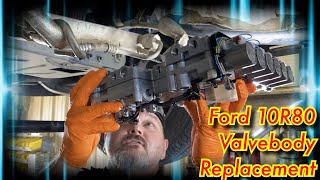
- Transmission Valve Body Assembly
(OEM #JL3Z-7A100-B)— The TSBs for the Aviator's 10-speed transmission often point to issues with sticking valves within the main control valve body as a root cause for shifting anomalies and ratio codes. This part number is for the 10R80 valve body and includes the solenoids.
Trusted brands: Motorcraft
OEM price range: $800-$1500
Aftermarket price range: $600-$1200 - Automatic Transmission Fluid
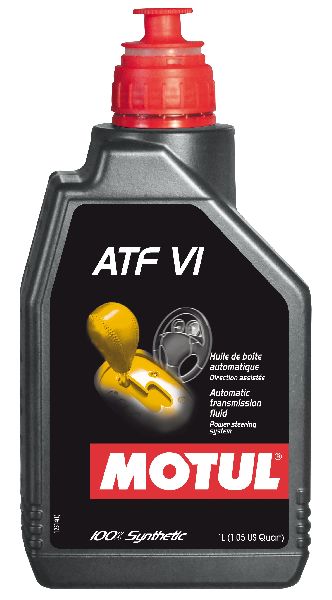
(OEM #XT-12-QULV)— Low or degraded fluid is a primary cause of transmission problems and will be needed for any repair involving opening the transmission. The required fluid is Motorcraft MERCON ULV.
Trusted brands: Motorcraft (MERCON ULV)
OEM price range: $15-$25 per quart
Aftermarket price range: $10-$20 per quart - CDF Clutch Drum Assembly
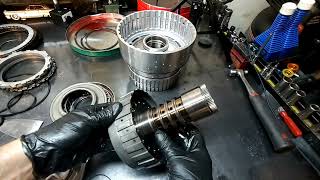
(OEM #JL3Z-7H351-B)— A known failure point in the 10R80/10R60 transmission where an internal sleeve can move, causing hydraulic leaks and multiple ratio codes, including P0733. Replacement requires complete transmission disassembly. The part number JL3Z-7H351-B is the updated version designed to prevent this failure.
Trusted brands: Motorcraft
OEM price range: $300-$600
Aftermarket price range: N/A - Complete Transmission Assembly — In cases of severe internal damage, indicated by large amounts of metal debris, replacing the entire transmission is often more cost-effective than a complete rebuild.
Trusted brands: Motorcraft
OEM price range: $4000-$7000+
Aftermarket price range: N/A
Related Codes That Often Appear With This One
- P0729, P0731, P0732, P0734, P0735, P0736 — These are all incorrect gear ratio codes for other gears. Their presence alongside P0733 strongly indicates a widespread problem within the transmission, such as low fluid, a failing valve body, or major internal wear, rather than an issue isolated to a single gear's components.
- P2700, P2701, P2702, P2703, P2704, P2705 — These codes relate to the application timing of transmission clutch elements. They are listed in the same TSBs as P0733 and point toward a hydraulic or mechanical issue within the clutch packs or valve body control system.
Technical Service Bulletins (TSBs) & Recalls
- TSB 22-2428: A significant, superseded TSB that addresses harsh/delayed shifts and multiple DTCs including P0733. It points to potential causes being PCM/TCM software, sticking valves in the main control, or axial movement of the CDF clutch cylinder sleeve.
- TSB 21-2434: Pertains to harsh or delayed shifts with or without DTCs like P0733 on some 2020-2022 Aviator models, suggesting a main control valve body issue and prescribing a 'break-in' procedure.
- TSB 22-2102: Relates to intermittent/harsh or delayed shifts, which may be accompanied by DTC P0733, on some 2020-2022 Aviator models. The fix involves a diagnostic break-in routine and potential overhaul of the valve body.
- TSB 24-2252: Superseded TSB covering a range of transmission DTCs, including P0733, for some 2020-2021 Aviator vehicles, pointing to the CDF clutch cylinder sleeve as a cause.
Platform-Specific Known Issues
- The 10-speed automatic transmission in the 2020-2023 Lincoln Aviator is subject to several Technical Service Bulletins that group P0733 with other DTCs related to harsh or delayed shifting. This indicates a known pattern of potential faults within the transmission, most notably the CDF clutch drum sleeve moving out of position and causing hydraulic leaks, or issues within the main control valve body.
Mechanic-Grade Diagnostic Values
- Shift Solenoid (A-F) Resistance — expected: 5.0 - 5.4 Ohms at 68°F (20°C). Failure: Resistance outside of this range indicates a faulty solenoid coil.
- Transmission Fluid Temperature (TFT) Sensor Resistance — expected: 1.5k - 0.8k Ohms. Failure: A reading outside this range corresponds to a temperature of 231-266°F (111-130°C), but an open or short would indicate sensor failure.
- Turbine/Intermediate/Output Speed Sensor Resistance — expected: 325 - 485 Ohms at 70°F. Failure: Resistance significantly outside this range suggests a failed sensor.
Scan Tool Commands That Help
- Ford IDS (Integrated Diagnostic System): Transmission Characterization / Solenoid Body Strategy — This function is required when replacing the main control valve body or the entire transmission. It programs the 13-digit solenoid body strategy number from the new part into the TCM/PCM to ensure correct hydraulic pressures and shift timing. Failure to perform this can result in DTCs or poor shift quality.
- Ford IDS (Integrated Diagnostic System): Clear Transmission Adaptive Tables — This should be performed after any transmission repair, including valve body or CDF drum replacement. It resets the learned shift parameters, allowing the TCM to start a fresh re-learning process with the new components.
- Ford IDS (or equivalent advanced scan tool): Adaptive Learning Drive Cycle — After clearing the adaptive tables, a specific drive cycle must be performed to allow the TCM to learn the new components and optimize shift quality. This typically involves a series of gentle accelerations through all gears and specific shift sequences. Not performing this can lead to erratic shifting for several days.
Wiring & Ground Locations
- Transmission Main Connector — Located on the side of the transmission case, this large connector houses all the wiring for the solenoids and sensors inside the transmission.. Damage or corrosion at this connector or in the associated harness can disrupt signals between the TCM and internal transmission components, potentially causing ratio codes. A full wiring diagram is essential for diagnosis.
- M1MZ-14290-S — This is the part number for the engine compartment front wiring harness for the hybrid models of the 2020-2023 Lincoln Aviator.. While not the direct transmission harness, damage to the main engine harness can affect communication with the TCM or power delivery, indirectly causing transmission faults. This part number supersedes L1MZ-14290-AAM and M1MZ-14290-R.
- TCM/PCM Ground — Ground points for the Powertrain Control Module (PCM) and/or Transmission Control Module (TCM) are typically located on the chassis in the engine bay, near the respective module.. A poor ground connection can cause erratic behavior from the control modules, leading to misdiagnosis of sensor data and incorrect fault codes like P0733. Verifying clean and tight grounds is a critical step in electrical diagnosis.
Real Owner Repair Stories
- Reddit user in r/f150 (2018 Ford F-150 EcoBoost with 10R80 transmission, 145k miles) — Crazy shift problems, floating gears then slamming into others, attempted to shift into first gear at 80mph.
❌ Tried (didn't work) Transmission relearn procedure, Valve body replacement
✅ What actually fixed it The ultimate cause was the known CDF drum failure. The user found TSB 22-2428 which helped diagnose the problem, and the fix was to replace the CDF drum, which requires transmission disassembly.
OEM Part Supersession History
HL3Z-7A100-A→HL3Z-7A100-B— Updated main control valve body for 2017 F-150s, often to address shift quality issues.JL3Z-7A100-C (Column Shift), JL1Z-7A100-A (Electronic Shift)→JL3Z-7A100-B— Consolidation of part numbers and potential updates for 2018+ vehicles with the 10R80, including Expedition and F-150. TSB 20-2117 lists these various part numbers for addressing TCC valve issues.
Heads up: It is critical to use the correct valve body based on vehicle application (column vs. electronic shift) and then program the correct solenoid strategy.Unknown, multiple early revisions→JL3Z-7H351-B— The original CDF clutch drum (cylinder) was prone to a sleeve failure causing hydraulic leaks. The updated part (JL3Z-7H351-B) features a machined lip or dam to prevent the sleeve from migrating, providing a permanent fix.
Heads up: Using an old-stock original design part will likely lead to a repeat failure.
Model Year Variations Within This Range
- 2020-2022: Vehicles built on or before August 15, 2022, are specifically called out in TSB 24-2252 (which supersedes earlier TSBs) for the CDF clutch cylinder sleeve issue. This suggests that vehicles built after this date may have received the updated CDF drum from the factory.
Helpful Videos
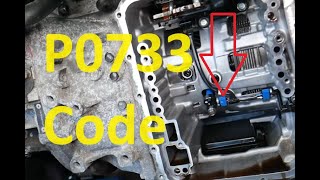
![What is P0733 Engine Code [Quick Guide]](https://img.youtube.com/vi/Q9QGWpw5pqs/mqdefault.jpg)
We Have This Part in Stock


The information in this article is provided for general reference and educational purposes only. Vehicle specifications, procedures, and part compatibility can vary by production date, trim level, and region. Always consult your vehicle's factory service manual and verify part numbers before purchasing or performing repairs. Safety-critical components such as airbags, seat belts, and braking systems should be installed by a qualified professional.
- Lincoln AVIATOR:
- 🧭 Diagnostic Flowchart
- 🎬 Helpful Videos
- 🛍️ Shop This Part
- What's Unique About the 2020-2023 Lincoln AVIATOR
- Symptoms You May Notice
- Most Likely Causes
- Rare But Worth Checking
- Diagnosis Steps
- Parts You'll Likely Need
- Related Codes That Often Appear With This One
- Technical Service Bulletins (TSBs) & Recalls
- Platform-Specific Known Issues
- Mechanic-Grade Diagnostic Values
- Scan Tool Commands That Help
- Wiring & Ground Locations
- Real Owner Repair Stories
- OEM Part Supersession History
- Model Year Variations Within This Range
- 🎟️ Get 5% Off