

P0733 on 2018-2023 Lincoln Navigator: Gear 3 Incorrect Ratio Causes and Fixes
P0733 on a 2018-2023 Lincoln Navigator almost always indicates a significant internal transmission problem, often related to a known issue with the CDF clutch drum. This is a complex, expensive repair requiring a transmission specialist and is not a DIY job. The fix involves a partial transmission rebuild using an updated part from Ford.
- P0733 on a 2018-2023 Navigator is a serious code that almost always points to a major internal transmission failure.
- The most likely cause is a well-documented design flaw in the 10R80 transmission's CDF clutch drum, which requires a partial transmission rebuild to fix.
- This is not a DIY repair. Do not continue to drive the vehicle, as this will cause further, more expensive damage.
- The first diagnostic step is to have a professional check the transmission fluid level and condition, but expect the ultimate fix to be an internal repair guided by manufacturer TSBs.
What's Unique About the 2018-2023 Lincoln NAVIGATOR
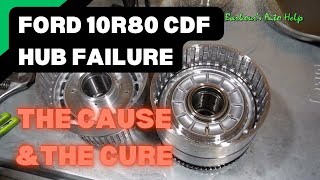
The 2018-2023 Navigator uses the Ford 10R80 10-speed automatic transmission, which was co-developed with GM. This transmission is known for a specific design flaw detailed in multiple Technical Service Bulletins (TSBs). The issue lies where a sleeve inside the 'CDF' (Clutch C/D/F) clutch drum can slide axially out of position, uncovering hydraulic fluid passages and causing a major internal pressure leak. This leak prevents clutches from engaging properly, leading to slipping and setting codes like P0733. Ford later updated the drum design with a machined lip to physically prevent the sleeve from moving, offering a permanent solution.
🎬 Watch: See the CDF hub failure and the permanent cure.Diagnostic Flowchart
Tap your situation to follow the diagnostic path that matches what you're seeing on this vehicle.
Symptoms You May Notice
- Check Engine Light is on
- Harsh, jerky, or delayed shifts, especially into or out of third gear
- Transmission slipping (engine RPMs flare up without an increase in speed)
- Vehicle enters "limp mode," limiting available gears and vehicle speed
- Delayed engagement when shifting from Park to Drive, sometimes lasting 2-3 seconds
- Loss of power during acceleration
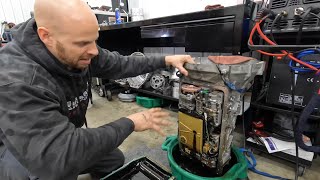
- A noticeable 'clunk' when downshifting, particularly from 4th to 3rd gear 🎬 See a mechanic explain the four most common 10R80 failures.
- Replacing only the transmission fluid and filter without addressing the root mechanical cause. This may temporarily improve symptoms but the problem will quickly return as the failing part continues to shed debris.
- Replacing input or output speed sensors. While these sensors report the problem, they are almost never the cause of an incorrect gear ratio code.
- Replacing only the shift solenoids without inspecting the CDF drum. The solenoid codes are often a symptom of the hydraulic leak, not the root cause.
Most Likely Causes
- CDF Clutch Cylinder Sleeve Failure 🔴 High Probability → Shop Automatic Transmission Coast Clutch Hub This is a well-documented design flaw in the 10R80 transmission. Manufacturer TSBs #TSB 24-2254 and #TSB 23-2250 directly link P0733 to "axial movement of the CDF clutch cylinder sleeve causing hydraulic circuit leaks." The sleeve slides out of place, uncovering fluid passages and causing a major pressure loss that prevents clutches from engaging.
How to confirm: A technician must perform hydraulic pressure tests as outlined in the TSBs. Diagnosis ultimately requires transmission disassembly to visually inspect the CDF drum for a dropped sleeve.
Typical fix: The transmission must be removed and disassembled to replace the faulty CDF clutch cylinder with the updated part (OEM # JL3Z-7H351-B) that has a machined lip to prevent the sleeve from moving. This is a partial transmission rebuild. In some cases, debris from the initial failure can damage the valve body, requiring it to be replaced as well.
Est. part cost: $250-$450 for the updated CDF drum assembly - Low or Contaminated Transmission Fluid 🟡 Medium Probability → Shop Transmission Assembly While not a design flaw, low fluid is a common cause for any transmission issue. If the fluid is low, it can't create the hydraulic pressure needed to engage clutches. If it's contaminated with clutch material (often from the CDF drum issue), it can clog the valve body and solenoids, leading to more widespread problems.
How to confirm: Check the transmission fluid level and condition. The 10R80 does not have a traditional dipstick, so this must be done by a professional from underneath the vehicle. The fluid should be red and clear, not dark, burnt-smelling, or full of metallic particles ('glitter').
Typical fix: If the fluid is just low, top it off with the correct Motorcraft MERCON ULV fluid and check for leaks. If it's dirty, a fluid and filter change is necessary, but this is often a temporary fix if an internal part like the CDF drum is failing and contaminating the new fluid.
Est. part cost: $150-$250 for fluid and filter - Valve Body or Shift Solenoid Failure ⚪ Low Probability → Shop Transmission Valve Body The valve body directs hydraulic fluid, and its solenoids act as electronic gates. Debris from a failing clutch can clog passages or cause a solenoid to stick. While possible as a primary failure, it's more often a secondary issue caused by contamination from the CDF drum failure. The TSBs list numerous solenoid codes that can be set as a result of the hydraulic leak.
How to confirm: A technician can use an advanced scan tool to command specific solenoids on and off and monitor pressure readings to isolate a fault in the valve body.
Typical fix: Replacement of the faulty solenoid or the entire valve body assembly, followed by a fluid change. A forum user reported this was necessary even after the CDF drum was replaced.
Est. part cost: $600-$1500
Rare But Worth Checking
- Worn Third Gear Clutch Pack: While the CDF drum is the most likely culprit for the hydraulic leak, the clutch pack for third gear itself could be worn out from high mileage or abuse, causing the slip. This is usually diagnosed during the transmission teardown.
- Faulty Transmission Control Module (TCM): → Shop Transmission Assembly It is extremely rare for the control module itself to be the cause. This should only be considered after all mechanical and hydraulic issues have been definitively ruled out.
Diagnosis Steps
- Verify the code with a professional OBD-II scanner.
- Check the transmission fluid level and condition. This requires lifting the vehicle and is best done by a professional.
- Inspect for any external transmission fluid leaks.
- Review manufacturer TSBs (specifically #TSB 24-2254 and #TSB 23-2250) which strongly point to the CDF clutch cylinder as the root cause for a wide array of ratio and solenoid codes.
- Perform hydraulic pressure tests as specified in the TSBs to confirm an internal leak.
- If tests confirm a leak, the transmission must be removed and disassembled for inspection and repair of the CDF clutch drum and any other resulting damage.
Parts You'll Likely Need
- CDF Clutch Cylinder / Drum Assembly (Updated Design)
(OEM #JL3Z-7H351-B)— This is the most common point of failure on the 10R80 transmission leading to P0733. This updated part number features a machined lip to prevent the internal sleeve from walking out, providing a permanent fix. It supersedes older parts HL3Z-7H351-A and JL3Z-7H351-A.
Trusted brands: Motorcraft (Ford OEM)
OEM price range: $250-$450 - Transmission Overhaul Gasket and Seal Kit — Required for any transmission disassembly and rebuild to ensure all seals are fresh and prevent leaks after reassembly.
Trusted brands: Motorcraft
OEM price range: $250-$400
Aftermarket price range: $150-$250 - Motorcraft MERCON ULV Automatic Transmission Fluid
(OEM #XT-12-QULV)— The transmission must be refilled with this specific ultra-low viscosity fluid. Using any other fluid type can cause shifting problems or damage. Note: The bottle should be shaken before use to properly mix additives.
Trusted brands: Motorcraft
OEM price range: $10-$15 per quart - Transmission Filter Kit
(OEM #LC3Z-7G186-A (FT-221))— Should always be replaced when the transmission is serviced, especially after an internal failure has likely contaminated the old filter with metallic debris.
Trusted brands: Motorcraft
OEM price range: $50-$80
Aftermarket price range: $30-$60
Related Codes That Often Appear With This One
- P0731 — Incorrect Gear 1 Ratio. Often set alongside other gear ratio codes when a major internal hydraulic leak, like from the CDF drum, affects multiple clutch circuits.
- P0732 — Incorrect Gear 2 Ratio. Like P0731, this points to a widespread internal issue rather than a problem specific to just one gear.
- P0751, P0756, P0761, etc. — These are shift solenoid performance codes. The TSBs for the CDF drum issue list a large number of these codes because the hydraulic leak caused by the drum failure prevents the solenoids from doing their job effectively, leading the TCM to flag them as faulty.
Technical Service Bulletins (TSBs) & Recalls
- TSB 24-2254
- TSB 26-2046
- TSB 25-2023
- TSB 23-2250
Platform-Specific Known Issues
- A known design flaw in the 10R80 transmission's CDF clutch drum is the primary cause of this code. TSB #TSB 24-2254 explicitly details that "axial movement of the CDF clutch cylinder sleeve causing hydraulic circuit leaks" is the reason for P0733 and many other related codes.
Mechanic-Grade Diagnostic Values
- Shift Solenoid Resistance — expected: 5.0 - 5.4 Ohms at 68°F (20°C). Failure: A reading outside this range indicates a faulty solenoid coil.
- TCC and LPC Solenoid Current — expected: Varies between ~50 mA (low) and ~850 mA (high) depending on command.. Failure: Inability to reach specified current or drawing no current suggests a wiring or solenoid issue.
- Third Gear Clutch Hydraulic Pressure — expected: 190 - 230 psi (Varies by specific test conditions). Failure: Pressure significantly below this range confirms an internal hydraulic leak, likely from the CDF drum or valve body.
Hidden / Shadow Codes Worth Checking
- P17xx series (e.g., P1700, P1702): These are manufacturer-specific codes indicating a general transmission system failure. They often accompany more specific codes like P0733 and signal to the technician that a deeper diagnosis of the transmission system is required. (see via Professional scan tools like Ford IDS or high-end aftermarket scanners.)
Scan Tool Commands That Help
- Ford IDS (Integrated Diagnostic System): Powertrain > Transmission > Transmission Characterization / Solenoid IDN — This function is mandatory after replacing the transmission or the main control valve body. It requires entering the 13-digit solenoid body strategy number from the new part's tag to program the TCM with the correct operational parameters for the new hardware. Failure to perform this step will result in erratic shifting.
- Ford IDS (or equivalent): Adaptive Learning Drive Cycle Reset — After any significant transmission repair, including valve body or CDF drum replacement, the TCM's adaptive learning tables must be cleared. A specific drive cycle procedure must then be performed to allow the TCM to relearn shift points and clutch engagement times.
Wiring & Ground Locations
- TCM (Transmission Control Module) — Mounted on the right rear of the transmission valve body, inside the transmission itself.. Its location inside the transmission makes it susceptible to heat and contamination. While module failure is rare, checking its power and ground sources is a valid diagnostic step if communication is lost.
- Fuse F37 and F73 (Underhood Fuse Box) — In the power distribution box located in the engine compartment.. These fuses have been identified as providing power to the TCM. A loss of communication or erratic behavior from the TCM can be caused by a blown fuse, which should be checked before condemning the module.
Real Owner Repair Stories
- Ford F150 Forum (Ford F-150 with less than 50,000 miles) — Unspecified transmission issues leading to dealer diagnosis.
✅ What actually fixed it The final diagnosis was a failed CDF Drum and a bad main valve body. The user noted that metallic particles from the drum failure likely contaminated and damaged the valve body, requiring both to be addressed. The repair cost was quoted in the 'several thousands of dollars'. - Monster Transmission (Shop Case) (2020 Ford F-150 with 60,000 miles) — Long delays when shifting into Reverse and unpredictable shift flare between 4th and 5th gear.
✅ What actually fixed it A transmission teardown revealed a separated CDF drum sleeve and burnt fluid. The transmission was rebuilt with a revised CDF drum (with retaining feature), an upgraded valve body, and a new pan.
"I Checked Everything" — The Actual Cause
- A common scenario is not a failed smoke test, but a failed post-rebuild test drive. A technician may replace the failed CDF drum but neglect to thoroughly inspect the valve body. Fine metallic debris from the original drum failure can travel into the valve body, causing control valves to stick in their bores. Even with a new drum, a sticking valve will cause continued harsh shifts, flares, or other drivability issues. Technicians must manually check every valve in the valve body for smooth, free movement before reassembly to prevent a comeback.
When the Usual Fixes Don't Work
- While the CDF drum failure is the most prevalent cause of P0733 in 2018-2022 models, it is not the only cause of 10R80 failure. Forum reports have mentioned transmission issues on 2023 models, which should already contain the updated CDF drum from the factory. This indicates that other components, such as the valve body, solenoids, or other clutch packs, can still fail independently and cause gear ratio or shifting-related trouble codes. The updated drum is a critical fix for a specific, common problem, but it does not make the transmission immune to all other potential faults.
OEM Part Supersession History
HL3Z-7H351-A, JL3Z-7H351-A→JL3Z-7H351-B— The original drum design allowed an internal sleeve to slide out of position, uncovering hydraulic passages and causing a catastrophic pressure loss. The updated 'B' version has a machined lip on the drum that physically prevents the sleeve from moving, providing a permanent solution to the design flaw.
Model Year Variations Within This Range
- 2018 - Mid-2022: Vehicles built on or before August 15, 2022, are equipped with the original, failure-prone CDF clutch drum. Vehicles built on or after August 16, 2022, should have the updated CDF drum (part #JL3Z-7H351-B) from the factory, significantly reducing the likelihood of this specific failure.
- 2021-2022: During the semiconductor chip shortage, some vehicles were produced without the Auto Start-Stop (*) feature. Transmissions in non-* vehicles lack the auxiliary electric fluid pump that maintains pressure when the engine is off. While not a direct cause of P0733, it represents a hardware difference within the transmission.
Helpful Videos


We Have This Part in Stock


The information in this article is provided for general reference and educational purposes only. Vehicle specifications, procedures, and part compatibility can vary by production date, trim level, and region. Always consult your vehicle's factory service manual and verify part numbers before purchasing or performing repairs. Safety-critical components such as airbags, seat belts, and braking systems should be installed by a qualified professional.
- Lincoln NAVIGATOR:
- 🧭 Diagnostic Flowchart
- 🎬 Helpful Videos
- 🛍️ Shop This Part
- What's Unique About the 2018-2023 Lincoln NAVIGATOR
- Symptoms You May Notice
- Most Likely Causes
- Rare But Worth Checking
- Diagnosis Steps
- Parts You'll Likely Need
- Related Codes That Often Appear With This One
- Technical Service Bulletins (TSBs) & Recalls
- Platform-Specific Known Issues
- Mechanic-Grade Diagnostic Values
- Hidden / Shadow Codes Worth Checking
- Scan Tool Commands That Help
- Wiring & Ground Locations
- Real Owner Repair Stories
- "I Checked Everything" — The Actual Cause
- When the Usual Fixes Don't Work
- OEM Part Supersession History
- Model Year Variations Within This Range
- 🎟️ Get 5% Off