

P0733 on 2010-2014 Subaru Outback: CVT Gear Ratio Fault Causes and Fixes
On a 2010-2014 Subaru Outback, code P0733 is almost always caused by a failing CVT valve body, a known issue with the TR580 transmission. The repair involves replacing the entire valve body assembly (Subaru Part #31825AA052 or superseding numbers) and typically costs between $1,500 and $2,500. Before paying for the repair, check with a Subaru dealer about goodwill assistance or if your vehicle is covered by Subaru's extended CVT warranty (TSB 16-115-18R).
- P0733 on a 2010-2014 Outback is a serious code that points to an impending transmission repair.
- The most likely cause is a failed CVT valve body, which is a known issue on this vehicle.
- Do not use aftermarket valve bodies or attempt to replace individual solenoids; an OEM replacement is the only reliable fix.
- This is not a DIY repair. It requires professional diagnosis and specialized procedures.
- Before paying for any repairs, contact a Subaru dealer to check for coverage under the 10-year/100,000-mile CVT warranty extension or to request goodwill assistance from Subaru of America.
What's Unique About the 2010-2014 Subaru Outback
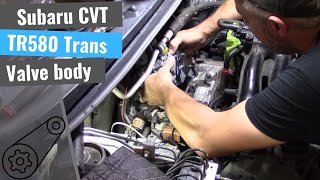
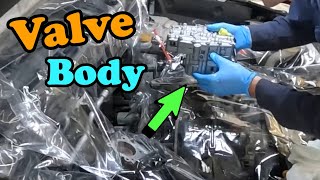
The 2010-2014 Subaru Outback uses a first-generation Lineartronic TR580 CVT, which is known for having issues with its control valve body. This component, which contains multiple solenoids to direct hydraulic fluid and change the pulley ratios, is the most common point of failure leading to ratio-related codes like P0733. Specifically, the torque converter lock-up solenoid within the valve body is a frequent culprit. Unlike many other vehicles where fluid or simple sensors are the top cause, on this platform, the valve body itself is the primary suspect. Subaru acknowledged issues with these CVTs by offering a warranty extension to 10 years/100,000 miles, and owners have often received financial assistance from Subaru of America for this specific repair, even when outside the extended warranty period.
Symptoms You May Notice
- Check Engine Light is on
- Flashing 'AT OIL TEMP' light on the dashboard
- Vehicle hesitates or stumbles on acceleration
- Engine RPMs flare or rise without a corresponding increase in speed
- Shuddering or jerking, especially at low speeds
- Noticeable loss of power or sluggish performance
- Transmission may feel 'stuck' in a certain ratio range
- Engine lugs or stalls when coming to a stop
- Replacing the entire CVT assembly when only the valve body is faulty. This is a much more expensive repair and often unnecessary if the issue is caught early.
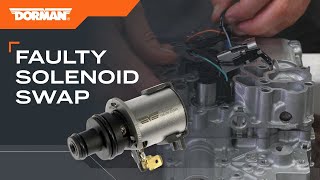
- Replacing individual solenoids. While tempting, aftermarket solenoids for these units are notoriously unreliable, and Subaru does not sell them separately from the valve body. The fix often fails shortly after. Some part numbers like 31706AA033 are for a single lock-up solenoid, but the complete assembly is the recommended repair. 🎬 Watch: How to replace just the lock-up solenoid
Most Likely Causes
- Faulty CVT Control Valve Body Assembly 🔴 High Probability → Shop Transmission Valve Body The first-generation TR580 CVT in these Outbacks has a widely documented history of valve body failures. Internal solenoids, particularly the torque converter lock-up solenoid, wear out or fail, and debris can clog the fine hydraulic passages, leading to incorrect pressure control and an inability to maintain the commanded ratio.
How to confirm: A professional technician will follow a diagnostic procedure, often outlined in Subaru TSBs like 16-102-16R, which involves checking fluid, testing electrical circuits, and analyzing live data. If other causes are ruled out and other codes like P0841 are not the primary issue, the valve body is condemned.
Typical fix: Replacement of the entire CVT valve body assembly with a new OEM part, followed by a fluid fill and a 'relearn' or 'adaptation' procedure for the TCM using a diagnostic tool.
Est. part cost: $800-$1300 - Low or Degraded CVT Fluid 🟡 Medium Probability CVTs are very sensitive to fluid level and condition. The fluid is not just a lubricant but the hydraulic medium used to operate the transmission. Low fluid due to a leak, or old, broken-down fluid, cannot maintain proper pressure. Subaru TSB 16-103-16R addresses common leak points.
How to confirm: Check the CVT fluid level and condition. This is difficult on these models as there is no dipstick; it must be checked via a specific procedure involving a scan tool to monitor temperature while the vehicle is level. The fluid should be translucent and not smell burnt.
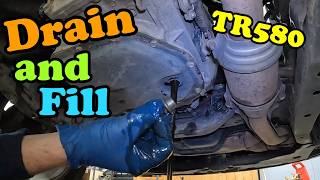
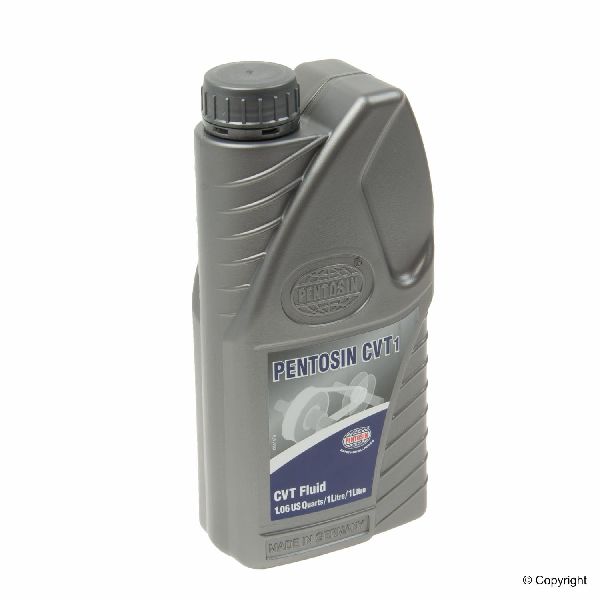
Typical fix: Perform a CVT fluid drain and fill using only the specified Subaru High-Torque CVT fluid. 🎬 Watch: Complete TR580 CVT fluid change service guide A full flush is generally not recommended.
Est. part cost: $100-$200
Rare But Worth Checking
- Failed Input or Output Speed Sensor: While less common than valve body failure, a sensor providing incorrect speed data to the TCM can trigger this code. This is often accompanied by other sensor-specific codes (e.g., P0722 for the output speed sensor).
- Internal Mechanical CVT Failure: In severe cases, the steel push belt, pulleys (variators), or torque converter could be damaged. This is a catastrophic failure, often preceded by loud whirring or grinding noises, and usually requires complete transmission replacement.
- Wiring Harness or Connector Issue: Damage or corrosion to the wiring leading to the transmission's sensors or solenoids can cause intermittent signals and trigger ratio codes. Subaru TSB 16-102-16R provides guidance on 'wiggle-testing' harnesses to find such faults.
Diagnosis Steps
- Check and document any other stored DTCs. A P0700 will almost always be present.
- Check the CVT fluid level and condition using the proper procedure. This requires the vehicle to be level and the fluid at a specific temperature (checked with a scan tool).
- If fluid is low, inspect for leaks. TSB 16-103-16R details common leak points like the oil pump chain cover seal and input shaft seal.
- If fluid level and condition are good, use a professional scan tool to monitor live data from the input and output speed sensors to ensure they are reading correctly.
- Follow the diagnostic flowchart from Subaru TSB 16-102-16R, which includes checking wiring and connector integrity via 'wiggle-testing'.
- If all other tests pass, the cause is most likely a faulty CVT valve body.
- Consult with a Subaru dealer to check for any applicable warranty extensions (TSB 16-115-18R or similar) or goodwill programs before authorizing repairs.
Parts You'll Likely Need
- CVT Control Valve Body Assembly
(OEM #31825AA052 (superseded by 31825AA055))— This is the most common failure point for ratio-related codes on this specific vehicle and transmission.
Trusted brands: Subaru (OEM)
OEM price range: $900-$1300
Aftermarket price range: Not Recommended - Subaru High-Torque CVT Fluid
(OEM #SOA748V0200)— This is the required fluid for servicing the TR580 CVT. Using any other fluid can cause damage.
Trusted brands: Subaru (OEM)
OEM price range: $15-$25 per quart
Aftermarket price range: Not Recommended
Related Codes That Often Appear With This One
- P0700 — This is a generic Transmission Control System Malfunction code. It simply means the TCM has stored a fault code (like P0733) and is requesting the Check Engine Light to be turned on.
- P0731, P0732, P0734 — These are incorrect ratio codes for other 'gear' ranges. Seeing multiple ratio codes together strongly points to a systemic issue like the valve body or low fluid, rather than a problem specific to one ratio range.
- P0841 — This code for 'Transmission Fluid Pressure Sensor/Switch 'A' Circuit Range/Performance' is also very commonly associated with a failing valve body on these CVTs. TSB 16-102-16R specifically addresses diagnostics for this code.
Technical Service Bulletins (TSBs) & Recalls
- 16-115-18R: Details the CVT Warranty Extension program for 2016-17 models, but similar extensions covered earlier years.
- 16-102-16R: Provides an updated diagnostic flow chart for transmission codes, including checks for wiring issues related to DTC P0841, which is often seen with P0733.
- 16-103-16R: Addresses common sources of CVT fluid leaks, such as the oil pump chain cover and input shaft seal.
- 16-90-13R: Addressed symptoms of stalling or stumbling when stopping in 2010-2012 Legacy and Outback models, related to torque converter lock-up issues.
Platform-Specific Known Issues
- Subaru issued a CVT warranty extension for many vehicles, including these model years, extending coverage to 10 years or 100,000 miles. Owners should always check with a dealer to see if their vehicle is covered.
- Subaru of America has a known history of providing 'goodwill' assistance for valve body replacements on vehicles that are slightly outside the extended warranty, especially for loyal customers with a good service history.
- A class-action lawsuit was settled regarding this issue, which prompted the warranty extension.
Mechanic-Grade Diagnostic Values
- Torque Converter Lock-Up Solenoid Resistance — expected: 10 - 13 Ohms. Failure: A significantly lower reading, often below 3 Ohms, indicates a shorted solenoid.
- AWD Transfer Clutch Solenoid Resistance — expected: ~4.5 Ohms. Failure: A reading significantly different from the specification.
- Other Shift Solenoids (Primary Up/Down) — expected: ~13 Ohms. Failure: A reading significantly different from the specification.
- Valve Body Top Plate Bolt Torque — expected: 6.5 ft-lbs (80 in-lbs). Failure: N/A - This is an assembly specification.
Scan Tool Commands That Help
- Subaru Select Monitor (SSM) or compatible professional scan tool: CVT Relearn / Transmission Adaptation / Learned Value Reset — This procedure is critical after replacing the valve body or individual solenoids. It resets the adaptive learning values in the TCM to match the new component's hydraulic and electrical characteristics. Failing to perform the relearn can result in poor shift quality, hesitation, or feeling 'off' even after the repair is complete.
Wiring & Ground Locations
- Transmission Control Module (TCM) — On early models (approx. 2010-2012), it is located under the driver's side dashboard. On later models (approx. 2013-2014), it is bolted to the top of the transmission case itself.. Knowing the TCM location is essential for checking power, ground, and communication circuits when diagnosing a potential module or wiring fault.
- Valve Body Main Connector — On top of the transmission case, providing the electrical connection to all solenoids within the valve body.. This is the primary point for testing solenoid resistance without removing the transmission pan. The lock-up solenoid, a common failure, can be tested from a specific pin at this connector to ground.
- Lock-Up Solenoid Pin — At the main valve body connector, identified as the white wire in one technician video and 'bottom pin three from the left' in another.. Allows for direct electrical testing of the most common failure component for these symptoms, confirming a bad solenoid before disassembly.
Real Owner Repair Stories
- BobIsTheOilGuy forum user (2015 Subaru Forester (TR580 CVT)) — Dashboard lights on, codes P0700 and a P27xx solenoid code.
✅ What actually fixed it Replaced only the faulty lock-up solenoid with a Dorman aftermarket part. The user reported it was still working fine 18 months after the repair. - YouTube user iDM (2014 Subaru Forester XT (TR690, but similar procedure) with 197,310 miles) — Harsh 'gear shifts' at low speeds, codes P2762 (TCC Solenoid Circuit) and P0700.
❌ Tried (didn't work) Driving the car after the solenoid replacement without a relearn procedure; the user noted it 'just didn't feel smooth'.
✅ What actually fixed it Replaced the TCC (lock-up) solenoid and then performed a CVT relearn procedure with an affordable scan tool. The user reported the relearn made a 'VERY noticeable difference in driveability' and fixed the issue. - Reddit user LameBicycle (2016 Subaru with TR580 CVT, 175,000 miles) — Solenoid failure.
✅ What actually fixed it The owner performed the solenoid repair themselves and reported no issues since. They noted that solenoid failure seems most common in the 120k-180k mile range.
OEM Part Supersession History
31825AA052→31825AA055— Internal design updates and revisions by Subaru to improve reliability.
Heads up: The older part number would likely function, but it is missing the successive updates made by the manufacturer to address the known failure points.
Model Year Variations Within This Range
- 2013-2014: These models feature the newer FB25 engine (vs. the 2010-2012 EJ25) and a 'revised' version of the TR580 CVT. The 2014 models specifically received software for 'adaptive transmission control' for smoother operation.
- Early (2010-2012) vs. Late (2013-2014): The physical location of the Transmission Control Module (TCM) changed. Early models have it under the driver's side dashboard, while later models have it bolted directly to the top of the transmission case.
Diagnostic Flowchart
Other Known Issues on This Vehicle
Issues unrelated to this code that are worth knowing about as an owner of this generation:
- Excessive Oil Consumption 🔴 High — Common in early FB25 engines (2013-2014 models). Caused by defective piston rings. Can lead to engine damage if oil level is not monitored. (Ref: Subject of a class-action lawsuit and subsequent warranty extension/repair programs.)
- Cam Carrier / Timing Cover Oil Leaks 🟠 Medium — A known source of oil leaks on the FB25 engine. Repair is labor-intensive and can cost over $2,000 as the engine may need to be removed. (Ref: Subaru TSB 02-15-14R addresses the resealing procedure.)
- Torque Converter Lock-Up Stumble/Stall 🟠 Medium → Shop Automatic Transmission Torque Converter — Owners report a stumble, shudder, or engine stall when coming to a stop, as if the torque converter is not disengaging correctly. This is often a precursor to or related to valve body failure. (Ref: TSB 16-90-13R was issued for this symptom on 2010-2012 models.)
- Broken Valve Springs 🔴 High — Early FB engines were susceptible to valve spring failure, which can cause misfires or catastrophic engine damage if a valve drops into the cylinder. (Ref: A recall was issued for certain models, but it's a known failure point.)
Used vs. New Parts: Buying Guide for This Vehicle
When a used part is the smart pick: A used part is generally not recommended for this repair. A used valve body from a junkyard has a high probability of having the same solenoid failure issue or developing it shortly after installation. The cost of labor makes this a significant gamble.
Donor-vehicle mileage cap: roughly under 100000 miles for the part to have meaningful remaining life.
What to inspect on the donor part:
- If considering a used part, verify the donor vehicle's mileage is as low as possible.
- Check for any service history indicating prior transmission work.
- Visually inspect the part for any physical damage, corrosion, or stripped bolt holes.
OEM-only on this vehicle (don't cheap out):
- CVT Control Valve Body Assembly: For a complete assembly replacement, the new, updated OEM part (31825AA055) is the most reliable option to ensure you get all manufacturer revisions.
Aftermarket brands forum-validated for this vehicle:
- Dorman: For replacing an individual solenoid (typically the lock-up solenoid), Dorman is a frequently cited aftermarket brand with user reports of long-term success, offering a much lower-cost repair than a full OEM valve body.
Brands owners have reported issues with on this vehicle:
- Unbranded/No-Name Complete Valve Bodies: Cheap, complete valve body assemblies from online marketplaces like Amazon or eBay should be avoided. They are likely rebuilt with low-quality, unreliable solenoids and have a high failure rate.
Real Owner Stories
Aggregated from forums and TSBs cited above. Mileages and costs reflect what owners reported in those sources.
2013 Subaru Outback 2.5L — 140000 miles
Symptoms: Flashing AT TEMP light, P0733 code, and the engine stalling at stops.
What fixed it: The owner opted for a remanufactured CVT from AAMCO after receiving high dealer quotes.
Cost: $7,000-$8,000
Source hint: subaruoutback.org forum thread
Related OBD-II Codes
Frequently Asked Questions
Is there a warranty extension for the CVT issues on my 2010-2014 Outback?
My Outback is stalling when I come to a stop; does TSB 16-90-13R apply to me?
Can I just replace a single solenoid instead of the whole $1,300 valve body?
How do I check the CVT fluid level on my 2013 Outback to rule out P0733?
What diagnostic steps does Subaru recommend for transmission codes like P0733?
If I am just outside the 100,000-mile warranty extension, am I stuck with the full repair bill?
Helpful Videos
We Have This Part in Stock




The information in this article is provided for general reference and educational purposes only. Vehicle specifications, procedures, and part compatibility can vary by production date, trim level, and region. Always consult your vehicle's factory service manual and verify part numbers before purchasing or performing repairs. Safety-critical components such as airbags, seat belts, and braking systems should be installed by a qualified professional.
- Subaru Outback:
- 🧭 Diagnostic Flowchart
- 🎬 Helpful Videos
- 🛍️ Shop This Part
- What's Unique About the 2010-2014 Subaru Outback
- Symptoms You May Notice
- Most Likely Causes
- Rare But Worth Checking
- Diagnosis Steps
- Parts You'll Likely Need
- Related Codes That Often Appear With This One
- Technical Service Bulletins (TSBs) & Recalls
- Platform-Specific Known Issues
- Mechanic-Grade Diagnostic Values
- Scan Tool Commands That Help
- Wiring & Ground Locations
- Real Owner Repair Stories
- OEM Part Supersession History
- Model Year Variations Within This Range
- Other Known Issues on This Vehicle
- Used vs. New Parts: Buying Guide for This Vehicle
- Real Owner Stories
- 2013 Subaru Outback 2.5L — 140000 miles
- Related OBD-II Codes
- Frequently Asked Questions
- 🎟️ Get 5% Off