

P0734 on 2018-2023 Ford Mustang: Gear 4 Incorrect Ratio Causes and Fixes
On a 2018-2023 Ford Mustang, P0734 indicates the 10R80 transmission is slipping or failing to engage 4th gear correctly. This is often linked to internal transmission issues covered by TSBs like 24-2046, such as a faulty valve body or, most notably, a failure of the CDF clutch drum where an internal sleeve moves and causes a hydraulic leak. This is a complex repair requiring professional service.
- P0734 on a 2018-2023 Mustang is a serious transmission code indicating a problem with 4th gear, usually slipping.
- The most likely cause is a known issue with the 10R80 transmission's valve body or CDF clutch drum, as documented in Ford TSB 26-2046.
- This is not a DIY-friendly repair. It requires professional diagnosis and likely involves significant internal transmission work.
- Do not ignore this code. Continued driving can lead to complete transmission failure and a much more expensive replacement.
What's Unique About the 2018-2023 Ford MUSTANG
The 2018-2023 Mustang uses the Ford 10R80 10-speed automatic transmission, which is known for having specific issues that can lead to this code. Unlike generic causes, many P0734 faults on this platform are traced back to known hardware and software problems within the transmission itself. Ford has issued multiple technical service bulletins (most recently TSB 24-2046) that point towards issues like sticking valves in the main control valve body and, most critically, a design flaw where the CDF clutch cylinder sleeve can move axially 🎬 Watch: A deep dive into why this 10-speed transmission fails., uncovering hydraulic ports and causing pressure loss.
Diagnostic Flowchart
Tap your situation to follow the diagnostic path that matches what you're seeing on this vehicle.
Symptoms You May Notice
- Check Engine Light is on
- Transmission fails to shift into 4th gear
- Harsh or delayed shifting, especially into or out of 4th gear
- Transmission slipping (engine RPMs increase but speed does not), often noticeable as a 'flare' on the 3-4 shift
- Vehicle enters 'limp mode,' limiting speed
- Reduced fuel economy
- A whining noise during shifts
- Replacing only the transmission fluid when a mechanical fault like the CDF drum sleeve has failed.
- Replacing an individual shift solenoid when the entire valve body is faulty or contaminated with debris.
- Replacing the valve body when the root cause is the internal CDF clutch drum leak. A Mustang owner on a Reddit forum reported this exact scenario, where a new valve body did not fix the slipping.
Most Likely Causes
- Internal Transmission Failure (CDF Clutch Cylinder Sleeve) 🔴 High Probability → Shop Transmission Assembly Ford TSB 24-2046 and its predecessors directly link P0734 to a design issue in the 10R80 transmission's CDF clutch cylinder. An internal bushing or sleeve can 'walk' or move axially, which uncovers hydraulic oil passages, causing a pressure leak to the clutch pack. This prevents the clutch from engaging properly, leading to slip and gear ratio codes.
How to confirm: This requires professional diagnosis. After removing the valve body, a technician can use a blow gun with a rubber tip to apply compressed air to the C-clutch port. If air escapes instead of holding pressure with a 'thud', it confirms a leak in the clutch circuit, pointing to this failure. Visual inspection during a transmission teardown is the ultimate confirmation.
Typical fix: Internal repair requiring transmission removal and disassembly to replace the CDF clutch drum assembly with an updated part that has a retaining lip to prevent the sleeve from moving. This is a complex, labor-intensive job.
Est. part cost: $400-$800 - Faulty Main Control Valve Body 🟡 Medium Probability → Shop Transmission Valve Body TSB 24-2046 also points to sticking valves within the main control valve body as a potential cause for harsh and delayed shifts. Debris from normal wear or the failing CDF clutch can contaminate the valve body, causing solenoids or valves to stick.
How to confirm: A technician can perform pressure tests and solenoid function tests with a high-level scan tool. In a YouTube video documenting a repair on an F-150, the technician opted to replace the valve body as a diagnostic step when faced with shifting issues.
Typical fix: Replacement of the entire main control valve body assembly. Crucially, this must be followed by programming the new solenoid body strategy into the PCM/TCM using a Ford-specific scan tool. A fluid flush and adaptive learning reset are also required.
Est. part cost: $600-$1200 - Low or Dirty Transmission Fluid ⚪ Low Probability → Shop Transmission Assembly While rarely the root cause for this specific TSB-related issue, low fluid can cause a lack of hydraulic pressure, leading to slipping and incorrect ratio codes. Dirty or burnt fluid, often a symptom of the internal failure itself, can cause valves in the main control to stick. The 10R80 requires specific Mercon ULV fluid.
How to confirm: Check the transmission fluid level and condition. The 10R80 does not have a traditional dipstick, so this must be done by a shop or by following a specific, multi-step service procedure at the correct temperature.
Typical fix: Perform a transmission fluid drain and fill or a full fluid exchange. If the fluid is low, the source of the leak must be found and repaired. If the fluid is burnt, suspect a larger internal issue.
Est. part cost: $150-$400
Rare But Worth Checking
- Powertrain Control Module (PCM) or Transmission Control Module (TCM) Software Issue: → Shop Transmission Assembly The first step in the diagnostic procedure outlined in TSB 24-2046 is often to check and update the PCM/TCM software. Sometimes, a reflash with updated software from the dealer can resolve shifting logic problems before replacing hardware.
- Faulty Input/Output Speed Sensor: If the TCM receives inaccurate data from the input or output speed sensors, it can miscalculate the gear ratio and trigger the code. This is less common than the known mechanical issues on the 10R80 but is a possibility, especially if other speed sensor codes are present.
Diagnosis Steps
- Verify the code with a professional-grade OBD-II scanner that can read transmission data.
- Check for any related Technical Service Bulletins (TSBs), specifically TSB 24-2046 for this vehicle, which supersedes older versions.
- Check the transmission fluid level and condition according to Ford's service procedure, as there is no dipstick.
- Use a scan tool to monitor live data, watching the input and output speed sensors as the transmission attempts to shift into 4th gear. Look for an RPM flare indicating slip.
- Perform electronic tests on the shift solenoids and valve body circuits.
- If electronic and fluid checks pass, the issue is likely internal. This requires removing the transmission pan and valve body for inspection.
- With the valve body removed, perform a compressed air check on the C-clutch port. A lack of pressure holding indicates a leak in the CDF clutch circuit.
- Inspect the CDF clutch cylinder and sleeve for movement or damage as indicated by TSB 24-2046.
- If the valve body is replaced, it is mandatory to program the new solenoid strategy into the PCM/TCM and reset adaptive learning tables.
Parts You'll Likely Need
- Main Control Valve Body Assembly
(OEM #JL3Z-7A100-B)— Often replaced as a complete unit to fix sticking valves or faulty solenoids. Replacement requires mandatory programming of the new solenoid strategy.
Trusted brands: Motorcraft
OEM price range: $800-$1200
Aftermarket price range: $600-$900 - CDF Clutch Cylinder / Drum Assembly
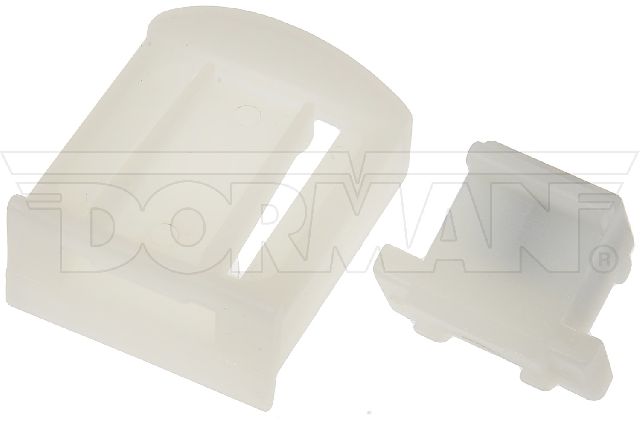
(OEM #JL3Z-7H351-B (Updated Part))— This is the core mechanical failure identified in TSB 24-2046 for the 10R80 transmission. The updated part includes a revised design to prevent the internal sleeve from moving and causing hydraulic leaks.
Trusted brands: Motorcraft
OEM price range: $400-$800
Aftermarket price range: $300-$600 - Transmission Fluid (Mercon ULV)
(OEM #XT-12-QULV)— Any internal transmission repair requires draining and refilling the fluid. Ford specifies Mercon ULV fluid for the 10R80 transmission, and using any other type can cause damage.
Trusted brands: Motorcraft
OEM price range: $20-$30 per quart
Aftermarket price range: $15-$25 per quart
Related Codes That Often Appear With This One
- P0731, P0732, P0733, P0735 — These are codes for incorrect gear ratios in other gears. When seen together, they strongly suggest a systemic issue like a failing valve body, low fluid, or the CDF clutch drum failure rather than a single gear-specific fault.
- P076F — This code for 'Gear 7 Incorrect Ratio' is specifically mentioned alongside P0734 in TSBs and forum discussions about the 10R80's CDF clutch cylinder issue.
Technical Service Bulletins (TSBs) & Recalls
- TSB 24-2046: The most recent bulletin that supersedes several previous versions. It outlines the full diagnostic procedure for harsh shifts and gear ratio codes (including P0734), pointing to software, the valve body, or the CDF clutch cylinder sleeve as the primary causes.
- TSB 22-2428: A predecessor to 24-2046, this TSB also covered the same issues across a wide range of Ford vehicles with the 10R80, including the Mustang, F-150, and Bronco.
Platform-Specific Known Issues
- The 10R80 10-speed transmission in 2018-2023 Mustangs is subject to Technical Service Bulletin TSB 24-2046 (which supersedes 23-2350, 22-2428, and others). It addresses harsh/delayed shifts and various gear ratio codes, including P0734. The bulletin identifies three primary causes: PCM/TCM software, sticking valves in the main control body, or axial movement of the CDF clutch cylinder sleeve causing hydraulic leaks. The CDF clutch sleeve failure is a widely documented mechanical flaw for this transmission family.
Mechanic-Grade Diagnostic Values
- 10R80 Shift and Control Solenoid Resistance — expected: 5.0 - 5.4 Ω at 20°C (68°F). Failure: A reading outside this range indicates a faulty solenoid coil.
- Transmission Fluid Temperature (TFT) Sensor Resistance — expected: 37k-16k Ω (69°F-104°F); 16k-5k Ω (105°F-158°F); 5k-2.7k Ω (159°F-194°F); 2.7k-1.5k Ω (195°F-230°F). Failure: Resistance values that do not correlate with the fluid temperature suggest a faulty sensor.
Scan Tool Commands That Help
- Ford IDS (Integrated Diagnostic System): Transmission Strategy Download / Transmission Characterization — This is a mandatory procedure after replacing the main control valve body. The technician must enter the 13-digit solenoid body strategy number from the new part to ensure the TCM has the correct calibration file for the new solenoids. Failure to do so can result in DTC P163E and poor shift quality.
- Ford IDS or equivalent professional scan tool: Clear Adaptive Tables — This function must be performed after a transmission overhaul, valve body replacement, or TCM reprogramming. It erases the learned shift adaptations, allowing the system to re-learn the transmission's characteristics during the subsequent Adaptive Learning Drive Cycle.
- Ford IDS or equivalent professional scan tool: Adaptive Learning Drive Cycle — After clearing the adaptive tables, a specific, multi-step drive cycle must be performed to allow the TCM to learn the clutch fill times and shift points. This is critical for achieving smooth shifting after a major repair.
Wiring & Ground Locations
- Engine to Chassis Ground Strap — Typically runs from the engine block to the vehicle's frame or chassis. On some Mustang models, a strap is located on the driver's side.. A poor engine ground can cause electrical noise and voltage drops, potentially affecting sensor readings and the operation of control modules like the PCM/TCM.
- Head to Firewall Ground — On some Mustang generations (S197), a ground strap connects the back of the driver's side cylinder head to the firewall.. Ensures the engine and its sensors have a solid ground reference to the vehicle body, where the control modules are grounded.
- Transmission Bell Housing Ground — A ground strap may run from the transmission bell housing to the firewall.. Provides a direct ground path for the transmission case and any sensors mounted directly to it, ensuring signal integrity for speed sensors.
Real Owner Repair Stories
- Reddit user, r/f150 (2018 Ford F-150 EcoBoost with 10R80 transmission, 145,000 miles) — Described as "crazy shift problems," including floating between gears and then slamming into the next, and attempting to shift into 1st gear at 80 mph.
❌ Tried (didn't work) Transmission relearn procedure, Replacement of the main control valve body
✅ What actually fixed it The root cause was identified as the CDF clutch drum failure. The user found TSB 22-2428 which described the issue of an internal sleeve moving and causing seal failure, confirming the diagnosis. The fix required replacing the CDF drum with the updated part.
"I Checked Everything" — The Actual Cause
- A common pattern with the 10R80 transmission and code P0734 involves replacing the main control valve body without success. As documented in owner forums, a technician may follow standard diagnostics and replace the valve body, a major and expensive repair, only for the shifting problems to persist. The actual root cause, often missed without a full teardown or specific air-check, is a hydraulic leak within the sealed CDF clutch drum assembly—a part internal to the transmission that the valve body bolts to.
OEM Part Supersession History
HL3Z-7H351-A, JL3Z-7H351-A→JL3Z-7H351-B— The original CDF clutch drum design had an internal bushing/sleeve that could move axially ('walk') out of position. This movement would either block a critical fluid passage or uncover a seal, causing a significant hydraulic pressure leak in the clutch circuit for gears 3, 4, and 5. The updated JL3Z-7H351-B part features a revised design with a retaining lip to physically prevent the sleeve from moving, permanently fixing the flaw.
Model Year Variations Within This Range
- 2018 - Mid-2022: Vehicles built before mid-2022 are susceptible to the original, faulty CDF clutch drum design. According to discussions referencing Ford's technical service bulletins, vehicles built on or after August 16, 2022, should have the updated CDF drum (part JL3Z-7H351-B or later) installed from the factory, mitigating this specific, common cause of P0734.
Helpful Videos


We Have This Part in Stock


The information in this article is provided for general reference and educational purposes only. Vehicle specifications, procedures, and part compatibility can vary by production date, trim level, and region. Always consult your vehicle's factory service manual and verify part numbers before purchasing or performing repairs. Safety-critical components such as airbags, seat belts, and braking systems should be installed by a qualified professional.
- Ford MUSTANG:
- 🧭 Diagnostic Flowchart
- 🎬 Helpful Videos
- 🛍️ Shop This Part
- What's Unique About the 2018-2023 Ford MUSTANG
- Symptoms You May Notice
- Most Likely Causes
- Rare But Worth Checking
- Diagnosis Steps
- Parts You'll Likely Need
- Related Codes That Often Appear With This One
- Technical Service Bulletins (TSBs) & Recalls
- Platform-Specific Known Issues
- Mechanic-Grade Diagnostic Values
- Scan Tool Commands That Help
- Wiring & Ground Locations
- Real Owner Repair Stories
- "I Checked Everything" — The Actual Cause
- OEM Part Supersession History
- Model Year Variations Within This Range
- 🎟️ Get 5% Off