

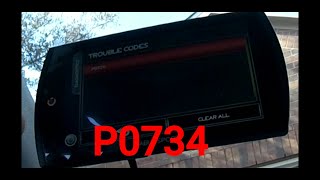
P0734 on 2003-2007 GMC Sierra Denali: Gear 4 Incorrect Ratio Causes & Fixes
This code indicates a 4th gear slip in the transmission. First, check for low or burnt transmission fluid. However, on these trucks with the 4L65-E transmission, P0734 is a strong indicator of a failing 3-4 clutch pack inside the transmission, a known weak point that typically requires a professional rebuild with upgraded parts.
- P0734 means your transmission is slipping in 4th gear.
- Always check the transmission fluid level and condition first; it's the easiest and cheapest first step.
- Be prepared for the possibility of a major repair. On the 2003-2007 Sierra Denali, this code is a classic symptom of a failed 3-4 clutch pack, which requires a transmission rebuild.
- Do not ignore this code. Continued driving will cause more severe internal transmission damage, significantly increasing repair costs.
- This is not a DIY-friendly repair unless you are an experienced transmission technician.
What's Unique About the 2003-2007 Gmc SIERRA DENALI
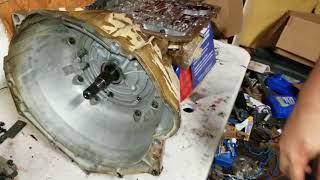
The Sierra Denali from this era is typically equipped with a 4L65-E automatic transmission, a slightly more robust version of the very common 4L60-E. This entire transmission family is notoriously prone to failure of the 3-4 clutch pack. A primary cause of this failure is a weak, flexible OE backing plate for the clutch pack, which allows for uneven heat buildup and clutch distortion during apply. While low fluid or a bad solenoid can cause P0734, it is very often the first warning sign of this specific, and serious, internal mechanical failure that will eventually require a transmission rebuild 🎬 Watch: Disassembly and diagnosis of 3rd and 4th gear failure, often with aftermarket upgrades like a stiffer backing plate to prevent recurrence.
Diagnostic Flowchart
Tap your situation to follow the diagnostic path that matches what you're seeing on this vehicle.
Generation note: This range covers two generations of the GMC Sierra. The 2003-2006 models belong to the GMT800 platform, while the 2007 model is the first year of the GMT900 platform. Both generations used a variant of the 4L60-series transmission (likely the 4L65-E in the Denali with the 6.0L V8), so the causes and fixes for P0734, particularly the 3-4 clutch pack failure, are largely the same.
Symptoms You May Notice
- Check Engine Light is illuminated.
- Transmission slips in, fails to shift into, or gets stuck in 4th gear.
- Engine RPMs are unusually high at highway speeds (e.g., over 3,000 RPM).
- Delayed or harsh engagement when shifting into 4th gear.
- Noticeable loss of power and reduced fuel economy.
- Vehicle enters 'limp mode' with reduced performance.
- Replacing input or output speed sensors. While these sensors report the problem, they are rarely the cause of the slippage itself. A user on YouTube replaced both sensors for a P0734 code, which only temporarily resolved the issue.
- Assuming a simple fluid change will fix a major internal slip. If the 3-4 clutch pack is already worn out and shedding material, new fluid is only a very temporary band-aid before the slip returns.
Most Likely Causes
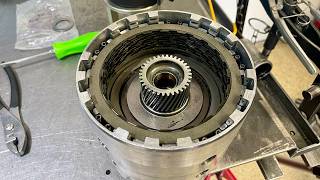
- Worn or Failed 3-4 Clutch Pack 🔴 High Probability The 3-4 clutch pack in the 4L60-E/4L65-E transmission is a well-documented weak point. The primary design flaw is a thin, weak OE backing plate that flexes during clutch application, causing uneven pressure, intense localized heat, and eventual burnup of the clutch friction material.
How to confirm: Confirmed by finding excessive gray or black clutch material in the transmission pan during a fluid service. A professional diagnosis involving hydraulic pressure tests and air checking the input drum apply circuits can also pinpoint the leak causing the slip.
Typical fix: This requires a complete transmission rebuild or replacement. During a rebuild, the 3-4 clutch pack is replaced, often with upgraded, more durable aftermarket components like a thicker backing plate (e.g., Sonnax 74140-01K) and higher-quality friction plates to prevent repeat failure. 🎬 Watch: How to upgrade the 3-4 clutch pack during a rebuild
Est. part cost: $500-$1200 for a master rebuild kit - Low or Dirty Transmission Fluid 🔴 High Probability → Shop Transmission Assembly Fluid is the hydraulic lifeblood of the transmission. Low levels from leaks or fluid that is burnt or contaminated with clutch material cannot provide the necessary pressure to engage gears properly. Dirty fluid can also clog hydraulic passages and solenoids.
How to confirm: Check the transmission fluid dipstick for level and condition. The fluid should be bright red and clear, not dark brown, black, or smelling burnt. Note that some later models may not have a dipstick.
Typical fix: If low, top off the fluid (DEXRON-VI) and inspect for leaks. If dirty or burnt, perform a transmission fluid and filter change. This is often a temporary fix if internal clutch damage has already occurred and is shedding material into the fluid.
Est. part cost: $50-$150 - Faulty Shift Solenoid 🟡 Medium Probability → Shop Transmission Valve Body Solenoids are electronic valves that direct fluid flow to engage gears. The 'A' solenoid (responsible for 1-2 and 3-4 shifts) can fail electrically or become clogged with debris, preventing the hydraulic command for 4th gear engagement.
How to confirm: A professional scan tool can command the solenoid on and off to check its response. It can also be tested for correct electrical resistance (typically 20-40 ohms) after removing the transmission pan.
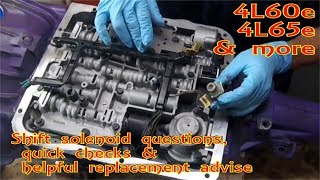
Typical fix: Replace the faulty solenoid. The 1-2 and 2-3 shift solenoids are identical and often replaced in pairs while the pan is off. 🎬 See this walkthrough on replacing the A and B shift solenoids
Est. part cost: $40-$100 - Valve Body Issues ⚪ Low Probability → Shop Transmission Valve Body The valve body is the complex hydraulic control center of the transmission. Bore wear in the valve body, particularly around the TCC regulator and isolator valves, can cause hydraulic leaks that lower the line pressure available to apply the 3-4 clutch pack, leading to slippage.
How to confirm: Requires removal and inspection by a transmission specialist. Vacuum testing of individual valve bores can identify leaks. Pressure testing can also point towards a valve body problem.
Typical fix: The valve body may be cleaned and serviced with oversized valves and reamed bores, or replaced entirely. Aftermarket kits from brands like Sonnax are available to fix these common wear areas.
Est. part cost: $200-$600
Rare But Worth Checking
- Failing Torque Converter Clutch (TCC): → Shop Automatic Transmission Torque Converter While not directly the 4th gear clutch, a failing TCC can cause slipping sensations and debris that contaminates the entire transmission, leading to other gear ratio codes and clogging solenoids or valves.
- Faulty Transmission Control Module (TCM) or Wiring: → Shop Transmission Assembly It's rare for the computer to be the problem, but it's possible. Corroded wiring or a faulty TCM can fail to command the shift correctly. This should only be considered after all mechanical and hydraulic causes are ruled out.
- Leaking Input Housing Seals: During a rebuild, it's critical to air-check the input drum. Leaking O-rings or seals on the input housing can cause a pressure loss to the 3-4 clutch apply circuit, leading to a quick failure of a newly rebuilt clutch pack.
Diagnosis Steps
- Check the transmission fluid level and condition. If it's low, black, or smells burnt, this indicates a problem and likely internal wear.
- Use an OBD-II scanner to check for other transmission-related codes, such as P0733 or P0894, which would further point to the 3-4 clutch pack.
- With an advanced scan tool, monitor live data for transmission input and output speed sensors to confirm the slip in 4th gear. The RPMs will spike while the output speed remains constant.
- Drop the transmission oil pan and inspect for excessive metal shavings or a significant amount of gray/black clutch material, which confirms internal mechanical failure.
- If the fluid is clean, test the resistance of the shift solenoids (A and B). They should measure between 20-40 ohms.
- Perform a line pressure test to check for low hydraulic pressure from a weak pump or internal leaks. Low pressure during the 3-4 shift points to a hydraulic circuit issue.
- If a rebuild is being performed, air-check the apply passages on the input drum to ensure the new 3-4 clutch seals are holding pressure.
- If all other tests are inconclusive, the transmission will need to be removed for internal inspection of the clutch packs, bands, and valve body.
Parts You'll Likely Need
- Transmission Filter and Gasket Kit
(OEM #24208576 (ACDelco, Deep Pan))— Required for any service that involves dropping the transmission pan, such as a fluid change or solenoid replacement.
Trusted brands: ACDelco, Wix, ATP
OEM price range: $40-$70
Aftermarket price range: $20-$40 - Transmission Fluid
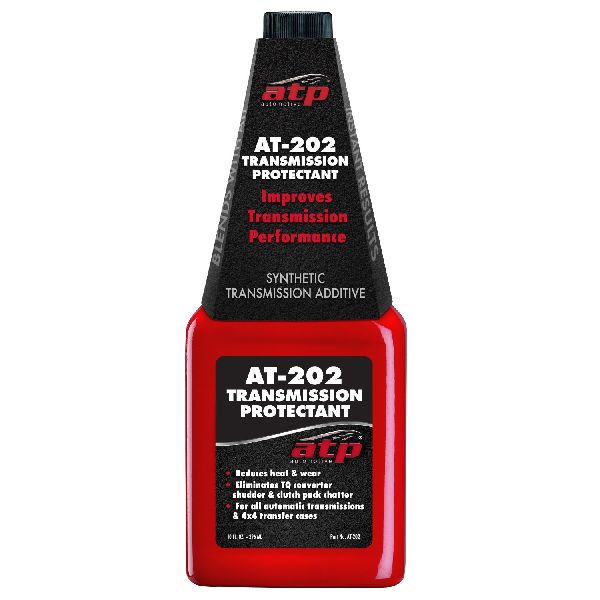
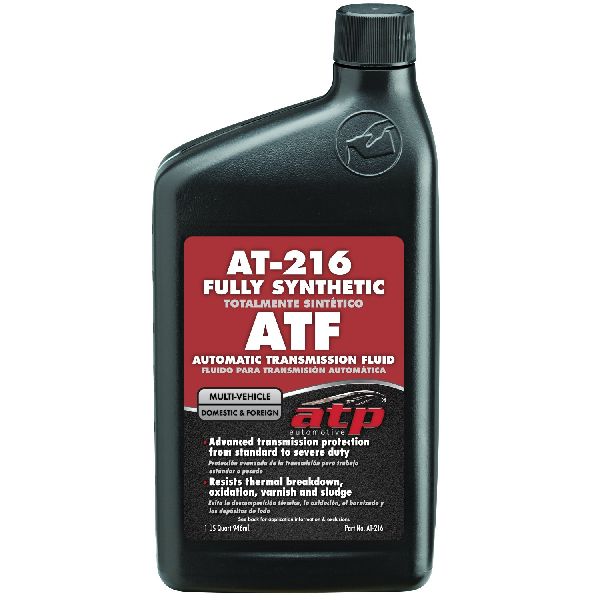
(OEM #10-9395 (ACDelco DEXRON-VI))— The correct fluid (DEXRON-VI for these models) is essential for proper hydraulic function and clutch performance.
Trusted brands: ACDelco
OEM price range: $8-$12 per quart
Aftermarket price range: $6-$10 per quart - Transmission Master Rebuild Kit — This is the most common fix for a P0734 caused by a failed 3-4 clutch pack, seals, and gaskets.
Trusted brands: Transtar, Alto, Precision
Aftermarket price range: $500-$1200
Related Codes That Often Appear With This One
- P0730 — This is a general 'Incorrect Gear Ratio' code that often appears alongside more specific gear codes like P0734.
- P0733 — Incorrect Gear Ratio in 3rd Gear. Since the 3-4 clutch pack is used for both gears, it's common to see codes for both 3rd and 4th gear when the pack fails.
- P0894 — Transmission Component Slipping. This is a more general code indicating slippage, which is the root cause of P0734.
- P1870 — Transmission Component Slipping. Often caused by valve body wear, which can also contribute to the pressure loss that causes a P0734.
Technical Service Bulletins (TSBs) & Recalls
- PIP4379M: A general GM bulletin from 2014 that lists a large number of transmission DTCs, including P0734, that can result from various internal hydraulic leaks or component failures. It does not pinpoint a specific cause for P0734 but acknowledges it as a potential fault code.
Platform-Specific Known Issues
- The 4L65-E transmission's 3-4 clutch pack is the Achilles' heel. The problem is so common that numerous aftermarket companies, like Sonnax, have developed specific parts like heavy-duty backing plates and valve body repair kits to permanently address the factory design shortcomings.
- A TSB from GM, #PIP4379M, lists P0734 among a wide array of transmission codes that could be caused by various internal hydraulic leaks or component failures, instructing technicians to follow standard diagnostic procedures.
Mechanic-Grade Diagnostic Values
- Shift Solenoid A (1-2, 3-4) and B (2-3) Resistance — expected: 20 - 40 Ohms. Failure: A reading outside this range (open or shorted) indicates a failed solenoid.
- Pressure Control (EPC) Solenoid Resistance — expected: 3.5 - 8.0 Ohms. Failure: A reading outside this range indicates a failed EPC solenoid.
- Line Pressure at Idle (in Park or Drive) — expected: 55 - 70 PSI. Failure: Pressure significantly below this range indicates a weak pump, clogged filter, or major internal leak.
- Line Pressure at Wide Open Throttle (WOT) Stall — expected: 170 - 190 PSI (minimum). Failure: Failure to reach this pressure indicates a pump unable to meet demand or a significant pressure leak under load.
- Line Pressure at Idle (in Reverse) — expected: 64 - 75 PSI (up to 325 PSI max). Failure: Low reverse pressure can indicate a worn reverse boost valve.
- Scan Tool Commanded Pressure Test (0.1 Amps to EPC) — expected: 165 - 185 PSI. Failure: Pressure significantly lower than the chart value for a given commanded amperage points to a hydraulic leak, not an electrical issue.
Scan Tool Commands That Help
- Tech 2 / GDS2 (or equivalent professional scanner): PCS Control / Solenoid Functional Test — This bidirectional test is used to manually command the Pressure Control Solenoid (PCS/EPC) to a specific amperage, allowing a technician to verify if the transmission's hydraulic system can produce the correct line pressure according to a diagnostic chart. It's crucial for separating electrical control problems from hydraulic integrity problems.
- Advanced Professional Scanner: Clutch Adaptation Relearn — After a transmission rebuild or valve body replacement, this function should be performed to reset the learned clutch apply pressure values in the TCM, ensuring smooth shifts and preventing premature wear on the new components.
Wiring & Ground Locations
- TCM (2003-2006 GMT800) — The T42 TCM is typically an external module, though its exact location can vary. It is often found in the engine bay. Some very early models may have control functions integrated within the PCM.. A faulty TCM or poor connection can cause incorrect commands or readings, leading to gear ratio codes. Knowing its location is the first step in checking its connectors and wiring harness.
- TCM (2007 GMT900) — Located under the hood, on the passenger side, mounted to a bracket beneath the battery tray.. This location is exposed to potential battery acid leaks and moisture, which can corrode the TCM connector and cause a host of transmission codes, including P0734.
- G103 / G104 (GMT800) — G103 is a primary engine ground on the front of the passenger side cylinder head. G104 is on the rear of the driver's side cylinder head.. The PCM and TCM rely on clean engine and chassis grounds. A corroded or loose G103/G104 ground can cause erratic sensor readings and unpredictable TCM behavior, potentially mimicking internal transmission faults.
Real Owner Repair Stories
- YouTube user SVCRUZA (GMC Truck with 4L60-E) — P0734 code, jerky shifting in/out of 4th gear.
❌ Tried (didn't work) The user replaced the input and output speed sensors as a first step.
✅ What actually fixed it The user declared the sensor replacement a success, but noted significant metallic debris on the magnetic tip of the old sensor. This is a classic sign of ongoing internal mechanical failure (like a failing clutch pack), indicating the sensor replacement was a misdiagnosis and the true failure was not yet addressed. The code was likely to return. - TexAgs forum user (Vehicle with 4L60-E) — Failure to shift to 3-4, but 1-2 and reverse work fine.
❌ Tried (didn't work) The user went through three separate professional transmission rebuilds that all failed with the same symptoms shortly after.
✅ What actually fixed it The user gave up on rebuilding the original transmission and replaced it with a used unit, which solved the problem. The suspicion was a hairline crack in a hydraulic circuit within the transmission case itself that was missed during the rebuilds. - YouTube channel "transmatted" (Vehicle with 4L60-E, rebuilt 4,000 miles prior) — Customer reported a neutral condition on the freeway, suspected 3-4 clutch failure.
❌ Tried (didn't work) A full teardown was performed based on the assumption of a burnt 3-4 clutch pack.
✅ What actually fixed it The 3-4 clutch pack was not burnt. The actual cause was that the 3-4 accumulator piston had been installed upside down during the previous rebuild. This created a leak in the 4th gear apply circuit, causing the no-4th-gear condition.
"I Checked Everything" — The Actual Cause
- A common scenario for P0734 is not a failed clutch pack, but a failed seal that *causes* the clutch pack to fail. The root cause is often the bonded rubber seals on the 3-4 clutch apply piston inside the input drum. Over time, these seals harden, shrink, and crack, allowing hydraulic pressure to leak past the piston. This lack of clamping force causes the clutches to slip and burn. A technician who only replaces the burnt clutches without replacing the hardened bonded pistons will see the vehicle return with the same failure, as the root-cause pressure leak was never fixed.
OEM Part Supersession History
OEM Input Drum Assembly→Sonnax Smart-Tech Input Housing Kit 77733-06K— The OEM design uses a snap ring to retain a flexible backing plate for the 3-4 clutch pack. This plate flexes under pressure, causing uneven heat distribution and burning the clutches. The Sonnax kit replaces the entire drum with a redesigned housing that uses a heavy-duty, bolt-on anchor plate, eliminating flex and the snap ring, while also allowing space for additional clutches.
Heads up: This is a comprehensive kit that requires specific assembly procedures and may require other updated parts (e.g., '97-later ring gear) as noted in its instructions.
Model Year Variations Within This Range
- 2003-2006 (GMT800): The Transmission Control Module (TCM) is a T42 type, typically located externally in the engine bay, separate from the main Powertrain Control Module (PCM).
- 2007 (GMT900, non-Classic): The T42 TCM is physically relocated to under the hood, on the passenger's side, mounted to a bracket underneath the battery tray. This makes it more susceptible to damage from battery leaks or moisture in that area.
Helpful Videos

We Have This Part in Stock


The information in this article is provided for general reference and educational purposes only. Vehicle specifications, procedures, and part compatibility can vary by production date, trim level, and region. Always consult your vehicle's factory service manual and verify part numbers before purchasing or performing repairs. Safety-critical components such as airbags, seat belts, and braking systems should be installed by a qualified professional.
- Gmc SIERRA DENALI:
- 🧭 Diagnostic Flowchart
- 🎬 Helpful Videos
- 🛍️ Shop This Part
- What's Unique About the 2003-2007 Gmc SIERRA DENALI
- Symptoms You May Notice
- Most Likely Causes
- Rare But Worth Checking
- Diagnosis Steps
- Parts You'll Likely Need
- Related Codes That Often Appear With This One
- Technical Service Bulletins (TSBs) & Recalls
- Platform-Specific Known Issues
- Mechanic-Grade Diagnostic Values
- Scan Tool Commands That Help
- Wiring & Ground Locations
- Real Owner Repair Stories
- "I Checked Everything" — The Actual Cause
- OEM Part Supersession History
- Model Year Variations Within This Range
- 🎟️ Get 5% Off