

P0734 on 2015 Jeep Grand Cherokee: Gear 4 Incorrect Ratio Causes & Fixes
On a 2015 Jeep Grand Cherokee, code P0734 most often points to a software issue in the Transmission Control Module (TCM). The primary fix is a dealer-performed software update outlined in Technical Service Bulletin #21-027-15 REV-C, which is much cheaper than assuming a major hardware failure. Before suspecting costly mechanical problems, owners should verify if this TSB is applicable and has been performed. A dealer flash typically costs between $150 and $250.
- For a 2015 Jeep Grand Cherokee, P0734 is very likely a software issue, not a hardware failure.
- Before authorizing any expensive repairs, have a Jeep dealer verify if TSB #21-027-15 REV-C is applicable and has been completed.
- If software is not the fix, the next step is a proper diagnosis of the transmission fluid level and condition by a professional.
- Do not immediately assume the transmission needs to be rebuilt or replaced, as this is the most expensive and often unnecessary conclusion.
- This code indicates a serious issue; continued driving is not recommended and can lead to more severe damage.
What's Unique About the 2015-2015 Jeep GRAND CHEROKEE
The 2015 Jeep Grand Cherokee uses a sophisticated ZF 8-speed automatic transmission, specifically the 8HP70 or its Chrysler-built equivalent, the 845RE. While generally reliable, early software calibrations had known issues. Jeep specifically released Technical Service Bulletin 21-027-15 REV-C to address the P0734 code with a software update. This makes it a unique case where the most probable cause isn't a mechanical failure but a correctable logic issue within the transmission's computer that a dealer can re-flash.
Diagnostic Flowchart
Tap your situation to follow the diagnostic path that matches what you're seeing on this vehicle.
Symptoms You May Notice
- Check Engine Light (Malfunction Indicator Lamp) is on.
- Vehicle may not shift into 4th gear, or the shift may be harsh or delayed.
- Harsh, erratic, or delayed shifting in general.
- Transmission may enter 'limp mode,' getting stuck in one gear (e.g., 4th gear).
- Slipping gears, where engine RPMs increase without a corresponding increase in vehicle speed.
- Reduced fuel economy due to inefficient gear usage.
- Transmission overheating.
- Replacing the entire transmission without first checking for the TSB software update.
- Replacing speed sensors when they are not the root cause, as a true sensor failure would likely trigger other specific sensor codes.
- Assuming a major mechanical failure before performing a simple fluid level and condition check.
Most Likely Causes
- Transmission Control Module (TCM) Software Requires Update 🔴 High Probability → Shop Transmission Assembly Jeep issued TSB #21-027-15 and its revisions specifically to fix this code with a software update, acknowledging a calibration issue from the factory for shift enhancements.
How to confirm: Contact a Jeep dealership with the vehicle's VIN to see if TSB #21-027-15 REV-C is open and has not been performed. The TSB applies to WK vehicles built on or before June 12, 2015.
Typical fix: A technician will use a diagnostic tool (like wiTECH) to reprogram or 'flash' the TCM with the latest software version. This service generally costs between $150-$250.
Est. part cost: $0 - Low or Dirty Transmission Fluid 🟡 Medium Probability → Shop Transmission Assembly The ZF 8-speed transmission does not have a traditional dipstick, making fluid level checks less straightforward for owners and potentially overlooked during routine service. Contaminated fluid can clog hydraulic passages and affect shifting.
How to confirm: A technician must check the fluid level and condition using the specific fill plug procedure, which involves monitoring fluid temperature (typically must be between 30-50°C or 86-122°F). Burnt smell or debris in the fluid indicates a problem.
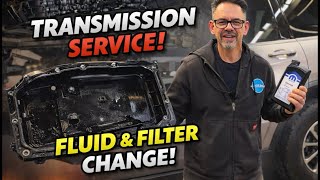
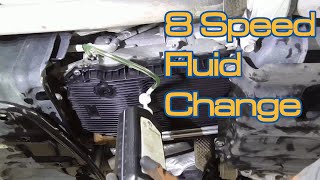
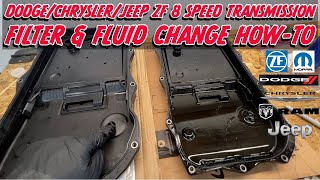
Typical fix: Top off the fluid if low and repair any leaks. If the fluid is dirty or burnt, a transmission fluid and filter change is necessary. The filter is integrated into the transmission pan, which must be replaced as a unit. 🎬 See this step-by-step ZF8 fluid and filter change guide
Est. part cost: $100-$250 - Faulty Shift Solenoid or Valve Body ⚪ Low Probability → Shop Transmission Valve Body
How to confirm: This requires advanced diagnostics with a scan tool to monitor solenoid operation and hydraulic pressures. A technician may need to perform electrical tests on the solenoid circuits or inspect the valve body for blockages or stuck valves.
Typical fix: If a specific solenoid is identified as faulty, it may need to be replaced. In many cases, the solenoids are integral to the valve body (mechatronics unit), which would be replaced as a complete assembly.
Est. part cost: $400-$1200
Rare But Worth Checking
- Internal Transmission Mechanical Failure: → Shop Transmission Assembly This is the worst-case scenario, usually resulting from prolonged driving with low fluid or other issues. It involves worn or damaged clutch packs, planetary gears, or other internal components. This would be confirmed by finding significant metal debris in the transmission pan during a fluid service. A full rebuild or replacement can cost several thousand dollars.
- Faulty Input/Output Speed Sensor: While less common than the software issue, a failing input or output speed sensor can send incorrect data to the TCM, causing it to miscalculate the gear ratio and trigger P0734. 🎬 Watch: A breakdown of common causes and fixes for P0734 Often, a failing sensor will also set its own specific trouble code (e.g., P0720).
Diagnosis Steps
- Scan the TCM for trouble codes. Confirm P0734 is present and note any other codes, especially for speed sensors or solenoids.
- CRITICAL FIRST STEP: Contact a Jeep dealer with the vehicle's VIN. Inquire if TSB #21-027-15 REV-C is applicable and if the software update has already been performed.
- If the TSB has been performed or is not applicable, the next step is to have a qualified technician check the transmission fluid level and condition. This requires a specific procedure where the transmission fluid temperature is monitored with a scan tool and must be within a specific range (e.g., 30-50°C) for an accurate reading.
- If the fluid level and condition are good, use an advanced scan tool to monitor live data, such as input/output speed sensor readings and solenoid command states, to look for inconsistencies while driving.
- Inspect the transmission wiring harness and connectors for any visible damage, corrosion, or loose connections.
- If diagnostics point to a specific solenoid or the valve body, further testing of those components is required. This may involve dropping the transmission pan for visual inspection.
- If significant metal debris is found in the transmission pan during a fluid service, suspect internal mechanical failure, which requires a transmission teardown.
Parts You'll Likely Need
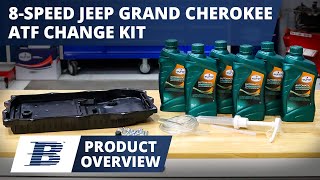
- Transmission Pan with Integrated Filter
(OEM #68225344AA)— Required for a transmission fluid service, as the filter is part of the pan on the ZF 8-speed transmission.
Trusted brands: Mopar, ZF
OEM price range: $150-$250
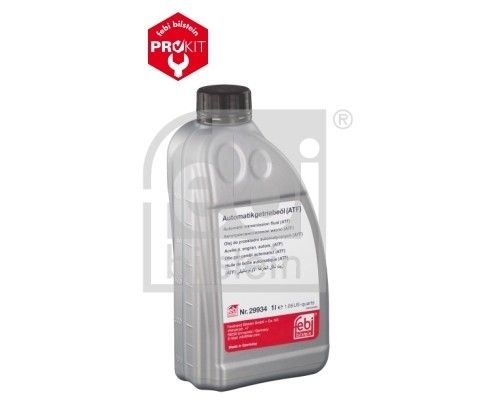
Aftermarket price range: $100-$180 - Automatic Transmission Fluid
(OEM #68218925AB (supersedes 68157995AA, 68157995AB))— Needed for a fluid top-off or a full fluid change. The correct specification (Mopar ZF 8 & 9 Speed ATF / ZF Lifeguard 8) is critical for proper transmission function.
Trusted brands: Mopar ZF 8 & 9 Speed ATF, ZF Lifeguard 8
OEM price range: $25-$40 per liter
Aftermarket price range: $20-$30 per liter
Related Codes That Often Appear With This One
- P1DCD — TCM monitoring processor performance multiple clutches locked up - mentioned in TSB #21-027-15 REV-C as being addressed by the same software update.
- P1B13 — Park-By-Wire unintended out of park position - also mentioned in TSB #21-027-15 REV-C.
- P0730 — Incorrect Gear Ratio (general) - This is a generic code that can accompany more specific gear ratio codes like P0734.
Technical Service Bulletins (TSBs) & Recalls
- 21-027-15 REV-C: The most current TSB that directly addresses P0734 on 2015 Grand Cherokees with a TCM software update for shift enhancements. It also applies to the Dodge Durango.
- 21-027-15: The original bulletin for this issue, which was later superseded by revised versions.
Platform-Specific Known Issues
- The primary vehicle-specific issue is the documented software calibration problem addressed by Jeep's Technical Service Bulletin #21-027-15 REV-C. This bulletin explicitly lists P0734 as a code that can be resolved by reprogramming the TCM on 2015 Grand Cherokees (and Dodge Durangos) with the ZF 8HP70/845RE transmission.
Mechanic-Grade Diagnostic Values
- Transmission Fluid Temperature for Fluid Level Check — expected: 30°C to 50°C (86°F to 122°F). Failure: An accurate fluid level cannot be determined outside this range.
- Transmission Fluid Temperature for 'Quick Learn' Procedure — expected: At least 55°C (131°F). Failure: The Quick Learn procedure cannot be initiated below this temperature.
- Transmission Fluid Temperature for Standard Adaptation — expected: Between 50°C (122°F) and 100°C (212°F). Failure: Adaptation learning will be aborted if the temperature is outside this range.
- General Shift Solenoid Resistance — expected: 5 to 30 Ohms. Failure: An infinite reading indicates an open coil; a zero or very low reading indicates a shorted coil.
Hidden / Shadow Codes Worth Checking
- P1DA8-00: Incorrect Gear Ratio Clutch A, B, or D Defective. This is a more specific manufacturer code that points toward a failure in a specific clutch pack, rather than the generic P0734. (see via This type of code is typically read by a dealer-level scan tool (like wiTECH) and may be found in conjunction with more generic P-codes.)
Scan Tool Commands That Help
- wiTECH (or equivalent advanced scan tool): RESET ADAPTIVE VALUES — This function is used to clear the learned clutch fill times and pressures. It must be performed before initiating a 'Quick Learn' or after replacing the transmission, valve body, or TCM.
- wiTECH (or equivalent advanced scan tool): QUICK LEARN / STATIC ADAPTATION (STADA) — This is a service routine to have the TCM relearn the clutch adaptation values. It should be performed to address shift quality concerns or after internal repairs. The transmission fluid must be above 55°C (131°F) to run this procedure.
- wiTECH (or equivalent advanced scan tool): Adaptation Drive Learn Procedure — If a Quick Learn is not available or does not resolve a shift quality issue, this manual driving procedure is required. It involves specific upshifts at light-to-medium throttle (1,250 - 2,000 RPM) to allow the TCM to relearn clutch fill characteristics.
Wiring & Ground Locations
- TCM Location — For 3.0L & 3.6L engines, the TCM is on top of the transmission. For 5.7L & 6.4L engines, it is on the right side of the transmission.. Physical inspection of the TCM and its connector is a key diagnostic step. Knowing its location is critical for checking for corrosion, damage, or loose connections.
- G903a / G108 — Right front of the engine compartment, on the inner fender, potentially near the power distribution block.. This is a primary ground point for the Transmission Control Module. A loose or corroded ground here can cause erratic TCM behavior, leading to incorrect calculations and fault codes like P0734.
- Braided Ground Strap — Typically connects the engine block to the chassis or firewall.. A corroded or broken main ground strap can cause a host of electrical issues, including limp mode and implausible signal codes (like U1424) that may accompany P0734. This is often overlooked as a cause for transmission-specific codes.
- TCM CAN C Connector — At the TCM module itself.. The CAN C bus wires (typically Yellow and Violet/White) are how the TCM communicates with the rest of the vehicle. A wiring diagram shows these are pins 1 and 2 or 9 and 10, depending on the specific connector. Damage to these wires can cause communication loss and trigger fault codes.
Real Owner Repair Stories
- Gears Magazine article (2016 Dodge Challenger 3.6L with 845RE transmission) — No-shifting condition (stuck in limp mode), Check Engine Light on.
❌ Tried (didn't work) The owner replaced the battery after multiple jump-starts, but the shifting problem appeared immediately after.
✅ What actually fixed it The story highlights that the transmission went into failsafe mode immediately following a battery replacement and jump-starting. This indicates the TCM is extremely sensitive to voltage irregularities, which can trigger limp mode and codes even if there is no mechanical fault with the transmission itself. - JLwranglerforums.com user (Jeep Wrangler (JL) with 8-speed transmission) — Malfunction Indicator Lamp with codes P0733 (Gear 3 Incorrect Ratio) and P1DA8-00 (Incorrect Gear Ratio Clutch A B or D Defective).
❌ Tried (didn't work) Technician initially thought a full transmission replacement was needed based on a TSB for other model years.
✅ What actually fixed it The final repair was the installation of a 'D Clutch kit'. This is a significant finding because it shows that when specific clutch-related codes appear with a general ratio code, the fix is often a targeted internal component repair (a specific clutch pack) rather than a valve body or full transmission replacement.
Model Year Variations Within This Range
- 2014 vs 2015: 2014 model year vehicles with the 845RE transmission require a TCM software update to enable the 'Quick Learn' scan tool procedure. 2015 models already have this functionality from the factory, though the TCM and scan tool software must still be at the newest revision to perform it.
- On or before June 12, 2015: Vehicles built on or before this date are subject to TSB #21-027-15 REV-C, which addresses code P0734 with a corrective software update. Vehicles built after this date should already have the updated software.
Helpful Videos

We Have This Part in Stock

The information in this article is provided for general reference and educational purposes only. Vehicle specifications, procedures, and part compatibility can vary by production date, trim level, and region. Always consult your vehicle's factory service manual and verify part numbers before purchasing or performing repairs. Safety-critical components such as airbags, seat belts, and braking systems should be installed by a qualified professional.
- Jeep GRAND CHEROKEE:
- 🧭 Diagnostic Flowchart
- 🎬 Helpful Videos
- 🛍️ Shop This Part
- What's Unique About the 2015-2015 Jeep GRAND CHEROKEE
- Symptoms You May Notice
- Most Likely Causes
- Rare But Worth Checking
- Diagnosis Steps
- Parts You'll Likely Need
- Related Codes That Often Appear With This One
- Technical Service Bulletins (TSBs) & Recalls
- Platform-Specific Known Issues
- Mechanic-Grade Diagnostic Values
- Hidden / Shadow Codes Worth Checking
- Scan Tool Commands That Help
- Wiring & Ground Locations
- Real Owner Repair Stories
- Model Year Variations Within This Range
- 🎟️ Get 5% Off