

OBD-II Code P0735: Incorrect 5th Gear Ratio
What P0735 means, why it triggers, and how to fix it
- Check your transmission fluid first; low or burnt fluid is the most common cause of P0735 and costs under $200 to service.
- Limit driving to short, low-speed trips under 45 mph to prevent a $300 solenoid repair from escalating into a $4,000 transmission rebuild.
- Expect repair costs to range from $150 for a fluid change to over $4,000 for a full rebuild, depending on internal damage.
- Do not replace the transmission without verifying hydraulic pressure and live sensor data, as a $250 faulty shift solenoid mimics catastrophic failure.
What Does P0735 Mean?

Code P0735 means the Transmission Control Module (TCM) detects the transmission is not in 5th gear when commanded. The computer constantly compares engine speed (via the Input Speed Sensor) to vehicle speed (via the Output Speed Sensor) to calculate the gear ratio. When this ratio misses the specific, pre-programmed value for 5th gear, it triggers P0735, confirming the transmission is slipping.
🎬 Watch: A quick overview of P0735 causes and common fixes.Technical definition: The official SAE definition for P0735 is "Gear 5 Incorrect Ratio." The TCM sets this code when it detects a difference of 10% or more between the calculated gear ratio and the manufacturer-specified ratio while commanding fifth gear.
Can I Drive With P0735?
Yes, But With Caution. You can drive for short, low-speed trips, but avoid highways. Your transmission will likely shift harshly, get stuck in a lower gear, or enter 'limp mode' to prevent catastrophic damage. Continuing to drive with a slipping transmission for more than 50 miles generates extreme heat (exceeding 250°F) that permanently damages fluid, seals, and internal components. This turns a moderate repair into a $4,000+ transmission rebuild.
Common Causes

- Low or Dirty Transmission Fluid (Very Common) — Transmission fluid creates the hydraulic pressure required to shift gears. Low, burnt, or dirty fluid prevents clutches from engaging fully, causing them to slip and trigger the code.
- Failed 5th Gear Shift Solenoid (Common) — A shift solenoid is an electronic valve directing fluid to engage specific gears. If the 5th gear solenoid fails electrically or sticks mechanically, it blocks the fluid needed to execute the shift.
- Clogged Valve Body or Filter (Common) — The valve body is the transmission's hydraulic control center. Sludge or metal shavings block its small passages or clog the main filter, restricting hydraulic pressure to the 5th gear clutch.
- Internal Mechanical Failure (Worn Clutches or Seals) (Common) — The 5th gear clutch pack, bands, or internal rubber seals wear out or harden over time. This causes internal hydraulic leaks and physical slipping under load.
- Faulty Input/Output Speed Sensors (Less Common) — The TCM relies on the Input and Output Speed Sensors to calculate gear ratios. A failed sensor provides erratic signals, causing incorrect calculations. This usually triggers secondary codes like P0720.
- Damaged Wiring or Connectors (Uncommon) — Wiring harnesses fray, corrode, or short out, sending incorrect signals to the TCM.
- Faulty Transmission Control Module (TCM) (Rare) — The TCM fails due to software glitches or hardware damage, misinterpreting sensor data. Rule out all other mechanical and electrical issues before replacing the TCM.
Symptoms

- Unable to Shift into 5th Gear — The vehicle refuses to shift into 5th gear, remaining stuck in 3rd or 4th gear at highway speeds.
- Transmission Slipping or Harsh Shifting — The engine RPMs flare up without the vehicle accelerating, or you feel a harsh jolt when shifting into 5th gear.
- Poor Fuel Economy — The engine runs at higher RPMs on the highway because it cannot access the overdrive gear, significantly increasing fuel consumption.
- Vehicle Enters 'Limp Mode' — The TCM locks the transmission in a single gear (usually 2nd or 3rd) to prevent further internal damage, severely limiting speed.
- Transmission Overheating — Friction from slipping clutches generates excessive heat, triggering a transmission temperature warning light.
- Check Engine Light On (also visible on scanner) — The check engine or transmission warning light illuminates on the dashboard.
Diagnostic Flowchart

Tap your situation to follow the diagnostic path that matches what you're seeing on this code.
Common Fixes & Costs
- Transmission Fluid and Filter Change — Parts: $50-$150, Labor: $100-$250, ~1.5 hr book time (Intermediate)
- Replace Shift Solenoid(s)
— Parts: $50-$200, Labor: $200-$400, ~3 hr book time
(Intermediate)
: OEM
: OEM - Replace Valve Body
— Parts: $500-$1200, Labor: $300-$800, ~4.5 hr book time
(Professional)
: OEM
: OEM - Rebuild or Replace Transmission — Parts: $1500-$4000, Labor: $1500-$3000, ~12 hr book time (Professional)
- Replace Transmission Control Module (TCM) — Parts: $400-$800, Labor: $200-$400, ~2.5 hr book time (Professional)
DIY vs Professional
- Transmission Fluid and Filter Change 🟢 Beginner
Tools: Socket set, drain pan, funnel, torque wrench, new fluid and filter/gasket. - Replace Shift Solenoid(s) 🟢 Beginner
Tools: Tools for fluid/filter change, plus a multimeter, vehicle-specific service manual, and possibly snap-ring pliers. - Replace Valve Body 🟢 Beginner
Tools: Advanced toolset, inch-pound and foot-pound torque wrenches, service manual, transmission-specific assembly lube. - Replace Transmission Control Module (TCM) 🟢 Beginner
Tools: Basic hand tools to access the module; proprietary diagnostic scan tool required for programming.
Used vs. New Parts: Buying Guide
When a used part is worth it: For a high-mileage vehicle (>150k miles) where the cost of a new part is prohibitive, a used solenoid pack or valve body from a low-mileage donor is a cost-effective choice. A complete used transmission is a gamble but may be the only economical option for an older car.
Donor-vehicle mileage cap: roughly under 80000 miles for the part to have meaningful remaining life.
Donor quality checklist:
- Verify the donor vehicle was not scrapped due to transmission failure.
- Match part numbers exactly, as slight variations cause incompatibility.
- Purchase from a reputable recycler offering at least a 90-day warranty.
Decision logic:
- If The part is a single shift solenoid and the vehicle has under 100k miles → Buy new OEM or a reputable aftermarket brand. The low cost of the part doesn't justify the labor risk of a used one.
- If The part is a complete valve body or transmission assembly for a vehicle with over 150k miles → A used or remanufactured part is an acceptable risk, but a remanufactured unit with a long warranty is superior to a used one.
- If The part is electronic, like a TCM → Favor a new or professionally remanufactured part with a warranty, as used electronics have an unknown history and high failure risk.
Warranty tradeoff: Used parts typically come with a 30-90 day parts-only warranty, leaving you to pay for labor again if it fails. New aftermarket parts often have a 1-year warranty, while OEM parts have a 1-2 year warranty.
Worst-case if a used part fails: 400-1500. If a used transmission or valve body fails after installation, you pay for the labor a second time, plus the cost of another part.
What Happens If You Wait — Timeline
- 0-1 month: Code P0735 is set. Check Engine Light is on. Driver notices occasional hesitation or a slightly harsh shift into 5th gear. Engine runs at higher RPM on the highway. (MPG impact: 5-10%% · Added cost: $20-$80 in wasted fuel.)
- 1-3 months: Slipping in 5th gear becomes frequent. Friction overheats the transmission fluid, causing it to darken and lose lubricating properties. A faint burning smell is noticeable. (MPG impact: 10-15%% · Added cost: $150-$400 (Cost of a fluid/filter change that may now be insufficient).)
- 3-6 months: The 5th gear clutch pack is significantly worn from repeated slipping and heat. Burnt fluid damages seals and causes shift solenoids to stick. Other gears shift harshly. (MPG impact: 15-20%% · Added cost: $800-$1,800 (A solenoid or valve body replacement is needed, but clutch damage remains).)
- 6+ months: Catastrophic failure. The 5th gear clutch pack disintegrates, sending metal debris throughout the transmission. The transmission loses all gears or gets stuck in limp mode permanently. (MPG impact: 20-30%+% · Added cost: $3,000-$7,000+ (The only fix is a complete transmission rebuild or replacement).)
Cost of Not Fixing It
- 0-1 month: Noticeable decrease in fuel economy (5-15%) due to inability to use overdrive gear. Increased engine wear from running at higher RPMs. (Added cost: 50-150)
- 1-6 months: Continued clutch slippage generates extreme heat, causing permanent damage to transmission fluid, seals, and gaskets. Leads to widespread internal leaks. (Added cost: 500-1500)
- 6+ months: Catastrophic transmission failure. Debris from the failing 5th gear clutch destroys the valve body, torque converter, and other gears. (Added cost: 3000-7000)
Diagnosis Steps
- Check Transmission Fluid
Check the transmission fluid level and condition. It must be at the 'full' mark, bright red or pink, and smell sweet. Brown, black, or burnt-smelling fluid confirms internal wear. Modern sealed transmissions require a technician to check the level from underneath the vehicle.
Tools: Rag, Transmission Dipstick (if equipped) (Beginner) - Scan for Other Codes
Use an OBD-II scanner to read all stored codes. Always diagnose and fix sensor codes (like P0720) or TCM faults (P0700) first, as they cause false P0735 readings.
Tools: OBD-II Scanner (Beginner) - Analyze Live Data
Monitor live data from the Input Speed Sensor (ISS), Output Speed Sensor (OSS), and commanded gear while driving. A large discrepancy between ISS and OSS when 5th gear is commanded confirms a mechanical slip. Fluid temperatures over 225°F indicate overheating.
Tools: Advanced OBD-II Scanner (Intermediate) - Inspect Wiring and Connectors
Visually inspect the transmission wiring harness. Look for frayed wires, loose connections, or corrosion on the speed sensor and main transmission plugs.
Tools: Flashlight (Beginner) - Test Shift Solenoids
Test the resistance of the 5th gear shift solenoid with a multimeter. Compare the reading to the service manual (typically 10-30 ohms). Next, apply 12V power to command the solenoid on; a missing 'click' means the valve is mechanically stuck.
Tools: Socket Set, Multimeter, 12V Power Probe, Service Manual (Advanced) - Perform Hydraulic Pressure Tests
Connect a transmission pressure gauge to the test port. Compare running pressure to manufacturer specs (e.g., 45-80 psi at idle). Low pressure points to an internal leak, bad solenoid, or weak pump.
Tools: Transmission Pressure Gauge Set, Service Manual (Professional) - Inspect Internal Components
Remove the transmission pan to check for metal shavings or clutch material. Fine grey dust on the magnet is normal; large metal chunks or thick black sludge confirm catastrophic internal failure.
Tools: Socket Set, Drain Pan, Gasket Scraper (Advanced) - Check Speed Sensor Waveform
Connect a digital oscilloscope to the speed sensor signal wires. A good sensor produces a clean square wave. An erratic pattern indicates a faulty sensor tricking the TCM.
Tools: Digital Oscilloscope, Back-probe Pins (Professional)
When This Code Triggers (Freeze-Frame Conditions)
- Engine Coolant Temp: 175-225°F (79-107°C) (The code typically sets when the transmission is at full operating temperature.)
- RPM: 1500-2500 RPM (During steady-state cruising or light acceleration when the shift to 5th gear is commanded.)
- Engine Load: 20-50% (Occurs under light to moderate engine load, not typically during heavy acceleration.)
- Vehicle Speed: 45-65 mph (The fault is logged at highway speeds when the transmission is expected to be in 5th gear.)
Related Codes
- P0730 — This is a general 'Incorrect Gear Ratio' code. P0735 is more specific, pinpointing the problem to 5th gear.
- P0700 — A generic code meaning the TCM has stored a fault code. It alerts you to check the TCM for specific codes like P0735.
- P0731, P0732, P0733, P0734 — Incorrect gear ratio codes for gears 1-4. Having P0735 alongside these suggests a widespread problem like low fluid, a clogged filter, or a failing pump, rather than a single 5th-gear component.
- P0720 — Indicates a fault in the Output Speed Sensor (OSS) circuit. A P0720 code appearing with P0735 means the ratio error is likely due to a bad sensor signal, not a mechanical slip.
- P2704 — Stands for 'Friction Element E Apply Time Range'. On modern transmissions like Ford's 10R80, the 'E' clutch is used for 5th gear. This confirms a specific problem with the 5th gear clutch circuit.
Climate & Environmental Factors
- Extreme Cold: Thickens transmission fluid, causing delayed engagement and sluggish shifting on startup, which intermittently triggers a gear ratio code.
- High Heat: Accelerates the breakdown of transmission fluid. Degraded fluid loses its hydraulic properties, leading to clutch slippage and overheating.
- High Altitude: Reduced engine power forces the transmission to shift more frequently or hold gears longer, exposing pre-existing weaknesses in the hydraulic system.
How to Talk to a Mechanic About This Code
Say this: "I have a P0735 code. Please check the transmission fluid condition and level, scan for related codes, and check the live data from the input and output speed sensors. Provide a written estimate before performing any repairs."
This signals you have done your research and directs the technician to perform a logical, step-by-step diagnosis rather than jumping to the most expensive conclusion. It establishes you as an informed consumer.
Avoid saying:
- 'My car is shifting weird, can you fix it?'
- 'Just fix whatever's wrong, I need it back fast.'
- 'My check engine light is on.' (Too vague)
Questions to ask before authorizing the repair:
- What was the condition of the transmission fluid and was there any debris in the pan?
- Did you perform a hydraulic pressure test, and what were the results?
- Can you show me the live data from the speed sensors that indicates the slip?
- Is a full rebuild necessary, or can the issue be resolved with a less expensive part like a solenoid or valve body?
- What is the warranty on this repair, is it nationwide, and what does it cover?
Where to Take It: Dealer vs Independent vs Chain
- Dealer:
Recommended if the vehicle is under warranty or has a known TSB. Otherwise, a transmission specialist is more cost-effective.
Best for: Vehicles still under the powertrain warranty., Newer vehicles with known manufacturer-specific issues or Technical Service Bulletins (TSBs).
Downsides: Typically the highest labor rates., May prefer to replace the entire transmission rather than rebuilding or repairing it, which is more expensive. (Typical cost: +50% vs. baseline) - Independent Shop:
Best fit, but specifically seek out a dedicated transmission specialty shop, not just a general independent mechanic.
Best for: Out-of-warranty vehicles where cost is a major factor., Finding a shop that specializes specifically in transmission repair.
Downsides: Quality and expertise vary greatly. Must vet the shop's reputation and certifications., A general mechanic lacks the specialized tools or experience for a deep internal transmission diagnosis. (Typical cost: +0% vs. baseline) - Chain Shop:
AVOID for anything beyond the initial code scan. P0735 requires a level of diagnostic expertise not typically found at chain shops.
Best for: Basic code scanning to confirm the P0735 code., Simple, unrelated maintenance like oil changes or tires.
Downsides: Technicians lack the specialized training for complex internal transmission diagnostics., Business model encourages replacing the entire transmission rather than performing a nuanced repair. (Typical cost: -10% vs. baseline)
When to Walk Away From the Repair
If the estimated repair cost exceeds 50% of the car's private-party value, seriously consider selling the car as-is or trading it in.
- Car worth $5000, fix is $3000: Walk away. The repair cost is 60% of the car's value. It is not financially sound to proceed.
- Car worth $15000, fix is $3500: Fix it. The repair cost is only 23% of the car's value and is a worthwhile investment.
- Car worth $3000, fix is $2800: Walk away. The repair cost is over 90% of the vehicle's value. The car is not worth fixing.
What Scan Tool You Need for This Code
Minimum: A scanner that reads and displays live transmission data, specifically Input Speed Sensor (ISS) RPM, Output Speed Sensor (OSS) RPM, and transmission fluid temperature.
A basic $20 code reader only gives you the P0735 code. Without live data, you are guessing between a bad sensor, a faulty solenoid, or a major mechanical failure.
Budget: BlueDriver Pro (~$120) — Connects to your smartphone and displays live data for multiple parameters at once (like ISS and OSS RPMs) to help diagnose the slip.
Mid-range: Foxwell NT510 Elite (~$200) — Offers OE-level diagnostics. It reads live transmission data and performs bi-directional tests to command solenoids to activate, determining if a solenoid is mechanically stuck.
Professional: Autel MaxiCOM MK808S/MK808Z (~$500) — A full-featured diagnostic tablet providing extensive live data, graphing, and bi-directional control. It performs advanced functions like transmission adaptive learning resets after a repair.
Rent vs buy: For P0735, buying a scanner with live data capabilities is recommended. You need to monitor data during a test drive, which is difficult with a rental tool from a parts store.
How to Clear the Code After You Fix It
- Use a compatible OBD-II scan tool to clear the diagnostic trouble codes (DTCs).
- Perform a transmission adaptive learning reset if the scan tool supports it and the manufacturer recommends it.
- Conduct a complete drive cycle to allow the vehicle's readiness monitors to run.
Drive cycle (~20 minutes): Start the engine and idle for 3 minutes. Accelerate to 55 mph and hold a steady speed for 5 minutes to ensure the shift to 5th gear. Drive in stop-and-go city traffic for 10 minutes, including several complete stops. Allow the vehicle to cool down completely.
Readiness monitors affected: Comprehensive Component Monitor, Catalyst Monitor, Evaporative System Monitor
Before emissions retest: drive at least 50 miles to fully set monitors.
Watch out for:
- Simply clearing the code will not fix the problem; the code returns if the underlying mechanical fault is not repaired.
- Disconnecting the battery erases all adaptive memory and readiness monitors, causing an immediate emissions test failure.
Will This Fail Emissions / State Inspection?
Yes — this code typically fails an OBD-II emissions inspection.
- California: An active P0735 causes an immediate failure of the smog check. After repairs, a full drive cycle must be completed to set all readiness monitors before a retest.
- New York: The NYS DMV inspection includes an OBD-II scan. Any active check engine light results in an automatic failure.
- Texas: In the 17 counties requiring emissions testing, an illuminated check engine light causes the vehicle to fail its annual safety inspection.
Most Commonly Affected Vehicles
- Ford Explorer, F-150, Ranger, Mustang (2017-2023) — Models with the 10-speed (10R80) transmission are subject to TSBs like 22-2428. A software update is the first step, but the cause is often a faulty valve body or a known internal failure of the CDF clutch drum sleeve.
- Chevrolet / GMC Silverado, Sierra (2007-2018) — On trucks with the 6L80/6L90 transmission, this code is commonly caused by a failing torque converter that sends debris into the valve body, clogging the separator plate orifices.
- Honda Accord, CR-V, Pilot, Odyssey (2003-2012) — Commonly experiences issues with a worn 5th gear clutch disc, low fluid, or failures in specific shift solenoids.
- Dodge / Chrysler Grand Caravan, Town & Country (2008-2016) — These vehicles are well-known for failures of the transmission solenoid pack. Replacing the entire pack is a common and effective repair.
- Nissan Altima, Maxima, Pathfinder, Murano (2005-2016) — Frequently cited as having a higher incidence of this code, often related to internal wear or valve body problems.
- Hyundai Santa Fe, Elantra (2008-2012) — Issues are often traced to mechanical problems within the transmission, such as a sticking control valve or a malfunctioning solenoid.
- Volkswagen Jetta (2014-2015) — The cause often points to internal transmission issues or mechatronic unit faults.
- Mazda 3, 6, CX-7 (2006-2014) — On models with the FNR5 5-speed automatic, TSB #1597 addresses this code, pointing towards issues beyond just solenoids, often requiring deeper internal diagnosis.
Manufacturer-Specific Notes
- Ford: On 10-speed transmissions (10R80), TSBs like 22-2428 are critical. A PCM/TCM software update is a required first step. If issues persist, inspect the valve body or the CDF clutch cylinder sleeve.
- Honda: Honda transmissions are highly sensitive to fluid type. Always use genuine Honda ATF. Problems frequently trace to a specific failed shift solenoid or a worn 5th gear clutch disc.
- Chrysler/Dodge/Ram: It is common for the entire solenoid pack to fail as a unit. Replacing the whole pack is the recommended and most reliable repair for shift-related codes.
- General Motors (Chevrolet/GMC): In 6L80/6L90 transmissions, P0735 is frequently a secondary code caused by a failing torque converter shedding debris into the valve body separator plate. Repair requires replacing the torque converter and separator plate.
Real Owner Stories
2012 Chevy Silverado 1500 at 130K miles
Truck experienced a hard slam shift on the highway, followed by a Check Engine Light and limp mode. Codes P0700 and P0735 appeared. Transmission fluid was burnt.
What they tried:
- Cleared the code, which allowed the truck to shift normally for a short period before the light returned.
- Performed a fluid and filter change.
Outcome: The issue was diagnosed as a classic 6L80 transmission failure: the torque converter shed debris, clogging the valve body. The owner required a full transmission rebuild, including a new torque converter and separator plate.
Lesson: On GM trucks with the 6L80/6L90, P0735 is rarely a simple fix. A hard shift followed by this code strongly indicates torque converter failure; changing the fluid will not solve the problem.
2019 Ford F-150 with 10R80 Transmission
Vehicle presented with P0735 and P2704 codes, with a confirmed slip in 5th gear.
What they tried:
- A shop performed a transmission teardown, expecting to find a failed 'E' clutch or CDF drum.
- No internal damage was found. The transmission was reassembled with a new valve body.
- The slip in 5th gear persisted.
Outcome: Further diagnosis revealed the root cause was an engine misfire detectable only under the specific load conditions of the 5th gear shift. The misfire disrupted the expected RPM, tricking the TCM into flagging a gear ratio error.
Lesson: Do not automatically assume a transmission-specific code means the transmission is at fault. A thorough diagnosis must rule out engine performance issues that mimic transmission problems.
2005 Kia Amanti at 120K miles
Immediately after an A/C compressor replacement, the car made a loud 'clank' and triggered P0735. A transmission shop recommended a full transmission replacement without a test drive.
What they tried:
- The owner test-drove the car and found it shifted into 5th gear perfectly.
- Checked the transmission fluid, which was full but dark.
Outcome: The owner suspected an electrical issue related to the recent A/C repair. The immediate jump to a full replacement was a misdiagnosis caused by a loose connector bumped during the A/C job.
Lesson: If a fault code appears immediately after another repair, suspect a connection issue. Always get a second opinion before agreeing to a multi-thousand dollar repair based only on a code.
How to Prevent This Code From Triggering
- Change transmission fluid and filter at recommended intervals. (Every 30,000-60,000 miles for most automatic transmissions.) — Clean fluid maintains hydraulic pressure, cools components, and provides proper lubrication. Old fluid leads to overheating and clutch slippage.
- Use only the manufacturer-specified transmission fluid (OEM fluid). (Every fluid change.) — OEM fluids contain specific friction modifiers designed for that transmission's clutches. Using a generic 'universal' fluid causes shifting problems.
- Install an auxiliary transmission cooler. (One-time installation, especially for vehicles that tow or operate in hot climates.) — Heat is the #1 killer of automatic transmissions. An external cooler reduces fluid temperatures by 50-100°F under load, preventing fluid breakdown.
- Check the fluid level monthly. (Once per month, or before long trips.) — Low fluid is a primary cause of slipping. Catching a leak early prevents a minor seal leak from turning into a major transmission failure.
- Come to a complete stop before shifting from Drive to Reverse. (Daily habit.) — Shifting while the car is moving puts massive strain on the transmission bands and gearsets. This simple habit dramatically reduces internal wear.
Frequently Asked Questions
How much does it cost to fix code P0735?
Costs range from $150 for a fluid change to over $4,000 for a transmission rebuild. Replacing a shift solenoid typically costs $250 to $600. Proper diagnosis is required to avoid overpaying.
Can I just add transmission fluid to fix it?
Topping off low fluid temporarily restores pressure, but you must fix the underlying leak. If the fluid is burnt and black, adding new fluid will not reverse the internal clutch damage.
What is the most common misdiagnosis for P0735?
Replacing a shift solenoid without checking hydraulic pressure or fluid condition is the most common mistake. The code often stems from a worn clutch pack or failing torque converter, meaning the new solenoid will not fix the slip.
Does P0735 always mean I need a new transmission?
No. Low fluid, a clogged filter, or a faulty shift solenoid cause this code and are much cheaper to fix. A full rebuild is only necessary if the transmission pan contains significant metal debris.
Why did the code come back after I cleared it?
Clearing the code only turns off the dashboard light; it does not fix the mechanical slip. The TCM re-runs its checks during your next drive, detects the incorrect gear ratio again, and triggers the code.
Can a bad speed sensor cause JUST a P0735 code?
It is highly unlikely. A faulty speed sensor affects all gears and triggers a specific sensor code like P0720. A solitary P0735 code points directly to a mechanical or hydraulic issue in the 5th gear circuit.
Can low battery voltage cause P0735?
Yes. Voltage below 12V causes erratic behavior in the TCM, leading to incorrect calculations and false codes. Always verify battery and alternator health before starting complex transmission diagnostics.
Will P0735 fail an emissions test?
Yes. An active Check Engine Light results in an automatic failure during an OBD-II emissions test. You must repair the issue and complete a full drive cycle before retesting.
Key Takeaways
- Check your transmission fluid first; low or burnt fluid is the most common cause of P0735 and costs under $200 to service.
- Limit driving to short, low-speed trips under 45 mph to prevent a $300 solenoid repair from escalating into a $4,000 transmission rebuild.
- Expect repair costs to range from $150 for a fluid change to over $4,000 for a full rebuild, depending on internal damage.
- Do not replace the transmission without verifying hydraulic pressure and live sensor data, as a $250 faulty shift solenoid mimics catastrophic failure.
Helpful Videos
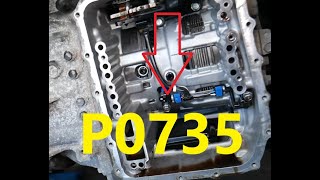
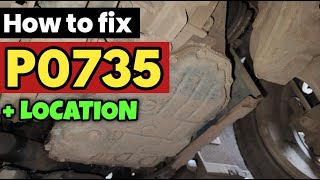

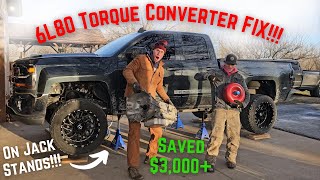
Shop the Parts Behind P0735
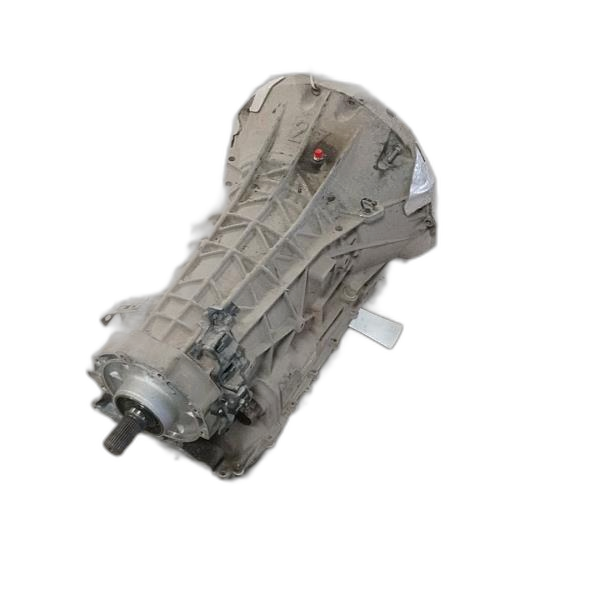
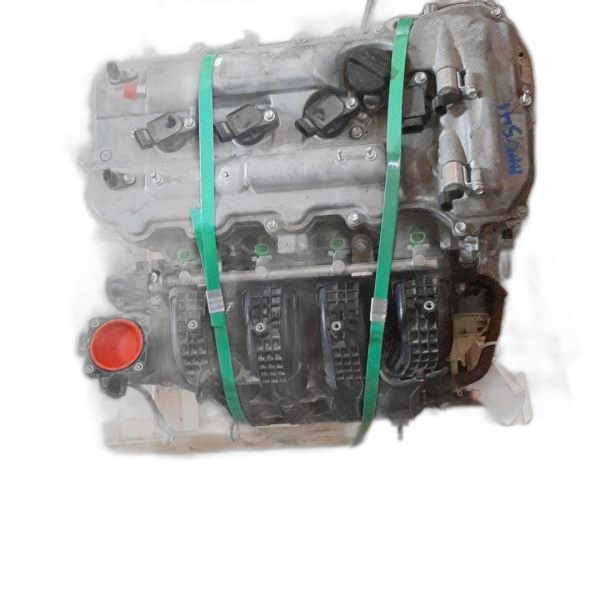
Below are the parts most often responsible for code P0735, ranked by how frequently each one is the actual culprit (per the diagnosis above). Tap any to see what we have for your vehicle.





The information in this article is provided for general reference and educational purposes only. Vehicle specifications, procedures, and part compatibility can vary by production date, trim level, and region. Always consult your vehicle's factory service manual and verify part numbers before purchasing or performing repairs. Safety-critical components such as airbags, seat belts, and braking systems should be installed by a qualified professional.
- 🧭 Diagnostic Flowchart
- 🎬 Helpful Videos
- 🛍️ Shop This Part
- What Does P0735 Mean?
- Can I Drive With P0735?
- Common Causes
- Symptoms
- Common Fixes & Costs
- DIY vs Professional
- Used vs. New Parts: Buying Guide
- What Happens If You Wait — Timeline
- Cost of Not Fixing It
- Diagnosis Steps
- When This Code Triggers (Freeze-Frame Conditions)
- Related Codes
- Climate & Environmental Factors
- How to Talk to a Mechanic About This Code
- Where to Take It: Dealer vs Independent vs Chain
- When to Walk Away From the Repair
- What Scan Tool You Need for This Code
- How to Clear the Code After You Fix It
- Will This Fail Emissions / State Inspection?
- Most Commonly Affected Vehicles
- Manufacturer-Specific Notes
- Real Owner Stories
- 2012 Chevy Silverado 1500 at 130K miles
- 2019 Ford F-150 with 10R80 Transmission
- 2005 Kia Amanti at 120K miles
- How to Prevent This Code From Triggering
- Frequently Asked Questions
- How much does it cost to fix code P0735?
- Can I just add transmission fluid to fix it?
- What is the most common misdiagnosis for P0735?
- Does P0735 always mean I need a new transmission?
- Why did the code come back after I cleared it?
- Can a bad speed sensor cause JUST a P0735 code?
- Can low battery voltage cause P0735?
- Will P0735 fail an emissions test?
- Key Takeaways
- 🎟️ Get 5% Off