

P0736 on 2001-2005 Chevrolet Silverado: Reverse Incorrect Ratio Causes and Fixes
P0736 on a 2001-2005 Silverado means the transmission is failing to engage reverse properly. The most common cause is low or burnt transmission fluid. Start by checking the fluid level and condition; a fluid and filter change may solve the issue. If not, suspect an internal problem like a bad solenoid, worn valve body components, or a failed clutch or sun shell.
- P0736 indicates a problem with the reverse gear, most often slipping or failure to engage.
- Always check the transmission fluid level and condition first; a fluid and filter change is the most common and least expensive fix.
- Do not drive the vehicle with this code, as you may lose reverse completely and could cause catastrophic transmission damage.
- If a fluid service does not resolve the issue, the problem is likely internal (solenoid, clutch, valve body) and requires professional diagnosis.
What's Unique About the 2001-2005 Chevrolet SILVERADO
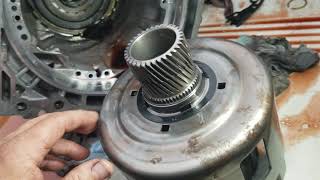
The 2001-2005 Silverado (GMT800 platform) primarily used the 4L60-E transmission in 1500 models and the heavier-duty 4L80-E in 2500/3500 models. While both can set a P0736 code for similar reasons like low fluid, the specific internal mechanical failures can differ. For the 4L60-E, this code is a very common symptom of a failing reaction sun shell, a well-documented weak point that affects reverse, 2nd, and 4th gears. 🎬 Watch: See how a broken reaction shell causes reverse failure. Upgraded replacements like the Sonnax 'SmartShell' or 'The Beast' sun shell are common fixes during a rebuild. For the 4L80-E, a worn low/reverse servo piston can be a more specific cause. Additionally, the 4L60-E valve body is prone to wear at the reverse abuse bore plug, causing a pressure leak that prevents proper reverse engagement.
Diagnostic Flowchart
Tap your situation to follow the diagnostic path that matches what you're seeing on this vehicle.
Symptoms You May Notice
- Check Engine Light is on
- Vehicle will not move when shifted into Reverse
- Delayed or harsh engagement into Reverse
- Slipping when in Reverse
- Inability to back up, especially under load or on an incline
- Grinding or clunking noises when shifting into reverse
- Vehicle enters "limp mode"
- Immediately replacing the transmission without checking fluid level and condition first. A simple fluid service is much cheaper and often solves the problem.
- Replacing shift solenoids (like the 1-2 or 2-3 shift solenoids) when the problem is mechanical. While solenoids can fail, P0736 on this platform is very frequently caused by a mechanical or hydraulic issue like the sun shell or a worn valve body bore.
- Replacing the Transmission Range Switch (Neutral Safety Switch), as it typically causes no-start conditions or incorrect gear display on the dash, but not usually an incorrect ratio code.
Most Likely Causes
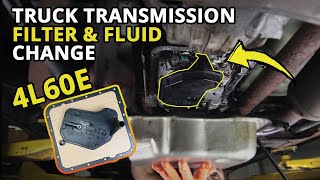
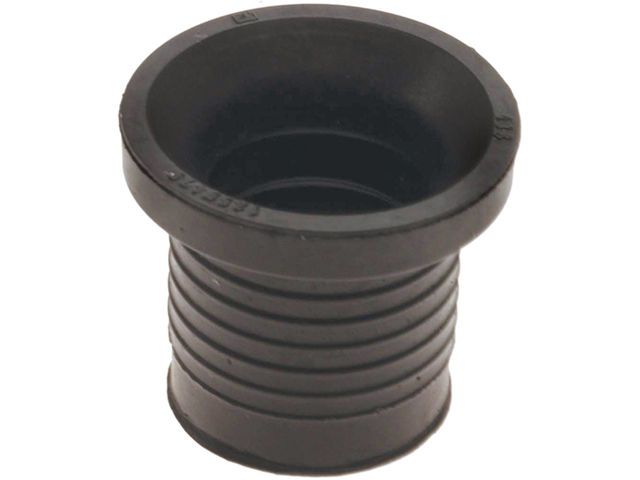
- Low or Dirty Transmission Fluid 🔴 High Probability → Shop Transmission Assembly Transmissions of this era are highly dependent on hydraulic pressure. Leaks from pan gaskets, cooler lines, or seals can lead to a low fluid level. A common, often overlooked, cause of low pressure is a cracked O-ring on the neck of the transmission filter, which allows the pump to suck in air. Burnt or degraded fluid loses its hydraulic properties and can no longer create the pressure needed to actuate clutches.
How to confirm: Check the transmission fluid dipstick (with the engine running and transmission warm, in Park) for level and color. The fluid should be at the full mark and reddish-pink. If it's low, brown, or smells burnt, it needs attention. A burnt smell strongly suggests internal clutch or band failure.
Typical fix: If low, top off the fluid and inspect for leaks. If dirty or burnt, perform a transmission fluid and filter change. Be sure to replace the filter neck seal.
Est. part cost: $50-$150 for fluid and a filter kit. - Internal Mechanical Failure (Sun Shell, Clutches) 🟡 Medium Probability High mileage and heavy use lead to wear. For the 4L60-E, the reaction sun shell is a notorious weak point that fractures, causing a loss of reverse, 2nd, and 4th gears. For the 4L80-E, the reverse servo piston can wear out. 🎬 Watch: How to fix no reverse on a 4L80-E transmission. Worn or burnt low/reverse clutch packs are also a common failure point on both transmissions.
How to confirm: This is diagnosed by ruling out fluid and electronic issues. The presence of codes P0729 (Gear 2 Incorrect Ratio) or P0734 (Gear 4 Incorrect Ratio) alongside P0736 is a classic indicator of a broken sun shell on a 4L60-E. Ultimately, diagnosis requires transmission disassembly.
Typical fix: Rebuild or replace the transmission. During a rebuild, it is critical to replace the stock 4L60-E sun shell with an upgraded, hardened unit like a Sonnax 'SmartShell' or 'The Beast' shell.
Est. part cost: $1800-$4500 for a rebuilt transmission. - Worn Valve Body or Failed Shift Solenoid 🟡 Medium Probability → Shop Transmission Valve Body Solenoids are electro-hydraulic valves that can fail electrically or become clogged with debris. More specific to the 4L60-E, the valve body bore for the 'Reverse Abuse Valve' can wear out from constant oscillation. This wear creates a hydraulic leak, preventing the low/reverse clutch from receiving enough pressure to engage properly, directly causing a P0736.
How to confirm: A professional can command solenoids with a bi-directional scan tool. To confirm valve body wear, a technician must remove the valve body and inspect the bores. Sonnax makes tools to check for this specific wear.
Typical fix: Replace the faulty solenoid. For a worn valve body, specialized kits like the Sonnax Forward and Reverse Abuse Valve Kit (77754-35K) can be installed to restore the hydraulic integrity of the bore without replacing the entire valve body.
Est. part cost: $40-$100 for a single ACDelco solenoid. $50-$100 for a valve body repair kit. - Clogged Transmission Filter ⚪ Low Probability → Shop Transmission Assembly If the transmission fluid is severely degraded, clutch material and other debris can clog the filter, starving the pump for fluid and lowering overall hydraulic pressure needed for all gear engagements, including reverse.
How to confirm: Inspecting the old filter and fluid during a service can provide clues. If the pan has a large amount of metallic debris or black clutch material, it indicates a serious internal failure requiring a rebuild.
Typical fix: Replace the filter and fluid. If significant debris is found, a simple service will not fix the underlying mechanical failure.
Est. part cost: $50-$150 for fluid and a filter kit.
Rare But Worth Checking
- Faulty Transmission Control Module (TCM) or Wiring: → Shop Transmission Assembly While rare, wiring damage from heat or chafing, or a bad ground connection for the TCM, can cause erratic signals and trigger false codes. This should be considered after all hydraulic and mechanical possibilities are ruled out.
Diagnosis Steps
- Check the transmission fluid level and condition with the engine running and transmission warm.
- If the fluid is low, top it off, clear the code, and test drive. Check for leaks. Pay close attention to the transmission filter neck seal upon service.
- If the fluid is dark, burnt, or contains excessive metallic/clutch debris, a simple fluid change will not suffice. This indicates a severe internal failure.
- Using an OBD-II scanner, check for other accompanying codes. Codes P0729 and P0734 on a 4L60-E strongly point to a broken sun shell.
- If the problem persists, the next steps involve checking transmission line pressure with a gauge, testing shift solenoid circuits, and inspecting the valve body for wear, particularly at the reverse abuse bore. These steps are best performed by a qualified technician.
- If all hydraulic and electronic tests pass, the issue is confirmed to be an internal mechanical failure (e.g., sun shell, clutches) requiring transmission removal and teardown.
Parts You'll Likely Need
- Transmission Fluid and Filter Kit
(OEM #24208576 (ACDelco kit for 4L60-E))— This is the most common and first-line fix for P0736, addressing issues of low, dirty, or degraded fluid, and a potentially bad filter seal.
Trusted brands: ACDelco, Wix, ATP
OEM price range: $60-$90
Aftermarket price range: $40-$80 - Upgraded Reaction Sun Shell
(OEM #77749-02K (Sonnax 'SmartShell'))— For 4L60-E models, the OEM sun shell is a common failure point causing loss of reverse. An upgraded, hardened shell is a mandatory replacement during a rebuild.
Related Codes That Often Appear With This One
- P0700 — This is a generic transmission fault code. It means the TCM has stored a specific code (like P0736) and has requested the main engine computer to turn on the Check Engine Light.
- P0729, P0734 — On a 4L60-E transmission, seeing these codes for incorrect 2nd and 4th gear ratios along with P0736 is a classic, textbook symptom of a broken reaction sun shell.
- P1870 — This code indicates 'Transmission Component Slipping' and often points to a worn TCC regulator valve bore in the valve body. This indicates general hydraulic pressure loss issues which can contribute to the failure of the reverse input clutch.
- P0731, P0732, P0733, P0735 — These are incorrect gear ratio codes for forward gears. If you have multiple ratio codes, it strongly points to a systemic issue like very low fluid, a clogged filter, or a failing transmission pump, rather than a problem specific to the reverse circuit.
Technical Service Bulletins (TSBs) & Recalls
- PIP4379K: This Technical Service Bulletin lists P0736 among a large group of transmission codes that can be caused by various hydraulic or control issues. It advises technicians to follow standard diagnostics, starting with fluid level/condition and checking for internal leaks (like a cracked filter) or stuck valves before condemning hard parts.
Platform-Specific Known Issues
- On 4L60-E equipped models (typically the 1500 series), a broken reaction sun shell is a well-documented failure that results in the loss of reverse gear, often along with 2nd and 4th gears (P0729, P0734).
- The 4L60-E valve body is known to wear at the reverse abuse bore plug, creating a cross-leak that starves the reverse clutch circuit of pressure and causes delayed or no reverse engagement.
Mechanic-Grade Diagnostic Values
- 4L60-E Shift Solenoid (A or B) Resistance — expected: 20-40 Ohms (typically 20-25 Ohms when healthy). Failure: A reading outside this range indicates a failed solenoid.
- 4L60-E Pressure Control (EPC) Solenoid Resistance — expected: 3.5-8.0 Ohms. Failure: A reading outside this range suggests a faulty EPC solenoid.
- 4L80-E Shift Solenoid (A or B) Resistance (2001 and earlier) — expected: 20 to 40 ohms at 68°F. Failure: Resistance outside the specified range.
- 4L80-E Pressure Control Solenoid Resistance — expected: 3.5 to 8.0 Ohms. Failure: Resistance outside this range indicates a faulty solenoid.
- 4L60-E Line Pressure at Idle (in Reverse) — expected: 64-75 psi (minimum) to 300-325 psi (maximum, at WOT). Failure: Significantly lower pressure indicates a hydraulic leak, worn pump, or clogged filter.
- 4L60-E Line Pressure at Idle (in Drive) — expected: 55-65 psi (minimum) to 170-190 psi (maximum). Failure: Low pressure points to internal leaks, a bad pump, or filter issues.
Scan Tool Commands That Help
- GM Tech 2: Transmission Output Controls > Solenoid Test — To individually command shift solenoids on and off to verify their mechanical function (listen for a click) and check the integrity of the control circuit. This helps isolate a failed solenoid from a wiring or TCM issue.
- GM Tech 2: Transmission Output Controls > EPC (Pressure Control Solenoid) Duty Cycle — To manually vary the duty cycle of the EPC solenoid while monitoring line pressure with a mechanical gauge. This confirms if the solenoid and valve body are responding correctly to commands from the TCM.
- GM Tech 2: Live Data Display > Transmission Data — To monitor Input Speed Sensor (if equipped) and Output Speed Sensor RPM in real-time. While attempting to engage reverse, a large discrepancy between expected and actual ratios will be visible, confirming the slip condition that sets P0736.
Wiring & Ground Locations
- PCM Ground — Rear of the driver's side cylinder head. A wire runs from the main harness to a bolt on the back of the engine block.. This is a primary ground for the Powertrain Control Module. A poor connection here can cause erratic sensor readings and incorrect transmission commands, potentially leading to false ratio codes.
- Engine Block to Firewall Ground Strap — A braided strap connecting the back of the passenger's side cylinder head to the firewall.. Ensures the engine and body have a solid common ground. Electrical noise from a poor ground can interfere with sensor signals between the transmission and the PCM/TCM.
- Frame Ground (Fuel Pump) — On the driver's side frame rail, near the fuel tank.. While primarily for the fuel pump, multiple circuits share this ground point. Corrosion here can cause widespread, difficult-to-diagnose electrical issues that could potentially affect powertrain components.
- Main Transmission Connector — On the passenger side of the transmission case, with a vertical connection.. This is the single point of connection for all electronic controls (solenoids, sensors). Corrosion or damage to the pins in this connector can directly cause P0736 by interrupting the signal to or from the reverse engagement circuits.
Real Owner Repair Stories
- Monster Transmission (General 4L60-E equipped vehicles (like 2001-2005 Silverado 1500)) — No reverse gear, vehicle just sits when shifted to 'R'.
❌ Tried (didn't work) Not specified, but implies that fluid top-offs did not resolve the issue.
✅ What actually fixed it The most common cause seen in their shop is a broken reaction sun shell, which eliminates both reverse and 2nd gear. The second most common cause is a failed reverse input clutch pack. Both require a transmission rebuild to fix.
Model Year Variations Within This Range
- 2005-onward: Some 4L60-E transmissions began incorporating an Input Speed Sensor (ISS) starting in 2005, becoming more common in 2006 and later. Transmissions with an ISS have a different internal harness, pump stator, and input shaft with a reluctor wheel. While the core cause of P0736 is often mechanical, a failing ISS on these later models could contribute to incorrect ratio calculations by the TCM.
- 2001-2005: The 4L65-E (RPO M32), an upgraded version of the 4L60-E, was used behind the 6.0L engine starting in 2001. It features stronger 5-pinion planetaries (vs. 4-pinion in the 4L60-E) and a stronger input shaft. While the causes of P0736 are similar, the 4L65-E is less prone to certain failures but the diagnostic process remains the same.
Helpful Videos
We Have This Part in Stock

The information in this article is provided for general reference and educational purposes only. Vehicle specifications, procedures, and part compatibility can vary by production date, trim level, and region. Always consult your vehicle's factory service manual and verify part numbers before purchasing or performing repairs. Safety-critical components such as airbags, seat belts, and braking systems should be installed by a qualified professional.
- Chevrolet SILVERADO:
- 🧭 Diagnostic Flowchart
- 🎬 Helpful Videos
- 🛍️ Shop This Part
- What's Unique About the 2001-2005 Chevrolet SILVERADO
- Symptoms You May Notice
- Most Likely Causes
- Rare But Worth Checking
- Diagnosis Steps
- Parts You'll Likely Need
- Related Codes That Often Appear With This One
- Technical Service Bulletins (TSBs) & Recalls
- Platform-Specific Known Issues
- Mechanic-Grade Diagnostic Values
- Scan Tool Commands That Help
- Wiring & Ground Locations
- Real Owner Repair Stories
- Model Year Variations Within This Range
- 🎟️ Get 5% Off