

P0736 on 2011-2013 Chevrolet Silverado: Reverse Incorrect Ratio Causes and Fixes
P0736 on a 2011-2013 Silverado means the transmission has a problem engaging reverse. The most common causes are low or dirty transmission fluid and a failing shift solenoid. However, this code on the 6L80 transmission frequently points to serious internal problems like a cracked 3-5-R clutch drum or worn stator support bushings, so a professional diagnosis is recommended if a fluid check doesn't help.
- P0736 indicates a serious problem with the reverse gear on your Silverado's transmission.
- Always start by checking the transmission fluid level and condition, as this is the easiest and a very common fix.
- Do not continue to drive the vehicle. You risk being stranded without reverse and causing severe, costly damage to the transmission.
- If a fluid service doesn't resolve the code, the problem is likely internal (e.g., shift solenoid, valve body, or clutches) and requires professional diagnosis.
What's Unique About the 2011-2013 Chevrolet SILVERADO
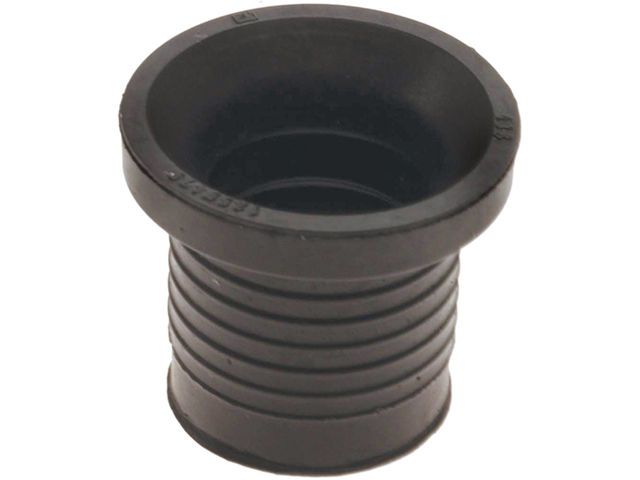
The 2011-2013 Silverado 1500 typically uses the GM 6L80 6-speed automatic transmission. While generally capable, this transmission is known for several specific, well-documented failure points that can lead to ratio codes like P0736. Unlike simpler issues on other vehicles, P0736 on a 6L80 often traces back to a cracked 3-5-Reverse clutch drum, worn stator support shaft bushings causing hydraulic leaks, or a failing torque converter that contaminates the entire system with debris. A GM Technical Service Bulletin (TSB PIP4379K) confirms that a wide range of ratio codes, including P0736, can stem from common hydraulic problems like a cracked filter neck O-ring causing the pump to suck air.
Diagnostic Flowchart
Tap your situation to follow the diagnostic path that matches what you're seeing on this vehicle.
Symptoms You May Notice
- No reverse or delayed, harsh engagement into reverse.
- Check Engine Light is on.
- Transmission slipping in reverse, possibly with a whining or grinding noise. 🎬 Watch: Common 6L80 issues causing slipping or loss of reverse.
- Vehicle enters 'limp mode' (reduced power).
- Harsh shifting between other gears if the issue is hydraulic or related to a failing TEHCM.
- Replacing input or output speed sensors. While these sensors provide the data for the ratio calculation, they rarely fail in a way that isolates only the reverse gear. The issue is almost always hydraulic or mechanical.
- Immediately assuming a full transmission rebuild is needed. While often a serious internal issue, the problem could be a less expensive fix like a fluid service with a new filter and O-ring, especially if the code appeared after a recent service.
Most Likely Causes
- Low or Dirty Transmission Fluid 🔴 High Probability → Shop Transmission Assembly The 6L80 transmission is sensitive to fluid level and condition. Low fluid causes a drop in hydraulic pressure needed to engage gears. A cracked internal filter neck or O-ring is a known issue that can cause the pump to suck air, lose prime, and trigger this code, especially after a recent fluid service.
How to confirm: Check the transmission fluid level and condition using the dipstick. The fluid should be at the correct level, red in color, and not have a burnt smell or contain metallic particles.
Typical fix: Perform a transmission fluid and filter change using DEXRON-VI fluid. If the filter O-ring was damaged, replacing it and the filter may resolve the issue.
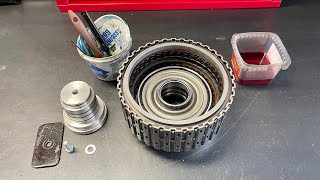
Est. part cost: $75-$150 - Cracked 3-5-Reverse Clutch Drum 🔴 High Probability → Shop Automatic Transmission Clutch Drum The factory welds on the 3-5-R clutch drum in the 6L80 are a notorious failure point. When these welds crack, they cause a major hydraulic leak, preventing the 3-5-R clutch pack from applying properly. This results in no reverse, and often slipping in 3rd and 5th gears.
How to confirm: This requires transmission disassembly. A technician will remove the drum and perform an air pressure test on the clutch circuit. A leak with bubbling around the welds confirms the failure.
Typical fix: Replace the 3-5-R clutch drum with a new OEM or reinforced aftermarket version and replace the burnt clutch plates. This is a major repair requiring a transmission teardown. GM released an updated drum to address this issue.
Est. part cost: $250-$650 for the loaded drum and clutches. - Worn Stator Support Bushings / Leaking Gasket 🟡 Medium Probability The stator support shaft in the transmission pump housing contains passages that feed hydraulic pressure to the clutch drums. The original aluminum bushings are prone to premature wear, causing a cross-leak that bleeds pressure from the 3-5-R clutch circuit, leading to P0736.
How to confirm: This is diagnosed during a transmission rebuild. Inspection of the stator support bushings will show visible wear or scoring. The gasket area may show signs of leakage. This is a common wear item addressed during professional rebuilds.
Typical fix: The transmission pump must be disassembled, and the stator support bushings and gasket must be replaced. Often the pump surfaces are machined to ensure a flat seal.
Est. part cost: $100-$300 for bushings, gaskets, and machine work as part of a larger rebuild. - Failed TEHCM (Valve Body and Solenoids) 🟡 Medium Probability → Shop Transmission Valve Body The TEHCM (Transmission Electro-Hydraulic Control Module) is the complete valve body, solenoid, and TCM assembly. Debris from a failing torque converter can clog the solenoids or wear the valve body bores, causing pressure loss and erratic shifting. A solenoid responsible for reverse may fail electrically or mechanically.
How to confirm: A professional scan tool can command specific solenoids and monitor pressure switch data. If a solenoid doesn't respond or pressure readings are incorrect despite good fluid, the TEHCM is suspect. Dropping the pan may reveal significant metallic debris.
Typical fix: Replace the entire TEHCM assembly. The new module must be programmed to the vehicle's VIN.
Est. part cost: $400-$800 for a remanufactured TEHCM.
Rare But Worth Checking
- Torque Converter Failure: While it may not directly cause P0736, the failure of the torque converter clutch is the #1 source of the metallic debris that contaminates the fluid and destroys the TEHCM and clutch packs, leading to this and other codes. Symptoms often start with a shudder at highway speeds (P0741) before other codes appear.
- Damaged Wiring or Connectors: Corrosion or damage to the main transmission wiring harness or the pass-through connector can interrupt signals between the vehicle and the TEHCM, causing various codes including P0736. This is less common than internal failures.
Diagnosis Steps
- Check the transmission fluid level and condition. Ensure it is full of clean DEXRON-VI fluid and does not smell burnt.
- Use an OBD-II scanner to check for any other transmission-related codes. The presence of P0733/P0735 or P0741 provides critical diagnostic clues.
- Inspect the transmission wiring harness and main connector for any visible damage, corrosion, or loose connections.
- Drop the transmission pan and inspect for excessive metal debris. A pan full of 'clutch mud' or metallic shavings confirms a significant internal mechanical failure.
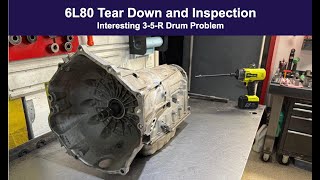
- If the transmission has been removed, perform a bench air test on the 3-5-R clutch drum apply port. Listen and feel for air leaking from the drum's welds, which confirms a cracked drum. 🎬 See a teardown showing a failed 3-5-Reverse clutch drum.
- During a rebuild, carefully inspect the stator support shaft bushings for wear and scoring, as this is a known pressure leak point for the 3-5-R clutch.
Parts You'll Likely Need
- Transmission Fluid and Filter Kit — This is the first and most common fix. The 6L80 transmission requires clean, correct-spec fluid (DEXRON-VI) and a properly sealed filter to maintain hydraulic pressure.
Trusted brands: ACDelco, Valvoline, Castrol
OEM price range: $100-$180
Aftermarket price range: $75-$120 - 3-5-R Clutch Drum Assembly (Loaded)
(OEM #ACDelco 24298742 (or 24259848))— A cracked 3-5-R clutch drum is a primary cause of P0736 on the 6L80. Replacing it with a complete loaded drum (including new clutches and pistons) is a common major repair.
Trusted brands: ACDelco
OEM price range: $450-$650
Aftermarket price range: $350-$500 - TEHCM (Valve Body/Solenoid Assembly)
(OEM #ACDelco 24254909)— If debris has damaged the valve body or solenoids, the entire TEHCM is typically replaced as a unit. This part contains the solenoids, pressure switches, and the TCM itself. It requires programming.
Trusted brands: ACDelco (Remanufactured), Dorman (Remanufactured)
OEM price range: $400-$800
Related Codes That Often Appear With This One
- P0700 — This is a general transmission fault code. It means the TCM has stored a specific code (like P0736) and has requested the Check Engine Light to be turned on.
- P0733, P0735 — These codes indicate incorrect gear ratios for 3rd and 5th gear. Since the 3-5-R clutch is responsible for all three gears, seeing these codes together with P0736 is a very strong indicator that the 3-5-R clutch drum has failed or its hydraulic circuit is compromised.
- P0741 — This code for 'Torque Converter Clutch Performance / Stuck Off' often precedes more serious codes. It indicates the torque converter is failing and shedding debris into the transmission fluid, which will eventually clog the valve body and cause shifting and ratio codes like P0736.
Technical Service Bulletins (TSBs) & Recalls
- PIP4379K: Addresses conditions of no drive, delayed engagement, or no reverse. It points to potential low pump pressure from a loss of prime, which can be caused by a low fluid level or a cracked internal filter/seal, especially after a fluid change.
- 22-NA-182: While not directly for P0736, this TSB discusses transmission overheating issues. Overheating accelerates fluid breakdown and wear on all internal components, including the clutches and seals that can lead to P0736.
Platform-Specific Known Issues
- Cracked 3-5-R Clutch Drum Welds: The most infamous weak point of the 6L80 leading to P0736. The factory welds that join the hub to the drum can fracture, causing a massive hydraulic pressure loss to the clutch pack responsible for 3rd, 5th, and Reverse gears.
- Worn Stator Support Bushings: Wear on the bushings inside the pump's stator support shaft allows clutch apply pressure for the 3-5-R circuit to leak away. This prevents the clutch from engaging fully, causing slipping and eventually burning out the clutches.
- Torque Converter Clutch (TCC) Failure: The lockup clutch inside the stock torque converter is prone to premature wear, which creates a large amount of metallic debris. This debris circulates through the transmission, clogs the filter, wears out the valve body, and sticks solenoids, leading to a variety of codes, including P0736.
Mechanic-Grade Diagnostic Values
- Shift Solenoid (On/Off) Resistance — expected: 20 - 40 Ohms. Failure: A reading outside this range indicates a failed solenoid coil, requiring TEHCM replacement.
- Pressure Control (PWM) Solenoid Resistance — expected: 3 - 8 Ohms. Failure: A reading outside this range indicates a failed solenoid coil, requiring TEHCM replacement.
- Transmission Line Pressure at Idle (in gear) — expected: 45 - 80 PSI. Failure: Significantly lower pressure points to a major hydraulic leak, pump issue, or stuck pressure regulator valve.
- Scan Tool Data: TFP Switch 1 (3-5/Reverse Clutch) — expected: LOW when in Reverse. Failure: If the switch state reads HI when reverse is commanded and fluid pressure is present, it indicates a faulty pressure switch within the TEHCM.
Scan Tool Commands That Help
- GDS2 / Tech2: Solenoid Automated Cleaning Process — This is a recommended first step before condemning the TEHCM. It automatically cycles all solenoids with the engine running in Park to dislodge small metallic debris that may be causing a solenoid to stick.
- GDS2 / Tech2: Reset Transmission Adapts / Fast Learn — This procedure is mandatory after replacing the TEHCM, valve body, or rebuilding the transmission. It clears the learned clutch apply data and forces the TCM to relearn shift pressures and timing.
- GDS2 / Tech2: Output Controls - Solenoid Test — Allows a technician to individually command each solenoid on and off to verify electrical and mechanical function. This is used to pinpoint a specific failed solenoid within the TEHCM assembly, often confirmed with a pressure gauge test plate.
Wiring & Ground Locations
- 16-Way Case Connector — The main round electrical connector on the passenger side of the transmission case, connecting the external harness to the internal TEHCM.. This is the single point of failure for all power, ground, and data communication to the transmission controller. Corrosion or a poor connection here can cause P0736 and many other codes. Pin 10 is Battery (+), Pin 12 is Run/Crank (+), and Pin 16 is Ground.
- G103 — On the front of the passenger side cylinder head.. This is a primary ground location for the TEHCM. A loose or corroded connection at G103 can cause erratic TEHCM behavior, leading to pressure control issues and fault codes.
- Engine Block to Firewall/Chassis Ground Strap — Typically runs from the rear of the driver's or passenger's side cylinder head to a stud on the firewall.. This is a critical ground path for the entire powertrain. On GMT900 trucks, this strap is known to corrode or break, causing a host of electrical issues, including intermittent transmission faults.
Real Owner Repair Stories
- Synthesized from multiple technical articles and repair guides (2011 Chevrolet Silverado 1500 w/ 6L80) — Sudden loss of reverse gear. Forward gears worked fine, but shifting to 'R' felt like neutral. Check Engine Light on with code P0736. Sometimes P0733 and P0735 were also present.
❌ Tried (didn't work) Checking transmission fluid level, which was full and clean., Performing a transmission fluid and filter service. The code returned immediately.
✅ What actually fixed it The transmission was removed and disassembled. The 3-5-Reverse clutch drum was found to have a hairline crack around the friction-welded hub. This is a well-documented, common failure. Replacing the drum with an updated OEM part and new clutches resolved the no-reverse condition and cleared the codes.
"I Checked Everything" — The Actual Cause
- A common misdiagnosis occurs when air-checking the 3-5-R drum. A technician may hear air escaping and immediately condemn the drum for being cracked. However, all 6L80 drums have a small, designed air-bleed orifice that will always leak air during this test. The correct procedure is to add fluid to the drum cavity during the air check and look for bubbles forming specifically at the hub weld, which confirms a crack. Mistaking the normal air bleed for a failure can lead to replacing a good drum.
OEM Part Supersession History
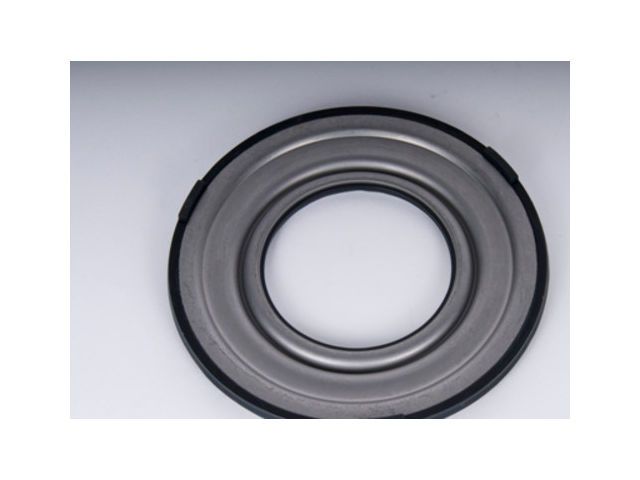
Early 3-5-R Clutch Drum (no QR code)→Updated 3-5-R Clutch Drum (with dot matrix QR label)— The original drums were prone to cracking at the hub weld. The updated part features an improved weld to prevent this failure.Early Stator Support Sealing Rings→Updated Stator Support Sealing Rings— The original rings were prone to leaking, especially during cold operation, causing delayed reverse engagement.
Heads up: The updated ring design will not fit the original-design pump. The pump must either be replaced with a later version or have the ring grooves machined to accept the updated seals.
Model Year Variations Within This Range
- Early production (approx. 2007-2010, but may affect early 2011): Early 6L80 units had issues with stator support sealing rings that would leak when cold, causing delayed engagements. This was addressed with updated seals that require a newer or machined pump.
- 2007-2014: Some sources indicate that valve bodies in this range should use 7 check balls, not 8. Installing the incorrect number of check balls during a rebuild will cause immediate shifting problems.
Helpful Videos
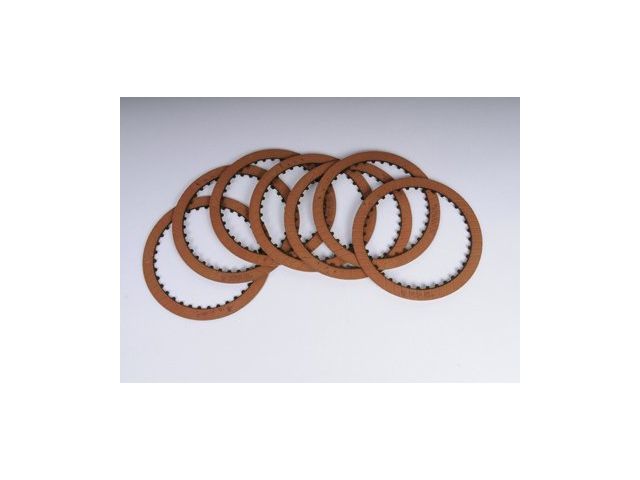
We Have This Part in Stock


The information in this article is provided for general reference and educational purposes only. Vehicle specifications, procedures, and part compatibility can vary by production date, trim level, and region. Always consult your vehicle's factory service manual and verify part numbers before purchasing or performing repairs. Safety-critical components such as airbags, seat belts, and braking systems should be installed by a qualified professional.
- Chevrolet SILVERADO:
- 🧭 Diagnostic Flowchart
- 🎬 Helpful Videos
- 🛍️ Shop This Part
- What's Unique About the 2011-2013 Chevrolet SILVERADO
- Symptoms You May Notice
- Most Likely Causes
- Rare But Worth Checking
- Diagnosis Steps
- Parts You'll Likely Need
- Related Codes That Often Appear With This One
- Technical Service Bulletins (TSBs) & Recalls
- Platform-Specific Known Issues
- Mechanic-Grade Diagnostic Values
- Scan Tool Commands That Help
- Wiring & Ground Locations
- Real Owner Repair Stories
- "I Checked Everything" — The Actual Cause
- OEM Part Supersession History
- Model Year Variations Within This Range
- 🎟️ Get 5% Off