

P0736 on 2001-2008 Chevrolet Silverado 3500: Reverse Gear Ratio Error Fixes
P0736 on a Silverado 3500 means the transmission is failing to engage reverse. The most common cause is low or dirty transmission fluid. If a fluid and filter change doesn't fix it, the problem is likely internal, such as a faulty shift solenoid, a failed Neutral Safety Back-Up (NSBU) switch, or a failed C5 reverse clutch pack in the Allison transmission.
- P0736 indicates a serious problem with your transmission's reverse gear that should be addressed immediately.
- Always start your diagnosis by checking the transmission fluid level and condition, as this is the most common and cheapest fix.
- Do not drive the vehicle. You risk being stranded without a reverse gear and could cause catastrophic, expensive damage to the transmission.
- If a fluid change doesn't solve the problem, the issue is internal and likely requires professional diagnosis with specialized tools.
What's Unique About the 2001-2008 Chevrolet SILVERADO 3500
The 2001-2008 Silverado 3500 primarily uses heavy-duty transmissions like the Allison 1000 or the 4L80-E. While incredibly durable, this code on these trucks often points to specific hydraulic or mechanical issues rather than just electronic faults. A known weak point in the Allison transmission that can cause a no-reverse condition is the failure of the C5 reverse clutch pack. For 4L80-E models, a common cause is a cracked or worn low/reverse servo piston, which can no longer apply the band needed for reverse. For early Allison 1000 models (2001-2005), a failing external Neutral Safety Back-Up (NSBU) switch is also a frequent culprit for erratic shifting and codes.
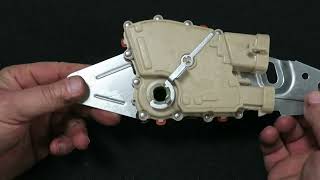
🎬 Watch: This easy NSBU replacement might fix your shifting issues.Diagnostic Flowchart
Tap your situation to follow the diagnostic path that matches what you're seeing on this vehicle.
Generation note: This range covers two generations: the first-generation GMT800 (2001-2007 Classic) and the second-generation GMT900 (2007.5-2008). While both often used the Allison 1000 or 4L80-E transmissions, there can be differences in wiring, connectors, and TCM software. For example, the Allison NSBU switch was external on 2001-2005 models but moved inside the valve body for 2006+ models. However, the core mechanical and hydraulic causes for P0736 are very similar across both generations.
Symptoms You May Notice
- No reverse gear engagement or a significant delay.
- Check Engine Light is on.
- Transmission may enter 'limp mode' or fail-safe.
- Harsh shifting or clunking when attempting to engage reverse.
- Vehicle may be unable to move in reverse at all.
- Flashing gear indicator light on the dashboard.
- Increased fuel consumption.
- Replacing the Transmission Control Module (TCM) first. TCM failure is uncommon and should be the last item to be diagnosed.
- Assuming any shift solenoid will work. It's crucial to identify and replace the specific solenoid responsible for the reverse circuit.
- On a 4L80-E, replacing the reverse band without checking the servo piston and pin length. Often, the piston is cracked or the pin is too short 🎬 See how to fix a 4L80-E no-reverse with a longer servo rod. to properly apply the band.
Most Likely Causes
- Low or Dirty Transmission Fluid 🔴 High Probability → Shop Transmission Assembly These heavy-duty trucks often operate under high load, which can accelerate fluid breakdown. Low fluid prevents the hydraulic system from creating the pressure needed to engage clutches. TSB PIP4379M specifically notes that low fluid is a primary cause for this code.
How to confirm: Check the transmission fluid level and condition using the dipstick with the transmission at operating temperature (around 160-200°F). The fluid should be at the correct level, red in color (for DEXRON) or amber/honey-colored (for Allison TES fluids), and not smell burnt.
Typical fix: Top off the fluid or perform a complete fluid and filter change using the correct fluid (e.g., DEXRON-VI for 4L80-E, Allison-approved TES-295/TES-389 fluid for the Allison 1000).
Est. part cost: $75-$200 - Faulty Shift Solenoid 🟡 Medium Probability → Shop Transmission Valve Body Solenoids can fail electrically or become clogged with debris over time, preventing them from directing fluid flow to engage the reverse gear components.
How to confirm: A diagnostic scan tool can be used to command the solenoid on and off. Resistance can also be checked with a multimeter after dropping the transmission pan or at the main transmission connector.
Typical fix: Replace the faulty shift solenoid. For the 4L80-E, the 'A' and 'B' shift solenoids are often replaced as a pair.
Est. part cost: $40-$120 - Internal Transmission Mechanical Failure 🟡 Medium Probability → Shop Transmission Assembly On Allison transmissions, the C5 reverse clutch pack is a known failure point. 🎬 Watch: A simple $1 fix for Allison transmissions with no reverse. On 4L80-E transmissions, a worn or cracked low/reverse servo piston is a very common cause for a no-reverse or weak reverse condition.
How to confirm: This is a diagnosis of exclusion. If fluid and electronics are good, dropping the transmission pan and finding excessive clutch material or metal shavings is a strong indicator. For a 4L80-E, the reverse servo can be inspected after pan removal.
Typical fix: Requires a partial or complete transmission rebuild to replace the worn clutch packs, seals, or other hard parts like the reverse servo piston.
Est. part cost: $500-$2500+ - Failed Transmission Valve Body ⚪ Low Probability → Shop Transmission Valve Body The valve body can develop cracks, or its internal bores can wear, causing hydraulic pressure to leak internally instead of being routed to the reverse clutch. Debris can also cause valves to stick.
How to confirm: Requires removal and inspection of the valve body, often by a transmission specialist. Pressure testing can also point to a valve body issue.
Typical fix: Replacement of the valve body or, in some cases, it can be rebuilt with an upgrade kit.
Est. part cost: $300-$1000
Rare But Worth Checking
- Faulty Neutral Safety Back-Up (NSBU) Switch (Allison): → Shop Neutral Safety Switch On Allison transmissions (especially 2001-2005 external models), the NSBU switch is a very common failure item. It tells the TCM the driver's selected gear. If it sends an incorrect signal, the TCM can become confused, inhibit shifts, and set various codes, including P0736.
- Faulty Transmission Control Module (TCM): → Shop Transmission Assembly While rare, a failing TCM can incorrectly interpret sensor data or fail to command shifts properly. This should only be considered after all other mechanical and electrical possibilities have been exhausted.
- Damaged Internal Wiring Harness: The wiring harness inside the transmission can become brittle from heat and fluid exposure, leading to intermittent connections or short circuits for the solenoids and sensors.
Diagnosis Steps
- Check the transmission fluid level and condition per the manufacturer's hot check procedure. Note the color and smell. Burnt fluid or a low level is a significant clue.
- Use an OBD-II scanner to check for any other transmission-related codes, especially P0700 or other gear ratio faults.
- With a capable scan tool, monitor live data from the transmission input and output speed sensors while attempting to engage reverse (with the vehicle safely secured).
- For Allison-equipped trucks, inspect the external NSBU switch (2001-2005) and its wiring connector for corrosion or damage. Test its operation.
- Inspect the transmission's external wiring harness and connectors for any visible damage, corrosion, or loose connections.
- If the fluid is old or dirty, perform a transmission fluid and filter change. Inspect the old fluid and pan for excessive metal shavings or clutch material.
- If the problem persists, drop the transmission pan to access and test the shift solenoids and internal wiring. For 4L80-E, inspect the reverse servo piston for cracks or damage.
- If solenoids and wiring are good, perform a transmission line pressure test to check for internal hydraulic leaks.
- If pressure is low or other tests are inconclusive, the issue is likely an internal mechanical failure (e.g., C5 clutch pack, reverse band) requiring transmission removal and teardown.
Parts You'll Likely Need
- Transmission Fluid and Filter Kit
(OEM #29537965 (Allison Internal Filter, Shallow Pan))— This is the most common and first-step fix. Contaminated or low fluid is the leading cause of hydraulic transmission issues. A kit usually includes the internal filter and the external spin-on filter for Allison models.
Trusted brands: ACDelco, Allison (for TES-295/TES-389 fluids)
OEM price range: $100-$200
Aftermarket price range: $50-$120 - Transmission Shift Solenoid
(OEM #24230298 (ACDelco kit for 4L80-E, contains both A/B solenoids))— A specific solenoid controls the hydraulic circuit for reverse. If it fails electrically or mechanically, reverse will not engage properly. It's common practice to replace both shift solenoids on a 4L80-E at the same time.
Trusted brands: ACDelco, Bosch, Rostra
OEM price range: $60-$120
Aftermarket price range: $40-$80 - Low/Reverse Servo Piston (4L80-E) — The original cast aluminum piston in the 4L80-E is prone to cracking, causing a loss of hydraulic pressure to the reverse band. This is a very common failure leading to a weak or non-existent reverse gear.
Trusted brands: Sonnax (Billet replacement), ACDelco
OEM price range: $40-$70
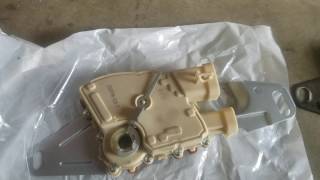
Aftermarket price range: $25-$50 - Neutral Safety Back-Up (NSBU) Switch (Allison 2001-2005)
(OEM #29540479)— This external switch is a frequent failure point on early Allison 1000 transmissions, causing a wide range of shifting problems, limp mode, and incorrect gear indication, which can lead to a P0736 code.
Trusted brands: Allison (Genuine), ACDelco
OEM price range: $150-$250
Aftermarket price range: $80-$150
Related Codes That Often Appear With This One
- P0700 — P0700 is a general transmission fault code. It simply means the TCM has detected a problem and has requested the Check Engine Light to be turned on. It will almost always be present with a specific code like P0736.
- P0731-P0735 — These codes indicate incorrect gear ratios in forward gears. If seen with P0736, it points to a more widespread problem like extremely low fluid, a clogged filter, or a failing transmission pump or torque converter.
Technical Service Bulletins (TSBs) & Recalls
- PIP4379M - This bulletin covers a wide range of transmission codes, including P0736. It advises technicians to first diagnose P0701 if present and to ensure the transmission fluid level is correct using the hot check procedure, as low fluid is a primary cause of these codes, especially after a fluid service or long periods of storage.
Platform-Specific Known Issues
- A known issue for Allison 1000 transmissions is the failure of the C5 reverse clutch pack, which will directly cause a P0736 code and a no-reverse condition.
- For 4L80-E transmissions, a cracked low/reverse servo piston is a very common culprit for P0736. The original cast part is brittle; aftermarket billet pistons are a common upgrade.
- On 2001-2005 models with the Allison 1000, the external Neutral Safety Back-Up (NSBU) switch is highly susceptible to water and road debris contamination, causing it to send faulty gear position signals to the TCM.
Mechanic-Grade Diagnostic Values
- 4L80-E Shift Solenoid A/B Resistance — expected: 20-40 Ohms (early models) or 10-15 Ohms (late models, post-1993). Some sources state 12-28 Ohms.. Failure: A reading of 0 Ohms (short circuit) or infinite/OL (open circuit).
- 4L80-E Pressure Control Solenoid (PCS) Resistance — expected: 3.5-8 Ohms.. Failure: A reading outside of the specified range.
- Allison 1000 Shift Solenoid C, D, E Resistance — expected: 20-30 Ohms.. Failure: A reading significantly outside this range indicates a faulty solenoid coil.
- Allison 1000 Main Line Pressure in Reverse — expected: At 600 RPM: 800-1380 kPa (115-200 psi). At 2100 RPM: 1515-1795 kPa (220-260 psi).. Failure: Pressure significantly below these ranges indicates a hydraulic issue (pump, valve body, internal leak). Pressure significantly above could indicate a stuck regulator valve.
Scan Tool Commands That Help
- GM Tech2: Transmission Output Controls — This function allows a technician to command individual shift solenoids on and off while the vehicle is stationary to verify their electrical operation and listen for an audible click from the transmission. This helps isolate a failed solenoid without first dropping the pan.
- GM Tech2: Transmission Data Display — Used to monitor live data streams from the Input Speed Sensor (ISS), Output Speed Sensor (OSS), and commanded gear vs. actual gear. For P0736, a technician would command reverse and watch for a large discrepancy between ISS and OSS RPM, indicating slippage.
- GM Tech2 / GDS2: Relearn Procedure / Reset Transmission Adapts — After replacing major transmission components like the valve body or solenoids, this function should be used to clear the learned shift adapt values from the TCM, forcing it to relearn shift timing and pressures.
Wiring & Ground Locations
- G103 / G104 — On the GMT800 platform, these critical grounds are typically located on the engine block itself. G103 is often on the front of the passenger side cylinder head, and G104 can be on the left rear of the driver's side cylinder head.. The Powertrain Control Module (PCM) and Transmission Control Module (TCM) rely on clean, solid ground connections to the engine block. A corroded or loose G103 or G104 ground can cause erratic sensor readings, incorrect solenoid commands, and phantom trouble codes, including transmission ratio errors.
- Main Battery to Frame/Engine Ground — The main negative battery cable has a primary connection to the engine block (often near the alternator or on the front driver's side) and secondary connections to the frame rail and body.. A poor main ground connection forces the entire electrical system, including the TCM and transmission solenoids, to find alternative, higher-resistance paths to ground. This can lead to low voltage at the solenoids, causing weak or incomplete engagement of clutches and bands.
Real Owner Repair Stories
- YouTube user and forum posts (2002 Chevrolet Silverado 2500HD with 4L80-E, 275,000 miles) — Complete loss of reverse gear, sometimes with a slight engagement when cold that disappears as the transmission warms up.
❌ Tried (didn't work) Initial diagnosis pointed towards a major internal failure like a broken reverse band.
✅ What actually fixed it A temporary but effective fix was achieved by dropping the pan, accessing the reverse servo, and welding a small amount of material (or using a pin extender kit) onto the end of the servo apply pin. This compensated for the wear in the reverse band, allowing the servo to apply enough pressure to engage reverse again. The root cause was a worn band and/or a cracked servo piston, but this avoided an immediate rebuild. - Duramax Forum user (2004 Chevy Silverado with Allison 1000) — No reverse, P0736 code, flashing PRNDL display, transmission in limp mode.
❌ Tried (didn't work) Checking fluid level, which was full and clean. Contemplating a transmission rebuild.
✅ What actually fixed it The problem was a failed external Neutral Safety Back-Up (NSBU) switch. The switch was sending conflicting gear position data to the TCM, causing the TCM to inhibit reverse engagement. Replacing the NSBU switch and clearing the codes resolved all symptoms.
OEM Part Supersession History
Unknown, multiple revisions→29540479— Improved sealing and durability.
Heads up: Part number 29540479 is for the 5-speed Allison 1000 (approx. 2001-2005) with a dual electrical connector. It is not compatible with 2006+ models which use a 6-speed transmission with an internal mode switch. Visual verification is recommended.
Model Year Variations Within This Range
- 2001-2005 vs 2006-2008 (Allison 1000): The 2001-2005 models use a 5-speed Allison with an external, bolt-on NSBU switch. In 2006, the transmission was updated to a 6-speed, and the NSBU switch was replaced with an Internal Mode Switch (IMS) located inside the valve body. This changes the diagnosis for gear position-related faults significantly.
- Pre-1994 vs Post-1994 (4L80-E): For early models in this range that might still have pre-1994 core components, the shift solenoids and pressure control solenoid have different designs and resistance values. For example, the early TCC solenoid was 20-40 ohms, while later PWM versions are 10-15 ohms. Using the wrong solenoid can cause harsh shifts or TCC issues.
Helpful Videos
We Have This Part in Stock

The information in this article is provided for general reference and educational purposes only. Vehicle specifications, procedures, and part compatibility can vary by production date, trim level, and region. Always consult your vehicle's factory service manual and verify part numbers before purchasing or performing repairs. Safety-critical components such as airbags, seat belts, and braking systems should be installed by a qualified professional.
- Chevrolet SILVERADO 3500:
- 🧭 Diagnostic Flowchart
- 🎬 Helpful Videos
- 🛍️ Shop This Part
- What's Unique About the 2001-2008 Chevrolet SILVERADO 3500
- Symptoms You May Notice
- Most Likely Causes
- Rare But Worth Checking
- Diagnosis Steps
- Parts You'll Likely Need
- Related Codes That Often Appear With This One
- Technical Service Bulletins (TSBs) & Recalls
- Platform-Specific Known Issues
- Mechanic-Grade Diagnostic Values
- Scan Tool Commands That Help
- Wiring & Ground Locations
- Real Owner Repair Stories
- OEM Part Supersession History
- Model Year Variations Within This Range
- 🎟️ Get 5% Off