

P0736 on 2018-2023 Ford Mustang: Reverse Gear Ratio Error Causes and Fixes
This code on a 2018-2023 Mustang with the 10R80 transmission indicates a reverse gear ratio error, meaning the transmission is slipping in reverse. The most common causes are low/dirty fluid or a software issue requiring a PCM/TCM update per Ford TSBs. If those don't solve it, the problem often lies with a faulty valve body or a known internal mechanical issue with the CDF clutch drum, which can lead to a costly transmission rebuild.
- P0736 means the transmission is slipping in reverse.
- For the 2018-2023 Mustang, the first step after reading the code should be to check for available PCM/TCM software updates, as per Ford's TSB 26-2046.
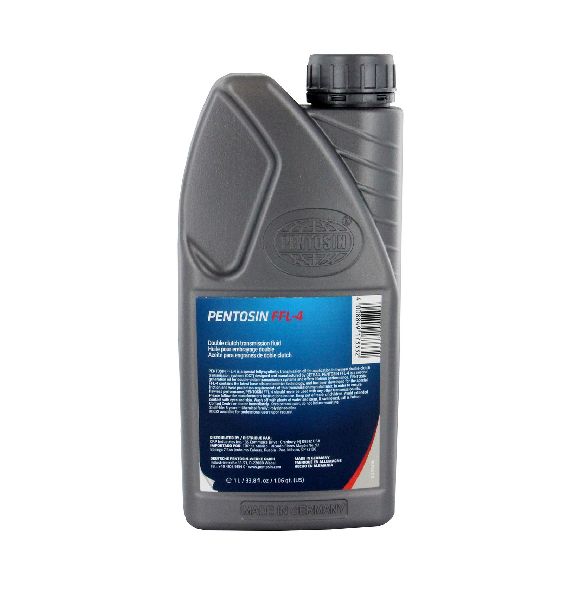
- If software is not the issue, check the transmission fluid level and condition. Use only the specified Motorcraft MERCON ULV fluid.
- This is not a DIY-friendly code beyond checking fluid (if possible) due to the need for advanced diagnostic tools and potential for complex repairs.
- Do not ignore this code. A lack of reverse is a safety issue, and continued driving could cause severe transmission damage.
What's Unique About the 2018-2023 Ford MUSTANG
For the 2018-2023 Mustang, this code is almost always associated with the 10-speed (10R80) automatic transmission. Ford has issued multiple Technical Service Bulletins (TSBs) that cover P0736, pointing to a complex interplay of software, valve body issues, and a specific mechanical weakness. A well-documented failure point in the 10R80 is the sleeve within the 'CDF' clutch drum (clutch 'F'), which can move out of position, causing hydraulic leaks and a host of gear ratio codes, including P0736. This makes diagnosis a multi-step process, starting with software and progressing to the valve body and potentially the CDF drum itself.
Diagnostic Flowchart
Tap your situation to follow the diagnostic path that matches what you're seeing on this vehicle.
Symptoms You May Notice
- Check Engine Light is on
- Inability to shift into reverse or vehicle feels like it's in neutral when in reverse.
- Delayed or harsh engagement when shifting into reverse, often with a clunk or jolt.
- Vehicle won't move when in reverse.
- Clunking or grinding noises when selecting reverse.
- Transmission may enter a "limp mode," limiting available forward gears.
- A 'double thud' or buck when shifting from Park to Reverse, especially when cold.
- Replacing internal transmission components before checking for software updates. Given the numerous TSBs, a software update should be one of the first steps.
- Replacing the entire transmission when only the CDF drum or valve body is faulty. A targeted repair can be more cost-effective if the rest of the transmission is in good condition.
Most Likely Causes
- Powertrain Control Module (PCM) or Transmission Control Module (TCM) Software Issue 🔴 High Probability → Shop Engine Control Module (ECM) Ford has released multiple TSBs (e.g., 22-2428, 23-2123) for the 10R80 transmission that list P0736. The issue is described as an incompatibility of the adaptive learning strategy with hardware break-in over time, which can be corrected with a software update.
How to confirm: A Ford dealership or a qualified shop with access to Ford's diagnostic software (FDRS) can check the current software calibration against the latest available version referenced in TSBs.
Typical fix: Reprogramming the PCM/TCM to the latest software version and performing a transmission adaptive learning drive cycle.
Est. part cost: $0-$250 - Low or Dirty Transmission Fluid 🟡 Medium Probability → Shop Transmission Assembly The 10R80 transmission is sensitive to fluid level and condition. Low fluid causes hydraulic pressure loss, leading to clutch slip, while dirty or burnt fluid can impair the function of solenoids and the valve body.
How to confirm: Check the transmission fluid level and condition using the specific procedure for the 10R80, which does not have a traditional dipstick. The fluid should be at the correct level, red, and not smell burnt. Dark fluid or glitter indicates internal wear. The normal operating temperature for a fluid check is between 206-215°F (97-102°C).
Typical fix: Perform a transmission fluid drain-and-fill or a full fluid exchange using the correct Motorcraft MERCON ULV fluid. Replace the filter if applicable.
Est. part cost: $150-$400 - Faulty Main Control Valve Body or Shift Solenoid 🟡 Medium Probability → Shop Transmission Valve Body Sticking valves or faulty solenoids within the valve body are a common issue addressed by Ford's TSBs. Debris from normal wear can clog passages, preventing the hydraulic pressure needed to engage the reverse clutch. Several owners on forums have had valve bodies replaced to fix shifting issues.
How to confirm: This is often diagnosed after software and fluid issues are ruled out. A technician can use an advanced scan tool to command specific solenoids and monitor pressures. Ford's TSBs include procedures for overhauling the valve body.
Typical fix: Overhaul or replacement of the main control valve body assembly.
Est. part cost: $400-$1200 - Internal Transmission Mechanical Failure (CDF Clutch Drum) 🟡 Medium Probability → Shop Transmission Assembly A widely documented failure point on the 10R80 is the 'CDF' clutch drum (7H351). A sleeve inside the drum can walk out of position, uncovering hydraulic passages and causing pressure loss to multiple clutches, including reverse. This issue is specifically mentioned in TSBs as a root cause for gear ratio codes.
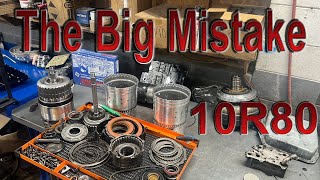
How to confirm: This is a diagnosis of exclusion after software, fluid, and valve body issues are eliminated. It requires transmission removal and disassembly for visual inspection of the CDF drum sleeve. 🎬 Watch: See how the CDF clutch drum sleeve fails internally.
Typical fix: Replacement of the CDF clutch drum with an updated part that has a machined lip to prevent the sleeve from moving. This is a transmission-out repair, often part of a full rebuild.
Est. part cost: $2500-$6000
Rare But Worth Checking
- Damaged Wiring Harness or Connectors: Although not common, wiring between the TCM and the transmission can become damaged from heat or road debris, causing intermittent signal loss to sensors or solenoids. A visual inspection is always a worthwhile step.
Diagnosis Steps
- Scan the TCM for P0736 and any other related trouble codes.
- Check for applicable Technical Service Bulletins (TSBs). The most recent comprehensive TSB for this issue is 22-2428, which supersedes several previous ones and addresses software, valve body, and CDF drum issues.
- If a software update is indicated by the TSB, have the PCM/TCM reprogrammed by a dealer or qualified shop and perform the adaptive learning drive cycle.
- Carefully check the transmission fluid level and condition. Ensure the fluid is clean, at the proper level, and does not smell burnt. This requires a specific lift and temperature procedure.
- Inspect the transmission wiring harness and connectors for any visible signs of damage, corrosion, or loose connections.
- If the fluid and software are good, use a professional scan tool to monitor transmission input and output speed sensors in real-time while attempting to engage reverse.
- Follow the diagnostic procedure in the relevant TSB, which may involve electronic tests of the shift solenoids and hydraulic pressure tests to determine if the valve body or CDF drum is leaking.
- If diagnostics point to an internal failure, the transmission must be removed for inspection and repair, focusing on the valve body and the CDF clutch drum.
- A recall (23S06) was issued for some 2022-2023 models for a loose bolt that could prevent Park from engaging; while not directly for P0736, it's worth checking if your vehicle is affected as it relates to overall transmission integrity.
Parts You'll Likely Need
- Transmission Fluid
(OEM #XT-12-QULV (Motorcraft MERCON ULV))— Incorrect fluid level or condition is a common cause of shifting problems and pressure loss.
Trusted brands: Motorcraft
OEM price range: $20-$30 per quart
Aftermarket price range: $15-$25 per quart - Transmission Valve Body Assembly
(OEM #JL3Z-7A100-B (Note: Part numbers are frequently superseded; verify with VIN))— The valve body and its solenoids control gear engagement. A malfunction here can directly cause the P0736 code after fluid and software issues are ruled out. TSBs often call for an overhaul or replacement.
Trusted brands: Motorcraft, SunCoast (Performance)
OEM price range: $650-$1100
Aftermarket price range: $600-$1200 - CDF Clutch Cylinder/Drum Assembly
(OEM #JL3Z-7H351-B (Note: This is an internal component, part of a larger assembly))— This is a known mechanical weak point in the 10R80. A failed sleeve causes hydraulic leaks leading to multiple gear ratio codes, including P0736.
Trusted brands: Motorcraft
OEM price range: $400-$500 (part only)
Related Codes That Often Appear With This One
- P0730 — This is a general 'Incorrect Gear Ratio' code and may accompany more specific gear-related codes like P0736.
- P0729, P0731-P0735 — These codes correspond to incorrect gear ratios in other gears (6th, 1st, 2nd, etc.). If seen with P0736, it points towards a more systemic issue like low fluid, a failing valve body, or a CDF drum failure affecting the entire transmission.
- P076F, P07D9, P07F6, P07F7 — These are additional gear ratio error codes that are frequently listed alongside P0736 in the same Ford TSBs, indicating a common underlying cause.
Technical Service Bulletins (TSBs) & Recalls
- TSB 22-2428 / 23-2123: These are recent, comprehensive TSBs that supersede many previous ones. They address harsh/delayed shifts and numerous DTCs including P0736, pointing to software, the valve body, and/or axial movement of the CDF clutch cylinder sleeve as possible causes.
- TSB 21-2357 / 22-2139: Earlier versions of the TSB that also list P0736 and attribute the cause to software/adaptive learning incompatibility, recommending a valve body overhaul and/or a PCM reprogram.
Platform-Specific Known Issues
- CDF Clutch Drum Sleeve Failure: → Shop Transmission Clutch Pressure Plate A primary mechanical failure point for the 10R80 transmission is the sleeve within the CDF clutch drum, which can move axially and uncover hydraulic passages, leading to pressure loss. This is a well-documented issue covered by Ford TSBs.
Mechanic-Grade Diagnostic Values
- Normal Transmission Fluid Operating Temperature — expected: 206°F to 215°F (97°C to 102°C). Failure: Fluid level checks performed outside of this temperature range may be inaccurate. Consistently high temperatures can indicate a cooling system issue or severe internal slip.
- Shift Solenoid Current — expected: Directly proportional; zero current equals zero pressure, max current equals max pressure.. Failure: If the power circuit to the solenoids fails open, all solenoids are electrically off, and no clutches can engage.
Scan Tool Commands That Help
- Ford Diagnostic & Repair System (FDRS): Network Test — To verify communication with all modules on the CAN bus, including the TCM/PCM. A grayed-out module indicates a communication failure, which could be due to power, ground, or wiring faults.
- Ford Diagnostic & Repair System (FDRS): Self-Test (On-Demand DTCs) — To actively command the TCM/PCM to check for faults. This is more comprehensive than just reading stored codes and can reveal intermittent issues.
- Ford Diagnostic & Repair System (FDRS): Programmable Module Installation (PMI) — Used after replacing a TCM or PCM to install the correct software and configuration for the vehicle.
- Ford Diagnostic & Repair System (FDRS): Transmission Adaptive Learning Drive Cycle — This must be performed after a software update, valve body replacement, or transmission rebuild to allow the TCM to relearn shift parameters. Failure to do so will result in poor shift quality.
Wiring & Ground Locations
- Main Transmission Case Connector (C175T) — The 32-pin main electrical connector on the passenger side of the 10R80 transmission case.. This connector carries all signals for speed sensors (TSS, OSS), temperature sensor (TFT), and solenoid commands. A loose connection, corrosion on pins, or damaged wires here can directly cause P0736 and other transmission codes. Specifically, Pin 4 is for the OSS, and Pin 1 is for the TSS.
- G104 — Located in the engine bay, near the battery. Often shares a grounding point with G102.. This ground point provides the ground for the Data Link Connector (DLC). A poor ground here can cause communication issues with diagnostic scan tools, preventing accurate diagnosis of the P0736 code.
- G201 — Located in the passenger side kick panel area, near the PCM.. This is a primary ground for the Powertrain Control Module (PCM). A faulty ground here can cause erratic PCM behavior, potentially leading to incorrect calculations and false diagnostic codes, including transmission ratio errors.
Real Owner Repair Stories
- mustang6g.com forum user (2018 Ford Mustang GT A10) — Harsh and clunky shifts, particularly when downshifting. Uncomfortable ride quality. No check engine light initially, but eventually threw codes.
❌ Tried (didn't work) Dealer reset the transmission's adaptive learning (KAM reset). The fix was temporary and the issue returned after about 1,000 miles.
✅ What actually fixed it The user's experience is common and often leads to a multi-step repair. While the specific user did not post a final resolution, the typical successful repair path after a failed KAM reset involves a PCM/TCM software update per TSBs, followed by valve body inspection/replacement if the issue persists. If both of those fail, the root cause is often the CDF clutch drum requiring a transmission rebuild.
OEM Part Supersession History
Various earlier versions→JR3Z-7H351-B (and later revisions)— The original CDF clutch drum design had a sleeve that was prone to axial movement ('walking'), causing hydraulic leaks. The updated design incorporates a machined lip or a more robust retention method to prevent the sleeve from moving.
Heads up: Vehicles built on or after August 16, 2022, are expected to have the updated CDF clutch drum from the factory. When repairing an older vehicle, it is critical to use the updated part number to prevent a repeat failure.Various earlier versions (e.g., HL3Z-7A100-A)→HL3Z-7A100-B (and later revisions)— Valve body designs are frequently updated to improve durability, address valve sticking issues, and refine hydraulic control in response to field data and software updates.
Heads up: It is critical to match the valve body part number to the vehicle's VIN and ensure the corresponding solenoid strategy is programmed into the TCM. Installing a mismatched valve body can cause severe shifting issues.
Model Year Variations Within This Range
- 2018 - Mid-2022: These model years are more susceptible to the original CDF clutch drum failure. While the issue can still occur on later models, vehicles built before August 16, 2022, did not have the updated drum from the factory and are at higher risk.
- 2018-2023: The software calibration for the PCM/TCM has undergone numerous revisions. A 2018 model will have a different baseline software than a 2023 model. This is why checking for the latest TSB and performing a software update is a critical first step, as a newer calibration may solve shift quality issues present on an older software version.
Helpful Videos

We Have This Part in Stock


The information in this article is provided for general reference and educational purposes only. Vehicle specifications, procedures, and part compatibility can vary by production date, trim level, and region. Always consult your vehicle's factory service manual and verify part numbers before purchasing or performing repairs. Safety-critical components such as airbags, seat belts, and braking systems should be installed by a qualified professional.
- Ford MUSTANG:
- 🧭 Diagnostic Flowchart
- 🎬 Helpful Videos
- 🛍️ Shop This Part
- What's Unique About the 2018-2023 Ford MUSTANG
- Symptoms You May Notice
- Most Likely Causes
- Rare But Worth Checking
- Diagnosis Steps
- Parts You'll Likely Need
- Related Codes That Often Appear With This One
- Technical Service Bulletins (TSBs) & Recalls
- Platform-Specific Known Issues
- Mechanic-Grade Diagnostic Values
- Scan Tool Commands That Help
- Wiring & Ground Locations
- Real Owner Repair Stories
- OEM Part Supersession History
- Model Year Variations Within This Range
- 🎟️ Get 5% Off