

P0736 on 2020-2023 Ford Transit: Reverse Incorrect Ratio Causes and Fixes
On a 2020-2023 Ford Transit, code P0736 is most often caused by a software issue requiring a PCM update or sticking valves in the transmission valve body. Both are documented in Ford Technical Service Bulletins (TSBs) like TSB 21-2377 and the superseding TSB 24-2046. A software check should always be the first step.
- P0736 on a 2020-2023 Transit indicates a problem with the reverse gear ratio, often preventing the vehicle from backing up correctly.
- Before suspecting major mechanical failure, have a Ford dealer check for and apply any available PCM/TCM software updates, as this is a known fix per TSB 26-2046.
- The most common mechanical cause is a faulty transmission valve body with sticking valves, an issue also documented by Ford in TSB 21-2377.
- Always check the transmission fluid level and condition first, as low or dirty fluid can cause a variety of shifting problems.
- This is not a DIY-friendly repair; diagnosis and repair should be left to a professional technician due to the complexity of the transmission and control systems.
What's Unique About the 2020-2023 Ford TRANSIT

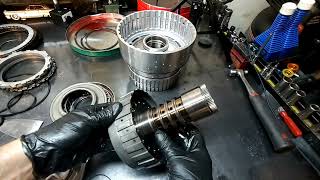
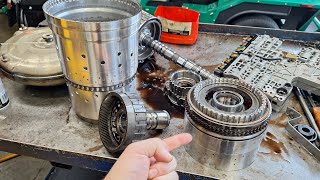
The 2020-2023 Ford Transit uses the 10-speed 10R80 automatic transmission, which is known to have specific issues across multiple Ford platforms. 🎬 Watch: Overview of common 10R80 transmission failures and problems. Ford has issued Technical Service Bulletins (TSBs), including TSB 21-2377 and the more recent TSB 24-2046, acknowledging that this code can be caused by either PCM software in need of an update or by sticking valves within the main control valve body. A less common but known mechanical failure in the 10R80 is a problem with the CDF drum sleeve, which can cause 🎬 See a teardown of the common CDF drum bushing failure. hydraulic leaks and erratic shifting. This makes a trip to the dealer for a software check a primary diagnostic step before attempting major mechanical repairs.
Diagnostic Flowchart

Tap your situation to follow the diagnostic path that matches what you're seeing on this vehicle.
Symptoms You May Notice
- Check Engine Light or Malfunction Indicator Lamp (MIL) is on.
- Failure to engage reverse gear, or a long delay before engagement.
- Harsh shifting or a loud 'clunk' or 'bang' when shifting into reverse.
- Transmission slipping while in reverse (engine RPMs increase but vehicle doesn't move accordingly).
- Vehicle enters "limp mode," limiting available gears to prevent further damage.
- Grinding noises when attempting to shift into reverse.
- Replacing the entire transmission when only a PCM software update or valve body replacement was needed.
- Replacing shift solenoids individually when the issue is with sticking valves in the valve body assembly or a software calibration problem.
- Assuming a major mechanical failure before checking for TSBs related to software and valve body issues.
Most Likely Causes

- Powertrain Control Module (PCM) Software Issue 🔴 High Probability → Shop Engine Control Module (ECM) Ford has explicitly identified this as a primary cause in TSBs 26-2046 and 24-2046 for a wide range of transmission codes, including P0736. Outdated software can have incorrect calibration tables, leading to a miscalculation of the gear ratio.
How to confirm: A Ford dealer or a qualified shop with access to Ford's Diagnostic & Repair System (FDRS) can check for and apply available PCM/TCM updates. This should be the first diagnostic step.
Typical fix: Reprogramming the PCM/TCM to the latest software calibration.
Est. part cost: $0 (if under warranty) - $150 - Sticking Valves in the Main Control Valve Body 🔴 High Probability → Shop Transmission Valve Body TSB 21-2377 and its successors directly link P0736 and other shifting issues on 2020-2021 Transits to sticking valves in the valve body. This can be due to debris or manufacturing tolerances.
How to confirm: After ruling out software, a technician may perform a specific "Accelerated Main Control Break In" routine as described in TSB 21-2377. If this fails to resolve the symptoms, the valve body is the likely culprit.
Typical fix: Overhauling or replacing the main control valve body.
Est. part cost: $500-$1200 - Low or Contaminated Transmission Fluid 🟡 Medium Probability → Shop Transmission Assembly While not specific to the Transit, low fluid level is a universal cause for transmission issues. It prevents proper hydraulic pressure from building, leading to clutch slip and incorrect ratio codes.
How to confirm: Check the transmission fluid level and condition. The 10R80 has a specific, multi-step procedure for checking the fluid that must be followed precisely. The fluid should be at the correct level and reddish (MERCON ULV), not dark brown, black, or smelling burnt.
Typical fix: Perform a transmission fluid and filter change using the correct Motorcraft MERCON ULV fluid. A simple drain and fill may not be enough; a full flush might be required if the fluid is heavily contaminated.
Est. part cost: $150-$300 - Internal Transmission Mechanical Failure (CDF Drum) ⚪ Low Probability → Shop Transmission Assembly A known weakness in early 10R80 transmissions is the CDF (Clutch D/F) drum. A sleeve inside the drum can move out of position, causing hydraulic leaks, which leads to a host of shifting problems and ratio codes. TSBs now address this specific failure.
How to confirm: This is a diagnosis of exclusion. If software, fluid, and valve body fixes fail, a technician will need to perform hydraulic pressure tests that point to an internal leak. Final confirmation requires transmission removal and teardown.
Typical fix: Replacing the CDF clutch cylinder assembly and related seals. This is a major repair requiring transmission disassembly.
Est. part cost: $3000-$7000 (for full transmission rebuild/replacement)
Rare But Worth Checking
- Faulty Transmission Speed Sensor: → Shop Transmission Assembly While less common than software or valve body issues on this platform, a failing input or output speed sensor can provide incorrect data to the TCM, causing it to miscalculate the gear ratio and trigger P0736.
- Damaged Wiring or Connectors: Corrosion or damage to the wiring harness between the TCM and the transmission can interrupt signals from speed sensors or solenoids, leading to various fault codes including P0736.
Diagnosis Steps
- Use an advanced scan tool to check for P0736 and any other accompanying transmission codes.
- Check for applicable Technical Service Bulletins (TSBs) for your vehicle's VIN. Specifically, look for TSB 24-2046, which supersedes earlier bulletins like 21-2377 and 26-2046.
- Software First: Have a dealer or qualified shop with Ford's FDRS software verify if the PCM/TCM has the latest calibration. If not, perform the update. This is the most common and least invasive fix.
- Check the transmission fluid level and condition according to the specific workshop manual procedure. If low or contaminated, perform a fluid and filter service.
- If software is current and fluid is good, a technician may perform the "PCM - Transmission Accelerated Main Control Break In" procedure as outlined in TSB 21-2377. This can sometimes free sticking valves.
- Inspect the transmission wiring harness and connectors for any visible damage, corrosion, or loose connections.
- If the above steps do not resolve the issue, the next step is to inspect and likely replace the transmission main control (valve body).
- If problems persist after a valve body replacement, hydraulic pressure testing is required to check for internal leaks, likely pointing to a CDF drum failure, which requires transmission removal and overhaul.
Parts You'll Likely Need
- Transmission Main Control Valve Body
(OEM #JL3Z-7A100-C (supercedes JL3Z-7A100-A))— Sticking valves within the valve body are a primary cause of this code on the 2020-2023 Transit, as identified by Ford in TSB 21-2377.
Trusted brands: Motorcraft
OEM price range: $700-$1200
Aftermarket price range: $500-$900 (Remanufactured) - Automatic Transmission Fluid
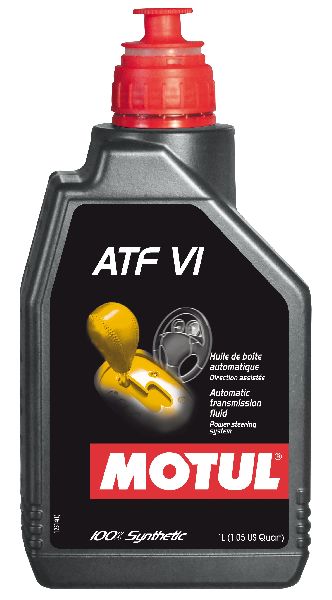
(OEM #Motorcraft MERCON ULV (Part # XT-12-QULV))— Low or dirty fluid is a common cause of transmission problems and will need to be replaced during a valve body service. The 10R80 requires this specific fluid type.
Trusted brands: Motorcraft
OEM price range: $15-$25 per quart
Aftermarket price range: $10-$20 per quart - Transmission Filter Kit
(OEM #FT-215 (Motorcraft))— Should always be replaced when the transmission pan is removed for a fluid change or valve body service.
Trusted brands: Motorcraft
OEM price range: $50-$80
Aftermarket price range: $30-$60
Related Codes That Often Appear With This One
- P0729, P0731, P0732, P0733, P0734, P0735 — These are all incorrect gear ratio codes for other gears (6th, 1st, 2nd, etc.). Their presence alongside P0736 strongly points to a systemic issue like software, low fluid, or a faulty valve body, as they are all listed together in TSBs 21-2377 and 24-2046.
- P2700-P2705 — These codes relate to transmission clutch application timing. They are also mentioned in the same TSBs as P0736 and point toward a hydraulic or control issue within the transmission, often related to the valve body or internal seals.
Technical Service Bulletins (TSBs) & Recalls

- TSB 24-2046
Platform-Specific Known Issues
- TSB 24-2046 (superseding 26-2046) notes that various incorrect gear ratio codes, including P0736, may be stored due to PCM software, a sticking valve body, or a faulty CDF drum sleeve.
- TSB 21-2377 specifically addresses harsh or delayed shifts and DTCs like P0736 on 2020-2021 models, attributing the cause to sticking valves in the main control valve body and providing a diagnostic and repair procedure.
- Owner forums for the Ford Transit and other 10R80-equipped vehicles frequently discuss delayed or harsh reverse engagement as a primary symptom leading to a P0736 code, with dealer repairs often involving either a PCM reflash or a valve body replacement.
Mechanic-Grade Diagnostic Values
- Shift Solenoid (A-F) Resistance — expected: 5.0 - 5.4 Ohms at 68°F (20°C). Failure: A reading outside of this range indicates a faulty solenoid coil.
- Transmission Fluid Temperature (TFT) Sensor Resistance — expected: Varies with temperature, e.g., 37k-16k Ohms at 69°F-104°F.. Failure: Resistance that doesn't correspond to the current fluid temperature suggests a faulty sensor.
Scan Tool Commands That Help
- Ford Diagnostic & Repair System (FDRS) or equivalent: Adaptive Learning Drive Cycle — This function should be performed after replacing the valve body, the entire transmission, or reprogramming the TCM/PCM. It resets the transmission's adaptive learning strategy, which may result in firm shifts for several days as it relearns.
- Ford Diagnostic & Repair System (FDRS) or equivalent: PCM - Transmission Accelerated Main Control Break In — This procedure is specifically mentioned in TSB 21-2377 as a step to try and free sticking valves in the main control body before resorting to replacement. Note that TSB 24-2046 states that affected vehicles are *not* main control break-in capable, suggesting this is only for earlier diagnostics.
Wiring & Ground Locations
- C175T — This is a 50+ pin connector at the Powertrain Control Module (PCM), often located on the firewall.. The C175T connector contains the circuits for the transmission fluid temperature (TFT) sensor, various speed sensors, and the shift solenoid controls. Technicians can test sensor and solenoid resistance from this connector without having to access the transmission directly.
Real Owner Repair Stories
- Reddit user in r/f150 (2019 F-150 Lariat 2.7L 4x4) — A 2-3 second delay when shifting from Park to Drive/Reverse, or between Drive and Reverse.
❌ Tried (didn't work) PCM reflash and replacement of some parts per a TSB.
✅ What actually fixed it The dealer performed a transmission overhaul and replaced the CDF drum, which resolved the engagement delay issues. However, this was followed by new hard shifting problems that then required a valve body assembly replacement.
OEM Part Supersession History
JL3Z-7A100-A→JL3Z-7A100-C— Supersession for the main control valve body assembly. Newer revisions often contain design updates to address issues like sticking valves.
Heads up: JL3Z-7A100-C is the direct replacement for -A and should be used.Original CDF Drum (pre-2022)→Updated CDF Drum (post-2022)— The original CDF drum design allowed an internal sleeve to move, causing hydraulic leaks. The updated part has a machined lip to prevent this sleeve movement.
Model Year Variations Within This Range
- 2020 - mid-2022: Vehicles built before August 16, 2022, are more prone to the CDF drum sleeve failure. TSB 24-2046 identifies this as a potential cause for P0736 and other shifting codes. Vehicles built after this date should have the updated CDF drum with a machined lip to prevent the sleeve from moving.
Helpful Videos

We Have This Part in Stock


The information in this article is provided for general reference and educational purposes only. Vehicle specifications, procedures, and part compatibility can vary by production date, trim level, and region. Always consult your vehicle's factory service manual and verify part numbers before purchasing or performing repairs. Safety-critical components such as airbags, seat belts, and braking systems should be installed by a qualified professional.
- Ford TRANSIT:
- 🧭 Diagnostic Flowchart
- 🎬 Helpful Videos
- 🛍️ Shop This Part
- What's Unique About the 2020-2023 Ford TRANSIT
- Symptoms You May Notice
- Most Likely Causes
- Rare But Worth Checking
- Diagnosis Steps
- Parts You'll Likely Need
- Related Codes That Often Appear With This One
- Technical Service Bulletins (TSBs) & Recalls
- Platform-Specific Known Issues
- Mechanic-Grade Diagnostic Values
- Scan Tool Commands That Help
- Wiring & Ground Locations
- Real Owner Repair Stories
- OEM Part Supersession History
- Model Year Variations Within This Range
- 🎟️ Get 5% Off