

P0736 on 2001-2005 GMC Sierra: Reverse Incorrect Ratio Causes and Fixes
P0736 on a 2001-2005 GMC Sierra means the transmission has a problem with reverse gear. The simplest cause is low or burnt transmission fluid. However, in the 4L60E/4L80E transmissions used in these trucks, it often points to a more serious internal failure like a worn low/reverse clutch pack or a broken reaction sun shell, which typically requires a transmission rebuild.
- P0736 means your truck's transmission is failing to engage reverse gear correctly.
- Always check the transmission fluid level and condition first; this is the simplest potential fix.
- On a 2001-2005 Sierra, this code often points to a serious internal mechanical failure, such as worn clutches or a broken sun shell, not just a simple sensor or solenoid.
- Do not continue to drive extensively with this code. You risk causing catastrophic transmission damage that is much more expensive to repair.
- Due to the high probability of a major mechanical failure, professional diagnosis is strongly recommended before purchasing any parts.
What's Unique About the 2001-2005 Gmc SIERRA
The 2001-2005 GMC Sierra (GMT800 platform) primarily uses the 4L60E or heavy-duty 4L80E automatic transmission. While very common, these transmissions are known for specific failure points that can lead to a P0736 code. A frequent and well-documented culprit in the 4L60E is a broken reaction sun shell, which can cause a loss of reverse, second, and fourth gears. For the 4L80E, a worn low/reverse band or a failing low/reverse servo piston are key components that can wear out and cause this issue. In both cases, while low fluid is a possible cause, this code often signals a significant internal mechanical failure requiring professional repair and often a full rebuild.
Diagnostic Flowchart
Tap your situation to follow the diagnostic path that matches what you're seeing on this vehicle.
Symptoms You May Notice
- Transmission will not shift into reverse or fails to engage.
- Delayed or hesitant engagement into reverse.
- Check Engine Light is on.
- Transmission warning light may be illuminated.
- Grinding or clunking noises when shifting into reverse.
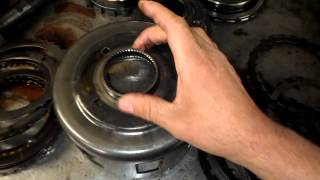
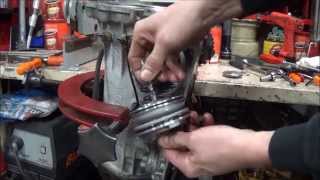
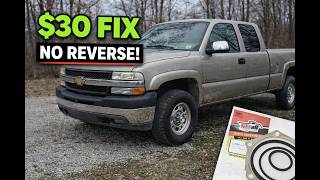
- Engine RPMs increase in reverse but the vehicle doesn't move (acts like neutral). 🎬 Watch: A mechanic diagnoses and repairs lost reverse on a work truck.
- Replacing shift solenoids when the actual problem is a major mechanical failure like a worn clutch pack or broken sun shell.
- Assuming the Transmission Control Module (TCM) is bad before thoroughly checking fluid condition and pressure, and inspecting for internal mechanical faults.
- Replacing input or output speed sensors. While faulty sensors can cause ratio codes, P0736 is more often a mechanical or hydraulic issue within the reverse circuit.
Most Likely Causes
- Low or Dirty Transmission Fluid 🔴 High Probability → Shop Transmission Assembly High mileage, towing, and leaks from cooler lines or pan gaskets can lead to low or degraded fluid, causing pressure loss and slipping. Burnt or dark fluid is a sign of internal clutch wear.
How to confirm: Check the transmission fluid dipstick with the engine running and warm. The fluid should be at the correct level, pinkish-red, and not smell burnt. Dark, brown, or metallic-flecked fluid indicates a serious internal problem.
Typical fix: Perform a transmission fluid and filter change. If the fluid is very contaminated, a full transmission inspection is necessary as this indicates internal damage.
Est. part cost: $50-$120 - Broken Reaction Sun Shell (4L60E) 🔴 High Probability → Shop Transmission Assembly The factory-stamped steel sun shell in the 4L60E is a notorious weak point. The splines where it engages the rear planetary gear set can strip, or the collar can break off entirely under load.
How to confirm: This failure typically results in the simultaneous loss of Reverse, 2nd, and 4th gears. The vehicle will still have 1st and 3rd. Diagnosis is confirmed by finding large metal pieces (parts of the shell) in the transmission pan and by transmission disassembly.
Typical fix: Requires a complete transmission teardown to replace the shell. It is highly recommended to use a hardened, aftermarket version like the Sonnax "SmartShell" or "The Beast" sun shell to prevent a repeat failure.
Est. part cost: $40-$100 for the upgraded part - Worn Low/Reverse Clutch Pack 🟡 Medium Probability Heavy use, high mileage, and operating with low fluid pressure can burn the friction material off the low/reverse clutch plates in both the 4L60E and 4L80E.
How to confirm: This is confirmed by dropping the transmission pan and finding excessive black clutch material, making the fluid dark and opaque. A transmission pressure test may also indicate a leak in the reverse apply circuit.
Typical fix: Requires a partial or full transmission rebuild to replace the worn clutch pack, steels, and associated seals.
Est. part cost: $400-$1000 for a rebuild kit - Faulty Shift Solenoid ⚪ Low Probability → Shop Transmission Valve Body While solenoids are a common failure point in 4L60E/4L80E transmissions, they are less likely to be the sole cause of P0736, as reverse is often controlled hydraulically. However, debris can clog a solenoid or a solenoid can fail electrically.
How to confirm: A professional scan tool can command the solenoid on and off to test its function. Resistance can also be checked with a multimeter at the transmission case connector (typically 20-25 ohms).
Typical fix: Replace the faulty shift solenoid, which is located inside the transmission oil pan.
Est. part cost: $40-$80
Rare But Worth Checking
- Worn Boost Valve or Leaking Reverse Apply Circuit: A worn boost valve in the transmission pump or a leak in the reverse apply circuit can cause insufficient line pressure to engage reverse properly. This can sometimes be accessed by removing the valve body without a full transmission removal.
- Cracked Low/Reverse Piston: The piston that applies hydraulic pressure to the low/reverse clutch pack can develop cracks, leading to a pressure loss and failure to engage reverse. This requires a rebuild to access and replace.
- Faulty Transmission Control Module (TCM): → Shop Transmission Assembly While uncommon, a failing TCM can cause this code. This should only be considered after all mechanical and hydraulic issues have been ruled out.
- Clogged Transmission Filter or Passages: → Shop Transmission Assembly If the transmission fluid is heavily contaminated, debris can clog the filter or small passages in the valve body, leading to pressure loss and preventing reverse from engaging.
Diagnosis Steps
- Check the transmission fluid level and condition with the engine running and warm. Top off or change if necessary. Note any burnt smell or debris.
- Use an OBD-II scanner to check for any other transmission-related codes, especially P0700 or other gear ratio codes (P0731-P0735).
- Inspect the transmission wiring harness and the main case connector for any visible damage, corrosion, or loose pins.
- If possible, use an advanced scan tool to monitor live data from the input and output speed sensors while attempting to engage reverse to confirm slippage.
- Perform a transmission fluid pressure test to check for internal hydraulic leaks, specifically checking for adequate pressure rise in reverse.
- Drop the transmission oil pan to inspect for metal shavings (indicates sun shell failure) or excessive black clutch material (indicates burnt clutches).
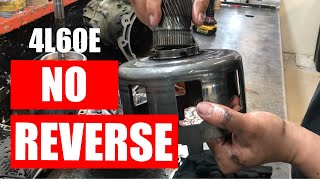
- If no external issues are found, the problem is internal (sun shell, clutches, seals) and requires professional disassembly and inspection. 🎬 Watch: A full teardown and assessment of a transmission with no reverse.
Parts You'll Likely Need
- Transmission Filter and Gasket Kit — This is the first step for any transmission issue, required when addressing low or dirty fluid.
Trusted brands: ACDelco, Wix, ATP
OEM price range: $40-$70
Aftermarket price range: $20-$40 - Reaction Sun Shell (Upgraded)
(OEM #Sonnax 77749-02K (SmartShell), Pro Select 42298B (The Beast))— A common failure point on the 4L60E transmission that directly causes a loss of reverse gear. The OEM part is weak; an upgraded, hardened shell is the standard repair.
Trusted brands: Sonnax, The Beast
OEM price range: $45 (Standard ACDelco 24228345)
Aftermarket price range: $40-$100 - Transmission Master Rebuild Kit — Often necessary to fix internal mechanical failures like worn clutches or seals that cause P0736. Includes all necessary gaskets, seals, and friction plates.
Trusted brands: ACDelco, Transtar, Alto, Raybestos
OEM price range: $500-$900
Aftermarket price range: $300-$600
Related Codes That Often Appear With This One
- P0700 — This code is a general fault request from the TCM. It acts as a 'check engine light' for the transmission, indicating that a more specific code like P0736 is stored.
- P0732, P0734 — If you have P0736 along with codes for incorrect 2nd (P0732) or 4th (P0734) gear ratios, it is a classic symptom of a broken reaction sun shell in a 4L60E transmission.
- P1870 — This code indicates transmission component slipping and often points to a worn TCC regulator valve bore in the valve body. This can cause widespread pressure issues that lead to clutch wear and trigger other ratio codes like P0736.
Technical Service Bulletins (TSBs) & Recalls
- PIP4379K: Mentions that issues like no engagement into reverse can be associated with DTC P0736, among many others, and advises following standard service diagnostics. [⭐ MANUFACTURER TSB — highest authority]
Platform-Specific Known Issues
- A General Motors Technical Service Bulletin (TSB #PIP4379K) lists P0736 among a wide range of transmission codes that can be caused by various internal hydraulic and mechanical issues, including problems that also cause no reverse engagement or delayed shifts.
Mechanic-Grade Diagnostic Values
- 4L60E/4L80E Shift Solenoid (A & B) Resistance — expected: 20 - 40 Ohms. Failure: A reading outside this range (open circuit or short) indicates a failed solenoid.
- 4L60E Pressure Control (PC) Solenoid Resistance — expected: 3.5 - 8.0 Ohms. Failure: Readings outside this range suggest a faulty PC solenoid.
- 4L80E Pressure Control (PC) Solenoid Resistance — expected: 3.5 - 4.5 Ohms. Failure: A reading below 3.0 Ohms or an open circuit indicates a failed solenoid.
- 4L60E Line Pressure at Idle in Reverse — expected: 64 - 75 PSI, with a significant rise from Park/Drive (55-65 PSI).. Failure: Low pressure or a failure to rise significantly when shifting into reverse points to a hydraulic leak, worn boost valve, failing pump, or clogged filter.
- 4L60E Line Pressure at Wide Open Throttle (WOT) — expected: Should reach at least 190 PSI.. Failure: If base pressure is low, the pump or transmission is worn. If max pressure is low but base pressure is okay, suspect the EPC (PC) solenoid.
Scan Tool Commands That Help
- Tech 2 / GDS2: PC Solenoid Amp Control / PCS Control — This bidirectional test allows a technician to manually command the pressure control solenoid through its amperage range while monitoring line pressure with a gauge. It is critical for determining if a pressure problem is caused by a faulty solenoid (electrical) or an internal hydraulic/mechanical issue like a weak pump or valve body leak.
- Advanced Scan Tool: Solenoid Activation Test — Allows for individually commanding shift solenoids on and off to listen for an audible 'click' from inside the pan. While not a definitive test (a solenoid can click but still leak), it's a quick way to check for an electrically dead solenoid without dropping the pan.
Wiring & Ground Locations
- Engine-to-Firewall Ground Strap — Typically runs from the rear of the driver's side cylinder head to a stud on the firewall. It is notoriously difficult to see and access.. This is a primary ground path for the engine and its sensors. A corroded or loose connection here can cause erratic signals and unpredictable behavior from the PCM, potentially affecting transmission control functions.
- PCM Grounds (G103/G104) — Multiple ground wires, typically black with a white stripe, are bundled and terminate at locations on the engine block and frame near the front of the vehicle.. The PCM relies on these grounds to provide a stable reference. A poor ground can cause incorrect sensor readings and faulty command signals to the transmission solenoids.
- Transmission 20-Way Connector — The main round electrical connector on the passenger side of the transmission case.. This is the primary interface between the vehicle's wiring harness and the transmission's internal components. It's a common spot for corrosion, bent pins, or fluid intrusion, and is the ideal location for on-vehicle resistance testing of solenoids.
Real Owner Repair Stories
- Reddit user on r/MechanicAdvice (1998 Chevrolet Corvette with a freshly rebuilt 4L60E) — No reverse engagement when on the ground, but wheels would spin in reverse when on a lift. All forward gears worked correctly.
❌ Tried (didn't work) Initially assumed a major internal hydraulic failure.
✅ What actually fixed it Upon dropping the pan, the new transmission filter had fallen out of the pump. The user noted the pan had a mark where the filter was pressing against it, indicating the wrong (likely a truck-style deep) filter was used for the Corvette's pan, causing it to either be blocked or fall out, starving the pump of fluid for reverse engagement. Installing the correct filter resolved the issue. - LS1Tech forum user (2004 Chevrolet Silverado with a used 4L60E (from a 2002 Silverado) with 69k miles swapped in.) — No reverse, acts exactly like neutral with no RPM change when selected. All forward gears worked fine.
❌ Tried (didn't work) Checking fluid level., Considering checking the boost valve.
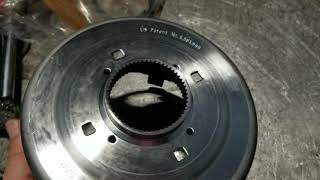
✅ What actually fixed it The consensus from experienced members was a classic internal failure: the reverse input clutch snap ring had popped out of its groove in the drum. This prevents the clutch pack from being applied. The fix requires transmission removal and disassembly to reseat or replace the snap ring and inspect the drum. - Reddit user on r/AskAMechanic (2001 GMC Sierra 4.8L with 4L60E (50k miles on rebuild)) — No reverse, acts like neutral. All forward gears work. Fluid was pinkish-brown with no metallic particles.
❌ Tried (didn't work) Fluid and level check.
✅ What actually fixed it The user did not post a final resolution, but expert advice given the symptoms was that an internal mechanical failure was certain. The top suggestions were a failed reverse input clutch pack or a dislodged snap ring in the reverse input drum, both requiring a transmission teardown to confirm and repair.
"I Checked Everything" — The Actual Cause
- In the context of transmissions, the equivalent of a 'smoke test clean' scenario is when all external electrical tests pass, but the fault persists. For P0736, a technician might test the shift solenoids and find their resistance is within spec (20-40 ohms), leading them to suspect a deeper issue. The actual cause is often a purely mechanical or hydraulic failure that cannot be detected electrically, such as a dislodged snap ring on the reverse input clutch drum, a cracked reverse input drum, or a worn-out low/reverse clutch pack.
OEM Part Supersession History
ACDelco 24228345 (Standard Replacement)→Sonnax 77749-02K ('SmartShell') or 'The Beast' Shell— The original equipment (and standard replacement) reaction sun shell is made of stamped steel with un-reinforced splines that are prone to stripping or breaking off at the collar, causing a loss of Reverse, 2nd, and 4th gears. The aftermarket upgrades are made of heavier gauge, heat-treated steel and have a reinforced collar to prevent this common failure.
Model Year Variations Within This Range
- 2003-2005 (vs 2001-2002): Around 2003, many 4L60E transmissions were updated to include an Input Speed Sensor (ISS) located in the pump stator. Earlier models calculate gear ratios by comparing engine RPM to the Output Speed Sensor (OSS). Models with an ISS can more directly detect slippage between the torque converter and the transmission input shaft. While the mechanical causes of P0736 remain the same, the diagnostic strategy and wiring harness differ for ISS-equipped models.
Helpful Videos
We Have This Part in Stock


The information in this article is provided for general reference and educational purposes only. Vehicle specifications, procedures, and part compatibility can vary by production date, trim level, and region. Always consult your vehicle's factory service manual and verify part numbers before purchasing or performing repairs. Safety-critical components such as airbags, seat belts, and braking systems should be installed by a qualified professional.
- Gmc SIERRA:
- 🧭 Diagnostic Flowchart
- 🎬 Helpful Videos
- 🛍️ Shop This Part
- What's Unique About the 2001-2005 Gmc SIERRA
- Symptoms You May Notice
- Most Likely Causes
- Rare But Worth Checking
- Diagnosis Steps
- Parts You'll Likely Need
- Related Codes That Often Appear With This One
- Technical Service Bulletins (TSBs) & Recalls
- Platform-Specific Known Issues
- Mechanic-Grade Diagnostic Values
- Scan Tool Commands That Help
- Wiring & Ground Locations
- Real Owner Repair Stories
- "I Checked Everything" — The Actual Cause
- OEM Part Supersession History
- Model Year Variations Within This Range
- 🎟️ Get 5% Off