

P0736 on 2009-2010 GMC Sierra 2500: Reverse Incorrect Ratio Causes and Fixes
This code means your truck's transmission is failing to engage reverse properly. The most common causes are low or dirty transmission fluid, but on the 6L90 transmission in these trucks, it often points to internal issues like a faulty valve body, a cracked 3-5-Reverse clutch drum, or worn clutches, which is a professional-level repair.
- P0736 on your Sierra 2500 indicates a serious problem with the reverse gear that should be addressed immediately to prevent further damage.
- Always start by checking the transmission fluid level and condition, as this is the simplest potential fix.
- Be prepared for a more complex internal transmission issue, as the 6L90 in these trucks is known for valve body and clutch pack problems that cause this code.
- This is not a typical DIY repair. Professional diagnosis with a scan tool and hydraulic pressure gauges is recommended before purchasing parts.
What's Unique About the 2009-2010 Gmc SIERRA 2500
The 2009-2010 Sierra 2500 HD uses the heavy-duty GM 6L90 (RPO code MYD) transmission. While fluid issues can cause P0736 on any vehicle, this specific transmission is known for several internal mechanical and hydraulic failures that directly lead to this code. Common culprits include a cracked 3-5-Reverse clutch drum, worn sealing rings on the stator support shaft causing cold-start engagement delays, and checkballs wearing into the valve body separator plate, causing a loss of hydraulic pressure for the reverse circuit. These issues are more common than simple solenoid failures.
Diagnostic Flowchart
Tap your situation to follow the diagnostic path that matches what you're seeing on this vehicle.
Symptoms You May Notice
- Transmission will not shift into reverse.
- Delayed or harsh engagement into reverse.
- Check Engine Light is on.
- Vehicle may show a "Range Inhibit" message.
- Slipping while in reverse.
- Grinding or clunking noises when shifting into reverse.
- Engine revs when put in reverse, but the vehicle doesn't move.
- Replacing shift solenoids when the root cause is a mechanical or hydraulic failure like a worn valve body separator plate, a cracked 3-5-R drum, or burnt clutches. The solenoid is often blamed when it's actually just a victim of debris from the real failure.
Most Likely Causes
- Low or Dirty Transmission Fluid 🔴 High Probability → Shop Transmission Assembly High mileage, heavy towing, and hauling break down the fluid's properties, while leaks can lower the level. This results in low hydraulic pressure, which is the primary cause of clutch slippage and engagement issues.
How to confirm: Check the transmission fluid level and condition using the dipstick with the engine running and transmission warm. The fluid should be at the correct level, pinkish-red, and not smell burnt. Dark, metallic, or burnt-smelling fluid indicates internal wear and clutch material contamination, pointing to a more serious problem.
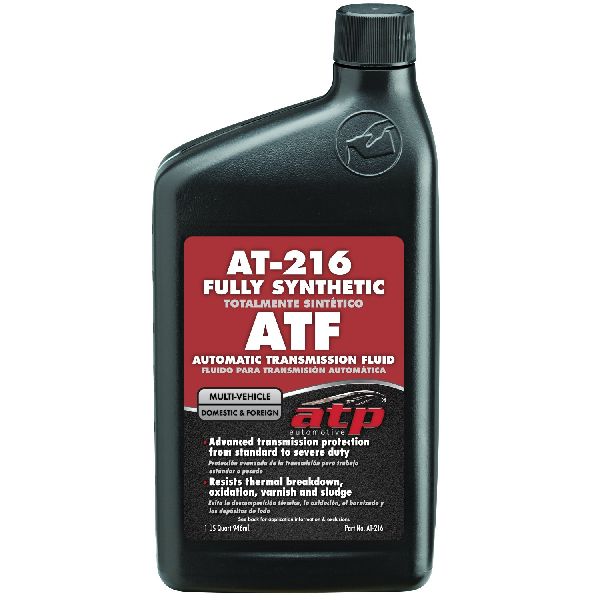
Typical fix: Perform a transmission fluid and filter change using DEXRON-VI fluid. If the fluid is very dark or contains significant metal shavings, a full transmission inspection is required as the damage is likely already done.
Est. part cost: $75-$150 - Worn or Stuck Valve Body Components 🟡 Medium Probability → Shop Transmission Valve Body A well-documented failure on 6L80/6L90 transmissions is the checkballs in the valve body wearing down and embedding themselves into the separator plate. This creates a hydraulic leak that prevents the 3-5-Reverse clutch from getting the pressure it needs to apply, resulting in no reverse.
How to confirm: This requires a technician to drop the transmission pan and valve body. A visual inspection of the separator plate will show small divots or holes where the checkballs have worn through. The checkballs themselves may be undersized.
Typical fix: Replace the damaged separator plate with an updated, more durable version. 🎬 Watch: Professional walkthrough of common 6L80 and 6L90 internal repairs. Install new checkballs. Some technicians install Sonnax kits that include oversized checkballs and other components to prevent recurrence. The valve body channels should be cleaned and inspected for wear.
Est. part cost: $200-$800 - Worn or Failed 3-5-Reverse Clutch Pack 🟡 Medium Probability The friction plates and seals for the reverse clutch pack wear out from normal use, heat, and heavy loads. Low fluid pressure from other issues (like a worn valve body plate) accelerates this wear, causing the clutches to slip, burn, and fail completely.
How to confirm: This is confirmed by finding excessive black clutch material (looks like wet coffee grounds) in the transmission pan and filter. Hydraulic pressure tests on the reverse circuit will also show pressure loss. A complete teardown is the only way to visually confirm burnt or worn-out clutches.
Typical fix: This requires a complete transmission rebuild to replace the worn clutches, steels, and seals. This is typically done as part of a master rebuild kit.
Est. part cost: $400-$1000 (as part of a full rebuild kit) - Faulty Shift Solenoid ⚪ Low Probability → Shop Transmission Valve Body While solenoids can fail, on the 6L90 they are less likely to be the root cause of P0736 than mechanical or hydraulic issues. Debris from other failures (like a failing torque converter or clutches) can clog a solenoid, causing it to stick.
How to confirm: A professional bidirectional scan tool can command the reverse shift solenoid on and off to test its electrical function and listen for a click. Resistance can also be checked with a multimeter. However, this won't detect a mechanical blockage.
Typical fix: Replace the faulty solenoid. This is done by removing the transmission oil pan and valve body, as the solenoids (part of the TEHCM) are mounted on top of it.
Est. part cost: $50-$100
Rare But Worth Checking
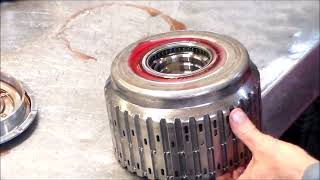
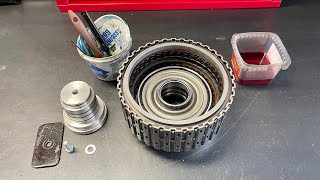
- Cracked 3-5-Reverse Clutch Drum: → Shop Automatic Transmission Clutch Drum A widely known failure point on early 6L80/6L90 transmissions. The weld connecting the drum housing to the hub can crack, causing a catastrophic loss of hydraulic pressure to the 3-5-R clutch pack. This results in no 3rd gear, no 5th gear, and no reverse. 🎬 Watch: How a cracked drum causes slipping in these gears. GM later released an updated drum to address this. Some shops preemptively weld the drum during a rebuild. In some extreme cases, the drum can separate completely.
- Transmission Control Module (TCM) Failure: → Shop Transmission Assembly The TCM (also called TEHCM in these trucks as it's combined with the valve body solenoids) can fail internally due to heat and vibration, or its software can become corrupted. This is typically diagnosed only after all mechanical and hydraulic possibilities have been ruled out, as it's less common than hard part failures.
- Worn Stator Support Bushings/Seals: The sealing rings on the stator support shaft are known to leak, especially during cold operation. This can cause delayed engagement into reverse or drive when the truck is cold, a symptom mentioned in TSB PIP4379N. Worn bushings can also contribute to pressure loss.
Diagnosis Steps
- Check and document any other stored trouble codes, paying close attention to codes like P0700 or P0776.
- Check the transmission fluid level and condition while the engine is running and the transmission is warm. Note if it is low, dark, burnt, or contains metallic particles.
- Use a professional scan tool to monitor live data, specifically input (ISS) and output (OSS) speed sensors, while attempting to engage reverse. A discrepancy confirms the slip condition.
- Inspect the transmission wiring harness and connectors for any visible damage, corrosion, or loose connections, particularly at the main transmission case connector.
- Drop the transmission oil pan to inspect for excessive metal debris or black clutch material. A small amount of fine grey material is normal, but large flakes or a thick sludge indicates severe internal wear.
- If the pan is relatively clean, the next step is to remove and inspect the valve body and separator plate. Look for worn spots where checkballs have seated, which is a very common failure point for loss of reverse.
- If significant debris is found in the pan, or if valve body inspection reveals no issues, the transmission must be removed for a complete teardown and inspection of internal components like the 3-5-Reverse clutch pack and drum.
Parts You'll Likely Need
- Automatic Transmission Fluid and Filter Kit
(OEM #88864060 (DEXRON-VI Fluid), 24236933 (Filter))— Low or contaminated fluid is a primary cause of transmission problems and should be the first service performed.
Trusted brands: ACDelco
OEM price range: $100-$175
Aftermarket price range: $75-$125 - Transmission Valve Body Separator Plate
(OEM #24244057 (Check specific application, may vary))— A common failure point on the 6L90 transmission where checkballs wear out the plate, causing hydraulic leaks and loss of reverse pressure.
Trusted brands: ACDelco, Sonnax
OEM price range: $50-$100
Aftermarket price range: $40-$80
Related Codes That Often Appear With This One
- P0700 — This is a general code indicating the Transmission Control Module (TCM) has stored a fault. It's an alert to check the TCM for more specific codes like P0736.
- P0776 — This code is for 'Pressure Control Solenoid B Stuck Off'. On a 6L90, this solenoid is involved in the 3-5-Reverse clutch circuit. Seeing P0776 alongside P0736 strongly points towards a problem with the 3-5-R drum or its related hydraulics.
- P0731-P0735 — These codes indicate incorrect gear ratios for forward gears. If seen with P0736, it strongly suggests a widespread issue like critically low fluid, a failing torque converter sending debris throughout the system, or a major internal hydraulic leak.
Technical Service Bulletins (TSBs) & Recalls
- PIP4379N: Mentions that codes including P0736 can be present with symptoms like no engagement into reverse, especially during a cold start. It advises technicians to follow standard service information diagnostics for a wide range of potential internal failures, confirming this is a known and complex issue.
Platform-Specific Known Issues
- The provided TSB #PIP4379N lists P0736 among a large group of transmission codes that can be caused by various internal hydraulic and mechanical failures, indicating this is a known pattern for GM trucks of this era.
- A common owner experience found on forums involves a sudden loss of reverse with no prior warning, often traced back to either the valve body separator plate wear or a cracked 3-5-R drum.
- Cold weather can worsen symptoms like delayed engagement into reverse, which points to leaking seals in the stator support shaft that lose pressure when the fluid is cold and thick.
Mechanic-Grade Diagnostic Values
- On/Off Shift Solenoid Resistance — expected: 20 - 40 Ohms. Failure: A reading outside this range indicates a failed solenoid, requiring TEHCM replacement.
- PWM Solenoid Resistance (Clutch Pressure & Line Pressure) — expected: 3 - 8 Ohms. Failure: A reading outside this range indicates a failed solenoid, requiring TEHCM replacement.
- On/Off Shift Solenoid Amperage Draw (at 12V) — expected: 0.3 - 0.7 Amps. Failure: An incorrect amperage value indicates a failed solenoid.
- Line Pressure at Idle (in gear) — expected: approx. 45 - 80 PSI. Failure: Significantly lower pressure indicates a hydraulic leak, worn pump, or regulator issue.
- TEHCM Regulated Voltage Supply — expected: 8.3 - 9.3 Volts. Failure: Voltage outside this range suggests a fault within the TEHCM's internal power regulation.
Scan Tool Commands That Help
- GDS2 (GM Dealer Scan Tool): Transmission Service Fast Learn — Required after replacing the TEHCM or valve body to allow the module to learn individual clutch apply pressures and characteristics. Can also be used to address harsh shifts.
- GDS2 / Tech2: Solenoid Output Overrides / Solenoid Valve State Control — To individually command solenoids on and off to test their mechanical function (listen for a click) and to verify hydraulic circuit integrity when used with a pressure gauge test plate.
- GDS2: Solenoid Cleaning Procedure — This automated function cycles all solenoids to flush potential debris from the solenoids and their circuits. It can be used if a solenoid is suspected of sticking intermittently.
- GDS2: Data Bus Diagnostic Tool — If multiple communication codes are present with P0736, this tool can be used to analyze the CAN bus network and identify modules that are not communicating, helping to isolate wiring faults.
Wiring & Ground Locations
- TEHCM Case Connector — The main electrical connector on the outside of the transmission case, which connects the vehicle harness to the internal TEHCM.. This is the single point for all power, ground, and data communication to the transmission controls. Pins 6 and 7 are for the High Speed GMLAN data bus. Corrosion or damage here can cause a wide range of codes, including P0736.
- G100 / G101 — Main chassis grounds located on the lower left (G100) and lower right (G101) of the radiator core support.. While not exclusively for the transmission, poor connections at these major ground points can introduce electrical noise and intermittent communication faults between the ECM and TCM, potentially leading to incorrect fault codes.
- TEHCM Main Connector Pins — Within the 16-pin TEHCM connector.. Pin 5 is the main ground, and Pin 4 is Battery+. Pins 10 & 11 are for the primary CAN bus communication. Verifying power, ground, and data signals at these pins is a key step in diagnosing a potential TEHCM or wiring issue.
Real Owner Repair Stories
- GMTNation Forums (GM Truck with 4L60E (similar valve body checkball issue to 6L90)) — Soft shifts, preventative maintenance.
✅ What actually fixed it The user replaced the valve body separator plate. A provided image clearly shows the original plate with an enlarged, worn seat where a checkball had created a pressure leak, compared to the perfectly round hole on the new plate. This visually confirms the common failure mode that causes pressure loss for clutch application. - YouTube video by 'EsotericTransmissions' (2007 GM truck with 6L80 transmission) — No movement in forward or reverse.
✅ What actually fixed it A teardown revealed a catastrophic failure of the 3-5-Reverse drum. The inner stator portion had completely separated from the outer clutch basket at the factory welds. This is an extreme example of the common 'cracked drum' failure, resulting in a total loss of hydraulic pressure for the 3-5-R clutch pack.
OEM Part Supersession History
Various early 6L90 3-5-R drums→ACDelco 24259850 (and others), Aftermarket welded drums— The factory welds on the original 3-5-Reverse clutch drums were prone to cracking, causing a loss of hydraulic pressure. Aftermarket suppliers and rebuilders often TIG weld the drum to reinforce this known weak point.Early 6L80/6L90 Valve Body Separator Plate→Updated GM Separator Plate— The original plates were prone to wear from the steel checkballs, leading to hydraulic cross-leaks. Updated plates are made of more durable material. Sonnax recommends using the updated OE plate when installing their valve body spring kits.OE Aluminum Stator Support Bushings→Sonnax 104036AK (Steel-backed bronze bushings)— The original aluminum bushings are vulnerable to scoring and premature wear during low oil flow conditions, such as vehicle startup. This leads to TCC apply/release issues and pressure loss. Steel-backed bronze bushings are more durable.
Model Year Variations Within This Range
- 2009-2010: When replacing the entire 6L90 transmission assembly, be aware that there are variations. A 2010 Sierra 2500 may have a tail shaft housing that is 1 inch longer (5 inches vs. 4 inches) and a correspondingly longer output shaft than other 6L90 units. The external case profile can also differ. These differences make a direct swap impossible without swapping parts, so verifying the replacement unit's physical dimensions is critical.
Helpful Videos
We Have This Part in Stock


The information in this article is provided for general reference and educational purposes only. Vehicle specifications, procedures, and part compatibility can vary by production date, trim level, and region. Always consult your vehicle's factory service manual and verify part numbers before purchasing or performing repairs. Safety-critical components such as airbags, seat belts, and braking systems should be installed by a qualified professional.
- Gmc SIERRA 2500:
- 🧭 Diagnostic Flowchart
- 🎬 Helpful Videos
- 🛍️ Shop This Part
- What's Unique About the 2009-2010 Gmc SIERRA 2500
- Symptoms You May Notice
- Most Likely Causes
- Rare But Worth Checking
- Diagnosis Steps
- Parts You'll Likely Need
- Related Codes That Often Appear With This One
- Technical Service Bulletins (TSBs) & Recalls
- Platform-Specific Known Issues
- Mechanic-Grade Diagnostic Values
- Scan Tool Commands That Help
- Wiring & Ground Locations
- Real Owner Repair Stories
- OEM Part Supersession History
- Model Year Variations Within This Range
- 🎟️ Get 5% Off