

P0736 on 2008-2012 GMC Sierra Denali: Reverse Gear Ratio Error Causes and Fixes
P0736 on a 2008-2012 Sierra Denali means 'Reverse Incorrect Ratio,' usually caused by an internal transmission problem. The most likely culprits are within the 6L80/6L90 transmission's valve body or a failed 3-5-Reverse clutch drum. This is a complex repair requiring a professional, with costs ranging from several hundred to over two thousand dollars.
- P0736 means your truck's transmission is failing to properly engage reverse gear.
- Do not ignore this code. While you may have forward gears, you risk severe, expensive damage to the transmission.
- The most likely causes on a 2008-2012 Sierra Denali are internal mechanical failures within the 6L80/6L90 transmission, such as a valve body fault or a cracked clutch drum.
- This is not a DIY-friendly repair. Diagnosis and repair require a transmission professional.
- Always start by checking the transmission fluid level and condition, but be prepared for a more complex mechanical issue.
What's Unique About the 2008-2012 Gmc SIERRA DENALI
The GMC Sierra Denali from this era uses the GM 6L80 or 6L90 automatic transmission. While generally robust, these transmissions are known for specific, repeatable issues that can lead to a P0736 code and a no-reverse condition. Failures are often mechanical and internal, commonly related to the valve body or the 3-5-Reverse clutch drum, rather than simple external sensor failures. A key failure point is the #5 checkball in the valve body, which can wear and get stuck in the separator plate, causing a complete loss of reverse. Another is the cracking of welds on the 3-5-R drum. The provided TSB PIP4379M confirms that no-reverse engagement is a recognized issue across multiple GM trucks with this powertrain.
Diagnostic Flowchart
Tap your situation to follow the diagnostic path that matches what you're seeing on this vehicle.
Symptoms You May Notice
- Transmission refuses to shift into reverse or has a long delay before engaging.
- Grinding or clunking noises when shifting into reverse.
- Vehicle may not move at all when in reverse, engine just revs as if in neutral.
- Illuminated Check Engine Light.
- Transmission may feel like it's slipping when in reverse.
- Message on dash to 'Reduce Acceleration'.
- Replacing external speed sensors when the problem is internal.
- Installing an incorrect valve body (e.g., a 6L90 valve body into a 6L80 transmission). The parts may bolt on but have different hydraulic passages, causing a no-reverse condition immediately after the repair.
Most Likely Causes
- Worn or Stuck Valve Body Components 🔴 High Probability → Shop Transmission Valve Body The 6L80/6L90 transmission is known for valve body issues. Specifically, the #5 checkball can wear down, get lodged in the separator plate, and block the hydraulic circuit for reverse. Additionally, the 3-5-R clutch regulator valve can stick in its bore, also preventing reverse engagement.
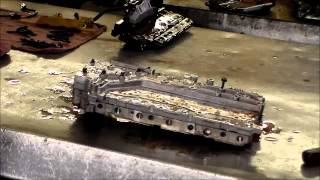
How to confirm: A technician must drop the transmission pan and valve body to physically inspect the checkballs and valve bores. The #5 checkball location is a primary inspection point for a no-reverse condition. 🎬 See this walkthrough on inspecting the 6L80E valve body. Vacuum testing specific circuits in the valve body can also pinpoint leaks.
Typical fix: Replacement of the worn checkball and potentially the separator plate if damaged. Sonnax offers Zip Kits (like part number 6L45-6L90-ZIP) and individual components to address valve body wear. In many cases, the entire valve body/TEHCM assembly is replaced.
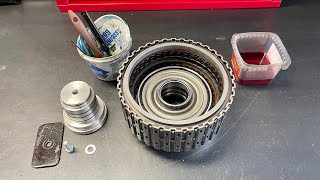
Est. part cost: $50-$700 - Cracked 3-5-Reverse Clutch Drum 🟡 Medium Probability → Shop Automatic Transmission Clutch Drum The factory welds on the 3-5-R drum in the 6L80 transmission are a known failure point that can crack, leading to a loss of hydraulic pressure for the reverse clutches. This is a well-documented failure mode. This failure causes severe slippage or a no-move condition in reverse, 3rd, and 5th gears. 🎬 Watch: A breakdown of common 6L80 slipping and reverse issues. GM updated the welds in 2010 to reduce the failure rate, but it can still occur on later models.
How to confirm: This requires transmission disassembly. A technician can perform an air check on the drum to listen for leaks at the welds, which confirms the failure. Bubbles will be visible around the weld seam when fluid is applied and air is introduced.
Typical fix: The transmission must be removed and rebuilt with an updated/stronger 3-5-R drum. Aftermarket suppliers like Sonnax offer reinforced drums.
Est. part cost: $150-$300 for the drum, plus rebuild kit parts - Low or Contaminated Transmission Fluid 🟡 Medium Probability → Shop Transmission Assembly
How to confirm: Check the transmission fluid level and condition. The fluid should be at the correct level, red in color (DEXRON-VI), and not smell burnt. TSB PIP4379M specifically calls for checking the fluid level first.
Typical fix: Perform a transmission fluid and filter change using the correct specification fluid (ACDelco DEXRON-VI). If the fluid is full of clutch material (dark and gritty), it indicates a severe internal failure.
Est. part cost: $100-$200 - Failed Shift Solenoid or TEHCM ⚪ Low Probability → Shop Transmission Valve Body The TEHCM (Transmission Electro-Hydraulic Control Module) is integrated with the valve body. While a single solenoid can fail, it's less common for a solenoid alone to cause just a P0736 without other codes. More often, debris from another failure (like a torque converter) clogs a solenoid. A stuck line pressure solenoid can cause low pressure, but this usually affects all gears.
How to confirm: A professional scan tool can command the reverse solenoid on and off to test its function. Resistance checks can also be performed on the solenoids with the TEHCM on the bench. The TEHCM must be programmed to the vehicle's VIN.
Typical fix: Replacement of the faulty solenoid or the entire TEHCM/valve body unit, which is located inside the transmission. The replacement TEHCM will require programming.
Est. part cost: $50-$600
Rare But Worth Checking
- Failed Torque Converter: While not a direct cause of P0736, a failing torque converter can shed debris that clogs the valve body, checkballs, and solenoids, leading to this code as a secondary symptom. This is a very common failure on the 6L80.
Diagnosis Steps
- Check the transmission fluid level and condition. Ensure it is full and does not look dark or smell burnt. Use only DEXRON-VI fluid.
- Use a professional-grade OBD-II scanner to confirm P0736 and check for other related transmission codes like P0700 or P0776.
- Review live data from the scanner to monitor the input and output speed sensors while attempting to engage reverse. A discrepancy will confirm slippage.
- Drop the transmission pan to inspect for excessive metal debris, which would indicate a serious internal mechanical failure like a failed torque converter or clutch pack.
- Remove and inspect the valve body for a dislodged or shrunken #5 checkball stuck in the separator plate. Also inspect the 3-5-R clutch regulator valve for free movement.
- If no issues are found in the valve body, the next step is to remove the transmission for inspection of the 3-5-Reverse clutch drum. Perform an air check on the drum to test for cracks in the welds.
Parts You'll Likely Need
- Transmission Valve Body with TEHCM
(OEM #24256861 (Superseded by other numbers, verify by VIN))— Often the source of the hydraulic pressure loss due to stuck valves or dislodged checkballs specific to the 6L80/6L90. It is often replaced as a complete assembly with the integrated control module (TEHCM).
Trusted brands: ACDelco, Sonnax (for repair kits like Zip Kits)
OEM price range: $500-$900
Aftermarket price range: $300-$700 - 3-5-Reverse Clutch Drum — A known mechanical weak point in the 6L80 transmission; the factory welds can crack, causing a loss of reverse. This requires a full transmission teardown.
Trusted brands: ACDelco (Updated design), Sonnax (Offers heavy-duty and welded reinforcement options)
OEM price range: $150-$250
Aftermarket price range: $100-$200 - Transmission Filter and Fluid Kit — The first and most basic step in troubleshooting. Low or dirty fluid is a common cause of transmission problems. Only DEXRON-VI fluid should be used.
Trusted brands: ACDelco
OEM price range: $80-$150
Aftermarket price range: $50-$100
Related Codes That Often Appear With This One
- P0700 — This code indicates a general fault request from the Transmission Control Module (TCM) and is almost always present with any specific transmission code like P0736.
- P0701 — This code indicates a TCM system performance issue. TSB PIP4379M specifically advises diagnosing this code first, as it points to a potential control-side problem.
- P0776 — Pressure Control Solenoid 'B' Performance or Stuck Off. This code is often associated with issues in the 3-5-Reverse circuit and can be caused by a cracked drum or valve body problems.
Technical Service Bulletins (TSBs) & Recalls
- PIP4379M: Addresses no drive, delayed engagement, or no reverse, and lists P0736 as a potential code. It advises checking fluid levels and diagnosing other TCM codes first.
Platform-Specific Known Issues
- The GM Technical Service Bulletin #PIP4379M directly addresses conditions including 'no engagement into reverse' and lists P0736 as a related trouble code for this vehicle platform.
- Owner Experience: No Reverse, Bad Valve Body: → Shop Transmission Valve Body A user on Reddit with a 2022 Sierra reported a sudden loss of movement and no reverse. The dealer diagnosed a bad valve body, stating it was a 'known issue'. This highlights that valve body problems persist even in newer generations of these trucks.
- Owner Experience: No Reverse After Fluid Loss: On GM-Trucks.com, a user with an '06 Sierra 2500HD experienced a transmission cooler line failure, lost fluid, and subsequently had no reverse gear even after refilling. This illustrates how a low fluid condition can cause permanent damage to the reverse circuit components.
Mechanic-Grade Diagnostic Values
- Shift Solenoid (On/Off type) Resistance — expected: 20-40 Ohms. Failure: A reading outside this range indicates a failed solenoid, requiring TEHCM replacement.
- Pressure Control Solenoid (PWM type) Resistance — expected: 3-8 Ohms. Failure: A reading outside this range indicates a failed solenoid, requiring TEHCM replacement. A more specific source suggests 5-6 Ohms.
- Pressure Switch Diaphragm Test — expected: Circuit should read near Open Loop (OL) with no pressure, and ~10 Ohms when pressure is applied with a pencil eraser.. Failure: If the reading is incorrect or does not change, the TEHCM is faulty.
- Transmission Main Line Pressure at Idle (in gear) — expected: Approximately 45-80 PSI. Failure: Significantly lower pressure (e.g., under 30 PSI) can indicate a missing pump boost valve roll pin or other major hydraulic leak.
Scan Tool Commands That Help
- GM GDS2/Tech2 or equivalent professional scanner: Solenoid Cleaning Procedure — This is an automated function that cycles all solenoids to flush debris. It can be used as a first step if a solenoid is suspected of sticking due to contamination. If the code returns after cleaning, the TEHCM likely needs replacement.
- GM GDS2/Tech2 or equivalent professional scanner: Output Control - Cycle Solenoids — This allows a technician to manually command individual solenoids on and off while using a special test plate (DT-47825) and pressure gauges to confirm the solenoid is actuating and holding pressure correctly. This is a definitive bench test for the TEHCM.
- GM GDS2/Tech2 or equivalent professional scanner: Fast Learn / Reset Transmission Adapts — This procedure must be performed after replacing the TEHCM or rebuilding the transmission to reset the learned clutch apply pressures and ensure proper shift quality.
Wiring & Ground Locations
- 16-Way Case Connector — The main electrical connector that passes through the transmission case on the passenger side, connecting the vehicle harness to the internal TEHCM.. This is the primary interface for all power, ground, and data communication to the TCM. A poor connection here can cause numerous transmission codes, including P0736. Pin 16 is Ground, Pin 10 is Battery Voltage, and Pin 12 is Run/Crank Voltage.
- G110 / G114 — On some newer body style trucks (2019+), these grounds are on the frame. While outside the 2008-2012 range, poor grounds are a common GM issue. On GMT900 trucks (2007-2014), key grounds are G104/G105 on the engine block near the front, and G201/G218 inside the cabin behind the kick panels.. A poor ground connection for the ECM/TCM can cause erratic behavior, incorrect sensor readings, and false codes. Ensuring the main engine-to-chassis and battery grounds are clean and tight is a critical, though often overlooked, diagnostic step.
Real Owner Repair Stories
- YouTube channel 'Nick's Transmissions' (2008 model year 6L80 with under 70,000 miles) — Severe slippage and a neutral condition in Reverse, 3rd, and 5th gear; burnt 3-5-R clutch pack.
❌ Tried (didn't work) The video focuses directly on the diagnosis of the failed component.
✅ What actually fixed it The root cause was confirmed to be cracked welds at the base of the 3-5-Reverse clutch drum, causing a major hydraulic leak. The fix is to replace the drum with an updated part and rebuild the clutch pack.
OEM Part Supersession History
24241350 / 24252114→24256861— Hardware and software updates to improve solenoid performance and pressure switch reliability.
Heads up: The TEHCM part number must be matched to the vehicle's year and calibration. Installing an incorrect year or part number TEHCM can result in a no-start or immediate limp mode. Part number 24256861 is commonly used for the 2010-2013 model years. All replacements require programming.
Model Year Variations Within This Range
- 2006-2009: Earlier 6L80 transmissions are more prone to the 3-5-Reverse drum weld cracking. In 2010, GM updated the welding process at the factory, which reduced the frequency of this specific failure, though it did not eliminate it entirely.
- 2008-2012: While the core design is the same, there were multiple TEHCM hardware and software revisions during this period. The specific TEHCM part number (Tag ID) must be matched to the vehicle for compatibility. For example, a TEHCM for a 2009 model may not be compatible with a 2012 model without correct programming.
Helpful Videos
We Have This Part in Stock


The information in this article is provided for general reference and educational purposes only. Vehicle specifications, procedures, and part compatibility can vary by production date, trim level, and region. Always consult your vehicle's factory service manual and verify part numbers before purchasing or performing repairs. Safety-critical components such as airbags, seat belts, and braking systems should be installed by a qualified professional.
- Gmc SIERRA DENALI:
- 🧭 Diagnostic Flowchart
- 🎬 Helpful Videos
- 🛍️ Shop This Part
- What's Unique About the 2008-2012 Gmc SIERRA DENALI
- Symptoms You May Notice
- Most Likely Causes
- Rare But Worth Checking
- Diagnosis Steps
- Parts You'll Likely Need
- Related Codes That Often Appear With This One
- Technical Service Bulletins (TSBs) & Recalls
- Platform-Specific Known Issues
- Mechanic-Grade Diagnostic Values
- Scan Tool Commands That Help
- Wiring & Ground Locations
- Real Owner Repair Stories
- OEM Part Supersession History
- Model Year Variations Within This Range
- 🎟️ Get 5% Off