

P0736 on 2013-2015 GMC Sierra Denali: Reverse Incorrect Ratio Causes and Fixes
P0736 on a 2013-2015 Sierra Denali indicates the transmission cannot properly engage reverse. The most common causes are low/dirty transmission fluid or internal transmission failure, such as a faulty valve body, leaking stator support seals, or a worn/cracked 3-5-Reverse clutch drum. A fluid change is a possible cheap fix, but repairs often require a transmission specialist and can be costly, frequently involving a transmission rebuild.
- P0736 means your truck's transmission is slipping or failing to engage the reverse gear.
- Always start your diagnosis by checking the transmission fluid level and condition; this is the simplest and cheapest potential fix.
- This code is serious. Do not continue to drive extensively, as you have no reverse and risk causing more severe, expensive internal transmission damage.
- On this specific truck, the problem is often an internal mechanical or hydraulic issue (e.g., valve body, clutch pack) that requires a transmission specialist to diagnose and repair.
What's Unique About the 2013-2015 Gmc SIERRA DENALI
The 2013-2015 Sierra Denali uses the 6-speed 6L80 automatic transmission. While P0736 is a generic code, on the 6L80 it frequently points to specific, well-documented mechanical failure points beyond just fluid or solenoids. One of the most common culprits is a cracked 3-5-Reverse clutch drum, often due to poor factory welds on pre-2010 models, though later models can still fail. Another known issue is leakage from the stator support shaft seals, which causes a pressure loss to the clutch packs. Debris from a failing torque converter is also a primary cause of downstream failures, as it contaminates the valve body and TEHCM, leading to stuck valves and incorrect pressures. For 2014+ models, a factory transmission thermostat that keeps fluid temperatures around 196°F is believed to accelerate torque converter and fluid breakdown, contributing to these failures.
Diagnostic Flowchart
Tap your situation to follow the diagnostic path that matches what you're seeing on this vehicle.
Generation note: The 2013 model is the last year of the GMT900 platform, while the 2014-2015 models are the first of the new K2XX platform. Both generations in this range commonly use the 6L80 6-speed automatic transmission, so the causes and diagnostic procedures for P0736 are very similar and subject to the same common failure points. However, a key difference is that 2014 and newer models have a transmission thermostat that maintains a higher operating temperature (around 196°F), which is a suspected contributor to premature torque converter failure.
Symptoms You May Notice
- Inability to shift into reverse, or a long delay before engagement.
- Check Engine Light is on.
- Transmission may feel like it's in neutral when in reverse.
- Harsh shifting or a clunking sound when selecting reverse.
- Transmission warning light may be illuminated.
- Increased fuel consumption.
- Replacing only the input or output speed sensors. While these sensors provide the data for the ratio calculation, they are rarely the cause of the error itself. The error is typically due to mechanical or hydraulic slippage, not a sensor failure.
- Replacing just a single solenoid without addressing the source of contamination. If debris from a failing clutch or torque converter caused the solenoid to stick, the new solenoid will soon fail as well.
Most Likely Causes
- Low or Contaminated Transmission Fluid 🔴 High Probability → Shop Transmission Assembly Fluid is the hydraulic lifeblood of the transmission. Leaks or extended service intervals can lead to low levels or fluid breakdown, causing pressure loss required to actuate the reverse clutch. Debris from a failing torque converter is a common contaminant.
How to confirm: Check the transmission fluid level and condition using the dipstick. The fluid should be at the correct level, pinkish-red, and not smell burnt or contain visible debris. Finding excessive dark, gritty material or metal shavings indicates a severe internal failure.
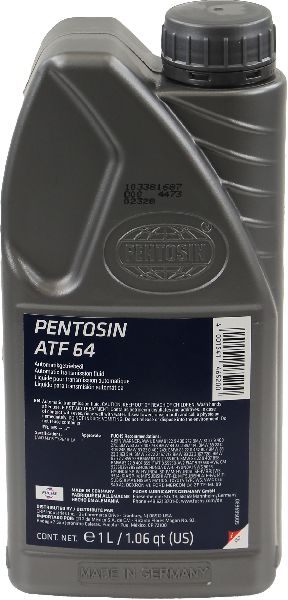
Typical fix: Perform a transmission fluid and filter change using ACDelco DEXRON-VI fluid. If the fluid is full of clutch material, this is a temporary measure at best, as the root cause is mechanical failure.
Est. part cost: $50-$150 - Failed 3-5-Reverse Clutch Pack / Drum 🔴 High Probability This is a very common failure in the 6L80. The clutch plates for reverse can burn up due to pressure loss, or the drum itself can crack at the welds, causing a major hydraulic leak. This prevents the clutch from applying, leading to a no-reverse or slipping condition.
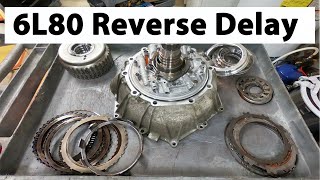
How to confirm: Confirmed by dropping the transmission pan and finding excessive clutch material. A transmission pressure test will show a pressure drop when reverse is commanded. A YouTube video by 'Transmission Bench' demonstrates an air test on an assembled drum to check for leaks at the welds. 🎬 Watch: See how the 3-5-Reverse drum fails and leaks. Ultimately, this requires transmission disassembly to verify.
Typical fix: A complete transmission rebuild to replace the worn clutch packs, seals, and gaskets. The 3-5-R drum should be inspected and replaced if any cracks are found. Upgraded aftermarket drums with reinforced welds are available.
Est. part cost: $500-$1500 (for a rebuild kit and new drum) - Worn or Stuck Valve Body Components / Faulty TEHCM 🟡 Medium Probability → Shop Transmission Valve Body The 6L80's valve body and integrated control module (TEHCM) can be susceptible to wear or debris from torque converter breakdown, causing solenoids or valves to stick. This misdirects hydraulic pressure, preventing reverse from engaging.
How to confirm: A professional technician will use a scan tool to monitor solenoid commands and fluid pressure. Dropping the transmission pan may reveal debris pointing to valve body issues. Sticking clutch select valves are a known issue.
Typical fix: Replacing the valve body and/or the TEHCM. The TEHCM must be programmed to the vehicle's VIN. Aftermarket companies like Sonnax offer remanufactured valve bodies with upgrades to address common wear points.
Est. part cost: $400-$1200 - Faulty Shift Solenoid ⚪ Low Probability → Shop Transmission Valve Body While a single solenoid can fail, it's less common for it to be the root cause for just P0736 without other codes. Often, a solenoid fails or gets clogged with debris from another internal failure, like a disintegrating torque converter clutch.
How to confirm: A professional scan tool can command the solenoid on and off to test its electrical function. Resistance can also be checked with a multimeter.
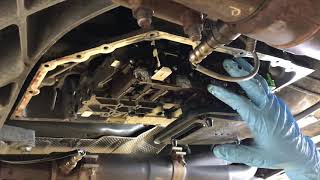
Typical fix: Replace the specific shift solenoid, which is located inside the transmission on the valve body. This is often done as part of a valve body service. 🎬 See this walkthrough on how to remove the valve body.
Est. part cost: $50-$100
Rare But Worth Checking
- Internal Hydraulic Leak at Stator Support: The paper gasket between the pump stator and the pump body is a known weak point in the 6L80. If this gasket fails, it can cause cross-leaks between hydraulic circuits, leading to pressure loss for the 3-5-R clutch. This requires a full transmission teardown to replace the gasket and inspect the sealing surfaces.
- Failing Torque Converter: While a failing torque converter often sets a P0741 code, its disintegration is a primary source of the debris that clogs solenoids and valve bodies, leading to codes like P0736. If you find excessive metallic dust in the pan, the torque converter is a likely culprit and must be replaced along with the transmission repair to prevent a repeat failure. 🎬 Watch: Why replacing only the torque converter isn't enough.
- Faulty Powertrain or Transmission Control Module (PCM/TCM): → Shop Transmission Assembly It is rare for the control module itself to fail, but it can happen due to software corruption or hardware failure. This should only be considered after all mechanical and hydraulic possibilities have been exhausted. Sometimes a simple reflash of the TCM software can resolve the issue.
Diagnosis Steps
- Check the transmission fluid level and condition. Ensure it is full, clean, and does not smell burnt. Use only DEXRON-VI fluid.
- Use a professional-grade OBD-II scanner to read and document all stored codes. Note any other transmission codes, especially P0700, P0776, or P0741.
- Review live data from the scanner, focusing on Transmission Input Speed and Output Speed sensors while attempting to engage reverse. A large discrepancy confirms slippage.
- Inspect the transmission wiring harness and connectors for any visible damage, corrosion, or loose connections. A broken wire in the harness can cause this issue.
- Drop the transmission pan to inspect for excessive metal shavings or clutch material. A small amount of fine grey material is normal, but large flakes, chunks, or 'coffee grounds' debris indicate severe internal damage, likely from the torque converter or clutches.
- If the fluid and pan are clean, perform a transmission fluid pressure test to check for hydraulic issues in the reverse circuit.
- If pressure is low or other tests are inconclusive, the valve body and internal components will need to be inspected by a professional, likely requiring transmission removal.
Parts You'll Likely Need
- Transmission Fluid and Filter Kit — This is the first and most crucial step in diagnosis and is the cheapest potential fix if the issue is simply low or dirty fluid.
Trusted brands: ACDelco
OEM price range: $70-$120
Aftermarket price range: $50-$90 - Transmission Rebuild Kit — If internal clutches are burnt or hard parts have failed, a full rebuild is necessary. The kit contains new clutches, steels, seals, and gaskets. This is the most common comprehensive fix.
Trusted brands: Transtar, Alto, Sonnax
OEM price range: $500-$900
Aftermarket price range: $400-$700 - Transmission Valve Body / TEHCM
(OEM #24256861 (TEHCM, may vary by year))— A common failure point on the 6L80 transmission that can cause pressure regulation issues leading to the P0736 code. Often replaced if contaminated with debris.
Trusted brands: ACDelco (Remanufactured), Sonnax (Remanufactured Valve Body)
OEM price range: $500-$1200
Aftermarket price range: $400-$800 - 3-5-Reverse Clutch Drum — A cracked drum is a very common point of failure on the 6L80 causing a loss of reverse. It must be inspected during any rebuild for this code.
Trusted brands: GM Genuine, Sonnax (Upgraded)
OEM price range: $150-$250
Aftermarket price range: $100-$200
Related Codes That Often Appear With This One
- P0700 — This is a general transmission fault code that simply means the TCM has detected a problem and has requested the Check Engine Light to be turned on. It will almost always appear with P0736.
- P0776 — Pressure Control Solenoid 'B' Performance or Stuck Off. This code is often associated with issues in the 3-5-Reverse circuit and can be caused by a cracked drum, valve body problems, or a failing solenoid, making it a common companion to P0736.
- P0731-P0735 — These codes indicate incorrect gear ratios in forward gears. If you see these along with P0736, it strongly points to a widespread issue like very low fluid, a clogged filter, a failing transmission pump, or a major internal hydraulic leak affecting the entire system.
- P0741 — Torque Converter Clutch (TCC) System - Stuck Off. If this code is present, it points towards a failing torque converter, which is a known cause of debris that leads to other transmission failures, including the P0736 code.
Technical Service Bulletins (TSBs) & Recalls
- PIP4379M: This bulletin from GM addresses a wide range of transmission engagement issues and codes, including P0736. It suggests following standard service information diagnostics and lists P0736 among many other codes that can result from a general control-side or internal hydraulic issue.
Platform-Specific Known Issues
- Cracked 3-5-Reverse Drum: The welds at the base of the 3-5-R clutch drum are a known weak point. A crack develops, causing a significant loss of hydraulic pressure to the clutch pack. This prevents the clutch from applying correctly, resulting in no reverse and code P0736.
- Stator Support Gasket Leak: The paper gasket sealing the stator support to the pump body can degrade and fail over time, causing internal cross-leaks between hydraulic circuits. This can starve the 3-5-R clutch circuit of the pressure it needs to engage, leading to slippage and this code.
- Torque Converter Clutch (TCC) Debris Contamination: The original equipment TCC is known to shed its lining material, which circulates as abrasive debris throughout the transmission. This debris clogs solenoid screens, scores valve bores in the valve body, and damages the TEHCM, leading to widespread pressure control problems that can cause any number of incorrect ratio codes, including P0736.
Mechanic-Grade Diagnostic Values
- Shift Solenoid (On/Off type) resistance — expected: 20-40 Ohms. Failure: A reading outside this range indicates a failed solenoid, requiring TEHCM replacement.
- Pressure Control (PWM type) Solenoid resistance — expected: 3-8 Ohms. Failure: A reading outside this range indicates a failed solenoid, requiring TEHCM replacement.
- Transmission line pressure at idle (in Park or Neutral) — expected: 45-80 PSI. Failure: Significantly lower pressure indicates a potential issue with the pump, valve body, or a major leak.
- Transmission line pressure at Wide Open Throttle (WOT) in gear — expected: Up to 300 PSI. Failure: Failure to build adequate pressure under load points to a severe internal hydraulic issue.
- Internal Mode Switch (IMS) bias voltage from TCM — expected: 8.3 - 9.3 Volts. Failure: Incorrect voltage suggests a problem with the TCM or the wiring to the IMS.
Scan Tool Commands That Help
- GM GDS2/Tech2: Solenoid Cleaning Procedure — This is an automated function that cycles all solenoids to flush out minor debris. It can be used as a diagnostic step if a sticking solenoid is suspected before replacing the TEHCM. If the code returns after cleaning, a mechanical fault is likely.
- GM GDS2/Tech2: Transmission Fast Learn / Reset Adapts — This procedure is mandatory after replacing the TEHCM, valve body, or rebuilding the transmission. It resets all learned shift parameters and allows the TCM to re-learn clutch apply volumes for proper shift quality.
Wiring & Ground Locations
- 16-Way Case Connector (X2) — The main round, twist-lock electrical connector on the passenger side of the transmission case. It connects the main vehicle harness to the internal TEHCM.. This is the single point of failure for all power, ground, and data communication to the transmission. Corrosion or a poorly seated connector can cause a loss of communication or power, leading to various codes including P0736. Pin 4 is Battery+, Pin 16 (or 5 in other diagrams) is Ground, and Pins 5 & 7 (or 10 & 11) are the CAN bus lines.
- G103 / G104 (GMT900) or Engine Block Ground (K2XX) — On 2013 models, G104 is on the rear of the driver's side cylinder head. On 2014-2015 models, a primary engine-to-frame ground strap is located on the lower front of the engine block.. A poor engine ground can cause a host of electrical issues, including erratic sensor readings and improper module function. While not a direct cause, verifying the main engine and transmission grounds are clean and tight is a critical step in diagnosing any electronic fault.
OEM Part Supersession History
24256861 (TEHCM)→19435614— Component and software updates to improve reliability and address common failure points.
Heads up: TEHCMs are year-range and software-specific. A 2014+ TEHCM (e.g., 24274046) is not interchangeable with an earlier one. The correct part must be installed and programmed with GM software (SPS2/Techline Connect) to the vehicle's VIN.24259848 (3-5-Reverse Drum Assembly)→This part number remains in use but may have had manufacturing improvements over time.— This is the complete loaded drum assembly from GM/ACDelco.
Heads up: This drum is specific to the 6L80 and will not fit the heavier-duty 6L90 transmission.
Model Year Variations Within This Range
- 2014-2015: These K2XX platform trucks feature a transmission fluid thermal bypass valve designed to get the fluid up to a higher operating temperature (approx. 196°F) faster for efficiency. This sustained high heat is widely believed to accelerate the breakdown of the transmission fluid and contribute to premature torque converter clutch failure, which in turn creates the debris that damages valve bodies and solenoids.
Helpful Videos
We Have This Part in Stock

The information in this article is provided for general reference and educational purposes only. Vehicle specifications, procedures, and part compatibility can vary by production date, trim level, and region. Always consult your vehicle's factory service manual and verify part numbers before purchasing or performing repairs. Safety-critical components such as airbags, seat belts, and braking systems should be installed by a qualified professional.
- Gmc SIERRA DENALI:
- 🧭 Diagnostic Flowchart
- 🎬 Helpful Videos
- 🛍️ Shop This Part
- What's Unique About the 2013-2015 Gmc SIERRA DENALI
- Symptoms You May Notice
- Most Likely Causes
- Rare But Worth Checking
- Diagnosis Steps
- Parts You'll Likely Need
- Related Codes That Often Appear With This One
- Technical Service Bulletins (TSBs) & Recalls
- Platform-Specific Known Issues
- Mechanic-Grade Diagnostic Values
- Scan Tool Commands That Help
- Wiring & Ground Locations
- OEM Part Supersession History
- Model Year Variations Within This Range
- 🎟️ Get 5% Off