

P0736 on 2020-2023 Lincoln Aviator: Reverse Gear Ratio Error Causes & Fixes
P0736 on a 2020-2023 Lincoln Aviator indicates an incorrect reverse gear ratio, meaning the transmission is failing to engage or hold reverse gear properly. This is almost always due to a serious internal transmission issue, often related to a faulty main control valve body or a failed CDF clutch drum bushing, as documented in manufacturer TSBs. This is a complex, expensive repair requiring professional service and likely transmission removal.
- P0736 on a 2020-2023 Aviator signifies a serious internal transmission problem, not a simple fix.
- The most likely causes are a faulty main control valve body or a failed CDF clutch drum, both of which are known issues documented in Lincoln/Ford TSBs.
- Do not ignore this code. While you may be able to drive in forward gears, you risk catastrophic transmission failure.
- This repair is not suitable for a DIY mechanic. It requires specialized tools and deep knowledge of automatic transmissions.
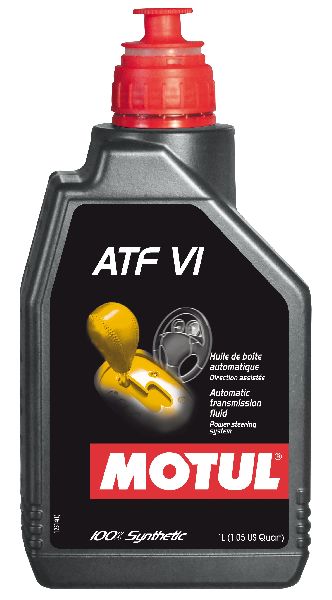
- Always ensure the correct transmission fluid (Motorcraft MERCON ULV) is used during any service.
What's Unique About the 2020-2023 Lincoln AVIATOR
The 2020-2023 Lincoln Aviator uses a 10-speed automatic transmission (10R60 or 10R80), which has widely documented issues across multiple Ford and Lincoln platforms. Multiple Technical Service Bulletins (TSBs) directly link P0736 and other shifting problems to specific internal components. The most common culprits are sticking valves within the main control valve body or a design flaw in the 'CDF' clutch drum where a bushing 'walks out' of position, blocking hydraulic passages. Unlike a simple sensor failure, this code on an Aviator almost always points to a complex mechanical or hydraulic fault within the transmission itself that requires significant disassembly to repair.
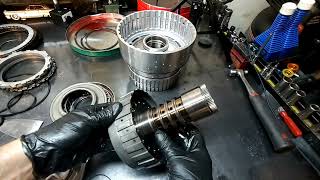
🎬 Watch: A mechanic explains the four most common failure points.Diagnostic Flowchart
Tap your situation to follow the diagnostic path that matches what you're seeing on this vehicle.
Symptoms You May Notice
- Inability to shift into reverse gear, or it acts like neutral.
- Delayed or harsh, clunking engagement when shifting into reverse.
- Vehicle moves slightly then acts as if in neutral when in reverse.
- Illuminated Malfunction Indicator Lamp (Check Engine Light).
- Illuminated Powertrain Fault light (wrench icon).
- Harsh or flared shifts in forward gears, particularly the 3-5 upshift, which is a common symptom of CDF drum failure.
- Increased fuel consumption due to transmission slippage.
- Replacing transmission speed sensors. While faulty sensors can cause ratio codes, the well-documented systemic issues with the 10R80's valve body and CDF drum make these components the primary suspects for P0736 on an Aviator.
Most Likely Causes
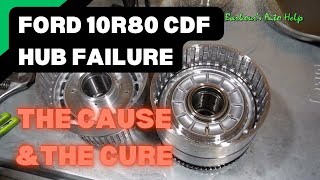
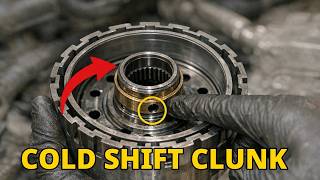
- Axial Movement of the CDF Clutch Cylinder Sleeve (Bushing Walkout) 🔴 High Probability → Shop Automatic Transmission Coast Clutch Hub This is a known design flaw in the 10R80 transmission family. The bushing inside the CDF clutch drum can migrate or 'walk out' of its intended position, blocking hydraulic fluid passages and causing pressure loss to the C, D, and/or F clutches. TSB 25-2302 directly addresses this failure mode.
How to confirm: This requires complete transmission removal and disassembly to visually inspect the CDF drum. A technician will look for a migrated bushing that has moved to partially cover oil passages. The presence of other shift codes (P0731-P0735) and harsh 3-5 shifts are strong indicators of this specific failure.
Typical fix: Replacement of the CDF clutch drum with the updated, redesigned part (OEM part number JL3Z-7H351-B or L1MZ-7H351-B) which has a machined lip to prevent the bushing from walking out. 🎬 See the cause and cure for CDF hub failure. This is a major transmission overhaul.
Est. part cost: $500-$1000 for internal components, plus seals and gaskets. - Sticking Valves in Main Control Valve Body 🔴 High Probability → Shop Transmission Valve Body This is a widely documented issue for the 10R60/10R80 transmission family, cited in TSBs 21-2434 and 22-2102. Debris or manufacturing tolerances can cause control valves to stick within their bores, leading to incorrect hydraulic pressure application.
How to confirm: A technician can perform a "Transmission Accelerated Main Control Break In" routine with a diagnostic scan tool as per TSB 21-2434. However, some technicians report a very low success rate for this procedure (~10%), often necessitating valve body replacement anyway. Visual inspection after removing the transmission pan can also reveal issues like scoring.
Typical fix: Overhaul or replacement of the main control valve body assembly. If the break-in procedure fails, this is the next step.
Est. part cost: $800-$1500 - Low or Contaminated Transmission Fluid 🟡 Medium Probability → Shop Transmission Assembly
How to confirm: Check the transmission fluid level and condition according to the manufacturer's procedure. The fluid should be at the correct level, red in color, and not have a burnt smell. Dark or glittery fluid is a sign of internal mechanical wear, likely from the failing CDF drum or other clutches.
Typical fix: Perform a transmission fluid and filter change using the correct Motorcraft MERCON ULV fluid. However, this is often a temporary fix or merely a symptom of a larger internal problem (like the CDF drum failure) causing the contamination.
Est. part cost: $150-$300 for fluid and filter. - Faulty Powertrain/Transmission Control Module (PCM/TCM) ⚪ Low Probability → Shop Transmission Assembly
How to confirm: This is a diagnosis of exclusion. All mechanical and hydraulic causes must be ruled out first. A technician can check for software updates before condemning the module.
Typical fix: Reprogramming or replacing the PCM/TCM.
Est. part cost: $800-$2000
Rare But Worth Checking
- Loose Bolt Inside Transmission: → Shop Transmission Assembly A specific recall (23S06 / NHTSA 23V-070) was issued for some 2022-2023 models where an extra bolt may have been left inside the transmission during an assembly plant repair process, which can prevent the park pawl from engaging and cause various shifting issues.
Diagnosis Steps
- Verify the code P0736 and check for any other related transmission codes (P0731-P0735, P2700-P2705) with a professional OBD-II scanner.
- Check the transmission fluid level and condition. Dark, burnt, or metallic fluid strongly suggests internal mechanical failure.
- Review all relevant Technical Service Bulletins (TSBs). TSB 25-2302 is the most current and comprehensive, superseding older ones like 22-2102 and 21-2434.
- Using a diagnostic tool, check for PCM/TCM software updates and perform the PCM - Transmission Accelerated Main Control Break-In routine as described in the TSBs. Be aware this has a low reported success rate.
- If the break-in procedure does not work, the next step is to drop the transmission pan and inspect the main control valve body for sticking valves or other visible damage.
- If the valve body is not the confirmed cause, the transmission must be removed from the vehicle for inspection and replacement of the CDF clutch cylinder due to the known bushing walkout issue, as described in TSB 25-2302.
- Inspect wiring and connectors to the transmission for any visible damage, though this is a less common cause for this specific code on this platform.
Parts You'll Likely Need
- Main Control Valve Body Assembly
(OEM #L1MZ-7A100-F (supersedes L1MZ-7A100-B))— Sticking valves in the valve body are a primary cause of harsh/delayed shifts and incorrect gear ratio codes on this platform, as cited by multiple TSBs. The part has been updated. 🎬 Watch this walkthrough on replacing the 10R80 valve body.
Trusted brands: Motorcraft
OEM price range: $350-$700 + $200 core charge - CDF Clutch Cylinder / Drum Assembly (Updated)
(OEM #JL3Z-7H351-B or L1MZ-7H351-B)— The original design is prone to a bushing 'walking out' and causing major hydraulic leaks. The updated part has a retaining lip to prevent this failure. This is the permanent fix for the most common root cause of severe 10R80 issues.
Trusted brands: Motorcraft
OEM price range: $300-$600 - Motorcraft MERCON ULV Automatic Transmission Fluid
(OEM #XT-12-QULV)— This is the required fluid for any service on the 10R60/10R80 transmission. Using the wrong fluid can cause damage and shifting problems.
Trusted brands: Motorcraft
OEM price range: $10-$15 per quart - Transmission Overhaul Gasket & Seal Kit — Required for any repair that involves removing the transmission and opening the case, such as replacing the CDF clutch drum.
Trusted brands: Motorcraft
OEM price range: $200-$400
Related Codes That Often Appear With This One
- P0731-P0735 — These are incorrect gear ratio codes for forward gears 1 through 5. Their presence alongside P0736 strongly indicates a systemic transmission problem, like a failing valve body or a major hydraulic leak from the CDF drum, affecting multiple gear circuits.
- P2700-P2705 — These codes relate to the timing and application of transmission clutch elements (A-F). They often accompany gear ratio codes and point towards a hydraulic control issue within the valve body or with the clutch packs themselves, which is consistent with both major causes.
Technical Service Bulletins (TSBs) & Recalls
- TSB 25-2302: Supersedes previous TSBs. Addresses harsh/delayed shifts and multiple DTCs (including P0736) due to either sticking valves in the valve body or axial movement of the CDF clutch cylinder sleeve. This is the primary diagnostic document for this issue.
- TSB 22-2102 / TSB 21-2434: Older bulletins, now superseded by 25-2302, that specifically pointed to sticking valves in the main control valve body as a cause for the same set of symptoms and codes. They introduced the 'Transmission Accelerated Main Control Break In' procedure.
Platform-Specific Known Issues
- The 10-speed 10R80 and 10R60 transmissions in the 2020-2023 Aviator are subject to multiple TSBs for harsh shifting, delayed engagement, and incorrect gear ratio codes. TSB 25-2302 is the most current, comprehensive bulletin.
- The most notorious failure is the 'bushing walkout' within the CDF clutch drum, which obstructs hydraulic passages and leads to multiple shift faults, including P0736. This requires transmission removal and overhaul to fix permanently with an updated part.
- Sticking valves in the main control valve body are another common cause, addressed by TSBs 21-2434 and 22-2102. The prescribed 'break-in' procedure has a low success rate according to some technicians, often leading to valve body replacement.
Mechanic-Grade Diagnostic Values
- Shift Solenoid Resistance (A-F) — expected: 5.0 - 5.4 Ohms at 68°F (20°C). Failure: A reading of infinite resistance (open circuit) or a value significantly outside the specified range indicates a faulty solenoid coil.
- Solenoid Activation Test — expected: An audible 'click' when 12V is briefly applied to the solenoid's terminals.. Failure: No click indicates the solenoid's internal valve is mechanically stuck or the coil is burned out.
Scan Tool Commands That Help
- Ford IDS, FORScan, high-end bidirectional scanners: Clear Transmission Adaptive Tables — This function must be performed after replacing the transmission, valve body, or solenoids to erase the learned hydraulic pressure values. It resets the transmission's shift strategy to its baseline.
- Ford IDS, FORScan, high-end bidirectional scanners: Adaptive Learning Drive Cycle — This specific, multi-step driving procedure MUST be performed immediately after clearing the transmission adaptive tables to allow the TCM to relearn the clutch fill times and pressure characteristics for smooth shifting. Failure to perform this procedure is a common reason for continued poor shift quality after a repair.
- Ford IDS or equivalent: Solenoid Strategy Download — When the valve body or an individual solenoid is replaced, the new component will have a specific 13-digit strategy number etched on it. This number must be programmed into the TCM using a scan tool to ensure the computer uses the correct performance data for that specific solenoid body.
Wiring & Ground Locations
- Under-Hood Fuse Box (Fuse 26) — Located in the fuse box in the engine compartment.. This 15A fuse supplies power to the Transmission Control Module (TCM). A loss of power here would cause a complete loss of transmission control and multiple codes.
- Under-Hood Fuse Box (Fuse 14) — Located in the fuse box in the engine compartment.. This 15A fuse powers the transmission oil pump and A/C clutch. Issues with this circuit could affect hydraulic pressure.
- Main Transmission Case Connector (26-pin) — The main electrical bulkhead connector on the transmission case.. This is the primary interface between the TCM and all internal transmission electronics. A visual inspection for corrosion or damage is crucial. Key pins include those for the Input/Output Speed Sensors (ISS/OSS), Transmission Fluid Temperature (TFT) sensor, and ground.
Real Owner Repair Stories
- F150 Tremor Forum user (Ford F-150 with 10R80 transmission) — Slipping during the first few shifts, which became a two-second delay followed by a hard shift after removing a performance tune. Also experienced harsh downshifts.
❌ Tried (didn't work) The user noted that one dealer had a 3-month wait for transmission service due to the high volume of 10R80 issues.
✅ What actually fixed it The dealer replaced the main control valve body, which resolved the severe shifting issues. - Reddit user /u/Optimal_Ad_1861 (self-identified transmission rebuilder) (Ford F-150 with 10R80 transmission) — Hard shifting and a trouble code.
❌ Tried (didn't work) The owner was concerned about the longevity of the transmission.
✅ What actually fixed it The user replaced the valve body, transmission fluid, and filter. The hard shifting disappeared and the code was resolved. The old fluid was noted to be 'pretty filthy'.
OEM Part Supersession History
HL3Z-7H351-A, JL3Z-7H351-A→JL3Z-7H351-B (also L1MZ-7H351-B)— The original CDF clutch drum design allowed an internal bushing to 'walk' or migrate out of position, blocking hydraulic oil passages. The updated JL3Z-7H351-B part features an integrated retention lip that physically prevents the bushing from moving, permanently fixing the design flaw.L1MZ-7A100-B→L1MZ-7A100-F— The main control valve body was updated by Ford to address issues with sticking valves that cause harsh shifting and gear ratio codes. The 'F' revision is the latest version recommended for repairs.
Model Year Variations Within This Range
- 2022-2023: A portion of these model year vehicles were subject to recall 23S06 for a loose bolt left inside the transmission during assembly/repair at the factory. This could block the park pawl from engaging, leading to a rollaway risk, and could also cause other shifting faults.
Helpful Videos

We Have This Part in Stock


The information in this article is provided for general reference and educational purposes only. Vehicle specifications, procedures, and part compatibility can vary by production date, trim level, and region. Always consult your vehicle's factory service manual and verify part numbers before purchasing or performing repairs. Safety-critical components such as airbags, seat belts, and braking systems should be installed by a qualified professional.
- Lincoln AVIATOR:
- 🧭 Diagnostic Flowchart
- 🎬 Helpful Videos
- 🛍️ Shop This Part
- What's Unique About the 2020-2023 Lincoln AVIATOR
- Symptoms You May Notice
- Most Likely Causes
- Rare But Worth Checking
- Diagnosis Steps
- Parts You'll Likely Need
- Related Codes That Often Appear With This One
- Technical Service Bulletins (TSBs) & Recalls
- Platform-Specific Known Issues
- Mechanic-Grade Diagnostic Values
- Scan Tool Commands That Help
- Wiring & Ground Locations
- Real Owner Repair Stories
- OEM Part Supersession History
- Model Year Variations Within This Range
- 🎟️ Get 5% Off