

P0736 on 2018-2023 Lincoln Navigator: Reverse Incorrect Ratio Causes and Fixes
On a 2018-2023 Lincoln Navigator, code P0736 indicates a problem with the Reverse gear ratio in the 10R80 transmission. The most likely causes are an issue with the transmission's main control valve body or a known internal mechanical failure of the CDF clutch drum. A software update may also be required per a manufacturer TSB.
- P0736 on your Navigator means there's a serious issue with the Reverse gear, most often requiring professional diagnosis.
- Do not immediately assume the worst. A software update recommended by a TSB could be a relatively simple fix.
- The most common mechanical culprits are the main control valve body and the internal CDF clutch drum, both known issues with the 10R80 transmission.
- Checking the transmission fluid level and condition is the first, easiest step, but it is unlikely to be the root cause.
- This repair is not suitable for most DIY mechanics; seek a reputable transmission shop for diagnosis.
What's Unique About the 2018-2023 Lincoln NAVIGATOR
The 2018-2023 Navigator uses the Ford-GM 10-speed (10R80) automatic transmission. While complex and generally smooth, this specific transmission has well-documented issues that can lead to P0736. Failures often trace back to two primary culprits: the main control valve body, where valves can stick, or a specific internal component known as the CDF (Clutch D/F) clutch cylinder/drum. A bushing or sleeve inside the CDF drum is known to migrate or 'walk' out of position, exposing hydraulic passages and causing pressure loss. Ford has issued multiple Technical Service Bulletins (TSBs), with the latest being TSB 24-2046, that address these specific mechanical failures as the root cause for ratio codes like P0736.
Diagnostic Flowchart
Tap your situation to follow the diagnostic path that matches what you're seeing on this vehicle.
Symptoms You May Notice
- Transmission fails to shift into Reverse, or has a long delay before engagement.
- Harsh, clunking, or banging sound when shifting into Reverse.
- Transmission slips while in Reverse, with RPMs flaring up but little movement.
- Illuminated Check Engine Light.
- Illuminated Wrench light on the dashboard.
- In some cases, other forward gears may also exhibit harsh or delayed shifting.
- Replacing the entire transmission when only a valve body replacement or CDF drum repair was needed.
- Replacing speed sensors when the root cause is a mechanical failure like a worn CDF drum.
- Performing only a software update when a known mechanical issue (CDF drum, valve body) is present, leading to a recurring problem.
Most Likely Causes
- Internal Mechanical Failure (CDF Hub/Drum) 🔴 High Probability This is the most widely documented mechanical failure on the 10R80. An internal sleeve in the CDF drum can slide out of position, uncovering oil passages and causing a critical loss of hydraulic pressure to the clutches. This is not a wear-and-tear issue but a design flaw that Ford has addressed with updated parts and is explicitly mentioned in TSB 24-2046 as a cause for ratio codes.
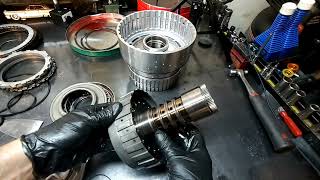
How to confirm: This requires transmission disassembly for visual inspection. A technician 🎬 Watch: See exactly how the CDF drum sleeve fails will look for the migrated sleeve within the CDF drum and likely find damaged Teflon seals. Significant metal debris in the transmission pan is a strong indicator of this type of failure.
Typical fix: The transmission must be removed and rebuilt with an updated CDF drum (Ford part #JL3Z-7H351-B) and associated seals and clutches. Aftermarket companies like Sonnax also offer kits designed to permanently lock the sleeve in place.
Est. part cost: $400-$900 for internal components during a rebuild - Main Control Valve Body Failure 🔴 High Probability → Shop Transmission Valve Body The 10R80 transmission is known to have issues with valves sticking within the main control body, leading to pressure regulation problems and incorrect gear engagement. TSB 24-2046 and its predecessors directly call out sticking valves as a primary cause alongside the CDF drum issue, recommending a valve body overhaul or replacement.
How to confirm: A technician can perform a pressure test and solenoid function tests with an advanced scan tool. Dropping the transmission pan may reveal debris related to valve body wear. Diagnosis often involves following the specific flowchart outlined in the relevant TSB. Aftermarket companies like Sonnax provide detailed vacuum testing guides to identify specific worn valves within the body.
Typical fix: Overhaul or replacement of the main control valve body assembly. The latest OEM part number is JL3Z-7A100-C, which supersedes JL3Z-7A100-A.
Est. part cost: $800-$1500 - Powertrain/Transmission Control Module (PCM/TCM) Software Issue 🟡 Medium Probability → Shop Transmission Assembly Early TSBs for the 10R80 focused on software, suggesting the original calibration may not adapt well to hardware break-in over time, causing shifting issues and setting ratio codes. While newer TSBs point to mechanical fixes, an out-of-date software version can still be a contributing factor or the sole cause in some cases.
How to confirm: A dealer or qualified shop can check the current software version against the latest available calibration using Ford's diagnostic tools (IDS or FDRS).
Typical fix: Reprogramming the PCM/TCM with the latest software update and performing an adaptive learning drive cycle. This is often the first step before attempting mechanical repairs.
Est. part cost: $0-$250 (Labor cost for programming) - Low or Contaminated Transmission Fluid ⚪ Low Probability → Shop Transmission Assembly
How to confirm: Check the transmission fluid level and condition. The fluid should be at the correct level, red in color, and not smell burnt. Low fluid can cause a loss of hydraulic pressure needed to engage gears.
Typical fix: Perform a transmission fluid drain-and-fill or a full fluid exchange using the correct Motorcraft MERCON ULV fluid. This is unlikely to fix the P0736 code if a mechanical fault exists.
Est. part cost: $150-$400
Rare But Worth Checking
- Faulty Transmission Speed Sensor: → Shop Transmission Assembly While less common than mechanical failures on this platform, a failing input or output speed sensor can send incorrect data to the TCM, causing it to falsely trigger a gear ratio code.
Diagnosis Steps
- Verify the transmission fluid level and condition. Ensure it is clean, full, and does not smell burnt.
- Use an advanced OBD-II scanner to check for any other transmission-related codes. Note all codes present.
- Check for applicable Technical Service Bulletins (TSBs) for your vehicle's VIN. TSB 24-2046 is the most current and comprehensive bulletin for this issue.
- If indicated by a TSB or if software is outdated, have a dealer or qualified shop update the PCM/TCM software and perform the adaptive learning relearn procedure.
- Perform a complete transmission system scan with a professional tool to monitor live data from the input and output speed sensors while attempting to engage Reverse.
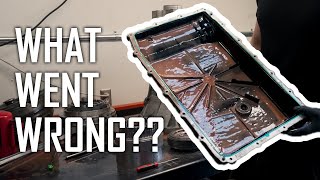
- Drop the transmission pan and inspect for excessive metal shavings or clutch material. A 'glitter bomb' of fine metal dust is a strong indicator of internal mechanical failure.
- If the fluid is clean and software updates do not resolve the issue, follow the diagnostic procedure in TSB 24-2046, which will lead to testing and potential overhaul/replacement of the main control valve body.
- If the valve body is ruled out or if symptoms persist, the transmission will need to be removed for inspection and repair of the CDF clutch drum.
Parts You'll Likely Need
- Transmission Main Control Valve Body
(OEM #JL3Z-7A100-C (supersedes JL3Z-7A100-A))— Sticking valves in the valve body are a primary cause of shifting and ratio problems in the 10R80 transmission, as identified in TSB 24-2046.
Trusted brands: Motorcraft
OEM price range: $900-$1500
Aftermarket price range: $700-$1200 - CDF Clutch Cylinder / Drum Assembly
(OEM #JL3Z-7H351-B (updated design))— This is a known mechanical weak point inside the 10R80 that fails when an internal sleeve migrates, causing widespread pressure loss and setting ratio faults. It is replaced during a transmission rebuild.
Trusted brands: Motorcraft, Sonnax (aftermarket repair kit)
OEM price range: $200-$400
Aftermarket price range: $150-$300 (for repair kits) - Automatic Transmission Fluid (MERCON ULV)
(OEM #XT-12-QULV)— This is the required fluid for any service on the 10R80 transmission. A full fluid change is necessary for a valve body replacement or transmission rebuild.
Trusted brands: Motorcraft
OEM price range: $10-$15 per quart
Aftermarket price range: $8-$12 per quart
Related Codes That Often Appear With This One
- P0730 — This is a general 'Incorrect Gear Ratio' code that often appears with more specific gear ratio codes like P0736.
- P0731-P0735 — These codes indicate incorrect ratios for forward gears (1-5). If seen with P0736, it points to a widespread problem within the transmission, such as a failing valve body or major hydraulic issue from the CDF drum.
- P0729, P076F, P07D9, P07F6, P07F7 — These are additional incorrect gear ratio codes for gears 6, 7, 8, 9, and 10. Their presence alongside P0736 strongly suggests a systemic failure like the CDF drum or valve body, as they are all listed together in TSB 24-2046.
Technical Service Bulletins (TSBs) & Recalls
- TSB 24-2046 (Feb 2024): This is the most current bulletin, superseding previous versions. It directly lists P0736 and attributes the cause to sticking valves in the main control valve body and/or axial movement of the CDF clutch cylinder sleeve. It provides a detailed procedure to diagnose and repair these specific mechanical issues.
- TSB 22-2139 / 23-2123: These are earlier, now superseded, versions of the same TSB. They also listed P0736 and pointed towards valve body overhaul or adaptive learning resets due to 'incompatibility of the adaptive calibration to adapt to hardware break-in over time'.
Platform-Specific Known Issues
- A primary known issue with the 10R80 transmission is the failure of the CDF clutch drum, where an internal sleeve shifts and causes hydraulic leaks, leading to harsh shifts, delayed shifts, and gear ratio codes.
Mechanic-Grade Diagnostic Values
- Shift Solenoid Resistance — expected: 5.0 - 5.4 ohms at 68°F (20°C). Failure: Readings outside this range indicate a faulty solenoid coil.
- Transmission Fluid Temperature for Level Check — expected: 206°F - 215°F (96°C - 101°C). Failure: Checking the fluid when it is too cold or too hot will result in an inaccurate level reading, which can mask or cause problems.
- Valve Body Vacuum Test — expected: Varies by valve; refer to Sonnax vacuum test guides.. Failure: Low vacuum readings at specific test ports indicate wear in the valve bore, causing internal leaks.
Scan Tool Commands That Help
- Ford IDS/FDRS, FORScan: Clear Transmission Adaptive Tables — This service function is required after any software update, valve body replacement, or internal transmission repair. It erases the learned clutch application pressures, forcing the TCM to start a new learning process.
- Ford IDS/FDRS, FORScan: Adaptive Learning Drive Cycle — This specific, multi-step driving procedure must be performed after clearing the adaptive tables to allow the TCM to properly relearn clutch engagement timing and pressures. Failure to perform this cycle can result in persistently poor shift quality. The procedure involves a sequence of light accelerations, steady cruising, gentle braking, and shifting between Neutral, Reverse, and Drive.
- Advanced Scan Tools (iCarsoft, Autel, etc.): Active Test - Command Gear Engagement — This allows a technician to command the transmission into Reverse while stationary (on a lift) and monitor live data from the input and output speed sensors to confirm if the slip is occurring, without having to drive the vehicle.
Wiring & Ground Locations
- Fuse F25 (Engine Compartment Fuse Box) — In the under-hood power distribution box.. This fuse supplies power to the Transmission Control Module (TCM). While a blown fuse would likely cause more severe symptoms and codes, intermittent power loss due to a poor connection here could contribute to erratic behavior.
- Transmission Main Connector — On the passenger side of the transmission case.. This is the main electrical interface for all solenoids and sensors within the transmission. Checking for corrosion, pin damage, or fluid intrusion is a critical step in diagnosing electrical faults versus internal mechanical issues.
Real Owner Repair Stories
- Ford Truck Enthusiasts Forums (2020 Lincoln Navigator) — Refused to shift into Drive or Reverse. The gear selector would indicate D or R, but live scan tool data showed the commanded and actual gear remained in Neutral. No fault codes were present.
❌ Tried (didn't work) Replaced Gear Shift Module (GSM), Replaced Transmission Control Module (TCM), Replaced main control valve body, Updated solenoid strategy via programming
✅ What actually fixed it The issue was intermittent. The user was able to get it into gear once after clearing codes with FORScan and immediately selecting Drive. The final resolution was not posted, but the diagnostic path pointed away from the common hard parts (which were already replaced) and towards a complex software, communication, or intermittent electrical issue preventing the TCM from commanding the gear change.
OEM Part Supersession History
Yellow Separator Plate (Valve Body)→Light Brown Separator Plate (Valve Body)— Ford changed the separator plate design in newer valve body assemblies.
Heads up: Receiving a 'new' OE valve body with a yellow separator plate may indicate it is older stock or a remanufactured unit, not the latest revision.
Model Year Variations Within This Range
- 2017 - Mid-2021: Vehicles produced before summer 2021 are more prone to the CDF drum bushing 'walking' out. Later models used a tighter press-fit tolerance for the sleeve, though the fundamental design without a retaining lip remained a risk.
- 2022+: Vehicles built on or after August 15, 2022, have different diagnostic procedures outlined in TSB 24-2046, suggesting internal changes related to the main control or software capabilities.
Helpful Videos
We Have This Part in Stock


The information in this article is provided for general reference and educational purposes only. Vehicle specifications, procedures, and part compatibility can vary by production date, trim level, and region. Always consult your vehicle's factory service manual and verify part numbers before purchasing or performing repairs. Safety-critical components such as airbags, seat belts, and braking systems should be installed by a qualified professional.
- Lincoln NAVIGATOR:
- 🧭 Diagnostic Flowchart
- 🎬 Helpful Videos
- 🛍️ Shop This Part
- What's Unique About the 2018-2023 Lincoln NAVIGATOR
- Symptoms You May Notice
- Most Likely Causes
- Rare But Worth Checking
- Diagnosis Steps
- Parts You'll Likely Need
- Related Codes That Often Appear With This One
- Technical Service Bulletins (TSBs) & Recalls
- Platform-Specific Known Issues
- Mechanic-Grade Diagnostic Values
- Scan Tool Commands That Help
- Wiring & Ground Locations
- Real Owner Repair Stories
- OEM Part Supersession History
- Model Year Variations Within This Range
- 🎟️ Get 5% Off