

P0740 on 2012-2014 Acura TL: Torque Converter Clutch Circuit Malfunction Guide
On a 2012-2014 Acura TL, code P0740 is most often caused by low/dirty transmission fluid or a failing torque converter clutch (TCC) solenoid. Start by servicing the transmission fluid with multiple drain-and-fills using Honda/Acura ATF DW-1. If that doesn't work, replacing the TCC solenoid is the next logical step before suspecting a more serious internal issue.
- P0740 on a 2012-2014 TL indicates a problem with the Torque Converter Clutch circuit, which affects fuel economy and transmission performance at highway speeds.
- Unlike older TLs, this code does not automatically mean the transmission has failed. The most common causes are simple: low/dirty fluid or a bad TCC solenoid.
- Always start diagnosis by checking the transmission fluid. Use only genuine Acura/Honda ATF DW-1 fluid for any service, and perform multiple drain-and-fills.
- Driving with this code can cause increased transmission temperatures and accelerated wear, so it should be addressed promptly.
What's Unique About the 2012-2014 Acura TL
While the P0740 code was a notorious sign of catastrophic transmission failure on older (1999-2003) Acura TL models, this is generally not the case for the fourth-generation (2009-2014) TL. On these later models, which use a more robust 6-speed automatic transmission (on most models), the issue is more commonly linked to serviceable components like the transmission fluid or the TCC solenoid itself, rather than widespread internal clutch failure. A full transmission replacement is a much less frequent outcome for this code on the 2012-2014 models compared to their predecessors. However, it's important to note that deteriorated fluid can cause torque converter judder, which Acura has addressed with TSBs involving fluid flushes and software updates.
Symptoms You May Notice
- Check Engine Light is on
- Vehicle fails to shift into the highest gear or seems to 'slip' at highway speeds
- Reduced fuel economy
- Engine RPM is higher than usual at highway speeds (e.g., above 2500 RPM at 65 mph)
- Vehicle may shudder or stall when coming to a stop (if the TCC is stuck engaged)
- Harsh or delayed shifts
- Flashing "D" indicator light on the dashboard
- Immediately replacing the torque converter without first checking the fluid and testing the TCC solenoid.
- Assuming the entire transmission has failed, as was common with older Acura models.
- Performing a single drain-and-fill when multiple are needed to sufficiently clean the system.
Most Likely Causes
- Low or Dirty Transmission Fluid 🔴 High Probability → Shop Transmission Assembly Honda/Acura automatic transmissions are sensitive to fluid level and condition. Old, degraded fluid can cause solenoids to stick or passages to become restricted. Acura issued TSBs (16-046, 18-047, 18-048) for this generation TL specifically for torque converter judder caused by deteriorated ATF, which can be a precursor to other issues.
How to confirm: Check the transmission fluid dipstick (engine off, on level ground) for level and color. The fluid should be red/pink and not smell burnt. If it is dark brown/black or low, it needs service.
Typical fix: Perform three consecutive transmission drain-and-fills using only genuine Acura/Honda ATF DW-1 fluid. This method replaces a majority of the old fluid without using a pressurized flush machine, which can dislodge debris and cause more harm.
Est. part cost: $40-$80 for fluid - Faulty Torque Converter Clutch (TCC) Solenoid 🟡 Medium Probability → Shop Automatic Transmission Torque Converter The solenoid can fail electrically over time or its internal screens can become clogged with normal clutch material, preventing proper operation. This is a very common failure point on Honda/Acura 5 and 6-speed automatics.
How to confirm: A mechanic can test the solenoid's resistance with a multimeter to see if it's within the manufacturer's specifications (typically 12-25 ohms for this type of solenoid). They can also apply 12V power to it to check for a mechanical 'click'. 🎬 Watch: Easy way to test the TCC solenoid
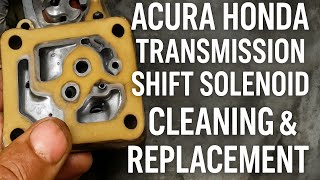
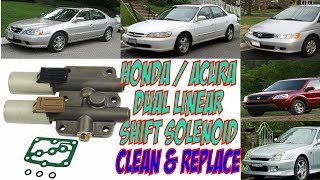
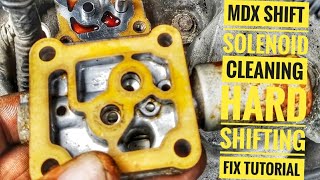
Typical fix: Replace the TCC solenoid assembly and the related gasket. On these transmissions, it is often part of a linear solenoid assembly located on the exterior of the transmission case, making it accessible after removing the battery and air intake components. 🎬 Watch: How to remove and clean the dual linear solenoid
Est. part cost: $100-$350 - Wiring or Connector Issues ⚪ Low Probability The wiring harness to the transmission can be exposed to heat and debris, potentially causing corrosion or damage over time, especially at the connector.
How to confirm: Visually inspect the wiring harness and connectors leading to the TCC solenoid for any signs of damage, corrosion, or loose connections. A continuity test can be performed on the circuit from the PCM/TCM to the solenoid connector.
Typical fix: Repair or replace the damaged section of the wiring harness or clean the connectors with electrical contact cleaner.
Est. part cost: $10-$100
Rare But Worth Checking
- Failing Torque Converter: → Shop Automatic Transmission Torque Converter While less common on this generation, an internal failure of the torque converter's lock-up clutch can cause this code. This is often accompanied by significant shuddering or excessive metallic debris in the transmission fluid. Acura TSBs indicate that judder is often a fluid issue, not a hard part failure.
- Internal Transmission Failure: → Shop Transmission Assembly In rare cases, excessive debris from failing internal clutches can clog the TCC solenoid and fluid passages, leading to the code. This is a much more serious issue requiring a transmission rebuild or replacement and was the primary failure mode on older TLs. NHTSA ODI #10392049 describes a case where a dealer identified code P0740 as an internal transmission failure requiring a full replacement.
- Faulty Powertrain Control Module (PCM): → Shop Engine Control Module (ECM) It is very rare for the PCM itself to be the cause of the problem. All other possibilities, especially fluid, solenoid, and wiring, should be exhausted before considering PCM replacement.
Diagnosis Steps
- Check the transmission fluid level and condition. If low, top it off with Acura ATF DW-1 and check for leaks. If dirty or burnt, perform a 3x drain-and-fill procedure.
- Scan the computer for any other transmission-related codes that could provide more clues.
- Inspect the wiring harness and connector for the TCC solenoid for any visible damage, corrosion, or loose connections.
- If the fluid and wiring are good, test the TCC solenoid. This involves checking its electrical resistance with a multimeter (should be in the 12-25 ohm range) and listening for a click when applying 12V power.
- If the solenoid tests bad, replace it along with its gasket/o-rings.
- If the solenoid tests good, the issue may be a clogged passage in the valve body, a failing torque converter, or a rare internal transmission problem requiring professional diagnosis, which may include a line pressure test.
Parts You'll Likely Need
- Acura ATF DW-1 Automatic Transmission Fluid
(OEM #08200-9008A)— Correct, clean fluid is the first and most critical step for resolving transmission issues on these vehicles. Using non-OEM fluid is not recommended.
Trusted brands: Acura (Genuine OEM)
OEM price range: $10-$15 per quart - Torque Converter Clutch (TCC) Solenoid Assembly
(OEM #28260-RDK-023 (This is a common part number for the linear solenoid assembly on this platform, but always verify with VIN))— This solenoid is the most common component to fail within the TCC circuit, either electrically or by becoming clogged.
Trusted brands: Acura (OEM), Rostra, Standard Motor Products (SMP)
OEM price range: $250-$350
Aftermarket price range: $100-$200
Related Codes That Often Appear With This One
- P0741 — This code indicates 'Torque Converter Clutch Circuit Performance or Stuck Off,' which is a closely related hydraulic/mechanical fault within the same system. P0740 is an electrical circuit fault, while P0741 points to the mechanical result of that fault (or a hydraulic blockage).
Technical Service Bulletins (TSBs) & Recalls
- TSB 16-046 / 18-047 / 18-048: Addresses a judder from the torque converter lock-up clutch between 20-60 mph. The cause is identified as deteriorated ATF, and the fix is a software update and a transmission fluid flush.
Platform-Specific Known Issues
- Torque Converter Judder/Shudder: → Shop Automatic Transmission Torque Converter Many 2012-2014 TLs experience a judder or shudder while driving between 20-60 mph. Acura TSB 16-046 (later replaced by 18-047 and 18-048) identified this as being caused by deteriorated transmission fluid, not a faulty torque converter. The fix involves a software update and flushing the transmission fluid three times. This condition is related to the TCC operation and can be a precursor to the P0740 code if the fluid condition worsens.
Mechanic-Grade Diagnostic Values
- Torque Converter Clutch (TCC) Solenoid Resistance — expected: 12 - 25 Ohms. Failure: A reading of infinite resistance (open circuit) or near-zero resistance (short circuit) indicates a failed solenoid.
Scan Tool Commands That Help
- Honda Diagnostic System (HDS) or equivalent professional bidirectional scanner: TCC Solenoid ON/OFF Test (Active Test) — This command is used after verifying fluid and wiring integrity. It directly commands the PCM/TCM to activate and deactivate the TCC solenoid. A technician can monitor live data (like TCC slip RPM) to see if the solenoid is responding to the command. This helps isolate a faulty solenoid from a hydraulic blockage or a bad PCM driver.
- Honda Diagnostic System (HDS): SHIFT SOL TEST in MISCELLANEOUS TEST MENU — This function can be used to run a diagnostic sequence on various transmission solenoids, including the TCC solenoid, to check for electrical integrity and response.
OEM Part Supersession History
28260-RDK-013→28260-RDK-023— Standard part revision and update by the manufacturer.
Heads up: The parts are generally interchangeable.28260-RDK-023→28260-R97-003— Part update and consolidation across multiple Honda/Acura models.
Heads up: This is listed as a valid supersession by some suppliers, but it is always critical to verify the correct part number with the vehicle's VIN before ordering.
Model Year Variations Within This Range
- 2012-2014: For the 2012 model year, Acura replaced the previous 5-speed automatic transmission with a new, more robust 6-speed automatic. This is a key reason why P0740 is less likely to indicate catastrophic failure on these specific years compared to earlier 2009-2011 models.
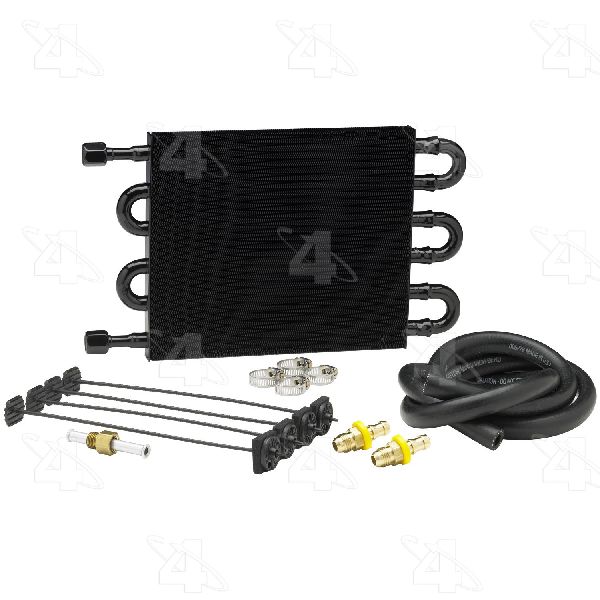
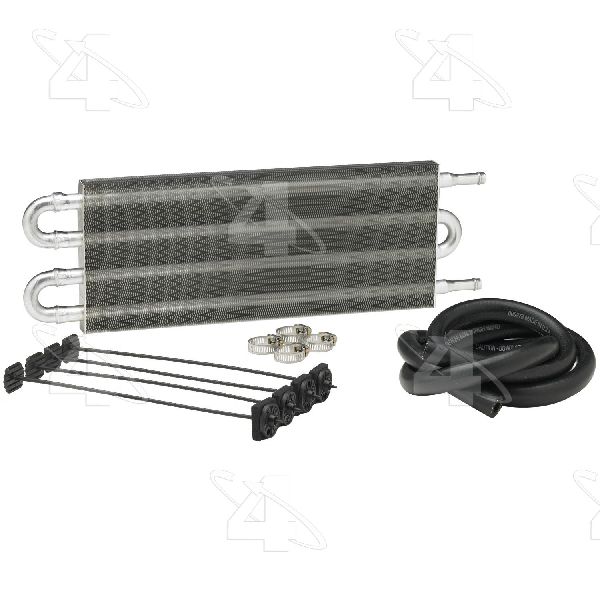
- 2012-2014: As part of the 2012 update, all TL models received an external transmission fluid cooler, a feature previously reserved for SH-AWD models. This helps with thermal management and may contribute to the increased longevity of the 6-speed transmission.
Diagnostic Flowchart
Other Known Issues on This Vehicle
Issues unrelated to this code that are worth knowing about as an owner of this generation:
- Excessive Oil Consumption (3.7L V6) 🔴 High — Common on the 3.7L J37 engine. Acura acknowledged the issue and extended the powertrain warranty (TSB 19-006) due to carbon buildup on oil control rings. Owners report needing to add oil between changes. (Ref: TSB 19-006)
- Torque Converter Judder/Shudder 🟠 Medium → Shop Automatic Transmission Torque Converter — Widespread enough to warrant multiple TSBs. A shudder is felt between 20-60 mph. It is caused by deteriorated ATF, not a failed torque converter. (Ref: TSB 16-046, 18-047, 18-048)
- Propeller Shaft Whine (SH-AWD models) 🟠 Medium — A common complaint on SH-AWD models where a whining or whistling noise that changes with road speed emanates from the center of the car. It's caused by a failing center support bearing on the propeller (drive) shaft, which requires replacing the entire shaft assembly.
Used vs. New Parts: Buying Guide for This Vehicle
When a used part is the smart pick: A used wiring harness pigtail or a complete transmission harness can be a good value if the part is visually inspected for corrosion, brittle wires, or damaged connector locks. For major electronic components like the TCC solenoid, used parts are not recommended due to their unknown history and high failure rate.
Donor-vehicle mileage cap: roughly under 80000 miles for the part to have meaningful remaining life.
What to inspect on the donor part:
- For wiring, check for any signs of cracking, melting, or previous repairs (e.g., tape, butt connectors).
- Ensure all connector pins are straight and free of green or white corrosion.
- Verify the donor vehicle is from a dry climate to minimize the risk of corrosion.
OEM-only on this vehicle (don't cheap out):
- Torque Converter Clutch (TCC) Solenoid Assembly: While some aftermarket options exist, the general consensus for Honda/Acura transmissions is that OEM solenoids offer the highest reliability and are worth the extra cost to avoid repeat repairs.
- Automatic Transmission Fluid (ATF): Strictly use Honda/Acura ATF DW-1. Using universal or incorrect fluid is a leading cause of shifting problems and component failure.
Aftermarket brands forum-validated for this vehicle:
- Standard Motor Products (SMP)
- Rostra
Brands owners have reported issues with on this vehicle:
- Unbranded, low-cost solenoids from online marketplaces are a significant gamble and have a high rate of premature failure.
Real Owner Stories
Aggregated from forums and TSBs cited above. Mileages and costs reflect what owners reported in those sources.
2001 Acura TL
Symptoms: Owner experienced the P0740 code specifically at highway speeds exceeding 60 MPH while in D5.
What fixed it: Replacing the 'control solenoid'.
Cost: $250-$250
Source hint: Acurazine.com: In a thread 'Po740 - Torque Converter Clutch Solenoid'
2000 Acura TL
Symptoms: The code appeared only when the vehicle reached 5th gear; owner attempted to clean screens and replace the solenoid.
What fixed it: The source notes a 3x drain and refill did not solve the issue, pointing towards a faulty solenoid.
Source hint: Acurazine.com: In a thread 'Po740 - Torque Converter Clutch Solenoid'
2012-2014 Acura TL
Symptoms: Vehicle experienced a judder or shudder while driving between 20-60 mph.
What fixed it: A software update and flushing the transmission fluid three times.
Source hint: TSB 16-046 / 18-047 / 18-048
Documented NHTSA Reports
Acura TL Owner Report
Symptoms: An owner reported the engine light coming on with codes P0740 for TCC circuit malfunction and P1740. A dealership manager confirmed the need for a new transmission.
Source hint: NHTSA ODI #10553729
Acura TL Owner Report
Symptoms: A dealer identified computer codes P0740 (Torque Converter Clutch), P0730 (Incorrect Gear Ratio), and P0700 (Shift Malfunction) and recommended service based on these findings.
Source hint: NHTSA ODI #10325921
Acura TL Owner Report
Symptoms: An owner noted that after the check engine light displayed P0740, the vehicle would get stuck in 2nd or 3rd gear while driving on the highway.
Source hint: NHTSA ODI #10292900
Acura TL Owner Report
Symptoms: A diagnosis retrieved codes P0730 for incorrect gear ratio and P0740 for TC clutch failure, with the dealer reporting a flare in shifting.
Source hint: NHTSA ODI #10286673
Related OBD-II Codes
Frequently Asked Questions
My 2012 Acura TL shudders between 20 and 60 mph; is this the P0740 code?
Can I use any transmission fluid to fix the P0740 code in my TL?
Is there a warranty extension for the engine issues on my 2012-2014 Acura TL 3.7L?
Where is the TCC solenoid located on the 2012-2014 TL?
What should the resistance be for a healthy TCC solenoid on this vehicle?
My SH-AWD TL has a whistling noise that changes with speed; is this related to the transmission code?
Helpful Videos
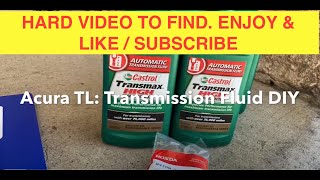
We Have This Part in Stock

The information in this article is provided for general reference and educational purposes only. Vehicle specifications, procedures, and part compatibility can vary by production date, trim level, and region. Always consult your vehicle's factory service manual and verify part numbers before purchasing or performing repairs. Safety-critical components such as airbags, seat belts, and braking systems should be installed by a qualified professional.
- Acura TL:
- 🧭 Diagnostic Flowchart
- 🎬 Helpful Videos
- 🛍️ Shop This Part
- What's Unique About the 2012-2014 Acura TL
- Symptoms You May Notice
- Most Likely Causes
- Rare But Worth Checking
- Diagnosis Steps
- Parts You'll Likely Need
- Related Codes That Often Appear With This One
- Technical Service Bulletins (TSBs) & Recalls
- Platform-Specific Known Issues
- Mechanic-Grade Diagnostic Values
- Scan Tool Commands That Help
- OEM Part Supersession History
- Model Year Variations Within This Range
- Other Known Issues on This Vehicle
- Used vs. New Parts: Buying Guide for This Vehicle
- Real Owner Stories
- 2001 Acura TL
- 2000 Acura TL
- 2012-2014 Acura TL
- Documented NHTSA Reports
- Acura TL Owner Report
- Acura TL Owner Report
- Acura TL Owner Report
- Acura TL Owner Report
- Related OBD-II Codes
- Frequently Asked Questions
- 🎟️ Get 5% Off