

P0740 on 2003-2010 BMW 5-Series: Torque Converter Clutch Circuit Causes and Fixes
P0740 on a 2003-2010 BMW 5-Series (E60/E61) most often indicates a problem with the torque converter clutch (TCC) solenoid inside the transmission. The fix typically involves dropping the transmission pan and mechatronics unit to replace the solenoid kit and critical seals (bridge seal, adapter seals). Always start by checking the transmission fluid level and condition first, as BMW's 'lifetime' fluid often degrades prematurely.
- P0740 on a 2003-2010 BMW 5-Series points to an electrical issue with the torque converter lock-up system.
- Always start diagnosis by checking the transmission fluid level and condition, as neglected fluid is a common root cause of transmission problems on these cars.
- The most likely part to have failed is the TCC solenoid, which is located inside the transmission on the mechatronics unit.
- Due to the complexity of accessing and replacing internal transmission components, this repair is best left to a professional or experienced DIYer.
- Ignoring this code can lead to reduced fuel economy, poor drivability, and potentially severe transmission damage over time.
What's Unique About the 2003-2010 BMW 5-Series
The 2003-2010 BMW 5-Series (E60/E61 generation) primarily used ZF 6-speed automatic transmissions (like the 6HP19 or 6HP26). These units are known for specific issues that can lead to a P0740 code. Failures are common in the solenoids located on the mechatronics unit (the transmission's control body). Additionally, several rubber seals, including the main mechatronics sealing sleeve (connector), a square 'bridge seal' between valve body halves, and four small tube seals, are known to harden and fail, causing pressure loss that can mimic or contribute to solenoid faults. BMW's 'lifetime' fluid recommendation is widely disputed by specialists, who recommend fluid and filter services every 50,000-60,000 miles to prevent these issues.
Generation note: The 2003-2010 period covers the entire E60 (sedan) and E61 (wagon) generation of the BMW 5-Series. While there were various engines and some transmission variations (e.g., 6HP19, 6HP26, 6HP28), the causes and diagnostic principles for P0740 are broadly similar across the platform as they share the same ZF 6HP mechatronics architecture.
Symptoms You May Notice
- Check Engine Light or 'Transmission Fault' message on the iDrive screen.
- Shuddering or a 'rumble strip' feeling, especially during light acceleration at highway speeds as the clutch attempts to lock. 🎬 Watch: How to diagnose and fix this transmission shudder
- Engine RPM is higher than usual at cruising speeds (e.g., over 2500 RPM at 70 mph).
- Delayed or harsh gear shifts, particularly harsh 2-1 downshifts when coming to a stop.
- Noticeable decrease in fuel economy.
- Stalling when coming to a stop (if the clutch is stuck engaged).
- Replacing the entire transmission when only a solenoid/seal kit and fluid service was needed.
- Replacing the torque converter when the actual fault is electrical (solenoid) or hydraulic (seals).
- Replacing only the TCC solenoid instead of the full kit and all related seals, leading to a repeat failure.
Most Likely Causes
- Faulty Torque Converter Clutch (TCC) Solenoid 🔴 High Probability → Shop Automatic Transmission Torque Converter The solenoids on the ZF 6HP mechatronics unit are a very common failure point. They are electro-mechanical and can fail electrically (causing P0740) or mechanically (sticking, causing performance codes).
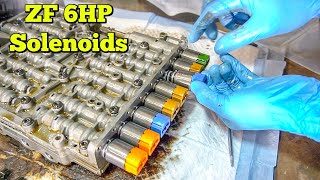
How to confirm: A technician can use a high-end scan tool to command the TCC solenoid and monitor its response. Resistance can also be checked with a multimeter at the transmission connector or directly at the solenoid after removing the valve body. 🎬 See this step-by-step ZF 6HP solenoid replacement guide The EDS solenoids (blue and yellow caps) should have a resistance of around 5 ohms.
Typical fix: Replace the faulty TCC solenoid. It is highly recommended to replace all solenoids as a complete kit (e.g., ZF Part No. 1068 298 044) since the labor to access them is significant. This requires removing the transmission pan and mechatronics unit.
Est. part cost: $50-$150 for a single solenoid, or $300-$500 for a full OEM ZF solenoid kit. - Failed Mechatronic Seals (Sleeve, Bridge, and Tube Seals) 🔴 High Probability The rubber seals that connect the mechatronic unit to the transmission case and within the valve body itself become hard and brittle with age and heat cycles. This causes internal pressure leaks, which the TCM can misinterpret as a solenoid circuit fault. The main connector sleeve is a notorious leak point for fluid externally as well.
How to confirm: This is typically diagnosed during a solenoid replacement. If the pan is dropped, these seals should be replaced regardless of their apparent condition. A visual inspection will show hardened, flattened, or cracked rubber. External fluid leaks around the round transmission connector are a dead giveaway for a failed sealing sleeve.
Typical fix: Replace the mechatronic sealing sleeve, the bridge adapter seal, and the four small tube seals. These are always replaced whenever the mechatronics unit is removed. 🎬 Watch: DIY mechatronic seal and sleeve service walkthrough
Est. part cost: $50-$100 for a complete OEM seal kit. - Low or Degraded Transmission Fluid 🟡 Medium Probability → Shop Transmission Assembly BMW's 'lifetime fill' philosophy means fluid is often neglected for over 100,000 miles, leading to breakdown and contamination. Degraded fluid can cause solenoids to stick, passages to clog, and accelerates seal hardening.
How to confirm: Check the transmission fluid level and condition. This is a complex procedure on the E60 as there is no dipstick. The vehicle must be level and the transmission at a specific temperature (30-50°C) to check the level via the fill plug. Dark, burnt-smelling fluid indicates a problem.
Typical fix: Perform a transmission fluid and filter (pan) service. If the fluid is very dirty, a full flush is not recommended as it can dislodge sludge and cause more issues. A drain-and-fill with a new pan/filter is the standard procedure.
Est. part cost: $150-$300 for a pan/filter kit and 6-7 liters of ZF Lifeguard 6 fluid. - Worn Torque Converter ⚪ Low Probability → Shop Automatic Transmission Torque Converter
How to confirm: This is typically diagnosed after all other electrical, solenoid, and hydraulic seal issues have been ruled out. Excessive metal shavings (beyond fine gray paste) in the transmission pan are a strong indicator of a failing torque converter or other internal mechanical failure.
Typical fix: Replace the torque converter. This is a major repair that requires removing the entire transmission from the vehicle.
Est. part cost: $500-$1500
Rare But Worth Checking
- Faulty Transmission Control Module (TCM/Mechatronics): → Shop Transmission Assembly While less common, the TCM (which is integrated into the mechatronics unit inside the transmission on these models) can fail internally, causing it to incorrectly report a circuit fault. This is usually a last resort after solenoids and wiring have been confirmed to be good.
- Damaged Wiring or Connectors: Damage to the internal wiring harness on the mechatronics unit or the main external connector can cause this code. Fluid leaking through a failed connector sleeve can also contaminate the pins and cause connection issues.
Diagnosis Steps
- Verify the code with an OBD-II scanner. Note any other transmission-related codes.
- Check the transmission fluid level and condition. This is the most important first step. The procedure for the E60 requires the vehicle to be level and the fluid to be at a specific temperature (30-50°C).
- Inspect the main transmission electrical connector for fluid leaks, which indicates a failed mechatronic sealing sleeve. Check the external wiring harness for damage.
- Use an advanced scan tool (like ISTA/INPA) to monitor live data, specifically TCC solenoid command vs. actual state, and engine RPM vs. turbine speed to identify slippage.
- If equipped with the knowledge and tools, test the TCC solenoid circuit for proper resistance and voltage from the TCM connector. EDS solenoids should be ~5 Ohms.
- Drop the transmission pan to inspect for metal debris. A small amount of fine gray paste on the magnets is normal; large shavings are not.
- If the pan is clean, the most likely cause is a combination of failing solenoids and hardened seals. The recommended repair is to replace the solenoid kit, the mechatronic sealing sleeve, the bridge seal, and the four tube seals.
- After repairs, refill with the correct fluid (ZF Lifeguard 6 or equivalent) to the proper level using the correct temperature-dependent procedure.
- Crucially, use a BMW-specific scan tool to reset the transmission adaptations. Failure to do so will result in continued poor shifting as the TCM is still using old values.
Parts You'll Likely Need
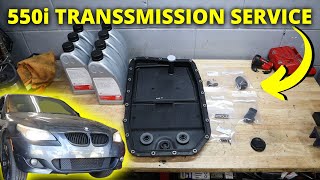
- Transmission Pan and Filter Kit — The filter is integrated into the plastic pan on ZF 6HP transmissions and must be replaced as a unit during a fluid service.
Trusted brands: ZF (OEM), Vaico, Febi
OEM price range: $120-$180
Aftermarket price range: $80-$150 - Mechatronic Solenoid Kit — This is the most common electrical component to fail. Replacing the full set is the standard, reliable repair.
Trusted brands: ZF (OEM)
OEM price range: $350-$500
Related Codes That Often Appear With This One
- P0741 — P0741 indicates 'Torque Converter Clutch Circuit Performance or Stuck Off'. If the circuit has an intermittent electrical fault (P0740), it will often lead to a performance issue (P0741) as the TCM fails to see the clutch engage properly.
- Various gear ratio error codes (e.g., P0734, P0735) — If the root cause is pressure loss from bad seals or failing solenoids, this can also cause slipping in specific gears, triggering other codes alongside P0740.
Platform-Specific Known Issues
- Mechatronic Sealing Sleeve Failure: → Shop Transmission Assembly The main electrical connector seal frequently hardens, allowing transmission fluid to leak out of the transmission and potentially wick up the wiring harness. It is a mandatory replacement item during any mechatronic service.
- Mechatronic Bridge and Tube Seal Failure: The square 'bridge' seal and four small tube seals that connect the valve body to the transmission case become brittle, causing major internal pressure loss. This leads to shifting problems and can trigger various codes, including P0740.
Mechanic-Grade Diagnostic Values
- Resistance of EDS Solenoids (Blue and Yellow Caps) — expected: ~5 ohms. Failure: A reading significantly higher or lower than 5 ohms, or an open circuit (infinite resistance).
- Resistance of MV Solenoids (Black Caps) — expected: ~12 ohms. Failure: A reading significantly different from 12 ohms.
Hidden / Shadow Codes Worth Checking
- 4F89: This is a BMW-specific fault code for 'Gear monitoring, shift e.g. 4-5'. While not a direct match for the P0740 circuit fault, it often appears alongside it when hydraulic pressure loss from failing seals or solenoids causes gear engagement problems. (see via BMW-specific diagnostic software like ISTA or INPA.)
- 4F8A: This BMW fault code translates to 'Gear monitoring, shift 4-5'. Similar to 4F89, it indicates a mechanical or hydraulic issue with a specific gear change that can be triggered by the same root causes as P0740, such as failing solenoids or internal seal leaks. (see via BMW-specific diagnostic software like ISTA or INPA.)
Scan Tool Commands That Help
- ISTA+: Display and Reset Adaptation Values — This function is critical after replacing solenoids, seals, or fluid. It clears the transmission's learned values, forcing it to relearn shift pressures and clutch fill times with the new components. The path is: Vehicle Management > Service Function > Powertrain > Transmission Control > Adjustment > Display and Reset Adaptation Values.
- INPA: Activate/Adapt — An older but still powerful tool, INPA can also reset adaptations. The path is: Select E60 > Transmission > Gearbox / Automatic GS19 > F6 (Activate) > F3 (Adapt). This must be followed by a specific re-learn drive cycle.
Real Owner Repair Stories
- Reddit user in r/BmwTech (BMW E60 (year/model not specified)) — Transmission slams into gear, delayed engagement into Drive or Reverse, 'Transmission Failsafe' message on dash.
❌ Tried (didn't work) A transmission fluid flush provided a temporary fix, but the symptoms returned after a few months.
✅ What actually fixed it The user was advised that the correct fix is to replace the mechatronic sealing sleeve, the bridge seal, and the solenoid pack in the valve body. - 5Series.net forum user (2004 BMW 545i (E60)) — Transmission fault message, harsh 2-1 downshift.
✅ What actually fixed it A shop replaced the mechatronics solenoids, the bridge seal, and the four sealing sleeves. This resolved the shifting issues. The forum member noted the importance of replacing all the seals, as they were likely worn out and could cause similar symptoms.
OEM Part Supersession History
Varies by early production→1068 298 044 (Solenoid Kit)— ZF consolidated parts and made improvements to solenoid design and materials over the production run. There are different kits based on model year.
Heads up: The solenoid kit for pre-LCI (Life Cycle Impulse) cars (up to 2007) is different from the kit for LCI cars (2008-2010). For example, kit 1068 298 044 is for pre-2008 V8 models. LCI models may use a different kit (e.g., 1068 298 045) with a different combination of solenoid colors (e.g., more yellow solenoids). Always verify the correct kit using the transmission's specific part number.
Model Year Variations Within This Range
- 2008-2010 (LCI models): The solenoid kit for later E60 models (often designated LCI for 'Life Cycle Impulse') changed. While early models typically use the ZF kit 1068 298 044 (3 blue, 3 yellow, 1 black solenoids), later models may require kit 1068 298 045 (e.g., 5 yellow, 1 blue, 1 black). It is critical to order the kit based on the transmission's specific ID tag, not just the car's model year.
- 2008+: Later models may have enhanced EWS (drive-away protection) security integrated into the mechatronics unit. Swapping a used mechatronics unit or complete transmission into these vehicles without resetting the ISN (Individual Serial Number) will result in the car starting but not engaging any gears.
Diagnostic Flowchart
Other Known Issues on This Vehicle
Issues unrelated to this code that are worth knowing about as an owner of this generation:
- Oil Filter Housing Gasket (OFHG) Leak 🔴 High — Extremely common on most E60 engines (N52, N54, etc.) after 60,000-80,000 miles. If left untreated, leaking oil can drip onto the serpentine belt, causing it to slip, shred, and potentially be ingested by the engine through the front main seal, leading to catastrophic engine failure.
- Electric Water Pump & Thermostat Failure 🔴 High — Common failure item on gasoline engines (N52/N54/N55) typically between 60,000 and 100,000 miles. Failure is often sudden and without warning, causing rapid overheating and requiring immediate shutdown to prevent engine damage.
- E61 Touring Tailgate Wiring Harness Failure 🟠 Medium — Affects virtually all E61 wagon models. The wires running through the tailgate hinges fatigue and break from repeated opening and closing. This causes failure of rear lights, the remote key fob, rear glass release, and rear wiper.
- N54 High-Pressure Fuel Pump (HPFP) Failure 🔴 High — Primarily affects the twin-turbo N54 engine (e.g., 535i). Symptoms include long crank times, reduced power ('limp mode'), and stuttering. This was subject to recalls and extended warranties, but can still be an issue on older cars. (Ref: Yes, multiple recalls and extended warranties were issued.)
- iDrive System Malfunctions 🟡 Low — Early E60 models (2003-2005) with the CCC (Car Communication Computer) are prone to reboots, freezing, or total failure. This can render navigation, audio, and other vehicle settings inaccessible.
Used vs. New Parts: Buying Guide for This Vehicle
When a used part is the smart pick: A complete used transmission assembly is a viable option if the original has confirmed catastrophic internal damage (e.g., large metal chunks in the pan). A used mechatronics unit can be considered, but it's risky and MUST be professionally cloned or have its ISN reset to work in the recipient vehicle.
Donor-vehicle mileage cap: roughly under 80000 miles for the part to have meaningful remaining life.
What to inspect on the donor part:
- Verify the donor vehicle's mileage and service history if possible.
- Inspect the fluid color and smell from the donor transmission before purchase.
- Check for external leaks, especially around the main connector sleeve and pan gasket.
- Ensure the main electrical connector pins are clean and not corroded or full of fluid.
OEM-only on this vehicle (don't cheap out):
- Mechatronic Solenoids (ZF is the OEM and the only reliable choice).
- Mechatronic Seals (Bridge seal, tube seals, connector sleeve - use OEM ZF or OEM suppliers like Elring).
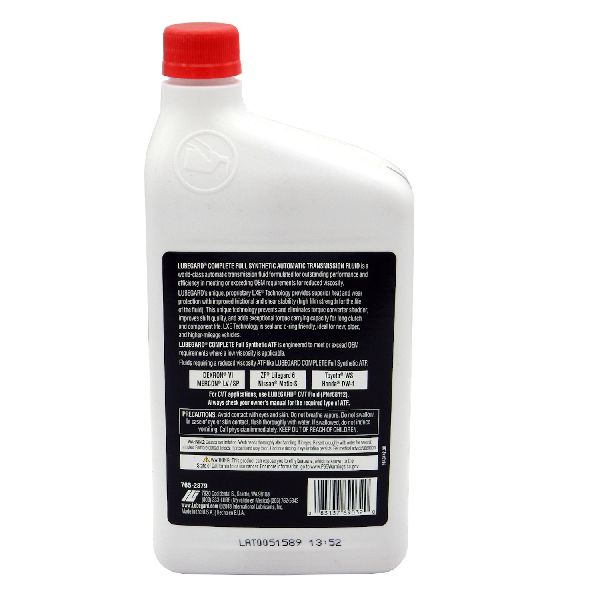
- Transmission Fluid (Must be ZF Lifeguard 6 or a fluid meeting the exact Shell M-1375.4 specification).
Aftermarket brands forum-validated for this vehicle:
- ZF (OEM for transmission, solenoids, pan/filter)
- Sonnax (For valve body repair components like Zip Kits, but not complete solenoids)
- Vaico / Febi (Often used for the pan/filter assembly with good results)
Brands owners have reported issues with on this vehicle:
- Unbranded, no-name solenoid kits from online marketplaces. These are notorious for high failure rates and incorrect resistance values, leading to repeat repairs.
Real Owner Stories
Aggregated from forums and TSBs cited above. Mileages and costs reflect what owners reported in those sources.
2004 BMW 545i
Symptoms: Owner experienced symptoms related to P0740 and was advised to check for fluid leaks at the mechatronic connector sleeve.
What fixed it: The community suggested starting with a fluid/filter change and inspecting the mechatronic connector sleeve for leaks.
Source hint: Bimmerfest: E60 Transmission Fault/P0740
BMW 5-Series with 6HP21 transmission
Symptoms: Chasing a shifting issue; symptoms included pressure loss within the transmission.
What fixed it: Replacing the bad sealing sleeve gaskets and the mechatronic seal adapter (bridge seal).
Source hint: 5Series.net: Transmission Faulty , need help!
BMW 5-Series (E60/E61) with 6HP19X transmission
Symptoms: Common transmission problems requiring a full mechatronic service.
What fixed it: A full mechatronic service including replacing the fluid, solenoids, and sealing sleeves.
Source hint: YouTube: BMW E60/61 Automatic Transmission Mechatronic DIY Service
Related OBD-II Codes
Frequently Asked Questions
How do I check the transmission fluid level on my E60 5-Series to rule out P0740?
Is there a specific solenoid kit recommended for the ZF 6HP mechatronics unit in my BMW?
My iDrive screen shows a 'Transmission Fault' message along with a shuddering feeling. What could this be?
Why is my 5-Series stalling when I come to a stop?
Do I need to do anything special after replacing the mechatronic solenoids and seals?
What fluid should I use for my 2003-2010 5-Series transmission service?
Helpful Videos

We Have This Part in Stock

The information in this article is provided for general reference and educational purposes only. Vehicle specifications, procedures, and part compatibility can vary by production date, trim level, and region. Always consult your vehicle's factory service manual and verify part numbers before purchasing or performing repairs. Safety-critical components such as airbags, seat belts, and braking systems should be installed by a qualified professional.
- BMW 5-Series:
- 🧭 Diagnostic Flowchart
- 🎬 Helpful Videos
- 🛍️ Shop This Part
- What's Unique About the 2003-2010 BMW 5-Series
- Symptoms You May Notice
- Most Likely Causes
- Rare But Worth Checking
- Diagnosis Steps
- Parts You'll Likely Need
- Related Codes That Often Appear With This One
- Platform-Specific Known Issues
- Mechanic-Grade Diagnostic Values
- Hidden / Shadow Codes Worth Checking
- Scan Tool Commands That Help
- Real Owner Repair Stories
- OEM Part Supersession History
- Model Year Variations Within This Range
- Other Known Issues on This Vehicle
- Used vs. New Parts: Buying Guide for This Vehicle
- Real Owner Stories
- 2004 BMW 545i
- BMW 5-Series with 6HP21 transmission
- BMW 5-Series (E60/E61) with 6HP19X transmission
- Related OBD-II Codes
- Frequently Asked Questions
- 🎟️ Get 5% Off