

P0740 on 2005-2012 Chrysler 300: Torque Converter Clutch Circuit Causes and Fixes
On a 2005-2012 Chrysler 300, code P0740 usually indicates a problem with the torque converter clutch (TCC) solenoid, the associated wiring, or a failing torque converter. On models with the 5-speed NAG1 transmission, a failed conductor plate is a very common cause. The repair can range from a fluid change or solenoid replacement to a complete torque converter replacement, which is labor-intensive.
- P0740 on a Chrysler 300 indicates a problem with the torque converter's ability to lock up, not necessarily a complete transmission failure.
- The most common causes are a faulty TCC solenoid, a bad conductor plate (on 5-speed models), or a worn-out torque converter.
- Do not rely on TSBs that reference the 62TE transmission, as it was not used in this vehicle.
- Driving with this code can cause excessive heat and damage, leading to much more expensive repairs. It should be addressed promptly.
- Diagnosis should follow a logical path: check fluid, inspect wiring, test the solenoid circuit, and only then condemn the expensive torque converter.
What's Unique About the 2005-2012 Chrysler 300
The 2005-2012 Chrysler 300 is a rear-wheel-drive based platform that primarily used the 4-speed 42RLE (V6) or the more common 5-speed NAG1 (W5A580) automatic transmissions. It's critical to note that manufacturer bulletins, like TSB #9004009 which mentions P0740, often refer to the 62TE transmission found in front-wheel-drive Chrysler vehicles (like the Chrysler 200 or minivans) and do not apply to the 300. For the 300, the problem is almost always isolated to the specific components of its NAG1 or 42RLE transmission. The NAG1, a Mercedes-Benz design (also known as 722.6), is particularly known for conductor plate failures, while TSB 21-011-05 for the NAG1 addresses a shudder during TCC engagement, which can be caused by water contamination in the ATF.
Diagnostic Flowchart
Tap your situation to follow the diagnostic path that matches what you're seeing on this vehicle.
Generation note: This range covers two generations of the Chrysler 300. The first generation (LX, 2005-2010) used a 4-speed 42RLE (V6) or a 5-speed NAG1/W5A580 (V6/V8). The second generation (LD, 2011-2012) continued with the NAG1 for V8 models but introduced an 8-speed 845RE automatic for the new 3.6L V6 Pentastar engine. The diagnostic principles for P0740 are similar for the NAG1 across generations, but the specific parts and procedures will vary significantly between the 42RLE, NAG1, and 845RE transmissions.
Symptoms You May Notice
- Check Engine Light is on
- Transmission may feel like it's slipping
- Higher than normal RPMs at highway speeds
- Poor fuel economy
- Vehicle may shudder or stall when coming to a stop
- Transmission may overheat or go into "limp mode" (stuck in one gear)
- Shudder felt during partial TCC lock-up in 3rd or 4th gear, a symptom specifically noted in TSB 21-011-05
- Replacing only the TCC solenoid when the torque converter itself has failed internally. If the converter is shedding clutch material, a new solenoid will likely fail again in a short time.
- On NAG1 transmissions, replacing the TCC solenoid when the true fault lies in the conductor plate's internal circuits or the leaking 13-pin connector.
Most Likely Causes
- Low or Contaminated Transmission Fluid 🟡 Medium Probability → Shop Transmission Assembly These transmissions are sensitive to fluid level and quality. The correct fluid is Mopar ATF+4 or equivalent. TSB 21-011-05 notes that even a small amount of water contamination (0.5%) in the fluid of a NAG1 transmission can cause a shudder during TCC engagement.
How to confirm: Check the transmission fluid level and condition. If the fluid is dark, smells burnt, or contains metallic particles, it indicates a more serious internal problem. A milky appearance indicates water contamination.
Typical fix: Perform a transmission fluid and filter change. If water contamination is suspected in a NAG1, a 'triple flush' procedure is recommended by Chrysler to ensure all contaminated fluid is removed from the torque converter.
Est. part cost: $75-$150 - Faulty Torque Converter Clutch (TCC) Solenoid 🔴 High Probability → Shop Automatic Transmission Torque Converter The solenoid is an electronic component that can fail electrically (open or short circuit) or mechanically (get stuck) over time.
How to confirm: A technician can use a scan tool to command the TCC solenoid on and off to check its response. The solenoid's electrical resistance can also be tested with a multimeter, which requires accessing it inside the transmission pan.
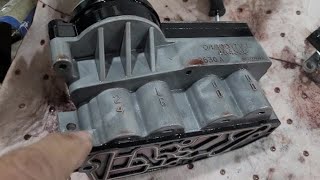
Typical fix: Replace the TCC solenoid. For the 42RLE, this is often part of a solenoid pack 🎬 Watch: Replacing the 42RLE solenoid pack to fix P0740. (Mopar P/N 5143151AA or 04800171AA). For the NAG1, it is a single solenoid on the valve body (Mopar P/N 1402770435).
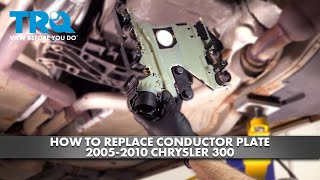
Est. part cost: $50-$250 - Damaged Wiring or Faulty Conductor Plate (NAG1/W5A580) 🔴 High Probability On the 5-speed NAG1 transmission, the conductor plate is a known failure point. It houses the speed sensors and the electrical connections for all the solenoids. A very common related issue is a leak from the 13-pin electrical connector (P/N 52108323AC), which allows fluid to wick up the wiring harness, potentially damaging the TCM and causing various codes, including P0740.
How to confirm: Inspect the external transmission wiring harness connector for ATF contamination. Test for continuity from the TCM to the transmission connector. If external wiring is good but codes persist, the internal conductor plate is the likely suspect, often confirmed when other speed sensor codes are also present.
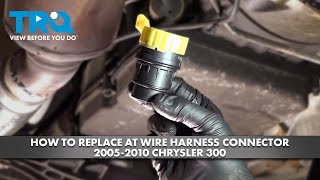
Typical fix: Replace the conductor plate (Mopar P/N 52108308AC) and always replace the 13-pin electrical connector sleeve/o-rings 🎬 See how to swap out the leaking 13-pin connector. at the same time. This requires draining the fluid and removing the valve body.
Est. part cost: $150-$350 - Failed Torque Converter 🟡 Medium Probability → Shop Automatic Transmission Torque Converter The internal lock-up clutch inside the torque converter can wear out, especially at higher mileage. This wear creates debris that contaminates the fluid and can damage solenoids and the valve body.
How to confirm: This is typically diagnosed after confirming the TCC solenoid and its circuit are functioning correctly. A scan tool may show excessive slip RPM when the TCC is commanded on. Burnt fluid with excessive clutch material is a strong indicator.
Typical fix: Replace the torque converter. This is a major repair that requires removing the entire transmission from the vehicle.
Est. part cost: $200-$600
Rare But Worth Checking
- Faulty Transmission Control Module (TCM): → Shop Transmission Assembly While rare, the TCM itself can fail, causing it to incorrectly report a circuit fault. This is more likely if the 13-pin connector on a NAG1 has been leaking fluid for a long time, allowing ATF to travel up the harness and into the module. This should be considered only after all other possibilities have been ruled out.
Diagnosis Steps
- Scan the vehicle's computer for P0740 and any other related transmission codes, like P0700 or P2767.
- Check the transmission fluid level and condition. Ensure the correct fluid type (ATF+4) is being used.
- On NAG1 transmissions, carefully inspect the 13-pin electrical connector at the front passenger side of the transmission for any signs of fluid leakage. If wet, the connector seal has failed.
- Inspect the main wiring harness for damage, corrosion, or fluid contamination, especially if the 13-pin connector is leaking.
- Using a professional scan tool, monitor Torque Converter Slip Speed and TCC Solenoid Duty Cycle while driving. Command the TCC solenoid on and off to verify its operation.
- If the solenoid does not respond or the circuit shows a fault, drop the transmission pan to access and test the TCC solenoid's resistance with a multimeter.
- While the pan is off, inspect for excessive metal shavings or clutch material, which would indicate a failing torque converter or other internal damage.
- On NAG1 transmissions, if the solenoid tests good, the next logical step is to replace the conductor plate and the 13-pin connector, as this is the most common point of electrical failure.
Parts You'll Likely Need
- Transmission Conductor Plate (NAG1/W5A580 only)
(OEM #52108308AC / 1402701261)— A very common failure point on the 5-speed Mercedes-designed transmission, causing various electrical and solenoid faults, including P0740.
Trusted brands: Mopar, Febi, Vaico, Dorman
OEM price range: $200-$300
Aftermarket price range: $120-$200 - Transmission Electrical Connector (NAG1/W5A580 only)
(OEM #52108323AC / 2035400253)— The o-rings on this connector fail, allowing ATF to leak out and potentially wick up the wiring harness. It should always be replaced when servicing the conductor plate.
Trusted brands: Mopar, Bosch
OEM price range: $15-$30
Aftermarket price range: $10-$20 - Torque Converter Clutch (TCC) Solenoid / Solenoid Pack
(OEM #5143151AA (42RLE Pack))— This is a common electrical component to fail. On the 42RLE, it's part of the main solenoid pack.
Trusted brands: Mopar, Bosch
OEM price range: $100-$250
Aftermarket price range: $100-$180
Related Codes That Often Appear With This One
- P0700 — This is a generic Transmission Control System Malfunction code. It simply means the TCM has stored a fault code (like P0740) and is requesting the Check Engine Light to be turned on.
- P2767 — Input/Turbine Speed Sensor 'B' Circuit No Signal. On NAG1 transmissions, this code frequently appears with P0740 and strongly points to a failed conductor plate, as the speed sensors are integrated into it.
- P0730 — Incorrect Gear Ratio. This code can appear alongside P0740 if the transmission is slipping excessively due to the TCC failure or related internal issues.
Technical Service Bulletins (TSBs) & Recalls
- TSB 21-011-05: Addresses a transmission shudder during TCC engagement on NAG1 (W5A580) transmissions, which can be caused by water contamination in the fluid. While not directly for P0740, the symptom and cause (fluid integrity) are highly relevant.
Platform-Specific Known Issues
- NAG1 Conductor Plate and Connector Leak: The most notorious issue for the 5-speed NAG1 (W5A580) transmission is the failure of the conductor plate, which houses the speed sensors. This is often preceded or accompanied by a leak from the 13-pin electrical connector. The leaking ATF can travel up the wiring harness and cause a host of electrical issues and fault codes, including P0740. It is standard practice to replace the connector whenever the conductor plate is serviced.
Mechanic-Grade Diagnostic Values
- TCC Solenoid Resistance (42RLE Transmission) — expected: 1.7 ohms. Failure: A reading significantly higher or lower than 1.7 ohms, or an open/infinite reading, indicates a failed solenoid.
- TCC Solenoid Resistance (NAG1/W5A580 Transmission) — expected: General specification is 10-30 ohms (OEM-specific value is not published).. Failure: A reading outside of this range suggests a faulty solenoid. This is a general guide, not a manufacturer specification.
- Clutch Volume Index (CVI) - Scan Tool Data — expected: Low-Reverse: 16-63; 2-4: 16-54; OD: 42-143; UD: 26-74.. Failure: A value outside of the normal range for a specific clutch pack indicates internal wear or hydraulic issues that could contribute to TCC problems.
Scan Tool Commands That Help
- Chrysler wiTECH or equivalent professional scanner: TCC Solenoid Actuation Test / Duty Cycle Command — This bidirectional command allows a technician to manually energize the TCC solenoid circuit while monitoring system response (like RPM drop or solenoid click). It's used to confirm if the solenoid is mechanically functioning and if the wiring from the TCM to the solenoid is intact.
- OBD-II Scanner with advanced functions: TCM Reset / Clear Adaptive Memory — After replacing a component like a solenoid, conductor plate, or valve body, the learned shift adaptations in the TCM should be cleared. This forces the module to relearn the clutch engagement points and can resolve shifting issues.
Wiring & Ground Locations
- TCM (Transmission Control Module) - NAG1 — For the NAG1, the TCM is often located in the front passenger footwell, behind the kick panel, or under the hood in a control module box, a design inherited from Mercedes-Benz.. This is the control center for the transmission. If the 13-pin connector leaks, ATF can wick up the harness and contaminate the TCM, causing P0740 and other faults. Physical inspection of the TCM and its connectors for oil is a critical diagnostic step.
- 42RLE Transmission Connector - Pin 3 — On the main 10-way connector for the 42RLE transmission.. Pin 3 is the 12-volt power input from the EATX relay for all solenoids. Testing for power at this pin is a primary step in diagnosing any solenoid circuit code, including P0740.
- 42RLE Transmission Connector - Pin 7 — On the main 10-way connector for the 42RLE transmission.. This is the control pin for the L/R (Low/Reverse) solenoid, which is also used to control the torque converter clutch. A technician can test for a command signal from the TCM at this pin.
Real Owner Repair Stories
- MBClub UK forum user (2003 Mercedes E270 CDI (with 722.6/NAG1 transmission, same as Chrysler 300)) — P0740 (TCC Circuit Malfunction) & P0715 (Input Speed Sensor), transmission in limp mode.
❌ Tried (didn't work) Replaced the conductor plate., Replaced the 13-pin connector plug., Performed a full transmission fluid and filter service.
✅ What actually fixed it The code persisted after replacing the common parts. The recommended next step, and a very common resolution, was to inspect the Transmission Control Module (TCM) itself for ATF that had wicked up the wiring harness from the leaking 13-pin plug, which requires cleaning or replacing the TCM. - Automotive Forums post by a Chrysler transmission engineer (2001 Chrysler 300M (with 42LE, a similar FWD transmission)) — P0740 code present, but transmission shifts fine.
❌ Tried (didn't work) The owner suspected an overfilled fluid level was the cause.
✅ What actually fixed it The engineer stated the most likely causes, in order, are: 1) Debris in the valve body causing the torque converter control valve to stick, 2) A worn oil pump bushing causing a pressure loss, or 3) A failed torque converter clutch. This provides an expert's diagnostic path beyond just the solenoid.
OEM Part Supersession History
52108308AB→52108308AC— Revision and improvement of the conductor plate for the NAG1/W5A580 transmission.
Heads up: The 'AC' revision is the current and preferred replacement part. The original Mercedes P/N is often cross-referenced as 1402701261.
Model Year Variations Within This Range
- 2011-2012: While V8 models (5.7L, 6.4L) retained the 5-speed NAG1 transmission, the V6 models with the 3.6L Pentastar engine were upgraded to the 8-speed 845RE automatic transmission. Diagnostic procedures and parts for a P0740 on a 2011+ V6 are completely different from the V8 models of the same years.
Helpful Videos
We Have This Part in Stock

The information in this article is provided for general reference and educational purposes only. Vehicle specifications, procedures, and part compatibility can vary by production date, trim level, and region. Always consult your vehicle's factory service manual and verify part numbers before purchasing or performing repairs. Safety-critical components such as airbags, seat belts, and braking systems should be installed by a qualified professional.
- Chrysler 300:
- 🧭 Diagnostic Flowchart
- 🎬 Helpful Videos
- 🛍️ Shop This Part
- What's Unique About the 2005-2012 Chrysler 300
- Symptoms You May Notice
- Most Likely Causes
- Rare But Worth Checking
- Diagnosis Steps
- Parts You'll Likely Need
- Related Codes That Often Appear With This One
- Technical Service Bulletins (TSBs) & Recalls
- Platform-Specific Known Issues
- Mechanic-Grade Diagnostic Values
- Scan Tool Commands That Help
- Wiring & Ground Locations
- Real Owner Repair Stories
- OEM Part Supersession History
- Model Year Variations Within This Range
- 🎟️ Get 5% Off