

P0740 on 2004-2008 Chrysler Pacifica: Torque Converter Clutch Circuit Fixes
On a 2004-2008 Chrysler Pacifica, code P0740 often indicates a failing torque converter, especially on 2008 models with the 6-speed 62TE transmission. While the code points to the TCC solenoid circuit, mechanics and TSBs report that replacing the torque converter is the more common fix. For 2004-2007 models with the 4-speed 41TE, a faulty solenoid pack is a more likely cause. This is a significant repair, often costing $1,500-$2,500.
- For the 2008 Pacifica with the 6-speed 62TE transmission, P0740 is very likely a failed torque converter, not just the solenoid.
- For 2004-2007 models with the 4-speed 41TE, a faulty solenoid pack is a more common cause.
- Always start diagnosis by checking the transmission fluid level and condition; it must be clean, full, and the correct ATF+4 type.
- Due to the high probability of needing a torque converter replacement, this can be a very expensive repair ($1,500+), so proper diagnosis is crucial to avoid wasting money on unneeded parts like a solenoid.
What's Unique About the 2004-2008 Chrysler Pacifica
The 2004-2008 Chrysler Pacifica used two different transmissions during its production run, which changes the diagnostic approach for P0740. Models from 2004-2007 typically have the 4-speed 41TE transmission, where a faulty solenoid pack is a common culprit. However, 2007-2008 models with the 4.0L V6 introduced the 6-speed 62TE transmission. For the 62TE, experienced technicians and even Chrysler TSBs (like #9004009) suggest that P0740 is very often caused by an internal failure of the torque converter itself, not just the solenoid that controls it. Many owners and shops have wasted money replacing the solenoid only to find the real problem was the converter.
Symptoms You May Notice
- Check Engine Light is on
- Vehicle may stall when coming to a stop
- Shuddering or vibration at cruising speeds (often described as driving over rumble strips)
- Noticeable decrease in fuel economy
- Transmission may not shift properly or shifts may feel harsh
- Engine RPM is higher than usual at highway speeds
- Transmission may feel like it's slipping in and out of gear on the highway
- Replacing the TCC solenoid on a 62TE transmission (2007-2008 models) when the torque converter is the actual failure. This is a very common and costly mistake, as the code often returns until the converter is replaced.
Most Likely Causes
- Failed Torque Converter 🔴 High Probability → Shop Automatic Transmission Torque Converter Especially on 2007-2008 models with the 62TE transmission, the internal clutch material within the torque converter is known to wear out, preventing a successful lock-up and triggering the P0740 code. Technicians and TSBs report this is the most common actual fix.
How to confirm: A professional diagnosis is needed. This involves using a scan tool to monitor TCC slip speed; a value consistently over 100 RPM when lock-up is commanded indicates failure. Finding excessive dark clutch material in the transmission pan is another strong indicator. If the solenoid circuit tests good but lock-up still fails, the converter is the cause.
Typical fix: Replace the torque converter. This requires removing the transmission from the vehicle. It is often recommended to replace the front pump seal at the same time.
Est. part cost: $200-$600 - Faulty Torque Converter Clutch (TCC) Solenoid or Solenoid Pack 🟡 Medium Probability → Shop Automatic Transmission Torque Converter On 41TE transmissions (2004-2007), the solenoid pack is a very common failure point and is often replaced as a complete unit. On the 62TE (2007-2008), the individual TCC solenoid (also called a Variable Force Solenoid) can fail, but it's much less common than the converter itself.
How to confirm: Test the solenoid's resistance with a multimeter to see if it's within the manufacturer's specified range. A technician can also command the solenoid on and off with a high-end scan tool to check its operation.
Typical fix: For 41TE, replace the entire solenoid pack. For 62TE, replace the individual TCC solenoid. This is located inside the transmission oil pan and may require removing the valve body.
Est. part cost: $50-$250 - Low or Dirty Transmission Fluid 🟡 Medium Probability → Shop Transmission Assembly Low fluid levels can prevent the hydraulic pressure needed to operate the TCC, while old, dirty fluid (often contaminated with clutch material from a failing converter) can clog passages and cause solenoids to stick.
How to confirm: Check the transmission fluid level and condition using the dipstick. The fluid should be at the correct level, pinkish-red, and not smell burnt. If it's dark, brown, or contains metal particles, there's a problem. Only Chrysler-approved ATF+4 fluid should be used.
Typical fix: Perform a transmission fluid and filter change using Mopar ATF+4 fluid. If the fluid is severely contaminated, a full replacement of the torque converter is likely necessary.
Est. part cost: $50-$100 - Wiring Harness or Connector Issues ⚪ Low Probability The wiring to the transmission can become damaged over time from heat, vibration, or road debris. The main connector at the solenoid pack is a common point for inspection.
How to confirm: Visually inspect the wiring harness going to the transmission for any signs of damage, corrosion, or loose connections. Check for continuity and shorts in the TCC solenoid circuit using a multimeter. Repair kits for the external harness are available.
Typical fix: Repair or replace the damaged section of the wiring harness or clean the connectors.
Est. part cost: $10-$100
Rare But Worth Checking
- Faulty Alternator (Ripple Voltage): A failing alternator can produce excessive AC voltage (ripple), which interferes with the sensitive electronics of the transmission sensors and control module. One documented case on a 2007 Pacifica showed that a bad alternator diode was the root cause of a P0740 code by interfering with speed sensor signals. The tech noted AC voltage was spiking to 4-5 volts when it should be under 0.5V.
- Faulty Transmission Control Module (TCM): → Shop Transmission Assembly While rare, the TCM itself can fail. This should only be considered after all other possibilities, including wiring, solenoids, and mechanical parts, have been thoroughly ruled out.
- Worn Front Pump Housing Bushing: A worn bushing in the transmission's front pump can cause a hydraulic leak, reducing the pressure available to engage the torque converter clutch. One forum user reported this as the root cause for their P0740 code.
Diagnosis Steps
- Check the transmission fluid level and condition. Ensure it is full of clean, licensed Mopar ATF+4 fluid.
- Use a quality OBD-II scanner to check for any other transmission-related codes, such as P0700.
- Inspect the transmission wiring harness and connectors for any visible damage, corrosion, or loose connections, especially the main connector to the solenoid pack.
- With a suitable scan tool, monitor the torque converter clutch slip RPM while driving at a steady cruise speed. A high slip value (e.g., >100 RPM) when lock-up is commanded indicates a problem.
- Test the TCC solenoid. This involves checking its resistance with a multimeter to ensure it's within spec. A scan tool can also be used to command the solenoid on/off to verify function.
- Test the wiring circuit for the TCC solenoid for proper voltage, ground, and continuity back to the TCM.
- If the solenoid and wiring test good but the TCC still fails to lock up (confirmed by scan tool data), the problem is an internal mechanical issue, most commonly the torque converter itself.
- As a final check, test for excessive AC ripple voltage from the alternator using a multimeter or oscilloscope, as this can cause phantom electronic codes. A reading above 0.5V AC is cause for concern.
Parts You'll Likely Need
- Torque Converter
(OEM #68036990AC (62TE); R8080714AA (62TE Reman w/ TC))— This is the most probable cause of P0740 on the 2007-2008 Pacifica with the 62TE transmission, and a common failure on high-mileage 41TE transmissions as well.
Trusted brands: Mopar, Transtar, Pioneer
OEM price range: $400-$700
Aftermarket price range: $200-$400 - Solenoid Pack (41TE) / TCC Solenoid (62TE)
(OEM #5140429AA (41TE Solenoid Pack))— This is the component the code directly references. It's a more likely fix for the 2004-2007 models with the 41TE transmission (as part of the solenoid pack) than for the 2008 model.
Trusted brands: Mopar, Rostra, Dorman
OEM price range: $150-$300
Aftermarket price range: $50-$150 - Automatic Transmission Fluid (ATF+4)
(OEM #68218057AB (or any licensed ATF+4))— Required for any repair involving opening the transmission, such as replacing the solenoid or filter. Using the correct Chrysler-specified ATF+4 fluid is critical.
Trusted brands: Mopar, Valvoline, Castrol
Related Codes That Often Appear With This One
- P0700: This is a generic transmission fault code that simply indicates the TCM has stored a specific fault code (in this case, P0740). It will almost always be present with any other transmission code.
- P0741: Indicates 'Torque Converter Clutch Circuit Performance or Stuck Off', a companion code confirming the TCC is failing to lock up as commanded.
- P2764: 'Torque Converter Clutch Pressure Control Solenoid Control Circuit Low' is also noted in Chrysler TSBs as pointing toward a likely torque converter failure.
Technical Service Bulletins (TSBs) & Recalls
- TSB #9004009 / #9004206: States that for 62TE equipped vehicles (like the 2008 Pacifica) with code P0740, if the TCC solenoid is functioning correctly, the root cause is a failed torque converter that needs replacement. Manufacturer TSB Bulletin #9004009 further clarifies that if the vehicle is jerking or slipping with codes P0740 or P2764 and the TCC solenoid is okay, the codes are indicative of a torque converter failure.
- Chrysler TSB (Oct 2010, Mar 2012): Related to engine cradle rust, extending warranty coverage for certain 2004-2005 models in 'salt belt' states, though the scope was later narrowed, leading to controversy.
Platform-Specific Known Issues
- A known issue, particularly on the 2008 model with the 62TE transmission, is that P0740 is frequently caused by torque converter failure, not the TCC solenoid itself. A TSB for other Chrysler vehicles with the 62TE confirms this diagnostic pattern.
Mechanic-Grade Diagnostic Values
- TCC Solenoid Resistance (62TE Transmission) — expected: 4.8-5.2 Ohms. Failure: A reading significantly outside this range, or showing an open/short circuit. One source noted a reading of 18.7 Ohms on a failed solenoid.
- Shift Solenoid Resistance (62TE Transmission) — expected: 1.6-1.8 Ohms. Failure: A reading outside this range. One technician found a bad solenoid reading 7.2 Ohms.
- Solenoid Resistance (41TE Solenoid Pack) — expected: 1.5-1.7 Ohms (per solenoid). Failure: A reading of infinity (open) or near-zero (short).
- Pressure Switch Resistor (41TE Solenoid Pack) — expected: 270-330 Ohms. Failure: A reading outside this range indicates a fault in the pressure switch circuit within the pack.
- Alternator AC Ripple Voltage — expected: Under 0.5 Volts AC (500 millivolts AC). Failure: Voltage spiking to 2.0V or higher, especially under load (e.g., when the cooling fan kicks on). One case showed spikes up to 5.0V.
Scan Tool Commands That Help
- Chrysler WiTech or other professional scanner: TCC Solenoid Actuation Test / Bidirectional Control — This command allows a technician to manually turn the TCC solenoid on and off while the vehicle is stationary to verify the electrical circuit and listen for the solenoid's physical click. It helps isolate a circuit/solenoid fault from a mechanical/hydraulic issue.
- Chrysler WiTech or other professional scanner: View Clutch Volume Index (CVI) values — To assess the internal wear of the transmission clutches. While not directly for the TCC, out-of-spec CVI values (e.g., Low-Reverse should be 16-63) indicate widespread internal wear that could accompany a P0740 caused by debris or hydraulic issues.
Wiring & Ground Locations
- G103 — On the driver's side frame rail, often accessible by removing the driver's side headlight assembly.. This is a major ground point for the front-end electronics. A corroded or loose G103 ground can cause a host of bizarre electrical issues, including erratic module behavior that could potentially trigger false transmission codes. While not a direct cause of P0740, ensuring this ground is clean and tight is a critical step in diagnosing any complex electrical fault on a Pacifica.
- 41TE Solenoid Pack Connector (8-pin) — On the front of the 41TE transmission, easily accessible.. This is the primary test point for the entire solenoid pack. Pin 4 is the 12V power feed, and Pin 7 controls the Low-Reverse and TCC solenoid. Testing resistance and voltage at these pins is the fastest way to diagnose the external electrical circuit.
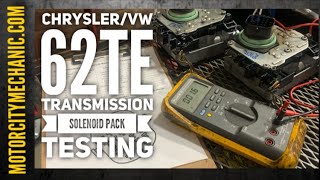
- 62TE Solenoid Pack Connector (23-pin) — On the side of the 62TE transmission, under a cover.. This connector is the interface to the TCM. Pin 10 is a common test point, and the TCC solenoid is tested between specific pins on this connector. A technician video demonstrates testing resistance between pin 10 and other pins to check individual solenoids.
Real Owner Repair Stories
- YouTube channel 'Automatic Transmission' (2007 Chrysler Pacifica) — P0740 code, fluctuating speedometer needle, flickering dome light.
❌ Tried (didn't work) Initial diagnosis focused on the transmission itself due to the P0740 code.
✅ What actually fixed it Replacing the alternator. A bad diode in the alternator was creating excessive AC ripple voltage (spiking to 4-5 volts), which interfered with the transmission speed sensors and control module, triggering a false P0740 code. - Chrysler Forum user 'mwestpacifica' (2005 Chrysler Pacifica) — Sudden loss of all electronics (wipers, lights, radio), dash lit up, car stuck in Park. Later, the Check Engine Light remained on.
❌ Tried (didn't work) Initially, the user found a broken negative battery terminal clamp, and replacing it seemed to fix the issue temporarily.
✅ What actually fixed it The problem returned and was ultimately traced to a bad ground at point G103 on the driver's side frame rail. Cleaning and securing this ground connection resolved the widespread electrical failures. - NHTSA ODI #10662298 — An owner reported that their check engine light came on and stayed on, with a scan returning codes P0700 and P0740. Their initial research suggested the Transmission Control Module (TCM) was the likely cause.
OEM Part Supersession History
4504570AC, 5015646AB, 5015646AC→5140429AA— Standard part consolidation and potential minor revisions over a long production life.
Heads up: These part numbers all refer to the solenoid pack for the 41TE/A604 transmission and are generally interchangeable.68036990AC→RL036990AD— RL prefix indicates a remanufactured Mopar part. The 'AD' suffix represents a later revision of the remanufactured component.
Heads up: This is the part number for the 62TE torque converter. The superseded number is a remanufactured unit that is a direct replacement.
Model Year Variations Within This Range
- 2004-2007: These models primarily used the 4-speed 41TE automatic transmission. For P0740, the most common culprit is a failure of the externally accessible solenoid pack.
- 2007-2008: Models equipped with the 4.0L V6 engine used the 6-speed 62TE automatic transmission. On these vehicles, P0740 is very frequently caused by an internal failure of the torque converter itself, rather than the solenoid.
Diagnostic Flowchart
Other Known Issues on This Vehicle
Issues unrelated to this code that are worth knowing about as an owner of this generation:
- Engine Cradle (Subframe) Rust/Rot 🔴 High — Very common on vehicles from 'salt belt' states. Can become structurally unsafe, with hundreds of NHTSA complaints filed. (Ref: Chrysler issued warranty extensions and TSBs, but they were controversially limited to specific build dates and regions, leading to a class-action lawsuit.)
- Premature Motor Mount Failure 🟠 Medium — Commonly reported around 65,000-100,000 miles. Causes excessive engine vibration at idle and clunking noises. (Ref: No official recall, but it is a widely discussed owner complaint. Some owners note that using cheaper aftermarket mounts leads to very rapid repeat failures.)
- Engine Ticking Noise (Rocker Arm Retaining Pin) 🟠 Medium — Commonly reported on the 3.5L and 4.0L V6 engines around 104,000 miles. A broken rocker arm retaining pin can block oil flow, causing a distinct ticking sound.
- Carbon Buildup on Valves 🟡 Low — Tends to occur on higher-mileage vehicles (around 130,000 miles), causing misfires and potentially a P0300 code. (Ref: Chrysler acknowledged the issue and advised a combustion chamber cleaning procedure.)
Used vs. New Parts: Buying Guide for This Vehicle
When a used part is the smart pick: A used solenoid pack for the 41TE transmission can be a viable option if sourced from a low-mileage, documented donor vehicle. Given that the part is external and relatively easy to replace, the financial risk is lower. Used electronic modules like the TCM are also a possibility, but must be from an identical vehicle to ensure compatibility.
Donor-vehicle mileage cap: roughly under 80000 miles for the part to have meaningful remaining life.
What to inspect on the donor part:
- For a solenoid pack, check the electrical connector pins for any corrosion or damage.
- Ask for the VIN of the donor car to verify its mileage and confirm it didn't have transmission-related issues.
- For any used part, look for signs of excessive heat (discoloration) or fluid leaks.
OEM-only on this vehicle (don't cheap out):
- Torque Converter: A used torque converter is extremely risky. It's a high-wear item, and installing a used one could lead to immediate failure and contamination of a freshly rebuilt transmission. Always buy a new or professionally remanufactured torque converter.
- Transmission Fluid: Never use used fluid. Always use new, licensed Mopar ATF+4 fluid, as Chrysler transmissions are very sensitive to fluid type and quality.
Aftermarket brands forum-validated for this vehicle:
- Solenoid Pack (41TE): Rostra and Dorman are widely available aftermarket options that are generally considered acceptable alternatives to OEM.
- Torque Converter (62TE): Brands like Transtar, Precision of New Hampton, and other specialist remanufacturers are common choices for transmission shops.
Brands owners have reported issues with on this vehicle:
- Be cautious of unbranded, 'white-box' solenoid packs and torque converters from online marketplaces, as quality control can be inconsistent.
Real Owner Stories
Aggregated from forums and TSBs cited above. Mileages and costs reflect what owners reported in those sources.
2007 Chrysler Pacifica
Symptoms: The vehicle was throwing a P0740 code, but the issue was actually electrical interference rather than a mechanical transmission failure.
What fixed it: Replacing a faulty alternator that was producing excessive AC ripple voltage.
Source hint: YouTube video documenting a 2007 Pacifica where a faulty alternator caused P0740.
2008 Chrysler Pacifica 62TE
Symptoms: P0740 code triggered; owner was cautioned against simply replacing the solenoid.
What fixed it: Replacement of the torque converter, as the internal clutch material wears out preventing successful lock-up.
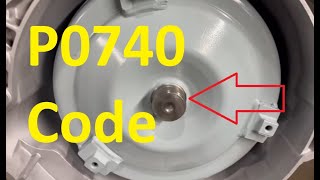
Source hint: YouTube video from a mechanic explaining why replacing only the TCC solenoid on a 62TE for P0740 is often a mistake.
2004 Chrysler Pacifica — ~82000 miles
Symptoms: Excessive engine vibration at idle and clunking noises.
What fixed it: Replacement of the motor mounts.
Source hint: ChryslerForum discussion on recurring motor mount failure.
Related OBD-II Codes
Frequently Asked Questions
My 2008 Pacifica has the 62TE transmission and code P0740. Does TSB #9004009 apply to me?
Can I just replace the TCC solenoid on my 2007 Pacifica with the 62TE transmission to fix P0740?
What kind of transmission fluid should I use for my 2004-2008 Pacifica to avoid TCC issues?
Is there a known issue with the alternator causing transmission codes on the 2007 Pacifica?
My 2005 Pacifica is shuddering at highway speeds; is this related to the engine cradle rust issue?
How do I confirm if the torque converter is actually bad on my 62TE transmission?
Helpful Videos
We Have This Part in Stock

The information in this article is provided for general reference and educational purposes only. Vehicle specifications, procedures, and part compatibility can vary by production date, trim level, and region. Always consult your vehicle's factory service manual and verify part numbers before purchasing or performing repairs. Safety-critical components such as airbags, seat belts, and braking systems should be installed by a qualified professional.
- Chrysler Pacifica:
- 🧭 Diagnostic Flowchart
- 🎬 Helpful Videos
- 🛍️ Shop This Part
- What's Unique About the 2004-2008 Chrysler Pacifica
- Symptoms You May Notice
- Most Likely Causes
- Rare But Worth Checking
- Diagnosis Steps
- Parts You'll Likely Need
- Related Codes That Often Appear With This One
- Technical Service Bulletins (TSBs) & Recalls
- Platform-Specific Known Issues
- Mechanic-Grade Diagnostic Values
- Scan Tool Commands That Help
- Wiring & Ground Locations
- Real Owner Repair Stories
- OEM Part Supersession History
- Model Year Variations Within This Range
- Other Known Issues on This Vehicle
- Used vs. New Parts: Buying Guide for This Vehicle
- Real Owner Stories
- 2007 Chrysler Pacifica
- 2008 Chrysler Pacifica 62TE
- 2004 Chrysler Pacifica — ~82000 miles
- Related OBD-II Codes
- Frequently Asked Questions
- 🎟️ Get 5% Off