

P0740 on 2008-2014 Dodge Avenger: Torque Converter Clutch Causes and Fixes
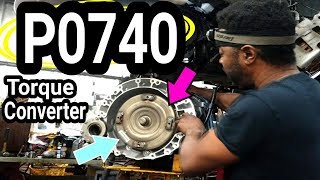
On a 2008-2014 Dodge Avenger with the 62TE 6-speed automatic transmission, code P0740 is a strong indicator of either a failed Torque Converter Clutch (TCC) solenoid pack or, more commonly, a failing torque converter. A manufacturer TSB directs technicians to replace the torque converter if the solenoid tests okay, as replacing only the solenoid often results in the code returning.
- For the 2008-2014 Dodge Avenger with a 6-speed automatic, P0740 is a serious code that points directly to a transmission problem.
- A Dodge Technical Service Bulletin (TSB #9004206) is the most important piece of information for this code; it states the problem is either the TCC solenoid or the torque converter itself.
- Do not automatically replace the TCC solenoid without proper diagnosis; many owners find the problem is actually the more expensive torque converter.
- This is not a DIY-friendly repair. Replacing the torque converter requires removing the transmission, a job for a professional shop.
- Driving with this code can lead to transmission overheating, stalling, and eventually a complete breakdown.
What's Unique About the 2008-2014 Dodge AVENGER

For the Dodge Avenger, particularly models equipped with the 6-speed 62TE automatic transmission (common with the 2.4L, 3.5L, and 3.6L engines), this code has very specific guidance from the manufacturer and a well-documented history in owner forums. A Technical Service Bulletin (TSB #9004206) was issued that provides a clear diagnostic path: if the vehicle jerks or slips and has a P0740 code, the TCC Solenoid operation should be checked first. If the TCC Solenoid is okay, the TSB states the code is indicative of torque converter failure and the converter should be replaced. This is a critical distinction, as many technicians and owners have spent time and money replacing the more accessible solenoid pack, only for the P0740 code to return because the root cause was worn clutch material inside the torque converter itself.
Diagnostic Flowchart

Tap your situation to follow the diagnostic path that matches what you're seeing on this vehicle.
Symptoms You May Notice
- Check Engine Light is on
- Vehicle jerking or slipping, especially at highway speeds when lock-up should occur
- Shuddering or vibration when accelerating or at cruising speeds
- Engine RPMs are higher than usual at highway speeds (feels like it won't shift into the final gear)
- Noticeable decrease in fuel economy
- Difficulty shifting gears or harsh shifts
- Stalling when coming to a stop
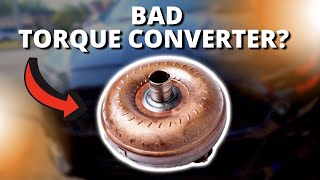
- A whining noise from the transmission area 🎬 See a breakdown of common bad torque converter symptoms
- Replacing the TCC solenoid pack when the torque converter is the actual failure. The provided TSB for the 62TE transmission specifically warns of this scenario. Many owners and shops replace the solenoid first because it is cheaper and easier, only to have the code return. A technician on YouTube strongly advises against this, stating that 🎬 Watch: Why you shouldn't just replace the solenoid pack worn clutch material from the converter is the true cause.
- Assuming any shudder is from the torque converter. While common, other issues like engine misfires or worn axle shafts can also cause shuddering.
Most Likely Causes

- Failed Torque Converter 🔴 High Probability → Shop Automatic Transmission Torque Converter A manufacturer TSB (#9004206) explicitly identifies torque converter failure as the likely cause if the TCC solenoid is functioning correctly on 62TE transmissions. The internal lock-up clutch material wears out, shedding debris into the fluid and preventing a solid lock-up, which the computer detects as excessive slip. This is the most common ultimate fix for P0740 on this platform.
How to confirm: After confirming the TCC solenoid and its circuit are good, the diagnosis points to the torque converter. A professional will use a scan tool to monitor 'TCC Slip Speed' in real-time; if the computer commands lock-up and the slip RPM remains high (e.g., over 100 RPM), the converter has failed internally. Excessive metal or clutch material in the transmission pan is another strong indicator.
Typical fix: Replace the torque converter. This requires removing the transmission. It is highly recommended to also replace the front pump seal and thoroughly flush the transmission cooler lines to remove contaminated fluid and debris.
Est. part cost: $200-$500 - Failed Torque Converter Clutch (TCC) Solenoid / Solenoid Pack 🟡 Medium Probability → Shop Automatic Transmission Torque Converter The TCC solenoid is part of a larger solenoid pack (or block) on the 62TE transmission, which is a known failure point. The solenoid can fail electrically (open or shorted circuit) or mechanically (stuck). While it is a common cause, it is often misdiagnosed as the final problem when the torque converter is actually at fault.
How to confirm: A technician can command the solenoid on and off with a capable scan tool to check for an audible click and response. The solenoid's resistance can also be tested with a multimeter to see if it's within the manufacturer's specified range. If the code returns immediately after being cleared, it often points to an electrical fault in the solenoid or wiring.
Typical fix: Replace the entire solenoid pack. This is located on the valve body and is accessed by removing the transmission oil pan and sometimes a side cover. The OEM Mopar part is recommended.
Est. part cost: $150-$250 for an OEM Mopar pack - Low or Dirty Transmission Fluid 🟡 Medium Probability → Shop Transmission Assembly The 62TE is sensitive to fluid level and condition. Low fluid can cause a loss of hydraulic pressure needed to operate the TCC, while old, burnt, or contaminated fluid (often with clutch material from a failing converter) can clog passages and cause solenoids to stick.
How to confirm: Check the transmission fluid level and condition using the dipstick, following the manufacturer's procedure (vehicle warm, running in neutral). The fluid must be the correct type (Mopar ATF+4), at the proper level, pink/red in color, and not have a burnt smell. Dark fluid with suspended particles is a bad sign.
Typical fix: Perform a transmission fluid and filter change using only Mopar ATF+4 or a licensed equivalent. If the fluid is very dark or contains significant metal/clutch debris, it indicates a more severe internal failure (likely the torque converter) is underway.
Est. part cost: $70-$150 - Wiring or Connector Issue ⚪ Low Probability The wiring harness to the transmission solenoid pack can be damaged by road debris, heat, or corrosion, leading to an open or shorted circuit that triggers the P0740 code. Sometimes the pins in the main connector can become contaminated with fluid or lose connection.
How to confirm: Visually inspect the wiring harness leading to the transmission's main connector. A multimeter is used to check for continuity and shorts between the TCM connector and the transmission connector pins corresponding to the TCC solenoid circuit.
Typical fix: Repair the damaged section of the wiring harness or clean/replace the affected connector.
Est. part cost: $20-$100
Rare But Worth Checking
- Faulty Transmission Control Module (TCM) or Powertrain Control Module (PCM): → Shop Engine Control Module (ECM) While rare, the control module itself can fail, sending incorrect signals or misinterpreting data. This should only be considered after all other possibilities, including wiring, solenoids, and mechanical parts, have been exhaustively ruled out. Sometimes a software update (flash) is available which can resolve shift quality issues that may be related.
Diagnosis Steps

- Check and verify the transmission fluid level and condition. Ensure it is clean, at the proper level, and is the correct type (Mopar ATF+4).
- Scan the system for any other transmission-related trouble codes. Address other codes first if present.
- Using a professional scan tool, monitor live data, specifically 'Torque Converter Clutch (TCC) Slip Speed'. Command the TCC solenoid on and off to check for a response.
- If TCC slip is excessive (>100 RPM) when lock-up is commanded, the torque converter has failed.
- If the code returns instantly after clearing, suspect an electrical issue. Inspect the transmission wiring harness and connectors for any visible damage, corrosion, or loose connections.
- Test the TCC solenoid circuit's resistance with a multimeter from the TCM connector to ensure it is within factory specifications. This tests the wiring and the solenoid coil at once.
- If the solenoid and wiring test good, but the slip data is bad, follow the guidance of TSB #9004206 and replace the torque converter.
- If the torque converter is replaced, it is mandatory to also replace the front pump seal and flush the transmission cooler and lines to remove all debris.
Parts You'll Likely Need
- Torque Converter — Identified by a manufacturer TSB and numerous owner experiences as the most likely root cause of P0740 on the 62TE transmission, due to internal clutch wear.
Trusted brands: Mopar, TC Remanufacturing, National Powertrain, Jasper
OEM price range: $300-$600
Aftermarket price range: $200-$500
Related Codes That Often Appear With This One
- P2764 — This code for 'Input/Turbine Speed Sensor 'B' Circuit No Signal' is mentioned alongside P0740 in the same manufacturer TSB, indicating they can occur together when there are significant TCC or torque converter issues.
- P0700 — This is a generic transmission fault code, which simply means the TCM has stored a fault. It will almost always be present alongside a more specific code like P0740.
- P0868 — This code for 'Transmission Fluid Pressure Low' can accompany P0740, pointing to issues like low fluid, a failing pump, or clogged passages that prevent the hydraulic pressure needed for TCC lock-up.
Technical Service Bulletins (TSBs) & Recalls
- Bulletin #9004206: States that for 62TE equipped vehicles with code P0740, if the TCC Solenoid is ok, the code is indicative of a torque converter failure and the torque converter should be replaced.
- A flash update for the TCM may be available for some models to improve overall transmission shift quality, which could be explored during diagnosis.
Platform-Specific Known Issues

- On Dodge Avengers with the 6-speed 62TE automatic transmission, TSB #9004206 provides a direct diagnostic path for code P0740, often saving time and money by pointing to either the TCC solenoid or the torque converter itself as the primary culprits.
- A common repair pitfall is replacing the solenoid pack when the torque converter is the true cause. Multiple sources, including mechanics and owners, confirm the code often returns until the converter is replaced due to worn internal clutch material.
Mechanic-Grade Diagnostic Values
- TCC (Torque Converter Clutch) Solenoid Resistance — expected: Approximately 5.0 - 5.2 Ohms at 70°F (21°C). Failure: A reading significantly higher or lower than the specified range, or an open circuit (infinite resistance).
- Other Shift Solenoids in the 62TE Pack (e.g., Low/Reverse, 2-4, OD, Direct Clutch) — expected: Approximately 1.6 - 2.0 Ohms at 70°F (21°C). Failure: Readings that are consistently high across all solenoids (e.g., 4 Ohms) could indicate a bad ground within the pack itself.
- Scan Tool Live Data: TCC Slip Speed — expected: Should drop to less than 60 RPM when the TCC is commanded to lock (FEMCC mode).. Failure: Remaining above 100 RPM for 10 seconds while lockup is commanded will set the P0740 code.
- Scan Tool Live Data: TCC Solenoid Duty Cycle — expected: The PCM/TCM will modulate the duty cycle to achieve lock-up.. Failure: If the duty cycle reaches its maximum (greater than 85%) and the slip speed is still too high, it indicates a failure.
Scan Tool Commands That Help
- wiTECH (Chrysler/Dodge/Jeep OEM tool): Reset Adaptive Values — After replacing transmission components like the solenoid pack or valve body, this function should be used to clear learned values before performing the Quick Learn procedure.
- wiTECH (Chrysler/Dodge/Jeep OEM tool): Quick Learn — This procedure is required after certain transmission repairs to allow the TCM to relearn clutch fill volumes and shift points. It should only be performed after adaptive values are reset and if no other DTCs are present.
- Professional Scan Tool: TCC System Test / Solenoid Actuation Test — This bidirectional command allows the technician to manually activate the TCC solenoid to check for an audible click and a response from the transmission, helping to isolate whether the fault is with the solenoid itself or the hydraulic/mechanical components.
Wiring & Ground Locations
- Transmission Solenoid/TCM Connector Pin 3 — On the main electrical connector going into the 62TE transmission solenoid pack.. Pin 3 is the specific circuit for 'TCC VFS (Variable Force Solenoid) control'. When testing for electrical faults, this is the pin to check for continuity, shorts, or voltage signals from the TCM.
- G200 — Located in the driver's side kick panel area.. This is a major interior ground point. While not directly for the transmission, poor grounds at G200 can cause erratic behavior in various modules, including the instrument cluster and potentially the PCM/TCM, leading to false codes.
- G105 — On the right side of the engine compartment.. This is a primary engine bay ground. A corroded or loose G105 could affect the PCM/TCM's ability to properly ground and control transmission solenoids.
Real Owner Repair Stories
- DodgeForum.com user 'guapoman2000' (2008 Dodge Avenger SE with 2.4L engine and 41TE 4-speed transmission (Note: while not the 62TE, the P0740 diagnostic path is similar and illustrative). Mileage at 106,287.) — Check Engine Light with code P0740.
❌ Tried (didn't work) Replaced the Torque Converter Solenoid Block. The Check Engine Light went away initially but returned after two months.
✅ What actually fixed it The issue was not ultimately resolved by the user in the thread. A Dodge dealer diagnosed it as needing a new torque converter in addition to the solenoid block for a total of $3,400, which the owner declined. This story serves as a real-world example of the common misdiagnosis where replacing only the solenoid is not a permanent fix.
OEM Part Supersession History
Multiple older numbers, including 05078709AB→68376696AA— This is the updated OEM Mopar solenoid pack for the 62TE transmission, designed to address failure points in earlier versions.
Heads up: While aftermarket versions exist, using the latest OEM Mopar part is often recommended to ensure compatibility and longevity.
Model Year Variations Within This Range
- 2007-2014+: While the core design of the 62TE transmission remained consistent, there were differences in torque converters and TCM calibrations depending on the engine it was paired with (e.g., 2.4L, 3.5L, 3.6L). Using a transmission or torque converter from a vehicle with a different engine can result in shifting problems or codes.
Helpful Videos

We Have This Part in Stock


The information in this article is provided for general reference and educational purposes only. Vehicle specifications, procedures, and part compatibility can vary by production date, trim level, and region. Always consult your vehicle's factory service manual and verify part numbers before purchasing or performing repairs. Safety-critical components such as airbags, seat belts, and braking systems should be installed by a qualified professional.
- Dodge AVENGER:
- 🧭 Diagnostic Flowchart
- 🎬 Helpful Videos
- 🛍️ Shop This Part
- What's Unique About the 2008-2014 Dodge AVENGER
- Symptoms You May Notice
- Most Likely Causes
- Rare But Worth Checking
- Diagnosis Steps
- Parts You'll Likely Need
- Related Codes That Often Appear With This One
- Technical Service Bulletins (TSBs) & Recalls
- Platform-Specific Known Issues
- Mechanic-Grade Diagnostic Values
- Scan Tool Commands That Help
- Wiring & Ground Locations
- Real Owner Repair Stories
- OEM Part Supersession History
- Model Year Variations Within This Range
- 🎟️ Get 5% Off