

P0740 on 2008-2015 Dodge Challenger: TCC Solenoid and Conductor Plate Fixes
On a 2008-2014 Dodge Challenger with the 5-speed automatic, P0740 is most often caused by a failed transmission conductor plate, which houses the TCC solenoid. Expect a shop repair to cost between $400 and $800. If the torque converter itself has failed, the cost can exceed $2,000.
- P0740 on a 2008-2015 Challenger indicates a problem with the torque converter clutch circuit, which can cause poor fuel economy, shuddering, and stalling.
- For models with the 5-speed automatic (W5A80/NAG1), the most common cause is a failed electrical conductor plate inside the transmission.
- Always check the transmission fluid level and condition first, and inspect the 13-pin electrical connector for leaks.
- This is a serious issue that should be addressed promptly to avoid further, more expensive transmission damage.
- Due to the complexity and need for special tools, this repair is best left to a professional mechanic.
What's Unique About the 2008-2015 Dodge CHALLENGER
Most 2008-2014 Challengers with an automatic transmission use the Mercedes-designed W5A80 (also known as NAG1 or Mercedes 722.6) 5-speed. A very common failure point on this specific transmission is the electrical conductor plate located inside the oil pan. This single part houses the TCC solenoid along with speed sensors, and its failure is a frequent cause of P0740 and the transmission entering 'limp mode'. The W5A580 designation decodes as 'W' for a hydraulic torque converter, '5' for 5 forward gears, 'A' for automatic, and '580' for its maximum torque capacity in Newton-meters (approx. 428 lb-ft).
Diagnostic Flowchart
Tap your situation to follow the diagnostic path that matches what you're seeing on this vehicle.
Generation note: This range covers the initial third-generation Challenger (2008-2014) and the first year of its refresh (2015). Most 2008-2014 models use the 5-speed W5A80/NAG1 automatic transmission. In 2015, the 8-speed ZF 8HP automatic became standard on V8 models. While P0740 has the same definition for both, the specific parts (like the conductor plate) and procedures differ. This guide focuses primarily on the W5A80/NAG1 transmission.
Symptoms You May Notice
- Check Engine Light is on
- Transmission goes into "limp mode" (stuck in one gear)
- Shuddering or vibration at highway speeds (40-60 mph)
- Engine RPMs are higher than normal at cruising speed
- Noticeable decrease in fuel economy
- Harsh or delayed gear shifts
- Engine stalling when coming to a stop
- Transmission overheating due to lack of lock-up
- Replacing the entire transmission when only the conductor plate and fluid service were needed.
- Replacing the torque converter when the actual fault was a less expensive electrical issue like the conductor plate or a leaking 13-pin connector.
- Replacing only the TCC solenoid when it is integrated into the conductor plate on the NAG1 transmission.
Most Likely Causes
- Faulty Transmission Conductor Plate 🔴 High Probability → Shop Transmission Assembly The W5A80/NAG1 transmission is known for conductor plate failures. The plate contains the TCC solenoid and speed sensors, and the delicate electronics can break down over time, causing an open or shorted circuit.
How to confirm: A technician will use a scan tool to check for communication with the solenoids and sensors. If speed sensor codes (like P0715) are also present or if the TCC solenoid is unresponsive, the conductor plate is the likely cause.
Typical fix: Replace the conductor plate, along with the transmission filter, pan gasket, and the 13-pin electrical connector plug as a preventative measure.
Est. part cost: $130-$250 - Low or Dirty Transmission Fluid 🟡 Medium Probability → Shop Transmission Assembly The W5A80/NAG1 transmission does not have a traditional dipstick, making it difficult for owners to check the fluid level. Leaks from the 13-pin connector are common. Using the incorrect fluid (e.g., ATF+4 instead of the specified fluid for NAG1) can also cause issues.
How to confirm: Check the fluid level using a special service tool (dipstick) and inspect the fluid's condition. Dark, burnt, or contaminated fluid indicates a problem.
Typical fix: Perform a transmission fluid and filter change using the correct specification fluid (typically Shell ATF 134 or equivalent).
Est. part cost: $100-$200 - Failed Torque Converter 🟡 Medium Probability → Shop Automatic Transmission Torque Converter If the TCC solenoid is commanded on but slippage is still detected (e.g., more than 100 RPM slip), the internal clutch inside the torque converter itself may have failed mechanically. This can be due to worn clutch material, a scenario supported by Dodge TSB #9004009.
How to confirm: This is typically diagnosed after ruling out all other causes (fluid, wiring, and solenoids). A transmission specialist can perform a stall speed test or analyze scan tool data for confirmation of excessive slip during commanded lock-up.
Typical fix: Remove the transmission and replace the torque converter.
Est. part cost: $300-$800 - Damaged Wiring or Leaking Connector ⚪ Low Probability The 13-pin electrical connector on the W5A80/NAG1 transmission is a known weak point and can leak fluid. This fluid can damage the pins or, more insidiously, wick up the wiring harness all the way to the Transmission Control Module (TCM), causing widespread electrical faults.
How to confirm: Visually inspect the round 13-pin connector where the harness plugs into the transmission for signs of ATF leakage. Unplug the connector and check for fluid inside the plug and on the pins.
Typical fix: Replace the 13-pin connector plug adapter (Mopar P/N 68021352AA) and clean any fluid from the harness and TCM connectors.
Est. part cost: $15-$40
Rare But Worth Checking
- Faulty Valve Body: → Shop Transmission Valve Body The hydraulic valve body that the conductor plate attaches to can become clogged with debris or warped, causing pressure issues even with a new solenoid.
- Faulty Transmission Control Module (TCM): → Shop Transmission Assembly This is very rare. The TCM should only be considered after all other possibilities, including the wiring harness being contaminated with fluid, have been exhaustively checked and ruled out.
Diagnosis Steps
- Scan the vehicle's computer system to confirm P0740 and check for any other related transmission codes.
- Check the transmission fluid level and condition using the appropriate service tool. Note that the W5A80/NAG1 transmission does not have a factory-installed dipstick.
- Thoroughly inspect the 13-pin electrical connector on the transmission for any signs of fluid leakage. Unplug it and check for fluid contamination on the pins, in the connector housing, and in the main harness.
- Use an advanced scan tool to monitor live data for the TCC solenoid command (duty cycle) and the torque converter slip RPM. Check if the computer is commanding lock-up and if the slip RPMs decrease as expected.
- If fluid and wiring are good, the next step is to drop the transmission pan to inspect for excessive metal debris, which would indicate a more severe mechanical failure.
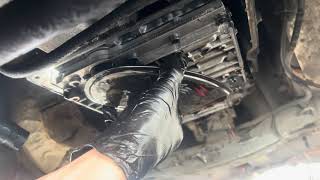
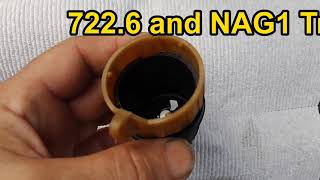
- With the pan off, remove the valve body to access and replace the conductor plate 🎬 Watch: Step-by-step guide to replacing the NAG1 conductor plate., which contains the TCC solenoid. This is the most common repair.
- If a new conductor plate and clean wiring do not resolve the issue, and the scan tool still shows excessive slip when lock-up is commanded, the problem is likely a mechanical failure within the torque converter itself, as suggested by TSB #9004009.
Parts You'll Likely Need
- Transmission Conductor Plate
(OEM #52108308AC)— This is the most common point of failure for code P0740 on the W5A80/NAG1 transmission used in these Challengers.
Trusted brands: Mopar, Febi Bilstein, Bosch, Dorman
OEM price range: $250-$350
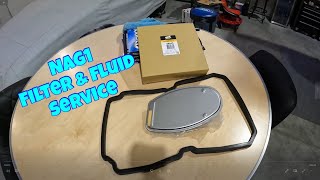
Aftermarket price range: $130-$200 - Transmission Filter Kit (Filter & Gasket) — Must be replaced anytime the transmission pan is removed for service.
Trusted brands: Mopar, WIX, ATP, Elring
OEM price range: $50-$80
Aftermarket price range: $20-$40 - Transmission Connector Plug Adapter
(OEM #68021352AA)— This 13-pin connector is a known leak point and should be replaced preventatively whenever the conductor plate is serviced.
Trusted brands: Mopar, Dorman
OEM price range: $25-$50
Aftermarket price range: $15-$25 - Torque Converter — Replaced if the internal lock-up clutch has failed mechanically, which is diagnosed after electrical issues are ruled out.
OEM price range: $600-$900
Aftermarket price range: $300-$500
Related Codes That Often Appear With This One
- P0715 — Input Speed Sensor Circuit Malfunction. This sensor is located on the conductor plate, and its failure is common alongside P0740.
- P0730 — Incorrect Gear Ratio. This code can be triggered when the transmission is slipping due to TCC failure or low fluid pressure, causing the computer to see an unexpected ratio between engine speed and output speed.
- P0717 — Input/Turbine Speed Sensor 'A' Circuit No Signal. Like P0715, this points to a failure of a sensor located on the conductor plate.
Technical Service Bulletins (TSBs) & Recalls
- TSB #9004009: While not directly for the Challenger's W5A580 transmission, this bulletin for the 62TE transmission provides relevant diagnostic logic, stating that if the TCC solenoid is confirmed to be working, code P0740 is indicative of a torque converter failure, requiring its replacement.
Platform-Specific Known Issues
- The 5-speed W5A80/NAG1 automatic transmission is known for the failure of its internal conductor plate, which leads to various electrical and shifting problems, including P0740.
- Fluid leaks from the 13-pin electrical connector (P/N 68021352AA) are very common and can wick up the wiring harness to the TCM, causing faults that mimic other component failures.
Mechanic-Grade Diagnostic Values
- TCC Solenoid Resistance — expected: 2.0 to 4.0 ohms. Failure: A reading outside this range (e.g., open circuit/infinite resistance or a short) indicates a faulty solenoid, which is part of the conductor plate.
- TCC Solenoid Resistance (Remote Test) — expected: Approximately 5.5 ohms. Failure: A significantly different reading when testing from the TCM connector suggests a problem in the solenoid or the wiring between the TCM and the transmission.
- Scan Tool - Torque Converter Slip Speed — expected: Should decrease to near 0 RPM when TCC is commanded to lock.. Failure: If slip remains high (e.g., over 100 RPM) when lock-up is commanded, it points to a mechanical failure in the torque converter clutch or a hydraulic pressure issue.
Scan Tool Commands That Help
- wiTECH or equivalent advanced scanner: TCC Solenoid Activation / Duty Cycle Control — This bidirectional test allows a technician to manually command the TCC solenoid on and off to verify its mechanical operation. If the solenoid clicks and slip RPM changes, the solenoid is likely functional, pointing the diagnosis towards a wiring, TCM, or mechanical issue.
- wiTECH or equivalent advanced scanner: TCM Adaptation Procedure / Reset Adaptives — This procedure must be performed after replacing the conductor plate, valve body, or entire transmission. It resets the transmission's learned shift parameters to the factory baseline, ensuring proper shift quality and preventing harsh engagement.
- wiTECH or equivalent advanced scanner: Store Adaptives — After performing the road-learning adaptation procedure, this command can be used to manually save the new values without having to wait for the automatic 10-minute storage interval.
Wiring & Ground Locations
- Transmission 13-Pin Connector — The round electrical connector on the passenger side of the W5A580/NAG1 transmission case.. This is the main interface for all transmission electronics. It is a notorious leak point; fluid wicking into the connector and harness is a primary cause of electrical faults for the TCC circuit.
- TCM Connector C2 - T75 & T78 Circuits — At the Transmission Control Module (TCM), which is typically located under the dash near the steering column.. Technicians can test the TCC solenoid's resistance remotely by measuring between the (T75) TCC Solenoid Control circuit and the (T78) Solenoid Supply circuit pins at this connector, which helps differentiate a wiring problem from an internal transmission problem.
- TCM Connector - Pins 36 & 38 (Remote Test) — At the Transmission Control Module (TCM) connector.. A technician can test the resistance of multiple solenoids from the TCM connector. Pin 38 is a common ground for the solenoids, and Pin 36 is for the line pressure solenoid. Testing here can quickly validate the integrity of the internal transmission wiring and solenoids without dropping the pan.
- Engine/Transmission Ground Strap — A braided metal strap typically connecting the engine block or bell housing to the vehicle's chassis/firewall.. A loose, corroded, or missing ground strap can cause the TCM to malfunction or misinterpret sensor data due to improper grounding, leading to various electrical fault codes, including P0740.
Real Owner Repair Stories
- YouTube channel 'Car guy 11' (Dodge Charger with NAG1/W5A580 transmission (same as Challenger)) — Transmission going into limp mode, code for input speed sensor signal loss.
❌ Tried (didn't work) The video directly proceeds to the most likely fix.
✅ What actually fixed it The problem was resolved by replacing the transmission conductor plate, which houses the speed sensors and TCC solenoid. The repair also included replacing the filter, pan gasket, and the 13-pin connector plug as a complete service.
OEM Part Supersession History
52108308AB→52108308AC— Revision and improvement of the conductor plate electronics to enhance durability and prevent common failures.
Heads up: The newer part (AC) is a direct replacement for the older part (AB) and should be used for all repairs.
Model Year Variations Within This Range
- 2015+: Starting in 2015, V8 models began using the 8-speed ZF 8HP automatic transmission. While P0740 is still a valid code, the internal components (solenoids, valve body) and diagnostic procedures are completely different from the 2008-2014 W5A80/NAG1 transmission.
Helpful Videos
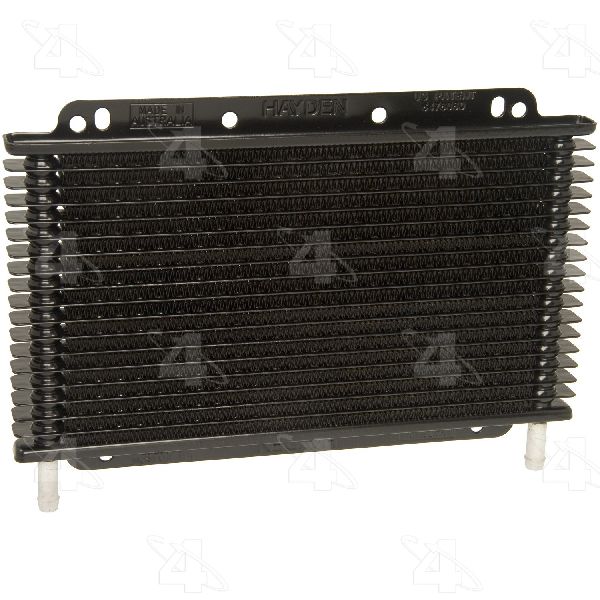
We Have This Part in Stock




The information in this article is provided for general reference and educational purposes only. Vehicle specifications, procedures, and part compatibility can vary by production date, trim level, and region. Always consult your vehicle's factory service manual and verify part numbers before purchasing or performing repairs. Safety-critical components such as airbags, seat belts, and braking systems should be installed by a qualified professional.
- Dodge CHALLENGER:
- 🧭 Diagnostic Flowchart
- 🎬 Helpful Videos
- 🛍️ Shop This Part
- What's Unique About the 2008-2015 Dodge CHALLENGER
- Symptoms You May Notice
- Most Likely Causes
- Rare But Worth Checking
- Diagnosis Steps
- Parts You'll Likely Need
- Related Codes That Often Appear With This One
- Technical Service Bulletins (TSBs) & Recalls
- Platform-Specific Known Issues
- Mechanic-Grade Diagnostic Values
- Scan Tool Commands That Help
- Wiring & Ground Locations
- Real Owner Repair Stories
- OEM Part Supersession History
- Model Year Variations Within This Range
- 🎟️ Get 5% Off