

P0740 on 2016-2022 Dodge Challenger: TCC Solenoid and Torque Converter Guide
P0740 on a 2016-2022 Challenger indicates a fault in the Torque Converter Clutch (TCC) circuit, most often related to the ZF 8-speed automatic transmission. This commonly results in jerking, poor fuel economy, and high RPMs at cruising speeds. The most frequent causes are a failed torque converter or a faulty TCC solenoid, which is integrated into the mechatronics unit.
- P0740 on a 2016-2022 Challenger points to a problem with the torque converter lock-up system, not just a simple sensor.
- The most common symptoms are poor fuel economy, shuddering, and engine RPMs being too high at highway speeds.
- Diagnosis requires professional tools to test the TCC solenoid and monitor transmission slip data.
- The two most likely culprits are the TCC solenoid itself or the torque converter's internal clutch.
- Do not ignore this code. Driving with a P0740 can lead to severe transmission damage and much more expensive repairs.
What's Unique About the 2016-2022 Dodge CHALLENGER
The 2016-2022 Challenger primarily uses the excellent ZF-designed TorqueFlite 8-speed automatic transmission (ZF 8HP family) in both V6 and V8 models. In these advanced transmissions, the TCC solenoid is not a simple, individually replaceable part. Instead, it is integrated into the complex mechatronic unit (valve body and control module assembly) located inside the transmission pan. This makes diagnosis more complex and repair more involved than on older transmissions. While TSB #9004009 mentions the 62TE transmission 🎬 Watch: Why you shouldn't just replace the TCC solenoid (not used in this Challenger), the diagnostic principle often holds true: the issue is typically either the TCC solenoid function or the torque converter itself.
Diagnostic Flowchart
Tap your situation to follow the diagnostic path that matches what you're seeing on this vehicle.
Symptoms You May Notice
- Check Engine Light is on
- Vehicle jerking or shuddering, especially at highway speeds (often described as a 'rumble strip' feeling)
- Engine RPMs are higher than normal when cruising
- RPMs bounce or flare when the transmission attempts to lock the converter
- Noticeable decrease in fuel economy
- Transmission may have difficulty shifting, feel like it's slipping, or exhibit harsh shifts
- Stalling when coming to a stop
- Sluggish or poor acceleration
- Replacing the entire transmission when only the torque converter or mechatronics unit was faulty.
- Replacing the mechatronics/solenoid pack when the actual failure is a mechanically worn-out torque converter clutch.
- Assuming the P0740 'circuit' code means it can only be an electrical part, when it is frequently triggered by a mechanical failure (slipping converter).
Most Likely Causes
- Failed Torque Converter 🔴 High Probability → Shop Automatic Transmission Torque Converter The internal clutch lining of the converter can wear out or disintegrate, preventing it from locking up even if the solenoid is working correctly. This is a very common failure mode that triggers a P0740 when the TCM commands lockup but detects continued high slip RPM.
How to confirm: This is often diagnosed after confirming the TCC solenoid and wiring are functioning correctly. A scan tool showing high TCC slip RPM (over ~100 RPM) when lock-up is commanded strongly points to a bad converter. Excessive debris in the transmission pan is also a key indicator.
Typical fix: Replace the torque converter. This is a major repair that requires removing the entire transmission from the vehicle.
Est. part cost: $400-$1200 - Faulty Torque Converter Clutch (TCC) Solenoid / Mechatronic Unit 🟡 Medium Probability → Shop Transmission Valve Body The solenoids are electro-mechanical parts integrated into the mechatronic unit, operating in hot fluid. They can fail electrically or mechanically over time. Since they are part of a larger assembly, the entire mechatronic unit is often replaced or rebuilt.
How to confirm: A technician can use a high-level scan tool to command the TCC solenoid on and off to check its response. The solenoid's electrical resistance can also be tested, but this requires accessing the mechatronics unit by removing the transmission pan.
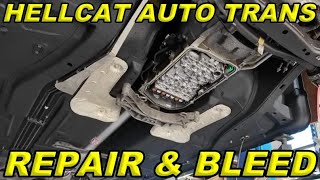
Typical fix: Replace the entire mechatronic unit or have it rebuilt by a specialist. This requires draining the transmission fluid and removing the transmission pan and valve body.
Est. part cost: $600-$1500 - Low or Dirty Transmission Fluid 🟡 Medium Probability → Shop Transmission Assembly The ZF 8-speed transmission is sensitive to fluid level and condition. Low fluid can prevent proper hydraulic pressure for solenoid operation, while dirty fluid (often contaminated with clutch material from a failing converter) can clog passages and cause solenoids to stick.
How to confirm: Check the transmission fluid level and condition. This transmission does not have a dipstick, so it must be checked by a technician from a fill plug on the transmission case with the vehicle at a specific temperature.
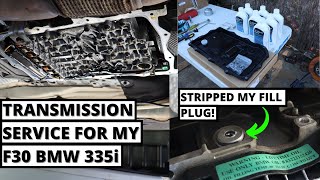
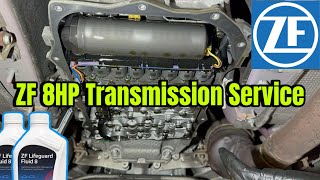
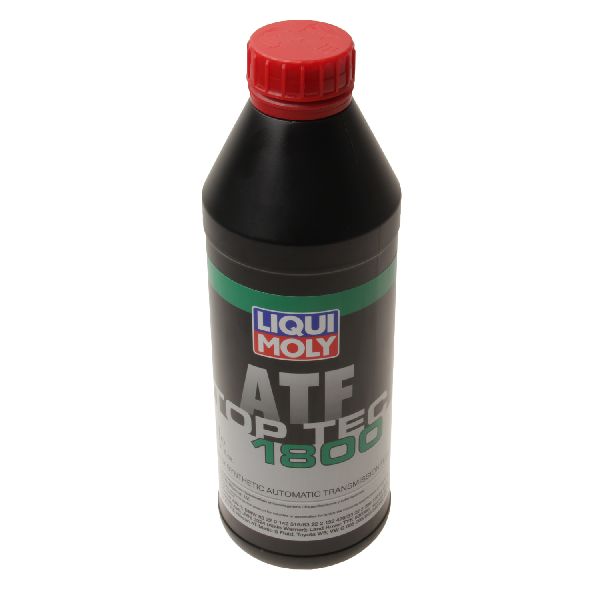
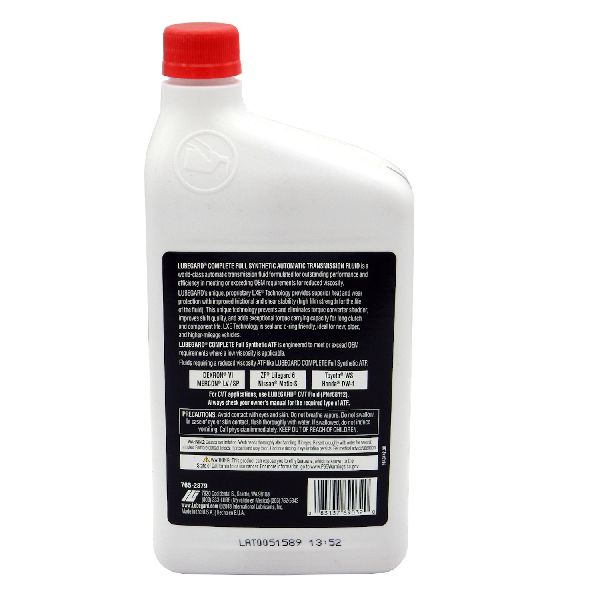
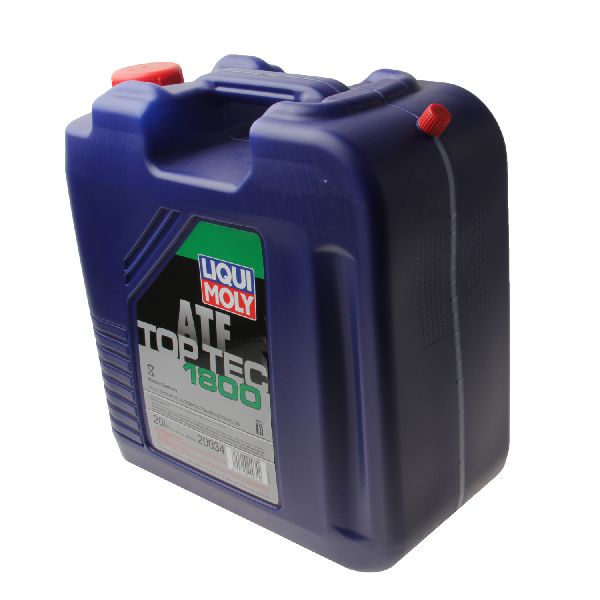
Typical fix: Perform a transmission fluid and filter service. The filter is integrated into the plastic transmission pan, so the entire pan must be replaced. Use only the manufacturer-specified fluid (e.g., Mopar 8&9 Speed ATF or ZF Lifeguard 8).
Est. part cost: $200-$400 - Wiring Harness Damage ⚪ Low Probability
How to confirm: Visually inspect the wiring harness leading to the transmission for any signs of damage, corrosion, or loose connections at the main connector. Perform continuity tests on the TCC solenoid circuit from the TCM connector.
Typical fix: Repair or replace the damaged section of the wiring harness.
Est. part cost: $50-$300 - Faulty Transmission Control Module (TCM) ⚪ Low Probability → Shop Transmission Assembly
How to confirm: This is a last resort after all other possibilities (converter, mechatronics/solenoid, fluid, wiring) have been ruled out. The TCM is integrated into the mechatronics unit on the ZF 8-speed, so it's diagnosed and replaced as one assembly.
Typical fix: Replace and reprogram the mechatronics unit.
Est. part cost: $800-$1500
Rare But Worth Checking
- Clogged Internal Hydraulic Passages: Debris from normal wear or a previous failure can clog the small passages in the valve body, preventing the TCC solenoid from operating the clutch correctly. This often requires a valve body/mechatronics replacement or transmission rebuild.
- Stuck TCC Control Valve in Pump: In some cases, the TCC control valve located in the transmission's oil pump assembly can stick, preventing proper hydraulic command of the torque converter. This requires transmission removal and pump inspection to diagnose.
Diagnosis Steps
- Confirm the code P0740 is present using an OBD-II scanner. Note any other transmission-related codes like P0741 or P0700.
- Check the transmission fluid level and condition. This must be done by a professional as there is no dipstick and requires a specific fluid temperature procedure.
- Use an advanced scan tool to monitor live data, specifically Engine RPM, Transmission Input Speed, and TCC Slip RPM. When lockup is commanded at cruising speed, slip RPM should drop to near zero. If it remains high (e.g., >100 RPM), the converter clutch is slipping.
- Command the TCC solenoid on and off with the scan tool to check for an electrical response and listen for a click.
- Inspect the transmission's main electrical connector and wiring harness for any visible damage, corrosion, or loose pins.
- If the solenoid does not respond or the circuit tests open/shorted, drop the transmission pan to access the mechatronics unit. Test the solenoid's resistance with a multimeter.
- If the solenoid and wiring test good, but TCC slip remains high when lock-up is commanded, the torque converter is the most likely culprit.
- If all hardware checks out, investigate the possibility of a faulty TCM (part of the mechatronics unit) as the final step.
Parts You'll Likely Need
- Torque Converter — The internal clutch lining of the converter can wear out, preventing it from locking up even if the solenoid is working correctly. This is a very common cause for this code on Mopar vehicles.
Trusted brands: Mopar, ZF, Dacco
OEM price range: $700-$1200
Aftermarket price range: $400-$800 - Mechatronic Unit (Valve Body & Solenoids)
(OEM #e.g., 0260550076 (Example for ZF8HP70, verify by VIN))— The TCC solenoid is integrated into this assembly. Failure of the solenoid or the internal TCM requires replacement or rebuilding of the entire unit.
Trusted brands: Mopar (ZF), Sonnax (rebuild kits)
OEM price range: $1000-$1800
Aftermarket price range: $700-$1200 (rebuilt) - Automatic Transmission Fluid and Filter/Pan Kit
(OEM #68218925AA (Fluid), 52854834AB (Pan/Filter))— Any internal transmission service requires draining the fluid and replacing the pan, which has an integrated filter. Using the correct ZF Lifeguard 8 / Mopar 8&9 Speed ATF is critical.
Trusted brands: Mopar, ZF, Liqui Moly
OEM price range: $250-$450
Aftermarket price range: $200-$350
Related Codes That Often Appear With This One
- P0741 — Indicates 'TCC System Stuck Off,' which is a performance-related version of the P0740 circuit code. They often point to the same root causes like a worn converter or stuck solenoid.
- P2764 — This code for 'Torque Converter Clutch Pressure Control Solenoid Control Circuit Range/Performance' was cited alongside P0740 in manufacturer TSBs for other models, indicating they are closely related and can be triggered by the same failure.
- P0700 — This is a generic transmission fault code that simply tells the PCM that the TCM has stored a fault. It will almost always be present alongside a more specific code like P0740.
Technical Service Bulletins (TSBs) & Recalls
- 9004009 - (Cited in Pass 1) Relates to 62TE transmission, but establishes a diagnostic pattern of checking the solenoid then condemning the torque converter.
- 9003704 - Addresses oil leaks from the pan/seals on 8-speed transmissions, which could lead to low fluid levels and cause this code.
Platform-Specific Known Issues
- Owner Experience: Solenoid vs. Torque Converter: → Shop Automatic Transmission Torque Converter On Dodge forums, a common story involves owners first replacing the less-expensive solenoid pack (or mechatronics), only to find the P0740 code returns because the root cause was a mechanically failed torque converter. One user on DodgeForum noted they replaced the TCC solenoid, but it did not fix the issue. Another on RamForum with an 8-speed had the torque converter, solenoid, and fluid replaced under warranty to resolve the code.
- TSB for Transmission Fluid Leaks (ZF 8-Speed): → Shop Transmission Assembly While not directly for P0740, TSB #9003704 addresses oil leaks from the transmission pan or o-rings on vehicles with 8-speed transmissions. A low fluid level resulting from a leak can cause hydraulic issues leading to a P0740 code.
Mechanic-Grade Diagnostic Values
- TCC Solenoid Resistance — expected: Approximately 5.0 to 5.5 ohms at 68°F (20°C).. Failure: A reading of infinite resistance (OL) indicates an open circuit in the solenoid coil. A reading significantly outside the expected range suggests a faulty solenoid.
- TCC Slip RPM (Live Data) — expected: Near 0 RPM when TCC lock-up is commanded by the TCM at cruising speed.. Failure: The P0740 code can be set if the slip is greater than 100 RPM for a set period (e.g., 10 seconds) when lock-up is commanded, indicating a mechanical slip in the converter clutch.
- TCC Solenoid Duty Cycle (Live Data) — expected: Varies based on driving conditions; should not be maxed out under normal operation.. Failure: The code may be set if the TCM commands a duty cycle greater than 85% to the solenoid and still cannot achieve lock-up (i.e., slip remains high). This indicates the system is trying its hardest to apply the clutch but is failing mechanically.
Scan Tool Commands That Help
- wiTECH or equivalent professional scanner: TCC System Test / Solenoid Activation — This bidirectional command is used to manually activate the TCC solenoid while the vehicle is stationary or during a road test. It helps a technician determine if the solenoid is responding to electrical commands from the TCM, which isolates the problem between the electrical circuit and a mechanical/hydraulic issue.
Wiring & Ground Locations
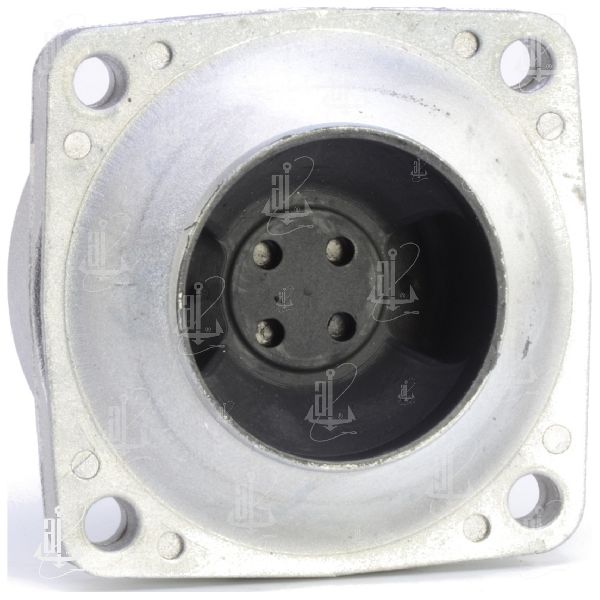
- Main Transmission Harness Connector — On the side of the ZF 8-speed transmission case. It is a large, round, twist-lock connector.. This is the primary electrical interface between the vehicle's wiring harness and the internal mechatronics unit (TCM and solenoids). Corrosion, moisture intrusion, or pushed-out pins at this connector can directly cause an open or short in the TCC solenoid circuit, triggering P0740. A visual inspection and continuity test from this connector is a key diagnostic step.
- Engine Block & Chassis Grounds — Key ground points are typically found from the engine block to the chassis/frame and from the battery negative terminal to the chassis.. The entire transmission control system relies on a solid ground connection. A corroded or loose ground strap can introduce electrical noise and voltage drops, causing erratic behavior from the TCM and solenoids, potentially leading to a P0740 code even if all components are otherwise healthy.
Real Owner Repair Stories
- Mechanic experience on 62TE transmission (similar Mopar logic) (Multiple Dodge/Chrysler vehicles with 62TE transmission) — Check Engine Light with code P0740.
❌ Tried (didn't work) Replacing the TCC solenoid., Replacing the entire valve body assembly.
✅ What actually fixed it In 100% of the mechanic's documented cases, the final repair was replacing the torque converter due to internal mechanical failure of the clutch. He warns that replacing the solenoid for a P0740 on these transmissions is often a waste of money. - DodgeForum.com user (2011 Dodge Grand Caravan (62TE transmission)) — P0740, TCC trying to lock up but RPMs would bounce back up, loss of MPG.
❌ Tried (didn't work) Replacing the TCC solenoid for $18.
✅ What actually fixed it The issue was resolved after performing a full transmission fluid flush (not just a pan drop). The user noted that air was accidentally introduced into the system during the flush, which had to be bled out before the transmission began to function correctly and the code cleared. This suggests the root cause was hydraulic rather than purely electrical.
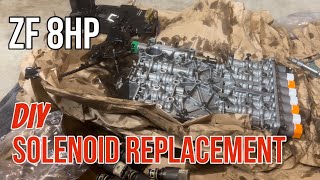
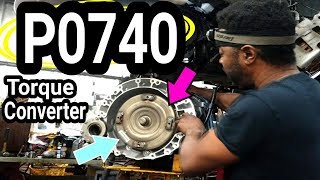
Helpful Videos


We Have This Part in Stock


The information in this article is provided for general reference and educational purposes only. Vehicle specifications, procedures, and part compatibility can vary by production date, trim level, and region. Always consult your vehicle's factory service manual and verify part numbers before purchasing or performing repairs. Safety-critical components such as airbags, seat belts, and braking systems should be installed by a qualified professional.
- Dodge CHALLENGER:
- 🧭 Diagnostic Flowchart
- 🎬 Helpful Videos
- 🛍️ Shop This Part
- What's Unique About the 2016-2022 Dodge CHALLENGER
- Symptoms You May Notice
- Most Likely Causes
- Rare But Worth Checking
- Diagnosis Steps
- Parts You'll Likely Need
- Related Codes That Often Appear With This One
- Technical Service Bulletins (TSBs) & Recalls
- Platform-Specific Known Issues
- Mechanic-Grade Diagnostic Values
- Scan Tool Commands That Help
- Wiring & Ground Locations
- Real Owner Repair Stories
- 🎟️ Get 5% Off