

P0740 on 2006-2013 Dodge Charger: TCC Solenoid and Torque Converter Guide
P0740 on a Dodge Charger most often points to a failed torque converter, even though the code definition suggests a solenoid circuit issue. A manufacturer TSB confirms this for the 6-speed 62TE transmission. Expect a professional repair costing between $1,000 and $2,500, as the transmission must be removed.
- For a 2006-2013 Dodge Charger, P0740 is a serious code that usually means the torque converter is failing.
- A manufacturer TSB (#9004009) is the most important guide for this repair; do not replace the TCC solenoid without confirming it has failed, as the torque converter is the more likely problem.
- This is not a simple DIY fix. Replacing the torque converter requires removing the transmission and should be done by a professional.
- Symptoms include shuddering, slipping, and high RPMs at highway speeds.
- Driving with this code can cause severe, expensive damage to the rest of the transmission due to overheating.
What's Unique About the 2006-2013 Dodge CHARGER
For Dodge vehicles with the 6-speed 62TE automatic transmission (common in V6 models), a critical Technical Service Bulletin (TSB #9004009) exists for this code. It advises that if the TCC solenoid's operation checks out, the P0740 code is indicative of a torque converter failure. Many experienced technicians report that replacing only the solenoid is often a waste of money, as the root cause is frequently worn-out clutch material inside the torque converter. This worn material prevents proper lock-up, causing slip that the computer detects. For V8 models with the 5-speed NAG1 (W5A580) transmission, while the solenoid can still be a cause, the overall diagnosis is more traditional, focusing on the solenoid, conductor plate, and wiring.
🎬 See how to replace the NAG1 conductor plate and solenoids.Diagnostic Flowchart
Tap your situation to follow the diagnostic path that matches what you're seeing on this vehicle.
Generation note: The 2006-2013 range covers the end of the first generation (LX, 2006-2010) and the start of the second generation (LD, 2011-2013). Both generations offered transmissions that can experience this issue. V8 models typically used the Mercedes-designed 5-speed NAG1 (W5A580), while V6 models, particularly from 2008 onwards, often used the Chrysler 6-speed 62TE. The provided TSB specifically mentions the 62TE transmission, making the diagnosis path different depending on the engine/transmission combination.
Symptoms You May Notice
- Check Engine Light is on
- Vehicle jerking or slipping, especially at highway speeds
- Shuddering when cruising at a steady speed
- Engine RPMs are higher than usual at highway speeds
- Reduced fuel economy
- Stalling when coming to a stop
- Transmission overheating
- Replacing the TCC solenoid when the torque converter is the actual failure. The TSB for the 62TE transmission specifically warns against this. 🎬 Watch: Why you shouldn't just replace the solenoid for P0740. The code often returns until the converter is replaced, wasting time and money.
Most Likely Causes
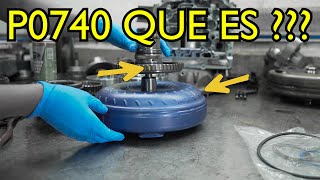
- Failed Torque Converter 🔴 High Probability → Shop Automatic Transmission Torque Converter A manufacturer TSB (#9004009) directly states that for the 62TE transmission, if the TCC solenoid is functional, this code indicates torque converter failure. The internal clutch friction material wears out, contaminates the fluid, and prevents a successful lock-up. This is a widely documented failure mode for this transmission.
How to confirm: After confirming the TCC solenoid and wiring are good, a professional diagnosis with a scan tool monitoring commanded vs. actual TCC slip is the next step. A slip rate consistently over 100 RPM during commanded lockup confirms the failure. Excessive metal shavings or dark, burnt fluid in the transmission pan is also a strong indicator.
Typical fix: Replace the torque converter. This requires removing the transmission. Many technicians recommend also replacing the front pump seal and inspecting the transmission fluid pump while the unit is out.
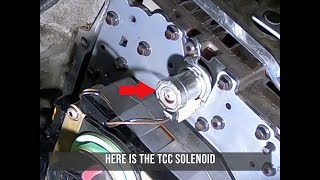
Est. part cost: $200-$600 - Failed Torque Converter Clutch (TCC) Solenoid 🟡 Medium Probability → Shop Automatic Transmission Torque Converter The solenoid is an electronic component that can fail from heat and wear. On the 62TE, it's often called the EMCC or LR/TCC solenoid. On the NAG1, it's a distinct solenoid on the valve body's conductor plate. While it can fail, it's often misdiagnosed as the root cause on 62TE models when the converter is the real problem.
How to confirm: A mechanic can use a scan tool to command the solenoid on and off to check its response. It can also be tested with a multimeter for proper resistance (ohms) and to check for shorts or opens in its circuit.
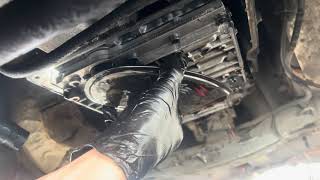
Typical fix: Replace the TCC solenoid. On the 62TE, this is inside the side pan of the transmission. 🎬 Watch: 62TE solenoid replacement and how to check fluid levels. On the NAG1, it's inside the main pan, attached to the valve body.
Est. part cost: $40-$150 - Low or Dirty Transmission Fluid ⚪ Low Probability → Shop Transmission Assembly Low fluid can prevent proper hydraulic pressure for lock-up, while old or contaminated fluid can clog passages and cause solenoids to stick or valves to malfunction. Both the 62TE and NAG1 transmissions are sensitive to fluid level and quality, requiring Mopar ATF+4 or equivalent.
How to confirm: Check the transmission fluid level and condition. The fluid should be at the correct level, pink/red in color, and not smell burnt. Note that many of these vehicles do not have a traditional dipstick and require a special tool and temperature chart to check accurately.
Typical fix: Perform a transmission fluid and filter change using the correct ATF+4 fluid. This is often a good first step if the fluid is old.
Est. part cost: $50-$150 - Wiring or Connector Issue ⚪ Low Probability The wiring harness leading to or inside the transmission can become damaged, corroded, or loose. On NAG1 transmissions, the 13-pin connector sleeve is a known weak point that can leak fluid and wick it up the harness to the TCM, causing various electrical faults.
How to confirm: Visually inspect the external wiring harness and connectors for damage or fluid contamination. A mechanic can perform a continuity test on the circuit from the control module to the transmission connector to check for opens or shorts.
Typical fix: Repair or replace the damaged section of the wiring harness or the connector. For the NAG1, replacing the 13-pin connector sleeve is a common preventative or corrective repair.
Est. part cost: $20-$100
Rare But Worth Checking
- Faulty Transmission Control Module (TCM) or Powertrain Control Module (PCM): → Shop Engine Control Module (ECM) This is very rare. The module itself can fail, but all other potential causes should be exhaustively ruled out before condemning an expensive computer. Sometimes a software update (flash) is available to improve transmission shifting logic and may be recommended.
- Sticking Valve in Valve Body: → Shop Transmission Valve Body Debris from a failing torque converter or normal wear can cause control valves within the valve body to stick, preventing correct hydraulic pressure from being routed to the TCC. This usually requires valve body removal for cleaning or replacement.
Diagnosis Steps
- Check the transmission fluid level and condition. If low, top it off. If it's dark, burnt, or contains excessive debris, a fluid and filter change is a good starting point, but be aware it may not solve the root cause.
- Use a professional scan tool to check for other transmission-related codes and to monitor live data, specifically commanded TCC state versus actual TCC slip RPM.
- Test the TCC solenoid circuit. A mechanic can check for proper voltage and ground at the solenoid and test the solenoid's resistance with a multimeter to rule out an electrical failure of the solenoid itself.
- If the vehicle has a 62TE transmission and the solenoid/wiring test okay, follow the guidance of TSB #9004009, which points to a failed torque converter.
- Inspect the transmission pan for excessive clutch material or metal shavings, which would confirm an internal mechanical failure.
- For NAG1 transmissions, inspect the 13-pin electrical connector for fluid leaks before proceeding to more complex internal diagnostics.
- If the torque converter is replaced, it's also wise to inspect the transmission front pump for related damage and to flush the transmission cooler lines thoroughly to remove any debris.
Parts You'll Likely Need
- Torque Converter
(OEM #68003520 (62TE), R8080714AA (62TE))— This is the most probable cause of P0740 on 62TE-equipped vehicles, as confirmed by a manufacturer TSB and extensive mechanic experience.
Trusted brands: Mopar, ATP, Transtar, Pioneer
OEM price range: $400-$700
Aftermarket price range: $200-$450 - Torque Converter Clutch (TCC) Solenoid
(OEM #52108314AB (NAG1/722.6), 5078709AB (part of 62TE solenoid pack))— This is the second most likely cause, or the primary suspect on NAG1 transmissions. It's an electronic valve that controls the lock-up function and can fail electrically or mechanically.
Trusted brands: Mopar, Dorman, Rostra
OEM price range: $80-$150
Aftermarket price range: $40-$90 - Automatic Transmission Fluid (ATF+4)
Related Codes That Often Appear With This One
- P2764 — This code for 'Torque Converter Clutch Pressure Control Solenoid Control Circuit Low' is mentioned in the same TSB (#9004009) and points to the same potential failures (solenoid or torque converter) on the 62TE transmission.
- P0700 — This is a generic code that simply means the Transmission Control Module (TCM) has stored a fault code. It acts as a 'check engine light' for the transmission and will always appear alongside a more specific code like P0740.
Technical Service Bulletins (TSBs) & Recalls
- 9004009: For 62TE equipped vehicles, if jerking/slipping occurs with code P0740 or P2764 and the TCC Solenoid is ok, the codes are indicative of a torque converter failure. Replace the torque converter.
- 21-015-07: While not directly for P0740, this TSB addresses a shudder condition on NAG1 transmissions and involves replacing the TCC solenoid, highlighting it as a known service item for this transmission.
Platform-Specific Known Issues
- TSB #9004009 explicitly states that for vehicles with the 62TE transmission, code P0740 (or P2764) points to a torque converter failure if the TCC solenoid is functioning correctly.
- For V8 models with the NAG1 (W5A580) transmission, a common failure point is the 13-pin electrical connector sleeve leaking fluid onto the conductor plate and wiring harness, which can cause this code and other shifting issues.
Mechanic-Grade Diagnostic Values
- TCC Solenoid Resistance (62TE Transmission) — expected: 4.8-5.2 Ohms at ~70°F. Failure: A reading significantly outside this range, or an open/short circuit (0 or infinite ohms).
- Shift Solenoid Resistance (62TE Transmission, for comparison) — expected: 1.6-1.9 Ohms at ~70°F. Failure: A reading that is significantly different from the other identical shift solenoids in the pack.
- TCC Solenoid Resistance (NAG1/W5A580 Transmission) — expected: 2.5-4.5 Ohms at ~70°F. Failure: A reading outside this range, indicating a failing solenoid coil.
- Scan Tool TCC Slip RPM (During Commanded Lock-up) — expected: Near 0 RPM (± 20 RPM) when fully locked (FEMCC).. Failure: Consistent slip greater than 100 RPM for several seconds while lock-up is commanded by the TCM.
- Scan Tool TCC Solenoid Duty Cycle (PEMCC mode) — expected: Should be below 85%.. Failure: The TCM commands the duty cycle above 85% for an extended period, indicating it is working excessively to achieve lock-up but failing.
Scan Tool Commands That Help
- wiTECH or high-end aftermarket (Autel, Snap-on): TCC Solenoid Actuation Test — This bidirectional test allows a technician to command the TCC solenoid on and off with the engine running to verify electrical circuit integrity and listen for a physical response from the solenoid. It helps rule out a wiring or TCM driver issue.
- wiTECH or high-end aftermarket (Autel, Snap-on): Transmission Quick Learn / Adaptive Learn Reset — This procedure should be performed after replacing the valve body, solenoid pack, or the entire transmission. It resets the learned clutch volume indexes (CVIs) and shift adapts, ensuring smooth operation with the new components.
Wiring & Ground Locations
- 62TE Main Transmission Connector — On the side of the transmission case, where the main vehicle harness connects.. The TCC solenoid is controlled through this connector. Specifically, Pin 10 is typically the 12V power supply from the relay, and Pin 3 is the control (ground) from the TCM for the TCC solenoid. Testing for voltage and signal at these pins is a key diagnostic step.
- NAG1 13-Pin Connector Sleeve — At the right rear of the transmission, connecting the vehicle harness to the internal conductor plate.. This connector is notorious for leaking ATF. The fluid can wick up the wiring harness, potentially reaching and damaging the TCM. It can also cause poor connections for the TCC solenoid, triggering a P0740. Inspecting for leaks here is a primary step for any NAG1 electrical fault.
- PCM/TCM Ground (e.g., G102) — Often located on the engine block or cylinder head near the front of the engine.. A poor ground connection for the engine or transmission control module can cause erratic voltage signals and incorrect solenoid operation, potentially leading to a false P0740 code. Ensuring this ground is clean and tight is a crucial, though sometimes overlooked, step.
Real Owner Repair Stories
- lxforums.com user report (2006 Dodge Charger R/T (5.7L V8 with NAG1 transmission)) — Check Engine Light with code P0740.
❌ Tried (didn't work) Transmission fluid and filter change.
✅ What actually fixed it The final repair was replacing the transmission conductor plate and the 13-pin connector sleeve. The original conductor plate was found to have a hairline crack, causing an intermittent connection to the TCC solenoid. - General mechanic consensus and forum reports (Dodge Charger V6 (e.g., 2011-2013 with 62TE transmission)) — P0740, shuddering at highway speeds.
❌ Tried (didn't work) Replacing the TCC solenoid or the entire solenoid pack.
✅ What actually fixed it The code and symptoms returned until the torque converter was replaced, confirming the guidance in TSB #9004009. The original converter's lock-up clutch material had failed. - Reddit r/MechanicAdvice user report (2012 Dodge Charger V6 (3.6L with 62TE or NAG1)) — P0740 along with P0868 (Transmission Fluid Pressure Low).
❌ Tried (didn't work) Initial diagnosis focused only on the TCC circuit.
✅ What actually fixed it The root cause was a failing transmission fluid pump. The low line pressure from the weak pump was insufficient to properly engage the torque converter clutch, triggering both codes. Replacing the pump resolved the issue.
OEM Part Supersession History
1402700861 (and others)→52108308AC, 1402701161 (Mopar/Mercedes OEM); 917-678 (Dorman)— Revisions to improve durability and prevent cracking of the plastic plate.
Heads up: Ensure the replacement conductor plate is specified for the correct model year range (e.g., pre-2004 vs 2004+), as there can be minor differences.N/A (Part with black o-rings)→2035400253 (Part with red/orange o-rings)— The original black o-rings on the NAG1 13-pin connector sleeve were prone to hardening and leaking. The updated part uses more durable, heat-resistant o-rings.
Model Year Variations Within This Range
- 2006-2013 (V8 Models): V8-powered Chargers (R/T, SRT8) consistently used the Mercedes-Benz 5-speed NAG1 (W5A580) transmission. Diagnosis for P0740 on these models focuses more on the conductor plate, 13-pin connector, and solenoids.
- 2008-2013 (V6 Models): V6 models, especially from 2008 onwards, commonly used the Chrysler-built 6-speed 62TE transaxle. For these vehicles, TSB #9004009 is highly relevant, pointing towards torque converter failure as the primary cause of P0740.
- 2011-2013 (V6 Models): With the introduction of the 3.6L Pentastar V6 in 2011, many Chargers were equipped with the 5-speed NAG1 initially, before a later transition to the 8-speed. It is crucial to identify which transmission is in the vehicle, as a 2012 V6 could have either a NAG1 or a 62TE, leading to different diagnostic paths.
Helpful Videos

We Have This Part in Stock

The information in this article is provided for general reference and educational purposes only. Vehicle specifications, procedures, and part compatibility can vary by production date, trim level, and region. Always consult your vehicle's factory service manual and verify part numbers before purchasing or performing repairs. Safety-critical components such as airbags, seat belts, and braking systems should be installed by a qualified professional.
- Dodge CHARGER:
- 🧭 Diagnostic Flowchart
- 🎬 Helpful Videos
- 🛍️ Shop This Part
- What's Unique About the 2006-2013 Dodge CHARGER
- Symptoms You May Notice
- Most Likely Causes
- Rare But Worth Checking
- Diagnosis Steps
- Parts You'll Likely Need
- Related Codes That Often Appear With This One
- Technical Service Bulletins (TSBs) & Recalls
- Platform-Specific Known Issues
- Mechanic-Grade Diagnostic Values
- Scan Tool Commands That Help
- Wiring & Ground Locations
- Real Owner Repair Stories
- OEM Part Supersession History
- Model Year Variations Within This Range
- 🎟️ Get 5% Off