

P0740 on 2003-2008 Honda Pilot: Torque Converter Clutch Circuit Causes and Fixes
On a 2003-2008 Honda Pilot, code P0740 is most often caused by a faulty torque converter clutch (TCC) solenoid or old, dirty transmission fluid. A simple transmission drain-and-fill and replacing the TCC solenoid is the most common fix, with parts costing between $50 and $150.
- P0740 on a 2003-2008 Pilot points to an issue in the torque converter clutch circuit, which is vital for fuel economy at highway speeds.
- Before replacing any parts, check the transmission fluid level and condition. A series of drain-and-fills with Honda ATF-DW1 is the recommended first step.
- The most common parts to fail are the external TCC solenoid (single, black connector) and the dual linear pressure control solenoid assembly.
- Replacing these solenoids is a moderately difficult DIY job that can save significant money over a shop visit.
- If fresh fluid and new solenoids do not fix the code, the problem is likely internal (torque converter or valve body) and requires professional repair.
What's Unique About the 2003-2008 Honda Pilot
The 5-speed automatic transmission in the first-generation Honda Pilot (models BVGA, PVGA) and related models like the Odyssey and Accord is known to be sensitive to fluid condition and prone to solenoid issues. While the P0740 code points to an electrical circuit fault, the root cause on these vehicles is frequently metallic debris from normal wear or torque converter clutch material contaminating the fluid. This debris clogs the fine mesh screens on the solenoids, leading to sticking, poor electrical response, and eventual malfunction. For many owners, a series of fluid drain-and-fills and solenoid cleaning or replacement can resolve the issue without requiring major transmission work.
Symptoms You May Notice
- Check Engine Light is on
- Flashing "D" (Drive) indicator light on the instrument cluster
- Engine RPM is higher than usual at highway speeds
- Noticeable decrease in fuel economy
- Vehicle may shudder or vibrate at cruising speeds
- Engine may stall when coming to a stop if the clutch is stuck engaged
- Harsh or delayed shifts
- Transmission may feel like it's slipping
- Replacing the entire transmission immediately without first checking fluid and external solenoids.
- Assuming any shifting issue is a major internal failure when it could be a simple, inexpensive solenoid.
- Replacing only one solenoid when debris has likely contaminated others.
Most Likely Causes
- Low or Dirty Automatic Transmission Fluid (ATF) 🔴 High Probability → Shop Transmission Assembly The transmission is sensitive to fluid quality. Over time, clutch material and metal shavings contaminate the fluid, clogging small passages and solenoid screens. This is the most common and easiest fix to attempt first.
How to confirm: Check the transmission fluid dipstick with the engine off and warm. The fluid should be reddish, not dark brown or black, and should not have a burnt smell. Debris in the fluid is a strong indicator.
Typical fix: Perform three consecutive drain-and-fill procedures using Honda Genuine ATF-DW1 fluid (the modern replacement for ATF-Z1). A full power flush is not recommended by many shops as it can dislodge debris and cause more harm.
Est. part cost: $40-$80 for fluid - Faulty Torque Converter Clutch (TCC) Solenoid 🔴 High Probability → Shop Automatic Transmission Torque Converter
How to confirm: The solenoid can be removed and tested with a multimeter for proper resistance, which should be between 12-25 ohms. Also, inspect the solenoid's screens for metallic debris. The solenoid can also be bench-tested by applying 12V to see if it clicks.
Typical fix: Replace the TCC solenoid assembly. It is typically a single solenoid with a black electrical connector located on the front of the transmission, often under the thermostat housing. Cleaning the screens may provide a temporary fix, but replacement is recommended.
Est. part cost: $40-$120 - Faulty A/T Clutch Pressure Control Solenoid Assembly (Dual Linear Solenoids) 🟡 Medium Probability → Shop Transmission Valve Body This solenoid pack works with the TCC solenoid to control hydraulic pressure. It is also susceptible to clogging from contaminated fluid and electrical failure.
How to confirm: These solenoids can also be tested for resistance. They are typically located under the battery tray on the top of the transmission. The screens on the gasket should be inspected for debris.
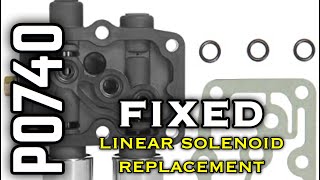
Typical fix: Replace the dual linear solenoid assembly and its gasket. The OEM part number is 28250-P6H-024.
Est. part cost: $100-$250 - Damaged Wiring or Connectors ⚪ Low Probability
How to confirm: Visually inspect the wiring harnesses going to the transmission solenoids for any signs of fraying, corrosion, or loose connections. Pay close attention to the connectors at the solenoids and the PCM.
Typical fix: Repair or replace the damaged section of the wiring harness or clean the connectors.
Est. part cost: $10-$100
Rare But Worth Checking
- Internal Torque Converter Failure: → Shop Automatic Transmission Torque Converter If fluid and solenoids are good, the torque converter itself may have failed internally. This is a major repair that requires removing the transmission. A manufacturer service bulletin, Honda TSB 02-051, addresses transmission lock-up clutch judder or vibration, which can be related to TCC function.
- Clogged Internal Hydraulic Passages or Valve Body Issue: → Shop Transmission Valve Body Debris can become lodged deep within the transmission's valve body, blocking fluid flow. This often requires a transmission rebuild or replacement to fix.
- Faulty Powertrain Control Module (PCM): → Shop Engine Control Module (ECM) In very rare cases, the computer that controls the transmission can fail. This should only be considered after all other possibilities have been exhausted.
Diagnosis Steps
- Read the code with an OBD-II scanner to confirm P0740 is present.
- Check the transmission fluid level and condition. If it is low, dark, or smells burnt, service the fluid first.
- A recommended fluid service is a '3x drain and fill': drain the fluid (about 3 quarts), refill, drive for a few minutes, and repeat the process two more times. This replaces most of the old fluid. Many owners and shops advise against a high-pressure flush.
- If the code returns, inspect the wiring and connectors for the TCC solenoid and clutch pressure control solenoids for any corrosion or damage.
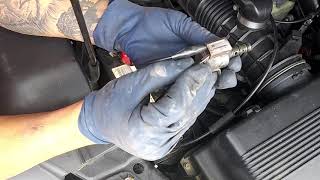
- Locate and test the TCC solenoid (single, black connector). Resistance should be 12-25 ohms. Inspect its screens for debris.
- Test the clutch pressure control solenoids (dual assembly, part #28250-P6H-024) in the same manner. Inspect the gasket screens for clogging.
- If a solenoid is out of spec or its screen is heavily clogged, replace it. It's often wise to replace the gasket and clean the screens on all accessible solenoids at the same time.
- If all solenoids and wiring test good, the problem is likely internal to the transmission (torque converter or valve body), and professional diagnosis is required.
Parts You'll Likely Need
- Torque Converter Clutch (TCC) Solenoid
(OEM #28250-P7X-004 (often part of a larger assembly))— This is the primary solenoid that controls the lock-up function and is a frequent failure point due to clogging or electrical fault.
Trusted brands: Honda Genuine, Standard Motor Products (T-Series), WVE/NTK
OEM price range: $80-$150
Aftermarket price range: $40-$90 - A/T Clutch Pressure Control Solenoid Assembly (Dual Linear)
(OEM #28250-P6H-024)— This assembly works in conjunction with the TCC solenoid and is another common cause of pressure-related transmission codes. Its screens often clog with debris.
Trusted brands: Honda Genuine, Rostra, Standard Motor Products
OEM price range: $200-$300
Aftermarket price range: $100-$180 - Automatic Transmission Fluid
(OEM #08200-9008 (ATF-DW1))— Clean fluid is critical for the proper function of Honda transmissions. Old fluid is a primary cause of solenoid failure. ATF-DW1 is the backward-compatible replacement for the original ATF-Z1.
Trusted brands: Honda Genuine
OEM price range: $10-$15 per quart
Related Codes That Often Appear With This One
- P0741 — P0741 indicates 'TCC Performance or Stuck Off,' which is a hydraulic/mechanical performance issue rather than the P0740 electrical circuit fault. They can appear together if an electrical problem leads to a performance problem.
- P0730 — P0730 indicates 'Incorrect Gear Ratio.' If the TCC system and other solenoids are malfunctioning, it can lead to general shifting problems and trigger this code.
Technical Service Bulletins (TSBs) & Recalls
- Honda TSB 02-051: Addresses transmission lock-up clutch judder or vibration, which can be related to TCC function. The fix often involves a software update and fluid flush.
- Honda TSB 09-010: While for a different issue (VTC actuator rattle), it demonstrates a common issue with oil/fluid pressure-activated components on J-series engines.
Platform-Specific Known Issues
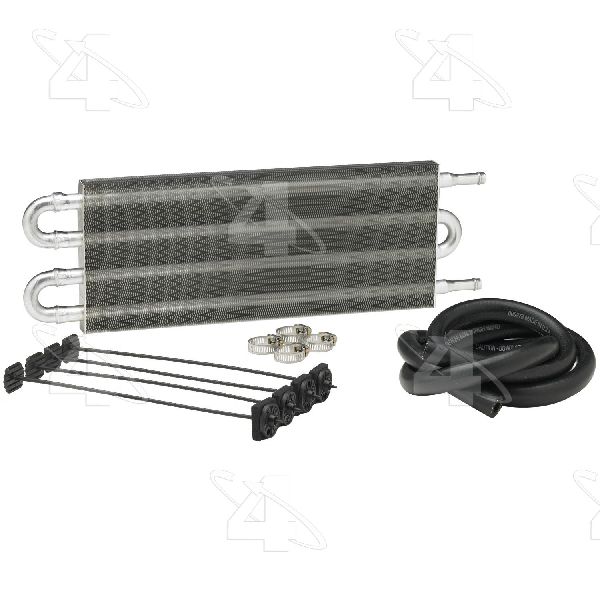
- Radiator Failure Leading to Transmission Failure (SMOD): → Shop Transmission Assembly The integrated transmission cooler within the stock radiator can fail, allowing coolant and transmission fluid to mix. This creates a 'strawberry milkshake of death' (SMOD) that quickly destroys the transmission. While not a direct cause of an electrical P0740 code, a failing transmission from SMOD can present with multiple codes and shifting issues. Owners sometimes proactively replace the radiator or bypass the in-radiator cooler with an external one.
Mechanic-Grade Diagnostic Values
- Torque Converter Clutch (TCC) Solenoid Resistance — expected: 12 - 25 Ohms. Failure: A reading of infinity (OL) indicates an open circuit, while a reading near zero indicates a shorted coil.
- A/T Clutch Pressure Control Solenoid (Dual Linear) Resistance — expected: 12 - 25 Ohms. Failure: A reading outside this range indicates a faulty solenoid coil.
- TCC Solenoid Bench Test — expected: Audible 'click' when 12V power and ground are applied to the terminals.. Failure: No clicking sound indicates the solenoid's internal valve is stuck.
Scan Tool Commands That Help
- Honda Diagnostic System (HDS): Lockup Solenoid Test (in Miscellaneous Test Menu) — This bidirectional command allows a technician to manually activate the TCC solenoid. An audible click should be heard from the transmission. If no click is heard, it confirms a fault in the solenoid or its circuit, helping to isolate the problem without removal.
Wiring & Ground Locations
- Transmission Ground Cable (G101) — A ground strap connecting the transmission case to the vehicle's chassis, often located on or near the thermostat housing.. Hondas of this era are known for having grounding issues. A corroded or loose G101 ground can cause erratic voltage and intermittent electrical faults in transmission components, including the TCC solenoid, potentially triggering a P0740 code even if the solenoid itself is good.
Real Owner Repair Stories
- YouTube user 'Jabo The Mechanic' (2004 Honda Pilot) — P0740 code appeared almost immediately after starting to drive.
❌ Tried (didn't work) Replacing the initial suspect solenoid with a used part from a junkyard did not fix the issue.
✅ What actually fixed it The problem was resolved only after replacing two separate solenoids: the TCC solenoid and the 'B' shift solenoid (brown connector). This suggests that debris or an electrical issue had affected multiple components. - YouTube user '2004 Honda Pilot MIL Check Engine Code P0740 solution' (2004 Honda Pilot with 400k miles) — P0740 Check Engine Light.
❌ Tried (didn't work) The owner considered replacing solenoids but was advised against it initially.
✅ What actually fixed it The owner found that the code was triggered by excessive debris in the transmission fluid. Performing a simple 'drain and fill' (NOT a flush) with fresh Honda ATF cleared the code. This fix worked on two separate occasions when the code appeared after 18-24k miles of driving.
OEM Part Supersession History
28250-P6H-004→28250-P6H-024— Part revision or update by the manufacturer.
Heads up: These part numbers are generally interchangeable for the specified 1998-2007 Honda/Acura V6 applications.
Diagnostic Flowchart
Other Known Issues on This Vehicle
Issues unrelated to this code that are worth knowing about as an owner of this generation:
- Transmission Failure / Radiator Cross-Contamination (SMOD) 🔴 High → Shop Transmission Assembly — A known weak point, especially on 2003-2005 models. Failure of the internal radiator transmission cooler mixes coolant and ATF, destroying the transmission.
- Timing Belt Replacement 🔴 High — The J35A is an interference engine. The timing belt, water pump, and tensioner must be replaced every 7 years or ~105,000 miles. Failure will cause catastrophic engine damage.
- Variable Cylinder Management (VCM) Issues (2006+ models) 🟠 Medium — Later models in this generation introduced VCM, which could cause issues like high oil consumption, fouled spark plugs, and failed engine mounts. (Ref: Subject of a class-action lawsuit for later model years.)
- Failing Lower Control Arm Bushings 🟡 Low — Compliance bushings in the front lower control arms frequently tear, causing clunking noises over bumps and alignment issues.
- Power Steering Whine 🟡 Low — A common issue where air enters the system due to a failing O-ring on the power steering pump inlet, causing a whining or groaning noise when turning.
- Ignition Switch Failure 🟠 Medium → Shop Ignition Switch — Early models were prone to ignition switch failures that could cause the vehicle to stall while driving. (Ref: Part of an earlier recall.)
Used vs. New Parts: Buying Guide for This Vehicle
When a used part is the smart pick: Used OEM solenoids from a junkyard can be a cost-effective option, especially if you can test them on-site. Given that aftermarket quality can be inconsistent, a tested, low-mileage OEM part is often a better choice than a cheap, new, no-name part.
Donor-vehicle mileage cap: roughly under 120000 miles for the part to have meaningful remaining life.
What to inspect on the donor part:
- Ask for the donor vehicle's mileage; lower is always better.
- Inspect the electrical connector pins for any green or white corrosion.
- Check the small filter screens on the solenoid. If they are clean or have minimal debris, it's a good sign. Avoid parts with screens heavily caked in black sludge.
- If possible, perform a resistance test (should be 12-25 ohms) and a 12V click test before purchasing.
OEM-only on this vehicle (don't cheap out):
- Automatic Transmission Fluid (ATF). Using only Genuine Honda ATF-DW1 is strongly recommended. The cost savings of using a generic multi-vehicle fluid do not outweigh the risk of damaging this notoriously sensitive transmission.
Aftermarket brands forum-validated for this vehicle:
- Standard Motor Products (SMP)
- WVE/NTK
- Rostra
Brands owners have reported issues with on this vehicle:
- Unbranded, no-name solenoids from online marketplaces like Amazon or eBay. Forum users frequently report high failure rates, incorrect resistance, and a swift return of the trouble code.
Real Owner Stories
Aggregated from forums and TSBs cited above. Mileages and costs reflect what owners reported in those sources.
2003-2008 Honda Pilot
Symptoms: P0740 code present; owner found that replacing the fluid was a common suggestion on enthusiast sites.
What fixed it: Replacing the transmission fluid (ATF).
Source hint: Piloteers.org: Numerous threads on this forum corroborate that P0740 is common and often solved by replacing flu
NHTSA Reported Experiences
Torque Converter Diagnosis: An owner reported being frightened to travel on the highway after a dealer diagnosed a P0740 code as a probable torque converter issue (NHTSA ODI #10917435). Another owner experienced a "racing" engine noise at 35mph and was told the P0740 code required a complete transmission replacement (NHTSA ODI #10452668).
Multiple Codes: One owner noted that within a week of driving a used vehicle, the check engine light came on with codes P0700, P0705, and P0740 all present, which a shop confirmed were related to the automatic transmission (NHTSA ODI #11174984).
Pressure Switch Attempt: In another case, an owner reported the P0740 code appearing twice over two years; the dealer attempted a fix by replacing the 4th gear pressure switch (NHTSA ODI #10425737).
Related OBD-II Codes
Frequently Asked Questions
Does Honda TSB 02-051 apply to the transmission judder I'm feeling along with the P0740 code?
Can I use any transmission fluid to fix the P0740 code on my Pilot?
Is there a specific solenoid part number I should look for to address clutch pressure issues?
Should I get a high-pressure transmission flush to clear the debris causing this code?
My 2006 Pilot has high oil consumption and a P0740 code; are they related?
What is the 'Strawberry Milkshake of Death' (SMOD) I keep hearing about in Pilot forums?
Helpful Videos

We Have This Part in Stock

The information in this article is provided for general reference and educational purposes only. Vehicle specifications, procedures, and part compatibility can vary by production date, trim level, and region. Always consult your vehicle's factory service manual and verify part numbers before purchasing or performing repairs. Safety-critical components such as airbags, seat belts, and braking systems should be installed by a qualified professional.
- Honda Pilot:
- 🧭 Diagnostic Flowchart
- 🎬 Helpful Videos
- 🛍️ Shop This Part
- What's Unique About the 2003-2008 Honda Pilot
- Symptoms You May Notice
- Most Likely Causes
- Rare But Worth Checking
- Diagnosis Steps
- Parts You'll Likely Need
- Related Codes That Often Appear With This One
- Technical Service Bulletins (TSBs) & Recalls
- Platform-Specific Known Issues
- Mechanic-Grade Diagnostic Values
- Scan Tool Commands That Help
- Wiring & Ground Locations
- Real Owner Repair Stories
- OEM Part Supersession History
- Other Known Issues on This Vehicle
- Used vs. New Parts: Buying Guide for This Vehicle
- Real Owner Stories
- 2003-2008 Honda Pilot
- NHTSA Reported Experiences
- Related OBD-II Codes
- Frequently Asked Questions
- 🎟️ Get 5% Off