

P0740 on 2005-2012 Jeep Liberty: Torque Converter Clutch Circuit Fixes
The P0740 code on a Jeep Liberty most often points to a failing torque converter clutch (TCC) solenoid or the torque converter itself. The solenoid is part of a larger, known failure-prone solenoid pack in the 42RLE transmission. A fluid and filter change is a good first step, but expect to potentially replace the solenoid pack, which is a moderately difficult DIY job, or the torque converter, which is a major repair.
- P0740 on a Jeep Liberty indicates a problem with the torque converter's ability to lock up, which is crucial for fuel efficiency at highway speeds.
- The most likely culprits are a failing TCC solenoid (part of the solenoid pack) or the torque converter itself.
- Always start diagnosis by checking the transmission fluid level and condition; low or burnt fluid can cause this code.
- This is not a minor issue. Driving with this code can lead to transmission overheating and catastrophic internal damage.
- Repair is not typically a beginner DIY task and often requires specialized tools and knowledge of internal transmission work.
What's Unique About the 2005-2012 Jeep LIBERTY

The Jeep Liberty models in this year range primarily use the 42RLE automatic transmission, which is notoriously unreliable and known for having issues with its solenoid pack. While the code P0740 points to an electrical circuit fault, on this platform it is very often a precursor to or indicator of a mechanical failure of either the TCC solenoid itself or the torque converter. The provided TSB #9004009, while mentioning the 62TE transmission, reinforces this pattern for Chrysler vehicles: if the solenoid is okay, the torque converter is the likely culprit. Many owners report that replacing the solenoid pack does not fix the issue, and the ultimate repair is a new torque converter.
Diagnostic Flowchart

Tap your situation to follow the diagnostic path that matches what you're seeing on this vehicle.
Generation note: This range covers both the first generation (KJ, 2002-2007) and second generation (KK, 2008-2012) Jeep Liberty. Both generations commonly used the 42RLE transmission, making the causes and fixes for P0740 very similar between them. Some later KK models may have the W5A580 transmission, but the P0740 fault logic remains focused on the TCC solenoid and torque converter.
Symptoms You May Notice

- Check Engine Light is on
- Transmission overheating warning light may illuminate.
- Vehicle may enter "limp mode," getting stuck in one gear (often 2nd).
- Shuddering or vibration at highway speeds when the TCC tries to lock.
- Stalling when coming to a stop
- Harsh or delayed gear shifts
- Reduced fuel economy.
- Engine RPM is higher than usual at cruising speeds, or fluctuates by 200-400 RPM on inclines.
- Replacing only the torque converter when the solenoid pack is the actual cause.
- Replacing the solenoid pack when the torque converter has already failed internally and contaminated the new solenoid with debris, causing the code to return.
Most Likely Causes

- Failing Torque Converter Clutch (TCC) Solenoid / Solenoid Pack 🔴 High Probability → Shop Automatic Transmission Torque Converter The 42RLE transmission used in most Liberties is known for solenoid pack failures, which is a highly critical and failure-prone part.
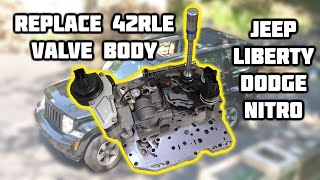
How to confirm: A professional-grade scan tool can command the solenoid on and off to check its response. The solenoid's electrical resistance can also be tested with a multimeter after removing the transmission pan and valve body. 🎬 Watch: Step-by-step guide to replacing the 42RLE solenoid pack. The entire solenoid pack is mounted to the valve body and must be removed for replacement.
Typical fix: Replace the entire transmission solenoid pack. The Mopar part number is often cited as 5143151AA, which may be superseded by 04800171AA.
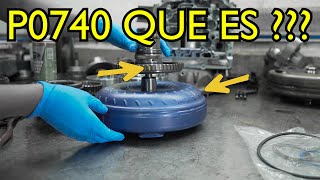
Est. part cost: $150-$300 - Failing Torque Converter 🟡 Medium Probability → Shop Automatic Transmission Torque Converter As stated in TSB #9004009, if the solenoid tests okay, the torque converter itself is the next likely failure point. Internal clutch material can wear out, causing slippage that the computer detects. Many owner experiences confirm that even after replacing the solenoid, the P0740 code returned 🎬 See a real-world diagnosis and repair of this persistent code. until the torque converter was replaced.
How to confirm: This is often a process of elimination. If the fluid, wiring, and solenoid are all confirmed to be good, the torque converter is the prime suspect. A technician can use a scan tool to monitor TCC slip speed; if the computer commands lockup and the slip RPM remains high (e.g., 200-300 RPM), the converter clutch is failing. Finding excessive clutch material in the transmission pan is a strong indicator.
Typical fix: Replace the torque converter. This requires removing the entire transmission from the vehicle.
Est. part cost: $250-$500 - Low or Dirty Transmission Fluid 🟡 Medium Probability → Shop Transmission Assembly
How to confirm: Check the transmission fluid level and condition. Note that many of these vehicles do not have a traditional dipstick and require a special tool (a Miller C-33 or aftermarket equivalent). The fluid should be red and clear, not brown, black, or burnt-smelling. Only Mopar ATF+4 or a licensed equivalent (like Valvoline ATF+4) should be used.
Typical fix: Perform a transmission fluid and filter change using the correct ATF+4 fluid. In some cases, this alone can resolve the issue if the fluid was very low or degraded.
Est. part cost: $75-$150 - Damaged Wiring or Connectors ⚪ Low Probability
How to confirm: Visually inspect the transmission wiring harness leading to the solenoid pack for any signs of damage, corrosion, or loose connections. Test for continuity and proper voltage at the connector using a multimeter and wiring diagram.
Typical fix: Repair or replace the damaged section of the wiring harness.
Est. part cost: $20-$100
Rare But Worth Checking
- Faulty Transmission Control Module (TCM) or Powertrain Control Module (PCM): → Shop Engine Control Module (ECM) This is uncommon. The module should only be suspected after all other possibilities (fluid, wiring, solenoid, torque converter) have been thoroughly ruled out. One owner reported replacing the ECU ultimately fixed a persistent P0740 issue after a transmission replacement.
- Clogged Internal Hydraulic Passages: Debris from failing internal components can clog the small passages within the valve body, preventing the TCC from operating correctly. This usually requires a valve body replacement or a full transmission rebuild.
- Faulty Brake Light Switch: A faulty brake light switch can sometimes send an incorrect signal to the TCM, preventing torque converter lockup. This is a rare cause but has been noted in forum discussions for similar Chrysler vehicles.
Diagnosis Steps
- Check and verify the transmission fluid level and condition. Ensure the correct ATF+4 fluid is used. Note that a special dipstick tool may be required.
- Scan the system for any other transmission-related codes. Pay special attention to a P0700 code.
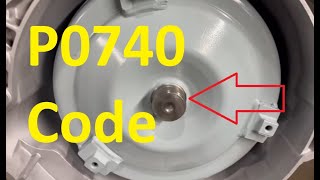
- Using a capable scan tool, monitor the Torque Converter Clutch slip speed while driving at highway speeds (50-60 MPH). A high slip RPM (over 200 RPM) when the TCC is commanded 🎬 Watch: Understanding the common causes and fixes for P0740. 'on' indicates a problem.
- Inspect the transmission's main electrical connector and wiring harness for any visible damage, corrosion, or loose pins.
- If wiring is okay, the next step is to drop the transmission pan to inspect for excessive metal shavings or clutch material, which would indicate a mechanical failure.
- If the pan is relatively clean, the solenoid pack is the next likely culprit. It is mounted to the valve body and can be replaced after dropping the pan and valve body assembly.
- If the solenoid and wiring test good, or if a new solenoid pack does not resolve the code, the failure is likely within the torque converter itself, as suggested by TSB #9004009 and numerous owner reports.
Parts You'll Likely Need
- Transmission Solenoid Pack (Block)
(OEM #5143151AA (or superseding #04800171AA))— This is the most common failure point for the 42RLE transmission that triggers a P0740 code.
Trusted brands: Mopar, Rostra, Dorman
OEM price range: $250-$400
Aftermarket price range: $150-$250 - Torque Converter — If the solenoid is not at fault, the torque converter's internal lock-up clutch has likely failed.
Trusted brands: Mopar, LuK, DACCO, Precision
OEM price range: $400-$600
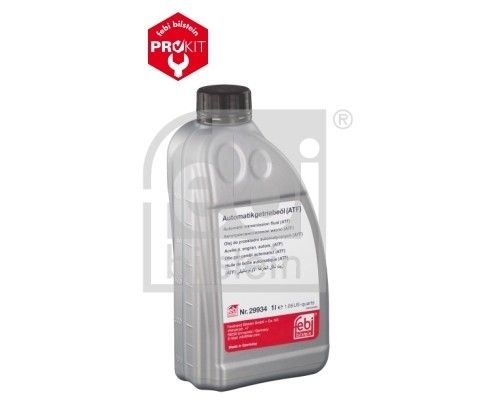
Aftermarket price range: $170-$400 - Automatic Transmission Fluid (ATF+4)
(OEM #MS-9602)— A fluid and filter change is required for any internal transmission repair and is a critical first step in diagnosis. Only ATF+4 is acceptable.
Trusted brands: Mopar, Valvoline, Castrol
OEM price range: $10-$15 per quart
Aftermarket price range: $8-$12 per quart - Transmission Filter and Pan Gasket — Must be replaced any time the transmission pan is removed for service.
Trusted brands: Mopar, Wix, ATP
OEM price range: $30-$50
Aftermarket price range: $15-$30
Related Codes That Often Appear With This One
- P0700 — P0700 is a generic code that simply means the Transmission Control Module (TCM) has stored a fault. It almost always appears alongside a more specific transmission code like P0740 to signal the driver that a transmission-related issue exists.
Technical Service Bulletins (TSBs) & Recalls
- NHTSA #9004009: While for the 62TE transmission, its diagnostic logic is relevant. It advises that if the TCC solenoid checks out, the torque converter itself has failed and should be replaced.
- Chrysler TSB 21-013-05: Some older Chrysler TSBs for other platforms have involved a TCM/PCM software re-flash to correct overly sensitive P0740 code triggers. While no specific TSB for the Liberty is widely cited, it's worth checking with a dealer for any available software updates before performing major mechanical repairs.
Platform-Specific Known Issues
- Solenoid vs. Torque Converter Dilemma: → Shop Automatic Transmission Torque Converter A very common repair story on forums involves owners first replacing the solenoid pack, only to have the P0740 code return. The final, successful repair is then replacing the torque converter. This suggests the initial solenoid may have been functional, or that debris from the fa
Mechanic-Grade Diagnostic Values
- TCC Solenoid Resistance — expected: 1.5 - 2.5 ohms when tested at the solenoid.. Failure: A reading significantly outside this range, or open/infinite resistance, indicates a failed solenoid.
- TCC Solenoid Circuit Resistance (at TCM connector) — expected: Less than 5.0 ohms.. Failure: Resistance above 5.0 ohms indicates an open or high resistance in the wiring between the TCM and the solenoid assembly.
- Voltage at Transmission Connector Pin 3 (Red wire) — expected: ~12V (Battery Voltage). Failure: No voltage indicates a problem with the EATX (transmission) relay or the power supply circuit to the transmission.
Scan Tool Commands That Help
- Professional Scan Tool (e.g., Snap-on, Autel, WiTech): TCC Solenoid Activation / Duty Cycle Command — This bidirectional control allows a technician to command the TCC solenoid on and off while monitoring its electrical response and hydraulic effect (RPM drop). This can confirm if the solenoid is responding to commands from the TCM, helping to isolate a faulty solenoid from a wiring or TCM driver issue.
- Professional Scan Tool (e.g., WiTech): Clear Transmission Codes — After a repair, some basic code readers may fail to clear fault codes stored deep within the Transmission Control Module (TCM). A professional tool is often required to fully erase the fault and reset transmission adaptive memory.
Wiring & Ground Locations
- Transmission Case Connector (10-pin) — On the driver's side of the 42RLE transmission case.. This is the main electrical connection to the internal solenoid pack. Testing for power, ground, and signal continuity happens here. Pin 3 (Red wire) should have 12V power from the transmission relay. The TCC solenoid is controlled through this connector.
- Engine/Chassis Grounds (G102, G104) — Various points on the engine block and chassis. For the KK Liberty (2008-2012), a key ground is located under the battery tray, and another on the passenger side inner wheel well.. A poor ground connection for the PCM/TCM or the transmission itself can cause erratic electrical behavior, including incorrect sensor readings and false circuit codes like P0740. Ensuring all major grounds are clean and tight is a crucial diagnostic step.
Real Owner Repair Stories
- YouTube user 'Transmissions' on a 2010 Chrysler 300 (same 42RLE transmission) (2010 Chrysler 300 3.5L with 42RLE transmission) — P0740 code, vehicle would no longer shift gears.
❌ Tried (didn't work) The user went straight to the most likely repair.
✅ What actually fixed it Replacing the transmission solenoid pack (block). The user confirmed the vehicle was repaired and running without issues for over a year. - Reddit user 'MonitorIllustrious45' (2011 Jeep Liberty Sport with towing package) — P0740 code appeared, followed by the transmission fluid temperature warning light.
✅ What actually fixed it A simple transmission fluid change at a quick lube service. After the fluid was replaced and the code cleared, the user drove for an hour with no check engine light or overheat warning.
OEM Part Supersession History
5143151AA→04800171AA— Standard part revision and update by Mopar.
Heads up: No major incompatibility is noted; 04800171AA is the direct replacement for 5143151AA for the 42RLE transmission. Both part numbers are frequently referenced for the same applications.
Model Year Variations Within This Range
- 2007-2012: While the core solenoid pack is the primary failure point, parts kits for 2007 and newer 42RLE transmissions sometimes include a new EPC (Electronic Pressure Control) solenoid and a line pressure transducer sensor to be replaced at the same time as the main solenoid block. This suggests a potential revision or recognition that these related components should be serviced together on later models (KK generation).
Helpful Videos
We Have This Part in Stock

The information in this article is provided for general reference and educational purposes only. Vehicle specifications, procedures, and part compatibility can vary by production date, trim level, and region. Always consult your vehicle's factory service manual and verify part numbers before purchasing or performing repairs. Safety-critical components such as airbags, seat belts, and braking systems should be installed by a qualified professional.
- Jeep LIBERTY:
- 🧭 Diagnostic Flowchart
- 🎬 Helpful Videos
- 🛍️ Shop This Part
- What's Unique About the 2005-2012 Jeep LIBERTY
- Symptoms You May Notice
- Most Likely Causes
- Rare But Worth Checking
- Diagnosis Steps
- Parts You'll Likely Need
- Related Codes That Often Appear With This One
- Technical Service Bulletins (TSBs) & Recalls
- Platform-Specific Known Issues
- Mechanic-Grade Diagnostic Values
- Scan Tool Commands That Help
- Wiring & Ground Locations
- Real Owner Repair Stories
- OEM Part Supersession History
- Model Year Variations Within This Range
- 🎟️ Get 5% Off