

P0740 on 2007-2014 Jeep Patriot: Torque Converter Clutch Circuit Malfunction Causes and Fixes
P0740 on a Jeep Patriot usually indicates a problem with the torque converter clutch (TCC) solenoid, the torque converter itself, or low/dirty transmission fluid. The fix often involves replacing the TCC solenoid inside the transmission pan, which can be a moderately difficult DIY job. For the common Jatco CVT, this is a known issue that can also point to valve body problems. For 2014 models with the 6-speed automatic, the torque converter itself is a more likely culprit if the solenoid tests go
- P0740 on a Jeep Patriot indicates a failure in the torque converter lock-up circuit.
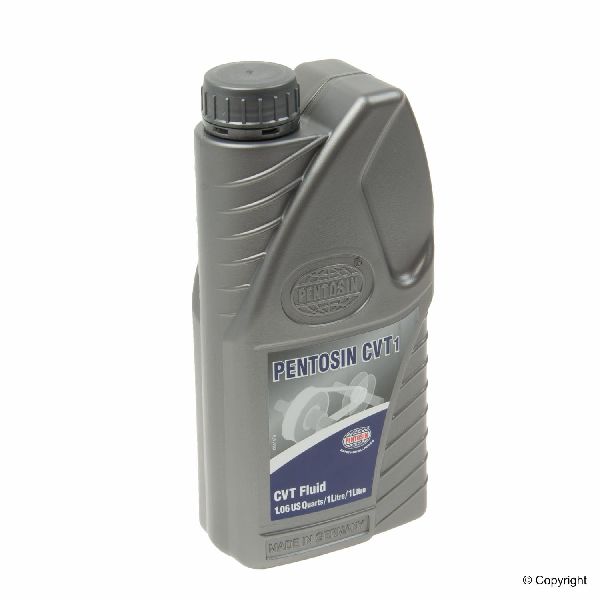
- The first and easiest step is to check the transmission fluid level and condition. Use only the specified fluid type (Mopar CVTF+4 for the CVT).
- The most common parts to fail are the TCC solenoid, followed by the torque converter itself.
- Driving with this code can cause poor performance and may lead to more severe transmission damage over time.
- Due to the complexity of internal transmission work, professional diagnosis is recommended if a fluid change does not solve the problem.
What's Unique About the 2007-2014 Jeep PATRIOT
The 2007-2014 Jeep Patriot was equipped with two main automatic transmission types: a Continuously Variable Transmission (CVT), specifically the Jatco JF011E, and later, a conventional 6-speed automatic (the Hyundai 6F24). Unlike other Jeeps from the era that used the 62TE transmission, the Patriot's transmissions have their own unique failure points for this code. For CVT models, which are very common, P0740 can often point to issues within the valve body, a failing TCC solenoid, or a worn torque converter. The 6F24 is a Hyundai-sourced transmission (also called A6MF1) and was introduced as an option for the 2014 model year, replacing the CVT on most front-wheel-drive models.
Diagnostic Flowchart
Tap your situation to follow the diagnostic path that matches what you're seeing on this vehicle.
Symptoms You May Notice
- Check Engine Light is on
- Vehicle may stall when coming to a stop
- Transmission slipping or shuddering, especially at highway speeds
- RPMs are higher than usual at cruising speed, as if the transmission won't shift into the final gear
- Noticeable decrease in fuel economy
- Transmission may not shift into the highest gear or may feel like it's hunting for gears
- Transmission overheating warning light may illuminate
- Replacing the entire transmission without first diagnosing the fluid, solenoid, and wiring.
- Assuming the problem is a major mechanical failure when it is simply low or incorrect transmission fluid.
- Replacing the TCC solenoid when the actual failure is the torque converter's internal clutch material, which is a common issue on Chrysler platforms.
Most Likely Causes
- Low or Dirty Transmission Fluid 🔴 High Probability → Shop Transmission Assembly The Jatco CVT in many Patriots is extremely sensitive to fluid level and condition. The manufacturer specifies Mopar CVTF+4 fluid, and using incorrect fluid or neglecting changes can lead to solenoid and valve body issues.
How to confirm: Check the transmission fluid level and condition. The fluid should be at the correct level and appear clean (typically light red or green), not dark, burnt, or full of debris. Many Patriots with the CVT do not have a traditional dipstick, requiring a special procedure and tool to check the level. 🎬 Watch this step-by-step guide to changing your CVT fluid and filters.
Typical fix: Perform a transmission fluid and filter change using the correct Mopar-specified fluid (CVTF+4 for the CVT, part number 05191184AB or 5191184AA). In some cases, multiple fluid changes may be needed to flush out contamination.
Est. part cost: $100-$200 - Failed Torque Converter Clutch (TCC) Solenoid 🔴 High Probability → Shop Automatic Transmission Torque Converter Solenoids are a common failure point in many automatic transmissions as they age. Debris in the fluid can cause them to stick or fail electrically. In the Jatco JF011E, there are two solenoids related to lock-up: a TCC Control Solenoid and a Lock-up Select Solenoid.
How to confirm: After checking the fluid, the solenoid itself should be tested. This involves dropping the transmission pan, accessing the valve body, and testing the solenoid's resistance with a multimeter. For the Jatco JF011E, the TCC control solenoid should have a resistance of 3 to 9 ohms. The lockup select switch solenoid should be 15 to 30 ohms.
Typical fix: Replace the faulty TCC solenoid(s), which are located on the transmission's valve body. For the Jatco JF011E, the TCC solenoid is often included in a solenoid kit.
Est. part cost: $70-$150 - Failed Torque Converter 🟡 Medium Probability → Shop Automatic Transmission Torque Converter Internal seals or the clutch lining within the torque converter can wear out, preventing it from locking up correctly. This is a known issue on many Chrysler/Jeep/Dodge platforms, where even with a good solenoid, the clutch material itself is worn and cannot hold.
How to confirm: This is usually diagnosed after confirming the fluid and TCC solenoid are good. A mechanic will use a scan tool to monitor TCC slip percentage; a high slip RPM when lock-up is commanded indicates a failed converter. Finding excessive metallic clutch debris in the transmission pan is also a strong indicator.
Typical fix: The transmission must be removed from the vehicle to replace the torque converter. This is a major repair.
Est. part cost: $300-$600 - Wiring or Connector Issues ⚪ Low Probability
How to confirm: Visually inspect the wiring harness leading to the transmission for any signs of damage, corrosion, or loose connections. Test for continuity from the TCM to the TCC solenoid connector using a multimeter and the vehicle's wiring diagram.
Typical fix: Repair or replace the damaged section of the wiring harness or the connector.
Est. part cost: $20-$100
Rare But Worth Checking
- Faulty Valve Body: → Shop Transmission Valve Body In some cases, especially on the CVT models, the issue may not be a single solenoid but a problem within the valve body itself, such as a stuck valve or clogged passage from fluid debris. Sometimes the entire valve body assembly is replaced to resolve persistent solenoid circuit codes. 🎬 Watch a demonstration on how to replace the CVT valve body.
- Faulty Transmission Control Module (TCM): → Shop Transmission Assembly While rare, the TCM itself can fail and send an erroneous P0740 code. This should only be considered after all other possibilities, including wiring and all transmission components, have been thoroughly ruled out.
Diagnosis Steps
- Check for other stored trouble codes with an OBD-II scanner.
- Inspect the transmission fluid level and condition. Ensure it is full and does not smell burnt or contain excessive debris. Note that many CVT models lack a dipstick and require a special tool.
- If the fluid is low or dirty, perform a fluid and filter change with the manufacturer-specified fluid (Mopar CVTF+4 for CVT models).
- Inspect the transmission's external wiring harness and connectors for any visible damage, corrosion, or loose pins.
- Using an advanced scan tool, monitor the torque converter slip RPM while driving. When the TCC is commanded on, the slip should drop to near zero. If it remains high (over 100 RPM for more than 10 seconds), a mechanical issue is likely.
- If an electrical fault is suspected, drop the transmission pan to access the valve body.
- Locate the Torque Converter Clutch (TCC) solenoid(s). Test resistance using a digital multimeter. For the Jatco JF011E CVT, the TCC control solenoid should be 3-9 ohms, and the lock-up select solenoid should be 15-30 ohms.
- If a solenoid tests out of range, replace it.
- If the solenoid and wiring are good, but slip is still high, the problem is likely a mechanical issue with the torque converter itself or the valve body. This level of diagnosis is best left to a professional.
Parts You'll Likely Need
- Torque Converter Clutch (TCC) Solenoid
(OEM #D814425 (Jatco JF011E TCC Solenoid))— This solenoid directly controls the lock-up function and is a frequent point of electrical or mechanical failure.
Trusted brands: Mopar, Sonnax, Rostra, Jatco
OEM price range: $120-$200
Aftermarket price range: $60-$150 - Transmission Fluid
(OEM #05191184AB (Mopar CVTF+4))— Correct, clean fluid is critical for the operation of the solenoids and valve body. Patriots with the CVT require this specific fluid.
Trusted brands: Mopar, Valvoline, Idemitsu
OEM price range: $25-$40 per quart
Aftermarket price range: $15-$25 per quart - Torque Converter — If the solenoid and wiring are confirmed to be good, the internal clutch of the torque converter itself has likely failed. This is a more involved repair.
Trusted brands: Mopar, LuK, Transtar
OEM price range: $400-$700
Aftermarket price range: $250-$500
Related Codes That Often Appear With This One
- P0700 — P0700 is a generic code that means the Transmission Control Module (TCM) has stored a fault code. It almost always appears alongside a more specific transmission code like P0740 to signal the driver that a transmission-related issue exists.
- P0741 — P0741 (Torque Converter Clutch Circuit Performance or Stuck Off) is closely related and indicates a mechanical/performance issue with the lock-up system rather than a purely electrical circuit fault. Seeing both may point more strongly toward a failing torque converter or valve body issue.
Technical Service Bulletins (TSBs) & Recalls
- TSB 21-018-14: Involves reprogramming the TCM for shift quality issues on some Chrysler models. While not directly for P0740, it shows that software updates can address transmission problems and may require a subsequent 'Adaptation Learn Procedure'.
- TSB 21-003-13: Relates to Drivetrain Control Module (DCTM) flashes for 4WD issues on other Jeep models, but highlights the complexity and software-dependency of the drivetrain systems.
Platform-Specific Known Issues
- The Jatco JF011E CVT used in many Patriots is known to be sensitive to fluid maintenance. Failure to use the correct CVTF+4 fluid or adhere to service intervals can accelerate wear and lead to codes like P0740. Overheating is also a common complaint with these CVTs, which can degrade fluid and damage internal components.
Mechanic-Grade Diagnostic Values
- TCC Slip RPM (Live Scan Tool Data) — expected: Near 0 RPM when the TCC is commanded to lock.. Failure: A slip of more than 100 RPM for 10 seconds or more when lock-up is commanded is a failure condition that will set the code.
- Jatco JF011E Secondary Pressure (at pressure port) — expected: Ranges from around 60 PSI at idle to almost 900 PSI under load (like a stall test).. Failure: Low pressure can indicate a sticking pump flow control valve or a major internal leak, preventing proper TCC operation.
- TCM Ground Circuit Resistance — expected: Less than 1.0 Ohm.. Failure: High resistance indicates a poor ground connection, which can cause erratic TCM and solenoid behavior.
Scan Tool Commands That Help
- wiTECH, Autel, Snap-on (Advanced Scan Tools): TCC Solenoid Activation / Duty Cycle Control — This bidirectional command allows a technician to manually command the TCC solenoid on, off, or to a specific duty cycle while monitoring the system's response. It is crucial for isolating whether the fault is with the solenoid/circuit itself or a mechanical/hydraulic problem within the transmission.
Wiring & Ground Locations
- G305 — Located in the left kick panel area.. This is a major ground point. A poor connection at G305 can affect various modules, potentially including the TCM, leading to erratic behavior and fault codes like P0740.
- TCM Connector — The main electrical connector for the Transmission Control Module.. Testing for continuity and voltage at the specific pins for the TCC solenoid circuit is a key diagnostic step to differentiate between a wiring fault, a solenoid fault, or a TCM fault.
Real Owner Repair Stories
- YouTube Commenter on "Causes and Fixes P0740 Code" (Vehicle not specified, but had P0740 and P0700 after an ECU replacement.) — Check Engine Light with P0740 and P0700 codes appeared 30 minutes into a drive after replacing the ECU.
❌ Tried (didn't work) Replacing all sensors, Replacing the transmission, Replacing the ECU (which fixed a different code, P0147, but then P0740 appeared), Checking fluids and clearing the code (code returned after an hour)
✅ What actually fixed it The user suspected they installed the torque converter incorrectly during the transmission replacement, strongly implying the final cause was a mechanical issue with the torque converter itself, not the solenoid or wiring.
When the Usual Fixes Don't Work
- While P0740 is defined as a circuit code, extensive mechanic experience, particularly with Chrysler platforms, shows it is frequently caused by a mechanical failure of the torque converter's internal clutch material. One transmission specialist noted that in 100% of the cases he repaired for this code on the similar 62TE transmission, the fix was a new torque converter, not the TCC solenoid that many replace first. This suggests that even if the solenoid and wiring test perfectly, the torque converter should be considered a primary suspect, especially if symptoms like shuddering are present.
Model Year Variations Within This Range
- 2007-2013 (and 2014+ 4x4 models): These years primarily use the Jatco JF011E CVT. P0740 diagnosis often involves the TCC solenoid, valve body, or the torque converter. Overheating and fluid sensitivity are major factors.
- 2014-2017 (Front-Wheel Drive models): For 2014, Jeep introduced the Hyundai-sourced 6F24 6-speed automatic as a replacement for the CVT on FWD models. While the code's meaning is the same, the internal components (solenoids, valve body, torque converter) are completely different from the CVT, requiring a distinct diagnostic approach and parts.
Helpful Videos

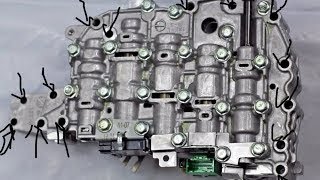
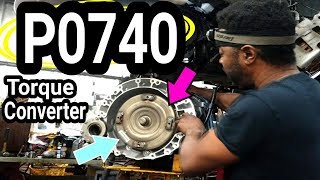
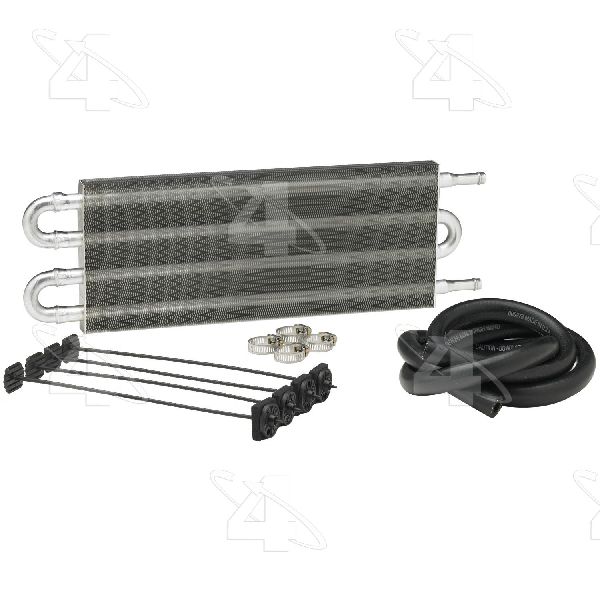
We Have This Part in Stock

The information in this article is provided for general reference and educational purposes only. Vehicle specifications, procedures, and part compatibility can vary by production date, trim level, and region. Always consult your vehicle's factory service manual and verify part numbers before purchasing or performing repairs. Safety-critical components such as airbags, seat belts, and braking systems should be installed by a qualified professional.
- Jeep PATRIOT:
- 🧭 Diagnostic Flowchart
- 🎬 Helpful Videos
- 🛍️ Shop This Part
- What's Unique About the 2007-2014 Jeep PATRIOT
- Symptoms You May Notice
- Most Likely Causes
- Rare But Worth Checking
- Diagnosis Steps
- Parts You'll Likely Need
- Related Codes That Often Appear With This One
- Technical Service Bulletins (TSBs) & Recalls
- Platform-Specific Known Issues
- Mechanic-Grade Diagnostic Values
- Scan Tool Commands That Help
- Wiring & Ground Locations
- Real Owner Repair Stories
- When the Usual Fixes Don't Work
- Model Year Variations Within This Range
- 🎟️ Get 5% Off