

P0740 on 2010-2016 Mercedes-Benz E-Class: Torque Converter Clutch Circuit Fixes
On a 2010-2016 E-Class, P0740 almost always points to a faulty torque converter lock-up solenoid (Y3/8y8) located on the transmission's valve body. The fix typically involves replacing the solenoid or the entire valve body/conductor plate assembly, a job requiring a Mercedes-specific scan tool for diagnostics and adaptation, making it best for a professional.
- P0740 on a 2010-2016 E-Class indicates an electrical fault with the torque converter lock-up circuit.
- The most likely cause is a failed TCC solenoid located inside the transmission on the valve body.
- Do not immediately assume the entire transmission or torque converter needs replacement; the fault is usually a smaller, specific component.
- This is not a beginner-friendly DIY repair. It requires dropping the transmission valve body and may require programming, so professional service is strongly recommended.
- Always use the correct specification transmission fluid when refilling.
What's Unique About the 2010-2016 Mercedes-Benz E-Class
The 2010-2016 E-Class (W212 generation) primarily uses the 7G-Tronic (722.9) automatic transmission. On this specific transmission, the torque converter lock-up (TCC) solenoid, identified as Y3/8y8, is a well-documented failure point. Unlike some vehicles where this code might be ambiguous, on the W212, it very frequently leads to an internal transmission repair involving this specific solenoid or the conductor plate it's mounted on. The issue is so common that the symptoms of a 'rumble strip' shudder during light acceleration are widely discussed in owner forums.
Symptoms You May Notice
- Check Engine Light is on
- Transmission warning message on the dashboard
- Noticeable shudder or vibration at low speeds (1200-2500 RPM) or during light acceleration, often described as driving over a 'rumble strip'.
- Engine RPM is higher than usual at highway speeds
- Reduced fuel economy.
- Harsh, delayed, or erratic gear shifts.
- Transmission may get stuck in one gear (limp mode).
- Stalling when coming to a stop.
- Replacing the entire torque converter when the problem is only the inexpensive lock-up solenoid.
- Replacing the entire transmission without first diagnosing the specific electrical fault.
- Mistaking the symptoms for an engine misfire, as the shudder can feel similar.
Most Likely Causes
- Faulty Torque Converter Lock-Up (TCC) Solenoid 🔴 High Probability → Shop Automatic Transmission Torque Converter The TCC solenoid (Y3/8y8), typically a blue-capped solenoid on the valve body, is a known failure point within the 722.9 transmission. Internal coil burnout or mechanical sticking can cause an open circuit. Some owners report success just replacing this single solenoid.
How to confirm: A technician with a Mercedes-specific scan tool (like XENTRY/DAS) can command the solenoid and monitor its electrical response and torque converter slip. An 'open circuit' or failure to actuate points to a bad solenoid. The resistance of the solenoid can be tested with a multimeter; a reading of approximately 5-6 ohms is expected, though a specific factory spec is not widely published.
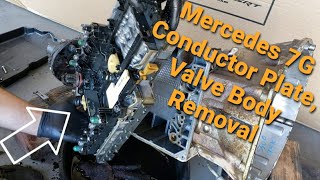
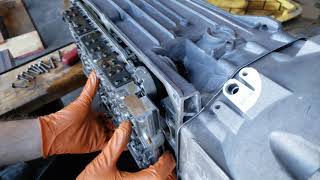
Typical fix: Replace the TCC solenoid (Y3/8y8). This requires removing the transmission pan and valve body. 🎬 Watch: How to remove the valve body and solenoids Often, all solenoids are replaced as a kit, or at least their O-rings are inspected and replaced.
Est. part cost: $70-$150 for a single solenoid - Failed Transmission Conductor Plate (Valve Body Electronics) 🟡 Medium Probability → Shop Transmission Assembly The conductor plate (also known as the TCU/TCM or VGS) contains the solenoids and integrated speed sensors. Cracks in its plastic housing or internal circuit board traces are common, causing electrical faults. This part is a frequent failure item.
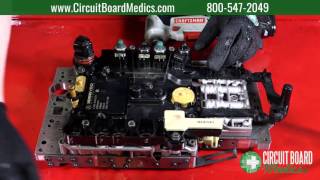
How to confirm: This is often diagnosed when replacing the TCC solenoid fails to fix the issue, or when other codes related to speed sensors (e.g., P0717, P0718) are also present. 🎬 See this guide on diagnosing conductor plate fault codes Visual inspection may reveal cracks or damage. A replacement requires dealer-level programming.
Typical fix: Replace the entire conductor plate. This is a 'theft-relevant part' and requires online SCN coding with a Mercedes-specific scan tool, making it a job for a dealer or specialized independent shop.
Est. part cost: $400-$800 for the conductor plate - Low or Contaminated Transmission Fluid 🟡 Medium Probability → Shop Transmission Assembly The 7G-Tronic transmission is sensitive to fluid level and condition. Low fluid can cause pressure drops, while old, contaminated fluid (often from deteriorating solenoid O-rings) can cause solenoids to stick or fail.
How to confirm: Check the transmission fluid level and condition. The fluid should be reddish (or blue for later models) and clear, not dark, burnt, or gritty. Note: These transmissions have no dipstick and require a shop tool to check the level at a specific temperature.
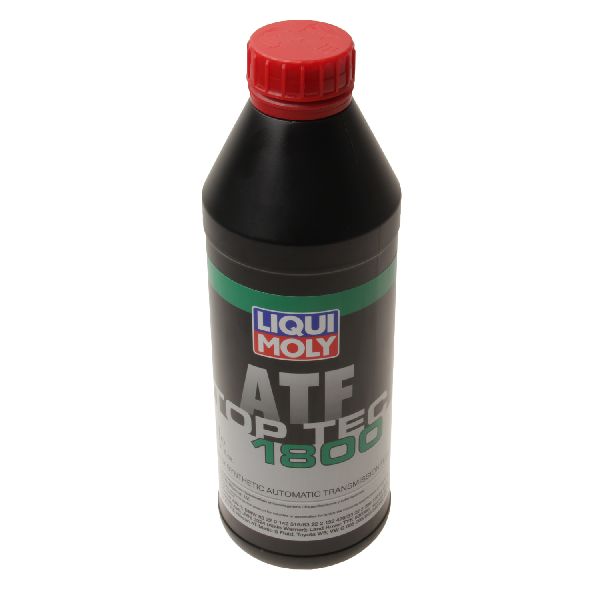
Typical fix: Perform a transmission fluid and filter change using the correct Mercedes-spec fluid (e.g., ATF 134 for red fluid models, ATF 134 FE for blue fluid models).
Est. part cost: $150-$300 for fluid and filter - Leaking Transmission Electrical Connector (13-pin Plug) ⚪ Low Probability → Shop Transmission Assembly The O-rings on the main electrical connector can fail, allowing transmission fluid to leak and wick up the wiring harness via capillary action, potentially shorting out connections at the TCM. This was a very common issue on the older 722.6 transmission and still occurs on the 722.9.
How to confirm: Unplug the main round connector at the transmission and inspect for any signs of oil residue inside the plug or on the pins. If oil is present, the connector sleeve must be replaced.
Typical fix: Replace the connector sleeve/plug and clean the harness contacts with electrical cleaner. If fluid has reached the TCM, it may also need cleaning or replacement.
Est. part cost: $15-$40 for the connector sleeve
Rare But Worth Checking
- Internal Torque Converter Failure: → Shop Automatic Transmission Torque Converter While P0740 is an electrical code, a severe mechanical failure inside the torque converter (like a failed clutch pack) can sometimes cause symptoms that lead to this code being stored. This is usually a last resort after all electrical causes are ruled out. Some owners have replaced the torque converter only to find the issue persists.
- Transmission Control Module (TCM) Failure: → Shop Transmission Assembly In rare cases, the TCM itself can fail, causing it to incorrectly report a circuit fault. However, on the 722.9, the TCM is integrated into the conductor plate, so this is diagnosed and replaced as a single unit.
Diagnosis Steps
- Read fault codes with a Mercedes-specific scanner (like XENTRY/DAS) to confirm P0740 and note any other transmission-related codes (e.g., for speed sensors).
- Check the transmission fluid level and condition using the proper service tool at the correct operating temperature (typically 80°C).
- Inspect the main transmission electrical connector (13-pin plug) for signs of fluid leakage or corrosion on the pins. If found, replace the connector sleeve.
- Using a professional scan tool, monitor live data for TCC solenoid command status, duty cycle, and torque converter slip RPM. Compare commanded state vs. actual state.
- Command the TCC solenoid (Y3/8y8) on and off with the scan tool to check for a response. Listen for a click and watch for a change in slip RPM.
- If the solenoid does not respond, test the wiring harness for continuity and shorts between the TCM and the transmission connector.
- If the wiring is confirmed to be good, the fault is internal to the transmission, most likely the TCC solenoid or the conductor plate.
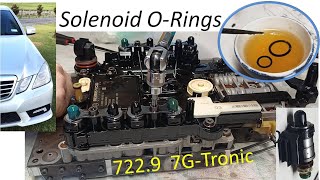
- Remove the transmission pan and valve body to inspect and replace the faulty component(s). It is highly recommended to inspect the O-rings on all solenoids at this time. 🎬 Watch: 722.9 solenoid O-ring and fluid service walkthrough
Parts You'll Likely Need
- Torque Converter Lock-Up Solenoid
(OEM #A2202770998 (Blue Cap) or A2202771098 (Black Cap) - verify by VIN)— This is the most common failure point for code P0740 on the 722.9 transmission. It is identified as Y3/8y8 on schematics.
Trusted brands: Genuine Mercedes-Benz, Bosch
OEM price range: $120-$180
Aftermarket price range: $70-$110 - Transmission Conductor Plate
(OEM #A0002702600 / A000270260080 (verify by VIN))— This part contains all the solenoids and speed sensors and often fails as a unit, causing various electrical fault codes including P0740. Replacement requires SCN coding.
Trusted brands: Genuine Mercedes-Benz, Siemens VDO
OEM price range: $500-$800
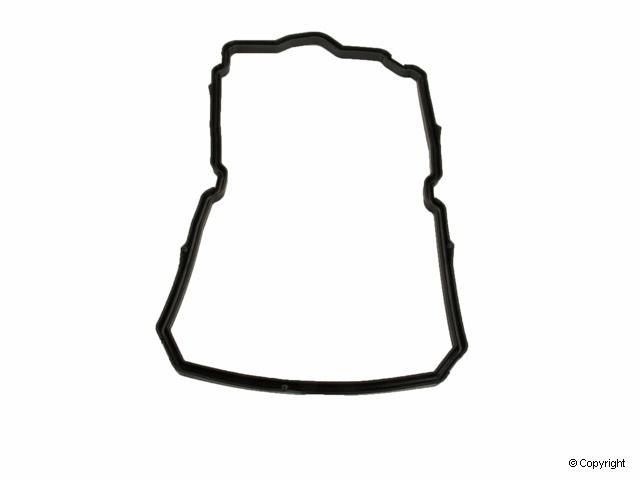
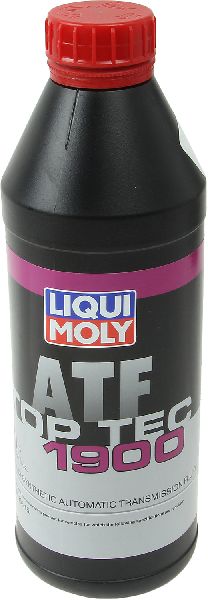
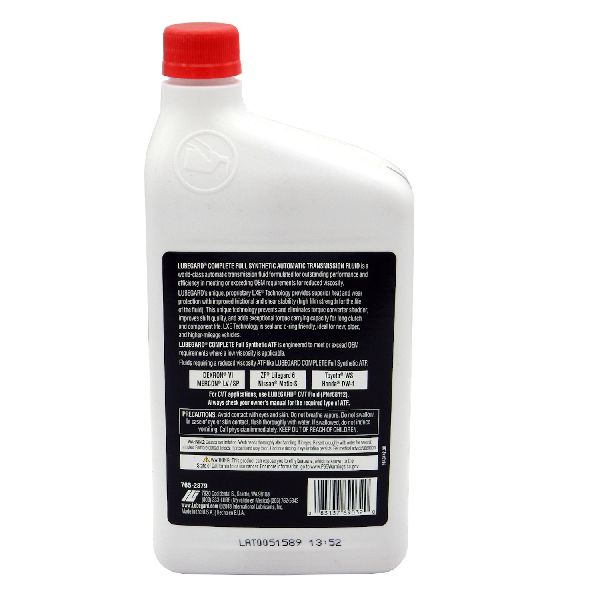
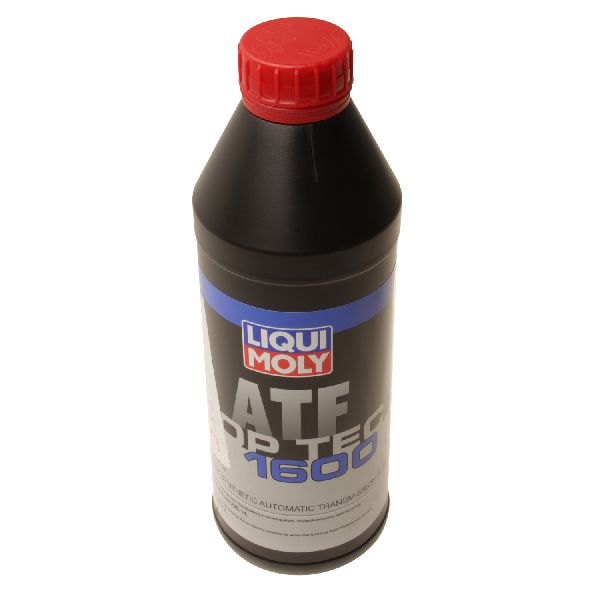
Aftermarket price range: $300-$500 - Transmission Fluid Service Kit (Fluid, Filter, Gasket, Bolts) — A fluid and filter change is required whenever the transmission pan is removed to service internal components. Use fluid spec MB 236.14 for pre-mid-2010 models (Red) or MB 236.15 for post-mid-2010 A89 models (Blue).
Trusted brands: Fuchs, Febi Bilstein, Genuine Mercedes-Benz, Liqui Moly
OEM price range: $200-$300
Aftermarket price range: $120-$200
Related Codes That Often Appear With This One
- P0741 — This code means 'TCC Performance or Stuck Off', indicating a hydraulic or mechanical issue preventing lock-up, which can be caused by the same failing solenoid or contaminated fluid.
- P0717 / P0718 — These codes for 'Input/Turbine Speed Sensor Circuit' often appear with P0740 because the speed sensors are integrated into the same conductor plate that houses the TCC solenoid. A failing conductor plate is the common cause for both codes appearing together.
Platform-Specific Known Issues
- A common owner experience is replacing the TCC solenoid (Y3/8y8) and finding the problem is resolved, avoiding the much more expensive conductor plate replacement. One owner on MBWorld noted changing the solenoid fixed the issue after a shop quoted a full transmission rebuild.
- Another real-world story involves an owner who replaced the torque converter first, only to have the P0740 code and shudder return. The issue was ultimately resolved by replacing the TCC solenoid and conductor plate, highlighting the importance of diagnosing the electrical components first.
Mechanic-Grade Diagnostic Values
- Torque Converter Clutch (TCC) Solenoid Resistance — expected: Approximately 5.0 - 6.0 Ohms. (Note: A precise OEM specification is not readily available, this is based on general solenoid testing values).. Failure: A reading of 0 Ohms (short circuit) or infinite/OL (open circuit) indicates a failed solenoid coil.
- Torque Converter Slip RPM (in lock-up) — expected: Under 50 RPM, ideally close to 0 RPM under steady cruise.. Failure: Consistent slip of over 50-100 RPM when lock-up is commanded indicates a mechanical/hydraulic issue with the clutch or a solenoid control problem. A user with a working system reported seeing 15-20 RPM of slip on their scanner.
Hidden / Shadow Codes Worth Checking
- Component-specific fault text: A generic P0740 code on a standard OBD-II reader may be accompanied by more detailed fault descriptions in the Mercedes XENTRY/DAS system. These can specify the exact component, such as 'Y3/8y8 (Torque converter lock-up clutch control solenoid)' and the fault type, such as 'open circuit' or 'short circuit to ground'. (see via Mercedes-Benz STAR/XENTRY diagnostic system.)
Scan Tool Commands That Help
- Mercedes-Benz XENTRY/DAS: Forced Shift Adaptation — After replacing the valve body, conductor plate, or solenoids, this function must be used to reset adaptation values and force the TCU to learn the new components' characteristics. Failure to do so will result in poor shift quality.
- Mercedes-Benz XENTRY/DAS: Solenoid Actuation Test — During diagnosis, a technician can use this function to command the TCC solenoid (Y3/8y8) on and off while monitoring live data (like slip RPM) to confirm if the solenoid is physically and electrically responding to commands from the TCM.
- Mercedes-Benz XENTRY/DAS: SCN (Software Calibration Number) Coding — This is mandatory when installing a new conductor plate. The conductor plate is a 'theft-relevant part' and must be programmed online to the vehicle's VIN. Without SCN coding, the vehicle will not start or the transmission will be inoperable.
Real Owner Repair Stories
- MBWorld.org Forums user 'Rudeney' (CLK-Class with 722.9 transmission (similar to E-Class)) — Intermittent limp mode over several years, which could be cleared by restarting the engine. Eventually, the car would not engage Reverse or Drive when first started. After idling for ten minutes and warming up, it started working again.
❌ Tried (didn't work) Restarting the engine was a temporary fix that eventually stopped working.
✅ What actually fixed it The temperature-dependent nature of the fault pointed to the conductor plate. The user had it towed to a dealer, who replaced the conductor plate, which resolved all symptoms. The total cost was $1400.
OEM Part Supersession History
VGS1 / VGS2 Conductor Plate→VGS3 / VGS4 Conductor Plate— Revisions to improve reliability of the integrated speed sensors and electronics.
Heads up: The conductor plate versions (VGS1, VGS2, VGS3) are NOT directly interchangeable. Software for VGS2 is not compatible with VGS3. Furthermore, if the vehicle originally had a VGS1 plate, a replacement often requires replacing the entire valve body as well. It is critical to match the replacement part to the vehicle's VIN and original equipment.
Model Year Variations Within This Range
- 2010 - mid 2010: These models have the 'early' 7G-Tronic (722.9) transmission. They use red-colored ATF 236.14 fluid and have a shallower transmission pan with a different filter. They do not have the 'A89' option code.
- Mid 2010 - 2016: These models have the '7G-Tronic Plus' transmission, indicated by option code A89 ('reduced friction'). They use a different, blue-colored ATF 236.15 fluid, which is not backward compatible. These transmissions also feature a deeper pan and an updated filter design. The internal clutch friction materials are also different.
Diagnostic Flowchart
Other Known Issues on This Vehicle
Issues unrelated to this code that are worth knowing about as an owner of this generation:
- Fading Burl Walnut Wood Trim 🟡 Low — Extremely common. The finish lacks adequate UV protection, causing it to fade, discolor, and look cloudy over time. Affects 2010-2016 models. (Ref: A class-action lawsuit resulted in a settlement offering extended warranty coverage for replacement.)
- M276/M278 Engine Timing Chain Rattle 🔴 High — Common on early M276 (V6) and M278 (V8) engines. Lack of oil pressure at startup due to faulty tensioners and missing check valves causes a brief, loud rattle. If ignored, it can lead to chain stretch and catastrophic engine failure. (Ref: Mercedes issued service bulletins and updated parts (tensioners, check valves) were released around 2014 to address this.)
- OM642 Diesel Oil Cooler Seal Leak 🔴 High — Very common on E350 BlueTEC models with the OM642 V6 diesel. The seals for the oil cooler, located deep in the 'V' of the engine, degrade and leak oil. The repair is extremely labor-intensive (8-12+ hours). (Ref: A TSB exists advising the use of updated purple Viton seals for the repair.)
- Airmatic Suspension Failure 🟠 Medium — Common on vehicles equipped with the optional air suspension, typically after 80,000-120,000 km. Air struts develop leaks, causing the car to sag, or the compressor fails from overuse.
- Electronic Steering Lock (ESL) Failure 🔴 High — A notorious issue where the electronic steering lock fails, preventing the key from being recognized and the car from starting. The steering wheel remains locked.
- Thrust Arm Bushing Wear 🟠 Medium — The bushings on the front suspension thrust links (control arms) wear out, causing uneven inner tire wear and potential clunking noises.
Used vs. New Parts: Buying Guide for This Vehicle
When a used part is the smart pick: For this repair, a used TCC solenoid or a complete used valve body with solenoids can be a cost-effective option. These are not typically coded to the vehicle and can be swapped over.
Donor-vehicle mileage cap: roughly under 80000 miles for the part to have meaningful remaining life.
What to inspect on the donor part:
- For solenoids, check for clean electrical connectors with no corrosion.
- For a valve body, inspect for any visible cracks or damage.
- Ask for the donor vehicle's VIN to verify it had the same transmission type (early vs. 7G-Tronic Plus).
- Ensure the fluid drained from the donor unit was not burnt or full of metal shavings.
OEM-only on this vehicle (don't cheap out):
- Transmission Conductor Plate (TCM/VGS): This part is the number one component to buy new from a dealer or a reputable rebuilder who can virginize it. It is a 'theft-relevant part' and is VIN-coded. A used conductor plate from a junkyard cannot be installed into another vehicle without being 'virginized' with specialized tools, and then SCN coded online by a dealer or specialist. Buying used is not recommended for DIY or most independent shops.
Aftermarket brands forum-validated for this vehicle:
- Bosch (for solenoids)
- Fuchs, Febi Bilstein, Liqui Moly (for transmission fluid and service kits)
Brands owners have reported issues with on this vehicle:
- Unnamed, no-brand 'white box' conductor plates or solenoids from online marketplaces are a significant risk due to high failure rates and potential for incorrect software/hardware versions.
Real Owner Stories
Aggregated from forums and TSBs cited above. Mileages and costs reflect what owners reported in those sources.
Mercedes-Benz E-Class (W212) with 722.9 Transmission
Symptoms: The owner experienced a torque converter lock-up clutch issue and was quoted for a full transmission rebuild by a shop.
What fixed it: Replacing only the TCC solenoid (Y3/8y8) resolved the issue.
Source hint: MBWorld.org Forums - Thread title: 'Need help: 722.9 7G-Tronic TC Lock Up Clutch Issue'
Mercedes-Benz E-Class (W212) with 722.9 Transmission
Symptoms: The vehicle had a persistent shudder and the P0740 code returned even after the torque converter itself was replaced.
What fixed it: The issue was finally resolved by replacing the TCC solenoid and the conductor plate.
Source hint: MBWorld.org Forums - Thread title: 'Need help: 722.9 7G-Tronic TC Lock Up Clutch Issue'
Related OBD-II Codes
Frequently Asked Questions
Can I just replace the TCC solenoid (Y3/8y8) on my E-Class 722.9 transmission, or do I need a whole new valve body?
Why does my Mercedes E-Class feel like it's driving over a 'rumble strip' at low speeds?
Is the conductor plate replacement a DIY job for a 2010-2016 E-Class?
What color transmission fluid should I use for my E-Class 7G-Tronic transmission?
Could a leak at the 13-pin electrical connector cause the P0740 code?
My E-Class is stalling when I come to a stop; is this related to the transmission?
Helpful Videos

We Have This Part in Stock

The information in this article is provided for general reference and educational purposes only. Vehicle specifications, procedures, and part compatibility can vary by production date, trim level, and region. Always consult your vehicle's factory service manual and verify part numbers before purchasing or performing repairs. Safety-critical components such as airbags, seat belts, and braking systems should be installed by a qualified professional.
- Mercedes-Benz E-Class:
- 🧭 Diagnostic Flowchart
- 🎬 Helpful Videos
- 🛍️ Shop This Part
- What's Unique About the 2010-2016 Mercedes-Benz E-Class
- Symptoms You May Notice
- Most Likely Causes
- Rare But Worth Checking
- Diagnosis Steps
- Parts You'll Likely Need
- Related Codes That Often Appear With This One
- Platform-Specific Known Issues
- Mechanic-Grade Diagnostic Values
- Hidden / Shadow Codes Worth Checking
- Scan Tool Commands That Help
- Real Owner Repair Stories
- OEM Part Supersession History
- Model Year Variations Within This Range
- Other Known Issues on This Vehicle
- Used vs. New Parts: Buying Guide for This Vehicle
- Real Owner Stories
- Mercedes-Benz E-Class (W212) with 722.9 Transmission
- Mercedes-Benz E-Class (W212) with 722.9 Transmission
- Related OBD-II Codes
- Frequently Asked Questions
- 🎟️ Get 5% Off