

P0740 on 2007-2017 Mitsubishi Lancer: Torque Converter Clutch Circuit Fixes
On a 2007-2017 Lancer with a CVT, code P0740 usually points to a problem with the torque converter lock-up system. The most common causes are a faulty TCC solenoid, a failing valve body, or degraded CVT fluid. This is a complex issue on a transmission with known reliability problems, and professional diagnosis is strongly recommended.
- P0740 on a 2007-2017 Lancer indicates an electrical fault in the torque converter clutch circuit.
- Due to the known issues with this model's CVT, the code is often a symptom of a larger problem like contaminated fluid or a failing valve body.
- Always start diagnosis by checking the level and condition of the CVT fluid. Use only Mitsubishi-specified fluid for changes.
- DIY repair is not recommended beyond checking the fluid, due to the complexity of the CVT and the high risk of misdiagnosis.
- Be prepared for the possibility that a simple solenoid replacement may not be a permanent fix; the underlying cause may be more severe.
What's Unique About the 2007-2017 Mitsubishi Lancer
The 2007-2017 Lancer primarily uses a Jatco JF011E Continuously Variable Transmission (CVT), also known as the RE0F10A. This transmission has a documented history of issues, including a class-action lawsuit for shuddering, surging, and premature failure. While P0740 is an electrical circuit code, on this platform it is often a symptom of a deeper mechanical or hydraulic problem within the CVT. A common point of failure is the pump's flow control valve bore wearing out, which starves the torque converter clutch of the pressure needed to operate, leading the computer to flag a circuit fault. A simple solenoid replacement may not be a permanent fix, as underlying hydraulic issues can cause the code to return.
Symptoms You May Notice
- Check Engine Light is on
- Vehicle shudders or vibrates, especially at steady cruising speeds (40-65 mph), sometimes described as a 'rumble strip' sensation
- Engine RPMs are higher than usual at highway speeds
- Noticeable decrease in fuel economy
- Harsh thump or clunk when shifting from Park into Drive or Reverse
- Vehicle may stall when coming to a stop
- Transmission overheating warning light may appear on the dash
- Replacing only the TCC solenoid when the root cause is a worn flow control valve bore in the valve body. The new solenoid works for a short time before the lack of hydraulic pressure causes the P0740 code to return.
- Replacing the entire transmission when a valve body repair or replacement would have solved the issue. Due to the known issues with the JF011E, some shops may default to recommending a full replacement.
Most Likely Causes
- Low or Degraded CVT Fluid 🔴 High Probability CVTs are very sensitive to fluid quality and level. The Jatco JF011E is known to run hot, which accelerates fluid breakdown. Contaminated fluid can cause solenoids and valves to stick.
How to confirm: Check the transmission fluid level and condition. The fluid should be translucent and not smell burnt. The presence of significant metal shavings on the dipstick or in the pan is a sign of serious internal wear.
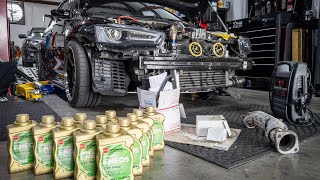
Typical fix: Perform a transmission fluid and filter change. This CVT has two filters: a pan filter and an external cooler filter that should both be changed. 🎬 Watch: Step-by-step guide to changing CVT fluid and filters. Use only the specified Mitsubishi OEM CVT fluid (e.g., DiaQueen J1/J4).
Est. part cost: $100-$200 - Faulty Torque Converter Clutch (TCC) Solenoid 🔴 High Probability → Shop Automatic Transmission Torque Converter The solenoid can fail electrically (coil burns out) or mechanically (gets stuck) due to contamination in the CVT fluid.
How to confirm: A technician can test the solenoid's resistance with a multimeter to see if it's within spec. A scan tool can also be used to command the solenoid on and off to check its response.
Typical fix: Replace the TCC solenoid. This solenoid is located on the valve body, requiring removal of the transmission pan.
Est. part cost: $50-$150 - Worn Pump Flow Control Valve in Valve Body 🔴 High Probability → Shop Transmission Valve Body This is a well-documented wear point in the Jatco JF011E. The valve, made of aluminum, oscillates in a steel bore within the valve body, leading to wear. This wear causes a loss of hydraulic pressure to the torque converter circuit, which the TCM interprets as a P0740 fault.
How to confirm: This is a difficult diagnosis. It's often suspected after fluid and solenoid replacement fail to fix the code. A transmission specialist can perform vacuum testing on the valve body to confirm the leak.
Typical fix: The ideal fix is to ream the worn bore and install an oversized valve, which is a specialist repair. A more common but expensive fix is the replacement of the entire valve body assembly. 🎬 See how to replace the valve body and filters.
Est. part cost: $800-$1500 - Damaged Wiring or Connectors ⚪ Low Probability Not platform-specific, but road debris, heat, and vibration can damage the wiring harness leading to the transmission over time.
How to confirm: Visually inspect the wiring harness from the TCM to the transmission case for any signs of chafing, burning, or corrosion at the connectors. Perform continuity tests with a multimeter.
Typical fix: Repair the specific section of damaged wire or replace the connector.
Est. part cost: $20-$100
Rare But Worth Checking
- Failing Torque Converter: → Shop Automatic Transmission Torque Converter While the code points to the control circuit, a mechanical failure within the torque converter's lock-up clutch can sometimes lead to this code. This is usually accompanied by significant shuddering or large amounts of metal debris in the fluid.
- Faulty Transmission Control Module (TCM): → Shop Transmission Assembly It's rare for the module itself to fail, but it can happen. This should only be considered after all other possibilities (solenoid, wiring, valve body) have been thoroughly tested and ruled out.
Diagnosis Steps
- Check and record any stored fault codes with an OBD-II scanner. Note if P0741 or P0700 are also present.
- Inspect the level and condition of the CVT fluid. Note any burnt smell or visible metal particles. A fluid that is dark and full of debris points to a more severe mechanical issue.
- Visually inspect the transmission wiring harness and connectors for any signs of damage, corrosion, or loose connections.
- Using a professional scan tool, monitor live data for TCC command signals from the TCM and the transmission's response.
- If possible, use the scan tool to command the TCC solenoid on and off to check for a reaction.
- If the wiring is confirmed to be good, the next step is to test the TCC solenoid's internal resistance using a multimeter. This requires accessing the solenoid, usually by dropping the transmission pan.
- If the solenoid and wiring test good, the problem is highly likely to be hydraulic or mechanical, pointing towards the valve body (specifically the flow control valve) or the torque converter itself.
- Given the complexity, if the initial fluid and wiring checks don't reveal the issue, it is best to consult a transmission specialist with experience in Jatco CVTs.
Parts You'll Likely Need
- CVT Fluid
(OEM #MZ320185 (DiaQueen CVT Fluid-J1) or MZ320286 (DiaQueen CVT Fluid-J4))— Fluid is the lifeblood of the CVT. Using the correct, clean fluid is the first and most important step in addressing almost any CVT issue.
Trusted brands: Mitsubishi Genuine
OEM price range: $20-$30 per quart
Aftermarket price range: N/A (OEM fluid is strongly recommended) - Torque Converter Clutch (TCC) Solenoid
(OEM #G7T23082)— This solenoid is a common electrical failure point that directly causes the P0740 code. It is often replaced first during diagnosis.
Trusted brands: Mitsubishi, Rostra
OEM price range: $100-$200
Aftermarket price range: $50-$100 - CVT Valve Body
(OEM #JF011E / RE0F10A (verify by VIN))— If fluid contamination or a worn flow control valve has clogged hydraulic passages, the entire valve body may need to be replaced to restore proper function and clear the code permanently.
Trusted brands: OEM (Remanufactured), Sonnax (provides repair kits)
OEM price range: $1000-$1800
Aftermarket price range: $600-$1200 (remanufactured) - External CVT Cooler Filter
(OEM #2824A006)— This is a critical maintenance item often overlooked. A clogged cooler filter can restrict flow, increase temperatures, and contribute to fluid breakdown and component failure.
Trusted brands: Mitsubishi Genuine
OEM price range: $30-$50
Aftermarket price range: $15-$25
Related Codes That Often Appear With This One
- P0741 — P0741 indicates 'TCC Performance/Stuck Off'. If the circuit malfunctions (P0740), the computer will also likely detect that the lock-up is not performing as commanded (P0741), pointing towards a hydraulic or mechanical issue.
- P0700 — P0700 is a generic code that simply means the Transmission Control Module (TCM) has stored a fault. It acts as a 'heads-up' to check the TCM for more specific codes like P0740.
Technical Service Bulletins (TSBs) & Recalls
- TSB-20-23-001: Titled 'Potential Transmission Shudder/Surge With Possible DTC', this bulletin addresses shudder conditions in CVT-8 transmissions (a later model than the Lancer's JF011E). While it lists related codes like P0741, it does not list P0740 and is primarily for 2016-2017 Lancers with the newer CVT8.
Platform-Specific Known Issues
- A class-action lawsuit was filed against Mitsubishi for defective CVTs in several models, including the 2014-2017 Lancer. The suit alleged issues like shuddering, jerking, and premature failure, which are all related to the symptoms of P0740.
Mechanic-Grade Diagnostic Values
- TCC Control Solenoid Resistance — expected: 3.0 to 9.0 ohms. Failure: A reading outside this range indicates a faulty solenoid coil.
- Lockup Select Switch Solenoid Resistance — expected: 15 to 30 ohms. Failure: A reading outside this range indicates a faulty solenoid coil.
- TCC Regulator Valve Circuit Pressure — expected: 0.0 to 145 PSI. Failure: Pressure readings outside this range, especially low pressure, can indicate a worn TCC regulator valve or other hydraulic leaks.
- TCC Solenoid Command Signal Voltage — expected: 0-12V Pulse Width Modulated (PWM) signal from the TCM when active.. Failure: No voltage or a constant voltage when commanded indicates a wiring or TCM driver fault.
Scan Tool Commands That Help
- Mitsubishi MUT-III: Reset (item No.1: Control learning value) — This function must be used after replacing the CVT assembly or the valve body assembly to initialize the learned values in the CVT ECU.
- Mitsubishi MUT-III: Clear CVT oil degradation level — This should be performed after changing the CVT fluid to reset the fluid life monitor.
- Mitsubishi MUT-III: Write calibration value (Saved calibration value writing) — When replacing the TCM or valve body, the specific calibration data file for the new part must be written to the control module. This often requires downloading the file from Mitsubishi's dealer network.
Wiring & Ground Locations
- Transmission Case Ground — The transmission case itself serves as the ground path for the solenoids on Mitsubishi models.. When checking solenoid resistance on a Mitsubishi Lancer, the multimeter's negative lead should be placed on a clean spot on the transmission case, not a specific pin in the connector, to get an accurate reading.
- TCM Connector — The wiring for the TCC solenoid runs from the Transmission Control Module (TCM) to the main transmission case connector.. A continuity check between the appropriate pin at the TCM connector and the corresponding pin at the transmission connector is necessary to rule out a wiring fault between the module and the transmission.
Real Owner Repair Stories
- Lancerforums.com user (2008 Mitsubishi Lancer GTS (CVT)) — Check engine light with code P0740, occasional shuddering at highway speeds.
❌ Tried (didn't work) Replaced TCC solenoid, Performed multiple transmission fluid flushes
✅ What actually fixed it The final fix was replacing the entire CVT valve body. The user suspected the original valve body had worn passages that caused a hydraulic pressure loss, which could not be fixed by just replacing the solenoid.
OEM Part Supersession History
MZ320185 (DiaQueen CVT Fluid-J1)→MZ320286 (DiaQueen CVT Fluid-J4)— J4 is an updated formulation designed to provide better protection for the CVT components.
Heads up: DiaQueen J4 is backward compatible and replaces J1. Vehicles specifying J1 should use J4.
Model Year Variations Within This Range
- 2007-2009 vs 2010-2017: Early JF011E valve bodies (often stamped with 1XF) used two pressure sensors. Later models (often stamped with 1XT) eliminated the secondary pressure sensor, using only one. A two-sensor valve body can be used in a one-sensor application, but not vice-versa. Chrysler models using this CVT always used the two-sensor version.
Diagnostic Flowchart
Other Known Issues on This Vehicle
Issues unrelated to this code that are worth knowing about as an owner of this generation:
- A/C Compressor Relay Failure 🟠 Medium — Common issue where the A/C clutch fails to engage, resulting in no cold air. The relay is a frequent failure point due to electrical stress and wear.
- Premature Rear Wheel Bearing Failure 🟠 Medium — Owners report humming or grinding noises from the rear of the vehicle, which often leads to replacing wheel bearings earlier than expected. Hitting potholes can sometimes trigger ABS/ASC/4WD warning lights related to a failing bearing/sensor.
- Clear Coat and Paint Failure 🟡 Low — Widespread reports of the clear coat peeling or fading, particularly on the roof, hood, and trunk. This is a cosmetic issue but very common across many model years.
- ETACS Module Malfunctions 🔴 High — The Electronic Time and Alarm Control System (ETACS) can fail, causing a host of bizarre electrical problems like interior lights not turning off, key fob issues, and random warning lights.
Used vs. New Parts: Buying Guide for This Vehicle
When a used part is the smart pick: A complete, used CVT assembly from a low-mileage, rear-ended donor vehicle can be a cost-effective alternative to a full rebuild, especially if your transmission has catastrophic internal damage (e.g., significant metal debris). A used valve body is risky due to the high potential for hidden bore wear.
Donor-vehicle mileage cap: roughly under 80000 miles for the part to have meaningful remaining life.
What to inspect on the donor part:
- Verify the donor vehicle's mileage and check its service history if possible.
- Ask the seller to drain a small amount of fluid. It should not be black, smell burnt, or contain visible glitter (metal shavings).
- Inspect the main wiring connector for corrosion or bent pins.
- Ensure the donor vehicle matches your model year range, as there are variations in valve body sensors.
OEM-only on this vehicle (don't cheap out):
- CVT Fluid: The Jatco CVT is extremely sensitive to fluid properties. Using anything other than Mitsubishi DiaQueen J4 (or a fluid that explicitly meets the J4 spec like Mobil CVTF Multi-Vehicle) is a major risk.
- Transmission Control Module (TCM): Due to programming and calibration requirements tied to the vehicle's VIN, a new or properly remanufactured OEM module is the only reliable option.
Aftermarket brands forum-validated for this vehicle:
- Sonnax: For valve body repair, Sonnax offers oversized valve kits and reaming tools that are highly regarded by transmission specialists for permanently fixing worn valve bores.
- Rostra: A common and generally reliable aftermarket source for individual transmission solenoids.
Brands owners have reported issues with on this vehicle:
- Generic, unbranded 'remanufactured' valve bodies from online marketplaces can be a gamble. They may have been simply cleaned and not properly tested or repaired with updated parts, leading to a quick return of the original problem.
Real Owner Stories
Aggregated from forums and TSBs cited above. Mileages and costs reflect what owners reported in those sources.
2008 Mitsubishi Lancer ES
Symptoms: The car thumps when changing into Drive or Reverse, though it otherwise drives smoothly without slipping.
What fixed it: The owner replaced the valve body with a new one; however, the fix was temporary as the code returned after approximately one month.
Source hint: Reddit r/mitsubishi
Related OBD-II Codes
Frequently Asked Questions
Does TSB-20-23-001 apply to my 2015 Lancer with code P0740?
What specific transmission fluid should I use for my Lancer's CVT to avoid P0740?
I'm experiencing a 'rumble strip' vibration at highway speeds; is this related to P0740?
Is there a known issue with the Lancer CVT that I should be aware of regarding this code?
Can I just replace the TCC solenoid to fix the 'thump' when shifting into Drive?
Why is the valve body repair so expensive for the JF011E transmission?
Helpful Videos


We Have This Part in Stock

The information in this article is provided for general reference and educational purposes only. Vehicle specifications, procedures, and part compatibility can vary by production date, trim level, and region. Always consult your vehicle's factory service manual and verify part numbers before purchasing or performing repairs. Safety-critical components such as airbags, seat belts, and braking systems should be installed by a qualified professional.
- Mitsubishi Lancer:
- 🧭 Diagnostic Flowchart
- 🎬 Helpful Videos
- 🛍️ Shop This Part
- What's Unique About the 2007-2017 Mitsubishi Lancer
- Symptoms You May Notice
- Most Likely Causes
- Rare But Worth Checking
- Diagnosis Steps
- Parts You'll Likely Need
- Related Codes That Often Appear With This One
- Technical Service Bulletins (TSBs) & Recalls
- Platform-Specific Known Issues
- Mechanic-Grade Diagnostic Values
- Scan Tool Commands That Help
- Wiring & Ground Locations
- Real Owner Repair Stories
- OEM Part Supersession History
- Model Year Variations Within This Range
- Other Known Issues on This Vehicle
- Used vs. New Parts: Buying Guide for This Vehicle
- Real Owner Stories
- 2008 Mitsubishi Lancer ES
- Related OBD-II Codes
- Frequently Asked Questions
- 🎟️ Get 5% Off