

P0740 on 2007-2012 Nissan Altima: Torque Converter Clutch Circuit Fixes
P0740 on a 2007-2012 Altima usually indicates a problem with the torque converter clutch (TCC) solenoid or the valve body inside the CVT. The most common fix is replacing the valve body assembly, as the solenoid is often integrated. This is a complex and costly repair, often requiring TCM reprogramming.
- P0740 on a 2007-2012 Altima points to an electrical issue with the torque converter clutch, but the root cause is often a mechanical failure within the CVT's valve body.
- Do not immediately assume the torque converter is bad; proper diagnosis of the electrical circuit and valve body is crucial.
- The most common and recommended repair is replacing the entire valve body assembly, not just the TCC solenoid.
- After replacing the valve body, reprogramming the TCM is a required step that should not be skipped.
What's Unique About the 2007-2012 Nissan Altima
The 2007-2012 Nissan Altima (fourth generation, L32) is equipped with a Jatco JF011E (also known as RE0F10A) Continuously Variable Transmission (CVT), which has a known history of issues. Unlike traditional automatic transmissions, the P0740 code on these CVTs often points towards a failure of the valve body, which houses the problematic TCC solenoid. Nissan has issued technical service bulletins (TSBs) for similar models that recommend replacing the entire valve body assembly rather than just a single solenoid for this code.
Symptoms You May Notice
- Check Engine Light is on
- Vehicle shuddering or vibrating, especially at lower speeds or during light acceleration.
- Stalling when coming to a stop if the TCC is stuck engaged.
- Reduced fuel efficiency due to the torque converter not locking up.
- Transmission slipping or harsh/jerky shifting.
- Engine RPMs are unstable or higher than usual at steady highway speeds.
- Transmission overheating, potentially triggering a warning light or a burning smell.
- Replacing only the TCC solenoid when it is part of a larger, failing valve body assembly.
- Replacing the entire transmission when only the valve body is needed.
- Assuming the torque converter is bad without first diagnosing the electrical circuit and valve body.
- Replacing the valve body without reprogramming the TCM, which can lead to improper shifting or a no-move condition.
Most Likely Causes
- Faulty Transmission Valve Body / TCC Solenoid 🔴 High Probability → Shop Transmission Valve Body The TCC solenoid is integrated into the valve body on these Jatco CVT models, and the entire assembly is a common failure point. Debris in the fluid can clog the fine passages and solenoids within the valve body. Nissan has issued TSBs for later models with similar CVTs advising valve body replacement for this code.
How to confirm: A technician will use a professional scan tool to check for specific solenoid circuit faults. They may also perform electrical tests on the solenoid circuit at the transmission connector. If the external wiring is good, the valve body is the likely culprit. In many forum discussions, owners report that replacing just the solenoid is not a lasting fix.
Typical fix: Replace the entire transmission valve body assembly and reprogram the Transmission Control Module (TCM) with the new valve body's calibration data, often supplied on a CD or via a QR code.
Est. part cost: $800-$1500 - Low or Dirty Transmission Fluid 🟡 Medium Probability → Shop Transmission Assembly CVT transmissions are very sensitive to fluid level and condition. Old, contaminated, or low fluid can cause solenoids to malfunction and lead to overheating and shuddering. The use of incorrect fluid is also a major cause of failure.
How to confirm: Check the transmission fluid level and condition. The fluid should be at the correct level and have a light, translucent color. If it is dark, burnt-smelling, or contains metal shavings, it indicates a problem. Note: These CVTs do not have a traditional dipstick, requiring a specific procedure to check the fluid level.
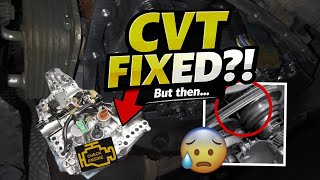
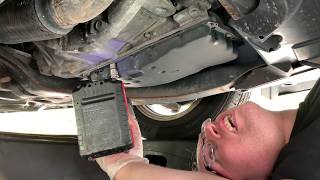
Typical fix: Perform a transmission fluid drain and fill or flush using the correct Nissan CVT fluid (NS-2). 🎬 Watch: Step-by-step guide for a CVT fluid and filter change. If the fluid is heavily contaminated with metal debris, internal damage (like a failing torque converter) is likely and a fluid change alone will not fix the issue.
Est. part cost: $150-$300 - Wiring or Connector Issues ⚪ Low Probability The wiring harness to the transmission can become damaged from road debris, heat, or corrosion over time, leading to an open or shorted circuit.
How to confirm: Visually inspect the wiring harness and connectors going to the transmission for any signs of damage, corrosion, or loose connections. A multimeter can be used to test for continuity and shorts in the TCC solenoid circuit between the TCM and the transmission.
Typical fix: Repair or replace the damaged section of the wiring harness or the connector.
Est. part cost: $50-$250
Rare But Worth Checking
- Failed Torque Converter: → Shop Automatic Transmission Torque Converter While the code points to an electrical circuit issue, a mechanical failure within the torque converter's clutch can sometimes trigger it. This is often accompanied by significant shuddering or large amounts of metal debris in the transmission fluid. Some technicians argue that a bad torque converter is often the true root cause, even when the code points to the solenoid.
- Faulty Transmission Control Module (TCM): → Shop Transmission Assembly In rare cases, the TCM itself can fail, sending false error codes. This is usually diagnosed only after all other possibilities, including wiring and the valve body, have been thoroughly eliminated. Sometimes a software reflash can resolve the issue.
Diagnosis Steps
- Scan the vehicle's computer for P0740 and any other related trouble codes.
- Check the level and condition of the CVT fluid. The correct fluid is Nissan NS-2. If the fluid is low, top it off. If it's dark, burnt, or contains debris, a fluid flush may be attempted, but internal damage is likely.
- Inspect the transmission wiring harness and connectors for any visible damage, corrosion, or loose pins.
- Using a multimeter, test the resistance of the TCC solenoid circuit at the transmission connector to see if it's within the manufacturer's specifications (typically between 4-5 ohms). An open or shorted circuit points to a wiring or solenoid issue.
- If the external wiring is intact and the fluid is clean, the next step is to test the valve body. This is typically done by a professional.
- If diagnostic tests confirm a fault with the TCC solenoid or valve body, replacement of the valve body assembly is the recommended repair.
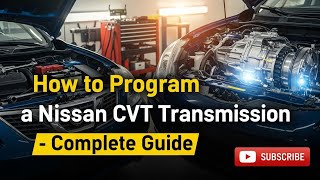
- After replacement, the TCM must be reprogrammed with the new valve body's calibration data using a tool like Nissan CONSULT. 🎬 See how to program the TCM after a valve body repair.
Parts You'll Likely Need
- Transmission Valve Body Assembly
(OEM #31705-1XF1A, 31705-1XF0C, 31705-1XZ0D (verify by VIN))— This is the most common cause of P0740 on this vehicle, as the TCC solenoid is integrated into this assembly and is a frequent failure point in the Jatco JF011E CVT.
Trusted brands: Hitachi (OEM), Rostra, Nissan (OEM)
OEM price range: $1000-$1500
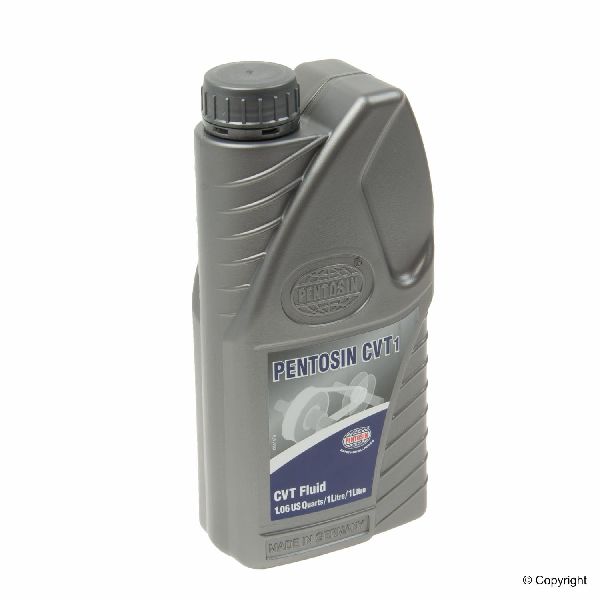
Aftermarket price range: $700-$1200 - Nissan CVT Fluid NS-2
(OEM #999MP-NS200P)— The correct fluid is required for any repair involving opening the transmission, such as a valve body replacement or fluid service. Using incorrect fluid can cause severe damage.
Trusted brands: Nissan (OEM)
OEM price range: $20-$25 per quart
Aftermarket price range: $15-$20 per quart - Torque Converter Clutch (TCC) Solenoid
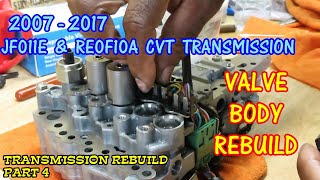
(OEM #31941-1XJ0A)— While replacing the entire valve body is recommended, some may attempt to replace only the TCC solenoid. This part is available separately but may not solve the underlying issue 🎬 Watch: A detailed walkthrough of a CVT valve body rebuild. if debris is present in the valve body.
Trusted brands: Nissan (OEM), Rostra
OEM price range: $80-$150
Aftermarket price range: $50-$100
Related Codes That Often Appear With This One
- P0744 — This code indicates an intermittent fault in the TCC circuit, which can be a precursor to the constant fault indicated by P0740, often pointing to a failing solenoid or wiring issue.
- P17F0 — Seen on later Nissan CVTs, this code for 'CVT Judder' is often addressed by a valve body replacement per TSB NTB17-082, showing the link between judder, codes, and the valve body as the common fix.
Technical Service Bulletins (TSBs) & Recalls
- NTB15-087: While for 2013-2015 Altimas, this TSB is highly relevant as it instructs technicians to replace the CVT valve body for a P0740 code instead of the entire transmission, indicating a known issue with this component.
- NTB12-103g: This bulletin provides the detailed procedure for writing calibration data to the TCM after a valve body or transmission replacement, which is a mandatory step for this repair.
- NTB17-018 / PC516: Details a voluntary service campaign for 2009-2010 Altimas to replace the Electro
Platform-Specific Known Issues
- The Jatco JF011E (RE0F10A) CVT used in this generation of Altima is known for premature failures, often related to the valve body and solenoids. Nissan extended the CVT warranty to 10 years/120,000 miles for many of these vehicles due to widespread issues.
- A Reddit user on r/Cartalk with a 2012 Nissan experiencing a P0744 (intermittent version of P0740) and whining was advised by a mechanic that the torque converter itself was likely failing and that replacing the entire CVT with a remanufactured unit is the common shop repair.
Mechanic-Grade Diagnostic Values
- TCC Control Solenoid (LCS) resistance — expected: 3 to 9 Ohms. Failure: A reading of infinite resistance (open) or near zero (short) indicates a failed solenoid.
- Lock-up Select Solenoid (LSS) resistance — expected: 15 to 38 Ohms. Failure: A reading outside this range indicates a failed solenoid.
- CVT Fluid Temperature Sensor resistance — expected: Approximately 6.5 kOhms at 20°C (68°F) or 0.9 kOhms at 80°C (176°F).. Failure: Readings that are drastically different suggest a faulty sensor, which can affect lock-up operation.
Scan Tool Commands That Help
- Nissan CONSULT-III or equivalent professional scan tool: TCC Solenoid Activation / Duty Cycle Command — Use this bidirectional command to manually activate the TCC solenoid while monitoring circuit voltage or pressure. This helps determine if the solenoid is mechanically stuck or if the fault is in the wiring or TCM, as it isolates the solenoid for a functional test.
- Nissan CONSULT-III or equivalent professional scan tool: Conform CVTF deterioration date / Write IP Char — This function is mandatory after replacing the transmission valve body or the entire CVT assembly. It writes the new valve body's specific calibration data (often from a QR code or CD) to the TCM to ensure correct hydraulic pressures and shift behavior.
Wiring & Ground Locations
- Shared Solenoid Ground — Internally on the valve body. A shared eyelet for all solenoids is fastened to the valve body by one of its mounting bolts.. A loose valve body bolt or corrosion at this single grounding point can cause an open or high-resistance ground circuit for the TCC solenoid, directly triggering a P0740 code. This is a critical, non-obvious failure point.
- Transmission Connector Pin 12 — On the main round harness connector at the transmission case.. This is the specific pin for the TCC control solenoid. Resistance and voltage tests should be performed at this pin to diagnose the circuit between the TCM and the solenoid.
- Transmission Connector Pin 13 — On the main round harness connector at the transmission case.. This is the specific pin for the Lock-Up Select solenoid, which works with the TCC solenoid. It should also be tested for correct resistance.
Real Owner Repair Stories
- Nissan Forum moderator 'Q45tech' (General advice for a Nissan with P0740 at 140k miles) — P0740 code returned after a reset.
❌ Tried (didn't work) A simple code reset was only a temporary fix.
✅ What actually fixed it The moderator advised that while the code points to an electrical issue (solenoid/wiring), at high mileage the root cause is often a mechanically worn-out lock-up clutch inside the torque converter itself. The advice was to be prepared for a remanufactured transmission ($3500) as a fluid flush or solenoid replacement ($1000) might not be a permanent solution on a high-mileage, aging unit. - NHTSA ODI #10758676 — An owner of a similar Nissan model reported experiencing issues between 20-30 MPH; a diagnostic test confirmed code P0740 with detailed info pointing specifically to the torque converter.
OEM Part Supersession History
31705-1XF0C, 31705-1XZ0D→31705-1XF1A— Part revision and consolidation by Nissan.
Heads up: Always verify the correct part number by VIN.Valve Body with 1 pressure sensor→Valve Body with 2 pressure sensors— Design update by Jatco.
Heads up: A two-sensor valve body can be used in a transmission that originally had a one-sensor body (the second sensor is just ignored). However, a one-sensor valve body CANNOT be used in a transmission that requires two sensors. A general rule is that transmissions with a stamp code starting in '1XT' use one sensor, while those starting in '1XF' use two.
Model Year Variations Within This Range
- 2007-2009: Early models in this generation reported a higher incidence of CVT transmission problems compared to the 2010-2012 models, suggesting potential running changes or improvements in later production years.
- 2010-2012: The 2010 model year received a mid-cycle refresh with updated styling. More importantly, stability control (VDC) became standard, and the CVT became the only available transmission on the sedan.
Diagnostic Flowchart
Other Known Issues on This Vehicle
Issues unrelated to this code that are worth knowing about as an owner of this generation:
- Premature CVT Failure 🔴 High — Very common, often occurring between 60,000 and 120,000 miles. Nissan extended the warranty to 10 years/120,000 miles on many models due to this. (Ref: Warranty Extension Program)
- Electronic Steering Column Lock (ESCL) Failure 🔴 High — Common on 2009-2010 models, causing a no-start condition. The steering wheel remains locked and the ignition will not engage. (Ref: Nissan Voluntary Service Campaign PC516 (NTB17-018))
- Melting / Sticky Dashboard 🟠 Medium — Widespread on 2008-2009 models, especially in hot climates. The dashboard surface degrades, becoming sticky and creating a dangerous reflective glare on the windshield. (Ref: Class Action Lawsuit Settlement (for 2008-2009 models in Florida))
- Cracked Radiator / Coolant Contamination of CVT 🔴 High → Shop Radiator — A known issue on earlier Nissan models that can still affect this generation. A crack in the internal radiator wall allows coolant to mix with CVT fluid, quickly destroying the transmission.
- Faulty Crankshaft/Camshaft Position Sensors 🟠 Medium — A common failure item that can cause stalling while driving, hesitation, or a no-start condition.
Used vs. New Parts: Buying Guide for This Vehicle
When a used part is the smart pick: For a complete transmission assembly, a used unit from a documented low-mileage (<80,000 miles) donor vehicle can be a cost-effective option, but it carries inherent risks. For the valve body specifically, a used part is highly discouraged.
Donor-vehicle mileage cap: roughly under 80000 miles for the part to have meaningful remaining life.
What to inspect on the donor part:
- Verify the donor vehicle's mileage and VIN.
- Ask for a video of the donor car running and driving, if possible.
- Check the seller's warranty policy (typically 30-90 days for used parts).
- Inspect the fluid from the donor transmission if possible; it should not be dark, burnt, or contain metal shavings.
OEM-only on this vehicle (don't cheap out):
- Nissan CVT Fluid NS-2: Do not use universal or 'multi-vehicle' CVT fluids, as they can cause damage.
- Transmission Control Module (TCM): While aftermarket options exist, an OEM unit (new or remanufactured) programmed to your VIN is the safest bet for compatibility.
Aftermarket brands forum-validated for this vehicle:
- Remanufactured Valve Bodies: Companies like Street Smart Transmission and Sunbelt Valve Body Builders specialize in rebuilding and improving these units, often correcting original factory weak points.
- Valve Body Repair Kits: TransGo offers kits with improved valves and components for technicians who rebuild valve bodies in-house.
Brands owners have reported issues with on this vehicle:
- No-name, unbranded valve bodies from online marketplaces without a warranty or clear testing procedure should be avoided. The risk of receiving a part with the same inherent flaws is very high.
Real Owner Stories
Aggregated from forums and TSBs cited above. Mileages and costs reflect what owners reported in those sources.
2012 Nissan Altima
Symptoms: The vehicle was experiencing a P0744 (an intermittent version of P0740) along with a whining noise.
What fixed it: A mechanic advised that the torque converter was likely failing and recommended replacing the entire CVT with a remanufactured unit.
Source hint: Reddit user on r/Cartalk
2009 Nissan Altima — ~150000 miles
Symptoms: P0740 code on a high-mileage vehicle.
What fixed it: The owner was warned that at high mileage, the lock-up clutch itself could be worn out, necessitating a remanufactured transmission replacement if fluid flushes and solenoid tests failed.
Source hint: Nissan Forum - Transmission Light/P0740 Code/Judgement is 7
Nissan Maxima (Platform Mate)
Symptoms: Check Engine Light with code P0740.
What fixed it: Valve body replacement.
NHTSA Record: NHTSA ODI #10758676 describes a diagnostic test performed on a similar Nissan model where the system identified the transmission part number 31036-3AA6B and DTC P0740 with detailed info pointing to the torque converter.
Cost: $929-$929
Source hint: Nissan Forum - CEL code came up p0740
Related OBD-II Codes
Frequently Asked Questions
Is there a warranty extension for the CVT on my 2007-2012 Nissan Altima that covers P0740?
Does TSB NTB15-087 apply to my 2007-2012 Altima?
Can I just replace the TCC solenoid instead of the whole valve body on my Altima?
What is the specific procedure for checking the CVT fluid level on this generation of Altima?
Do I need to reprogram anything after replacing the valve body to fix P0740?
Is the P0740 code related to the Electronic Steering Column Lock (ESCL) failure on my 2009 Altima?
Helpful Videos
We Have This Part in Stock

The information in this article is provided for general reference and educational purposes only. Vehicle specifications, procedures, and part compatibility can vary by production date, trim level, and region. Always consult your vehicle's factory service manual and verify part numbers before purchasing or performing repairs. Safety-critical components such as airbags, seat belts, and braking systems should be installed by a qualified professional.
- Nissan Altima:
- 🧭 Diagnostic Flowchart
- 🎬 Helpful Videos
- 🛍️ Shop This Part
- What's Unique About the 2007-2012 Nissan Altima
- Symptoms You May Notice
- Most Likely Causes
- Rare But Worth Checking
- Diagnosis Steps
- Parts You'll Likely Need
- Related Codes That Often Appear With This One
- Technical Service Bulletins (TSBs) & Recalls
- Platform-Specific Known Issues
- Mechanic-Grade Diagnostic Values
- Scan Tool Commands That Help
- Wiring & Ground Locations
- Real Owner Repair Stories
- OEM Part Supersession History
- Model Year Variations Within This Range
- Other Known Issues on This Vehicle
- Used vs. New Parts: Buying Guide for This Vehicle
- Real Owner Stories
- 2012 Nissan Altima
- 2009 Nissan Altima — ~150000 miles
- Nissan Maxima (Platform Mate)
- Related OBD-II Codes
- Frequently Asked Questions
- 🎟️ Get 5% Off