

P0740 on 2004-2015 Nissan Titan: Torque Converter Clutch Circuit Causes and Fixes
On a 2004-2015 Titan, code P0740 is often caused by a faulty torque converter clutch (TCC) solenoid inside the transmission pan. However, a critical and widespread issue on these trucks is coolant contaminating the transmission fluid from a failed radiator cooler. This issue is famously known as the 'Strawberry Milkshake of Death' (SMOD). Always check your transmission fluid first; if it looks like a pink or strawberry milkshake, the radiator must be replaced along with flushing the transmission
- P0740 on a 2004-2015 Titan is an electrical fault with the torque converter clutch circuit.
- Before any other diagnosis, check the transmission fluid. If it looks like a strawberry milkshake, the radiator has failed and is the root cause of the problem.
- The most common parts-based fix is replacing the TCC solenoid inside the transmission pan.
- Ignoring this code can lead to severe transmission overheating and costly internal damage.
- Due to the common coolant contamination issue (SMOD), this code should be treated with high urgency.
What's Unique About the 2004-2015 Nissan Titan
The 2004-2015 Nissan Titan uses the RE5R05A automatic transmission, which has a well-documented vulnerability. The transmission cooler, which is integrated into the bottom tank of the radiator, can crack internally. This allows engine coolant (ethylene glycol) to mix with the automatic transmission fluid (ATF). This contamination, known as SMOD ('Strawberry Milkshake of Death'), is highly destructive. The glycol breaks down the friction material on clutch plates and can short-circuit electrical components like the solenoids and the Transmission Control Module (TCM), making it a primary suspect for any transmission-related electrical code like P0740 on this specific truck. This issue is so prevalent that it led to a class-action lawsuit and extended warranties for some affected Nissan models.
Symptoms You May Notice
- Check Engine Light is on
- Reduced fuel economy, especially at highway speeds
- Vehicle shudders or vibrates when cruising at a steady speed
- Engine RPMs fluctuate while driving at a constant speed
- Harsh, delayed, or slipping gear shifts
- Transmission may feel like it's slipping or hesitating
- Engine stalling when coming to a stop (if the clutch is stuck on)
- Transmission overheating warning light or a burning smell from the fluid
- Transmission fluid on dipstick is pink and milky (the 'strawberry milkshake') indicating coolant contamination
- Replacing only the TCC solenoid without checking for coolant contamination. If the fluid is contaminated, the new solenoid will likely fail again quickly.
- Replacing the entire transmission when only a solenoid, radiator, or valve body was needed.
- Replacing the torque converter. P0740 is an electrical circuit code, and while a mechanical torque converter failure can cause similar symptoms, it won't directly set this specific code unless it causes secondary electrical issues.
- Flushing the transmission fluid but not replacing the faulty radiator. The contamination will immediately re-occur, leading to a repeat failure.
Most Likely Causes
- Low, Dirty, or Contaminated Transmission Fluid (SMOD) 🔴 High Probability → Shop Transmission Assembly The RE5R05A transmission is highly susceptible to coolant contamination from an internal radiator failure, a notorious issue for this platform.
How to confirm: Check the transmission fluid dipstick. The fluid should be clean and red/purple (Matic-S). If it is low, dark brown, burnt-smelling, or looks like a pink 'strawberry milkshake', the fluid is contaminated with coolant. A glycol test kit can confirm trace amounts of contamination even if the color looks normal.
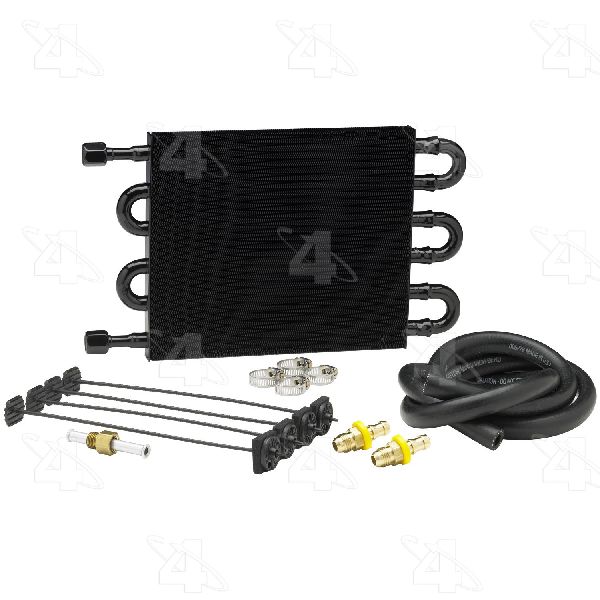
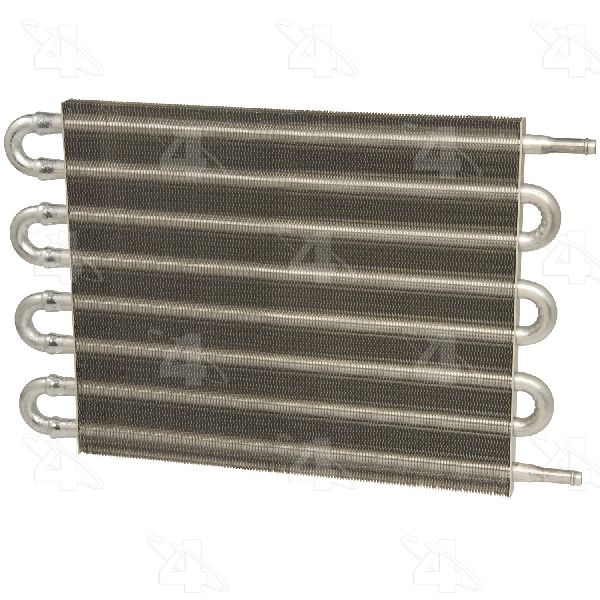
Typical fix: If contaminated with coolant, the radiator MUST be replaced, and the transmission and cooler lines must be thoroughly flushed multiple times to remove all contamination. Often, the valve body and solenoids are also damaged and require replacement. Many owners proactively bypass the internal radiator cooler with an external one to prevent this failure. 🎬 Watch: How to bypass the radiator cooler to prevent damage
Est. part cost: $100-$300 for fluid and filter; $200-$500 for a new radiator. - Faulty Torque Converter Clutch (TCC) Solenoid 🔴 High Probability → Shop Automatic Transmission Torque Converter This solenoid is a common failure point. Electrical failure can be caused by age or, more frequently on this truck, by shorting out from coolant-contaminated fluid.
How to confirm: After dropping the transmission pan, the solenoid's electrical resistance can be tested with a multimeter. A typical resistance for this type of solenoid is between 10-30 ohms. An open circuit (infinite resistance) or short (near zero resistance) indicates failure. Compare the reading to the manufacturer's specification.
Typical fix: Replace the TCC solenoid, which is located on the valve body inside the transmission. This requires draining the fluid and removing the pan. It is often sold as part of a complete solenoid pack.
Est. part cost: $50-$150 for a single solenoid, $250-$500 for a full solenoid kit. - Damaged Wiring or Connectors 🟡 Medium Probability The internal transmission wiring harness and the TCM itself are submerged in fluid and can be damaged by heat and especially by the corrosive effects of coolant contamination. External connectors can be damaged by road debris or corrosion.
How to confirm: Visually inspect the external transmission wiring harness. Test for continuity and shorts on the TCC solenoid circuit from the main harness connector to the transmission. Testing the internal harness requires removing the pan and valve body/TCM assembly.
Typical fix: Repair or replace the damaged section of the wiring harness. The internal harness is integrated with the TCM on these models, so damage often necessitates replacing the entire valve body/TCM assembly.
Est. part cost: $20-$200 for external harness repair; $800-$1500 for a new valve body with TCM. - Faulty Transmission Valve Body ⚪ Low Probability → Shop Transmission Valve Body Debris from normal wear or sludge from coolant contamination can cause valves to stick or wear out the bores in the valve body, affecting hydraulic pressure control. On the RE5R05A, the TCM is integrated into the valve body, making it a single, expensive point of failure.
How to confirm: This is typically diagnosed after confirming the fluid, solenoid, and wiring are all good. A professional may use pressure gauges to diagnose hydraulic issues. Often, it's replaced when coolant contamination is found, as the integrated TCM is likely compromised.
Typical fix: Replace the entire valve body assembly, which includes the TCM and solenoids. This is a complex job best left to a professional.
Est. part cost: $800-$1500
Rare But Worth Checking
- Failing Transmission Control Module (TCM): → Shop Transmission Assembly While not common as a primary failure, the TCM on the Titan is very often a secondary failure caused by short circuits from coolant contamination. Since it is integrated with the valve body on the RE5R05A, it is usually the last part to be suspected unless SMOD is confirmed, at which point it becomes a primary suspect.
- Internal Torque Converter Failure: → Shop Automatic Transmission Torque Converter While P0740 is an electrical code, a failing lock-up clutch inside the torque converter can sometimes cause erratic solenoid operation that the computer interprets as a circuit fault. This is less common than a direct solenoid or wiring failure.
Diagnosis Steps
- Scan the vehicle's computer to confirm P0740 is the primary code present and check for any other related transmission codes.
- CRITICAL STEP: Carefully check the transmission fluid level and condition. Pull the dipstick, wipe it, and check again. Look specifically for a milky pink/brown color ('strawberry milkshake') that indicates coolant contamination. Smell the fluid for a burnt odor.
- If fluid is contaminated, stop all other diagnosis. The radiator has failed internally. The radiator must be replaced and the transmission system must be thoroughly flushed. The valve body/TCM assembly is likely damaged and may need replacement.
- If fluid is okay, inspect the external wiring harness and connectors leading to the transmission for any visible damage, corrosion, or loose connections.
- Drain the transmission fluid and remove the transmission pan to access the internal components.
- Locate the Torque Converter Clutch (TCC) solenoid on the valve body. It is part of the solenoid assembly.
- Disconnect the solenoid and test its resistance using a digital multimeter set to Ohms. A healthy solenoid should read between 10-30 Ohms. An open or shorted reading confirms failure.
- Test the internal wiring harness for continuity from the main connector to the solenoid connector. On this model, the harness is part of the TCM/valve body assembly, so you'll be testing the pins at the main connector that correspond to the TCC circuit.
- If the solenoid and internal wiring test good, the problem may lie in the external wiring or the driver circuit within the TCM itself.
- Refill the transmission with the correct fluid (Nissan Matic S or a compatible equivalent), clear the codes, and perform a road test to see
Parts You'll Likely Need
- Radiator
(OEM #21460-ZH30A (Varies by year/model, confirm with VIN))— Required if the transmission fluid is contaminated with coolant, as the internal transmission cooler has failed. This is the most common and critical failure on this platform leading to transmission issues.
Trusted brands: Denso, Spectra Premium, CSF, Koyo
OEM price range: $350-$500
Aftermarket price range: $150-$300 - Valve Body with Solenoids and TCM
(OEM #31705-X428E (Varies by year, confirm with VIN))— The TCC solenoid is part of this assembly. More importantly, the integrated TCM is often destroyed by coolant contamination (SMOD), making replacement of the entire unit necessary.
Trusted brands: Nissan OEM, Rostra (Solenoids only), Hitachi (Original Manufacturer)
OEM price range: $1000-$1500
Aftermarket price range: $600-$900 (Remanufactured) - Automatic Transmission Fluid
(OEM #Nissan Matic S (supersedes Matic J))— Fluid must be replaced when dropping the pan or flushing the system. Use only fluid that meets Nissan Matic S specifications to ensure proper performance.
Trusted brands: Nissan OEM Matic-S, Idemitsu ATF Type J/S, Valvoline MaxLife Multi-Vehicle ATF, Castrol Transmax Import Multi-Vehicle
OEM price range: $15-$25 per quart
Aftermarket price range: $8-$15 per quart
Related Codes That Often Appear With This One
- P0741 — Indicates 'TCC Circuit Performance or Stuck Off', which is a closely related mechanical/performance issue that can occur alongside the electrical P0740 code.
- P1754 — Another Nissan-specific code related to a solenoid valve circuit fault. Forum discussions show this code appearing alongside others when coolant contamination occurs.
- P0743 — Indicates 'TCC Circuit Electrical', another closely related electrical fault code that can be triggered by the same underlying issues.
Technical Service Bulletins (TSBs) & Recalls
- NHTSA DP12-004: A denial of a defect petition that contains a detailed investigation and description by NHTSA/ODI into the transmission cooler failures on 2005-2010 Nissan Pathfinder, Frontier, and Xterra vehicles, confirming the mechanism of failure and symptoms.
Platform-Specific Known Issues
- The RE5R05A transmission in 2004-2015 Titans is infamous for the 'Strawberry Milkshake of Death' (SMOD). This occurs when the internal transmission cooler inside the radiator fails, allowing coolant and transmission fluid to mix. This contaminated fluid quickly damages clutch materials and electrical components, leading to codes like P0740 and eventual transmission failure if not addressed immediately.
Mechanic-Grade Diagnostic Values
- TCC Solenoid Resistance — expected: Conflicting data exists. Some sources state 3.3 Ohms, while others state 23 Ohms. A more detailed source specifies 3-9 Ohms. Always verify with the specific part or service manual if possible.. Failure: An open circuit (infinite resistance) or a short circuit (near zero resistance).
- Other Valve Body Solenoids Resistance (Direct Clutch, Front Brake, etc.) — expected: 3.3 Ohms or within a 3-9 Ohm range.. Failure: Reading significantly outside the expected range.
- Low Coast Brake Solenoid Resistance — expected: Varies by type: Early (brown connector) is 10-15 Ohms; Late (Bosch/Nachi) is 20-40 Ohms.. Failure: Reading outside the specified range for the type installed.
- TCC Solenoid Current (Live Scan Tool Data) — expected: 0.2-0.4 amps during slip; 0.4-0.7 amps when fully locked up.. Failure: Current reading of 0.0 amps or over 0.8 amps when commanded on.
- TCM Power and Ground Pins (at TCM connector) — expected: Consistent 12V+ power and solid ground at pins 1, 2, 10, and 11 while the engine is running.. Failure: Voltage below 12V or fluctuating resistance on ground pins, indicating an internal TCM fault or wiring issue.
Scan Tool Commands That Help
- Nissan CONSULT-II / CONSULT-III: Solenoid Operation Check — To actively command the TCC solenoid and monitor its response in amps, verifying if the TCM driver and the solenoid itself are functional. Requires a CAN adapter.
- Nissan CONSULT-II / CONSULT-III or J2534 Pass-Thru: Adaptive Strategy Reset / Relearn Procedures — This MUST be performed after replacing the valve body, TCM, or the entire transmission to reset learned pressure values and allow the TCM to adapt to the new components.
- Nissan CONSULT-III Plus with VI2 Interface: Blank TCM Programming — Required when installing a brand new, unprogrammed (blank) TCM/valve body assembly. Standard J2534 software (NERS) may not support this for RWD platforms; the dealer-level tool is often necessary.
Wiring & Ground Locations
- Main Engine Grounds — One primary ground runs from the intake manifold to the battery negative terminal. Another runs from the cylinder head (exhaust side) to the firewall.. Poor engine or chassis grounds can cause floating voltages and erratic sensor readings, potentially affecting the TCM's operation and its ability to accurately control and monitor solenoid circuits.
- TCM Power/Ground Pins — On the main harness connector for the TCM (whether external on early models or at the transmission case on later models), pins 1, 2, 10, and 11 are key for power and ground.. These specific pins must be tested for stable voltage and ground to rule out a faulty TCM before condemning it. Fluctuations here point to a bad module or a problem in the main vehicle harness.
- Transmission Main Harness Connector — A large, round connector on the passenger side of the transmission case. Pinouts differ for pre and post mid-2004 models.. This is the primary test point for checking continuity and resistance of the entire internal transmission harness and solenoids without dropping the pan.
OEM Part Supersession History
Bosch-manufactured TCM/Valve Body→Hitachi-manufactured TCM/Valve Body— Manufacturer change during production run.
Heads up: The early Bosch units were often field-programmable by independent shops. The later Hitachi units were more difficult to program, sometimes requiring a trip to a Nissan dealer with a CONSULT-III tool. Swapping between types is not recommended.Valve Body with 10-15 Ohm Low Coast Solenoid→Valve Body with 20-40 Ohm Low Coast Solenoid— Design change in the solenoid pack.
Heads up: The TCM is calibrated for a specific solenoid resistance. Installing a valve body with the wrong solenoid pack will cause shifting problems and may set other fault codes. The resistance must be verified before installation.
Model Year Variations Within This Range
- 2004 (early models): The Transmission Control Module (TCM) is a separate unit located in the passenger cabin, typically behind the right kick panel.
- Mid-2004 to 2015: The TCM is integrated with the valve body inside the transmission pan (this assembly is often called a 'mechatronic' unit or 'Tekken'). This makes it vulnerable to fluid contamination (SMOD) and requires pan removal for service.
- 2007-2015: Engine power was increased from 305 hp to 317 hp. This did not affect the transmission hardware or the causes of P0740.
- Various: The valve body design changed over the years, with variations in the number of check balls (5 vs. 3) and accumulator bodies (2 vs. 1). While some assemblies can be interchanged, it must be from the same vehicle type (e.g., Titan to Titan) due to different shift strategies.
Diagnostic Flowchart
Used vs. New Parts: Buying Guide for This Vehicle
When a used part is the smart pick: A complete used transmission assembly can be a cost-effective solution ONLY IF its history is known and it can be verified that the donor vehicle did not suffer from the SMOD (coolant contamination) failure. Buying a used valve body/TCM alone is extremely risky.
Donor-vehicle mileage cap: roughly under 120000 miles for the part to have meaningful remaining life.
What to inspect on the donor part:
- Inspect the transmission fluid from the donor vehicle. If it is anything but clean and red/purple, reject it immediately.
- Check the donor vehicle's radiator for any signs of leaks or repairs, as this is the source of SMOD.
- Obtain the VIN of the donor vehicle to check for any reported transmission service history or accidents.
OEM-only on this vehicle (don't cheap out):
- Radiator: Given the high risk and catastrophic consequences of a failed internal cooler, only an OEM or a high-quality, reputable aftermarket radiator specifically designed to prevent SMOD should be used. Avoid generic, low-cost options.
Aftermarket brands forum-validated for this vehicle:
- For the valve body/TCM, reputable remanufacturers like Street Smart Transmission or Sunbelt Valve Body Builders are a known-good alternative to a risky used part, as they are rebuilt, tested, and pre-programmed to the vehicle's VIN.
Brands owners have reported issues with on this vehicle:
- Avoid generic, unbranded used valve bodies and TCMs from online marketplaces or salvage yards with no testing or warranty, as there is a high probability they have been damaged by coolant contamination.
Real Owner Stories
Aggregated from forums and TSBs cited above. Mileages and costs reflect what owners reported in those sources.
2005-2010 Nissan Pathfinder/Frontier/Xterra
Symptoms: Vehicle shudders or vibrates when cruising at a steady speed; harsh, delayed, or slipping gear shifts.
What fixed it: An official investigation confirmed the root cause was a failure of the internal transmission cooler within the radiator, leading to coolant contamination of the transmission fluid.
Source hint: NHTSA DP12-004
Nissan Titan
Symptoms: Check Engine Light on with multiple solenoid codes stored, including P1754.
What fixed it: A repair shop immediately suspected water/coolant contamination (SMOD) as the likely root cause of the multiple electrical faults within the transmission.
Source hint: nissanforums.com thread titled 'Titan transmission rebuild or valve body'
Nissan Pathfinder
Symptoms: Coolant contamination found in the transmission fluid, causing erratic transmission behavior.
What fixed it: The repair involved addressing the damage caused by the coolant, which had compromised the valve body and the integrated Transmission Control Module (TCM).
Source hint: YouTube video titled 'RE5R05A Coolant Contamination, Nissan Pathfinder - Transmission Repair'
Nissan Versa (Cross-Manufacturer Reference)
Symptoms: An owner reported issues occurring between 20-30 MPH.
What fixed it: A diagnostic test identified DTC P0740 related to the torque converter and transmission part number 31036-3AA6B.
Source hint: NHTSA ODI #10758676
Related OBD-II Codes
Frequently Asked Questions
What is the 'Strawberry Milkshake of Death' (SMOD) and how does it relate to P0740 on my Titan?
I checked my transmission fluid and it's pink and milky. What's the first step?
Is there a way to prevent the SMOD radiator failure on my 2004-2015 Titan?
My mechanic says the TCM is bad. Is that a separate part I can replace on my RE5R05A transmission?
Are other Nissan trucks affected by this same transmission cooler failure?
What resistance reading should I look for when testing the TCC solenoid on my Titan?
What is the correct type of transmission fluid for my 2004-2015 Nissan Titan?
Helpful Videos
We Have This Part in Stock

The information in this article is provided for general reference and educational purposes only. Vehicle specifications, procedures, and part compatibility can vary by production date, trim level, and region. Always consult your vehicle's factory service manual and verify part numbers before purchasing or performing repairs. Safety-critical components such as airbags, seat belts, and braking systems should be installed by a qualified professional.
- Nissan Titan:
- 🧭 Diagnostic Flowchart
- 🎬 Helpful Videos
- 🛍️ Shop This Part
- What's Unique About the 2004-2015 Nissan Titan
- Symptoms You May Notice
- Most Likely Causes
- Rare But Worth Checking
- Diagnosis Steps
- Parts You'll Likely Need
- Related Codes That Often Appear With This One
- Technical Service Bulletins (TSBs) & Recalls
- Platform-Specific Known Issues
- Mechanic-Grade Diagnostic Values
- Scan Tool Commands That Help
- Wiring & Ground Locations
- OEM Part Supersession History
- Model Year Variations Within This Range
- Used vs. New Parts: Buying Guide for This Vehicle
- Real Owner Stories
- 2005-2010 Nissan Pathfinder/Frontier/Xterra
- Nissan Titan
- Nissan Pathfinder
- Nissan Versa (Cross-Manufacturer Reference)
- Related OBD-II Codes
- Frequently Asked Questions
- 🎟️ Get 5% Off