

P0740 on 2005-2012 Nissan Xterra: Torque Converter Clutch Circuit Fixes
On a 2005-2012 Xterra, code P0740 often points to a failing Torque Converter Clutch (TCC) solenoid or contaminated transmission fluid. A primary concern for this vehicle, especially 2005-2010 models, is the potential for the radiator to leak coolant into the transmission (SMOD), which requires immediate and extensive repairs. A solenoid replacement can cost $250-$500, while a radiator replacement and transmission flush can exceed $1,300, and a full transmission replacement can be over $5,000.
- For a 2005-2012 Xterra, P0740 is a serious code that demands an immediate check of the transmission fluid for coolant contamination (SMOD).
- If the fluid is milky or pink, the radiator has failed and must be replaced along with extensive transmission flushing or replacement.
- If the fluid is simply old or low, a fluid/filter change and a new TCC solenoid may fix the issue.
- Due to the high risk of the SMOD issue, professional diagnosis is strongly recommended to avoid costly missteps.
- Many owners perform a preventative modification by bypassing the radiator's internal cooler and installing a separate, external transmission cooler.
What's Unique About the 2005-2012 Nissan Xterra
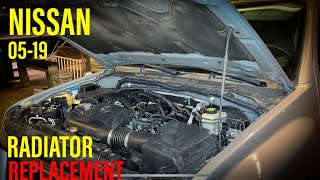
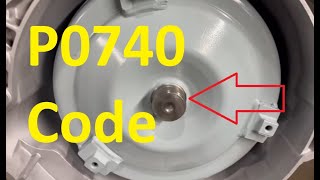
For the second-generation Nissan Xterra (2005-2015), particularly models from 2005-2010, the P0740 code must be taken very seriously due to a well-documented design flaw. The automatic transmission cooler, which is integrated into the bottom of the radiator (often a Calsonic brand unit), is prone to internal failure. This allows engine coolant to mix with the automatic transmission fluid (ATF). This contamination, known by owners as the "Strawberry Milkshake of Death" (SMOD), quickly destroys friction materials and damages electrical components within the transmission, including the TCC solenoid and valve body, leading to code P0740 and eventual transmission failure. 🎬 Watch: Understanding P0740 causes and torque converter solenoid fixes. While the issue was largely resolved by 2011, some late 2010 models may have the updated radiator.
Symptoms You May Notice
- Check Engine Light is on
- Vehicle may stall when coming to a stop
- Shuddering or vibration at highway speeds, similar to driving over rumble strips
- Poor fuel economy
- Transmission slipping or harsh shifting
- Engine RPM is higher than usual at a steady cruise speed
- Transmission overheating
- Inability for the transmission to shift into higher gears
- Replacing only the TCC solenoid without checking for coolant contamination. If SMOD is present, the new solenoid will fail quickly.
- Mistaking a torque converter shudder for an engine misfire.
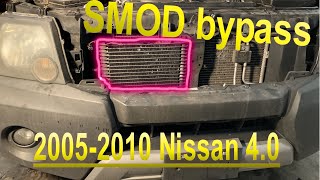
- Performing a single transmission flush after SMOD. Multiple flushes are required to remove all contamination, and even then, long-term damage to the TCM is possible. 🎬 See how to perform the SMOD bypass to protect your transmission.
Most Likely Causes
- Contaminated Transmission Fluid (Coolant Leak/SMOD) 🔴 High Probability → Shop Transmission Assembly The integrated transmission cooler within the stock Calsonic radiator is a known failure point on 2005-2010 models, leading to coolant mixing with ATF.
How to confirm: Check the transmission fluid via the dipstick. If it appears pink, milky, or like a strawberry milkshake, it is contaminated with coolant. Also, check the coolant in the radiator or overflow for signs of oily transmission fluid. The dipstick has a 10mm bolt holding it in place.
Typical fix: This is a major repair. At a minimum, the radiator must be replaced, and the transmission and torque converter must be completely flushed multiple times. In many cases, the contamination damages the TCM on the valve body, requiring a valve body or full transmission rebuild/replacement. Some owners report success with just a radiator replacement and multiple flushes if caught early.
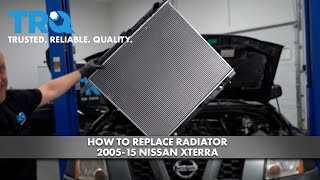
Est. part cost: $150-$400 for a new radiator (Koyorad is a popular replacement), plus $200+ for flushing fluid. 🎬 Follow this step-by-step guide to replace your Xterra's radiator. A rebuilt transmission can cost $2000-$5000+. - Failed Torque Converter Clutch (TCC) Solenoid 🟡 Medium Probability → Shop Automatic Transmission Torque Converter The solenoid can fail from normal wear or, more commonly on this vehicle, from damage caused by contaminated (SMOD) or old, dirty fluid. The RE5R05A transmission uses a PWM solenoid that can function as the TCC solenoid.
How to confirm: A technician can test the solenoid's resistance with a multimeter (target resistance is often cited between 20-30 ohms, but see specific diagnostic values) and command it on/off with a capable scan tool. This requires dropping the transmission oil pan for access.
Typical fix: Replace the TCC solenoid, which is located on the transmission's valve body. This is often done along with a transmission fluid and filter change. Use only Nissan Matic-S ATF or a compatible equivalent.
Est. part cost: $80-$200 - Low or Dirty Transmission Fluid 🟡 Medium Probability → Shop Transmission Assembly
How to confirm: Check the transmission fluid level and condition using the dipstick. The fluid should be at the correct level and reddish-pink in color, not dark brown, black, or burnt-smelling.
Typical fix: Perform a transmission fluid drain-and-fill or a complete fluid flush and replace the filter. Use only Nissan Matic-S ATF or a compatible equivalent.
Est. part cost: $80-$200 - Damaged Wiring or Connectors ⚪ Low Probability
How to confirm: Visually inspect the wiring harness leading to the transmission for any signs of damage, corrosion, or loose connections. A multimeter can be used to check for continuity and shorts in the TCC solenoid circuit from the TCM connector.
Typical fix: Repair or replace the damaged section of the wiring harness.
Est. part cost: $20-$100
Rare But Worth Checking
- Failed Transmission Control Module (TCM): → Shop Transmission Assembly While rare on its own, TCM failure is common as a direct result of SMOD. The TCM is mounted on the valve body, and coolant contamination shorts the electronics. One owner noted that even after flushing, trapped coolant in the TCM cover caused it to fail 10,000 miles later. This should only be considered after other possibilities have been ruled out if SMOD is not present.
- Internal Valve Body Failure: → Shop Transmission Valve Body Debris from contaminated fluid can clog passages or cause valves within the valve body to stick, preventing proper TCC operation. Sometimes the entire valve body needs to be replaced.
Diagnosis Steps
- Scan the vehicle's computer for P0740 and any other stored codes. Multiple transmission codes (e.g., P0745, P1757) increase the likelihood of SMOD.
- CRITICAL STEP: Carefully inspect the transmission fluid level and condition. Look for the tell-tale signs of coolant contamination (pink, milky fluid). Also check the radiator coolant for ATF contamination. This is the most important first step for this specific vehicle.
- If fluid is contaminated (SMOD), stop diagnosis. The radiator must be replaced with an updated OEM or quality aftermarket unit (e.g., Koyo, Denso). The transmission will require multiple flushes, and there is a high risk that the valve body/TCM or the entire transmission is already damaged and will need replacement.
- If fluid is just low or dirty, perform a transmission service (drain/fill or flush) using only Nissan Matic-S or compatible fluid and clear the codes to see if P0740 returns.
- If the fluid is clean and the code persists, inspect the transmission wiring harness for any visible damage.
- Using a professional scan tool, monitor the TCC slip RPM and command the TCC solenoid on and off to check for a response.
- If the solenoid does not respond, drop the transmission pan to access the valve body.
- Test the resistance of the TCC solenoid with a multimeter. There is conflicting information in technical documents; some state the TCC solenoid should be ~23 ohms while others are ~3.3 ohms. An open or shorted reading indicates a failed solenoid.
- If the solenoid tests good, check the internal wiring harness for continuity before considering a faulty TCM or internal hydraulic blockage.
Parts You'll Likely Need
- Radiator
(OEM #21460-9CA2E (Updated part, verify with VIN))— This is the most common root cause of P0740 on this vehicle for model years 2005-2010. The internal transmission cooler fails, contaminating the ATF with coolant. A radiator replacement is mandatory if SMOD is detected.
Trusted brands: Koyorad, Denso, Spectra Premium, Nissan OEM (updated version)
OEM price range: $300-$500
Aftermarket price range: $150-$250 - Torque Converter Clutch (TCC) Solenoid
(OEM #31941-1FX02 (This part number is often cited for the RE5R05A solenoid assembly, verify application) or 31941-90X01.)— This solenoid is the component commanded by the TCM to engage the lock-up clutch. It can fail electrically or become stuck due to debris or fluid contamination from SMOD.
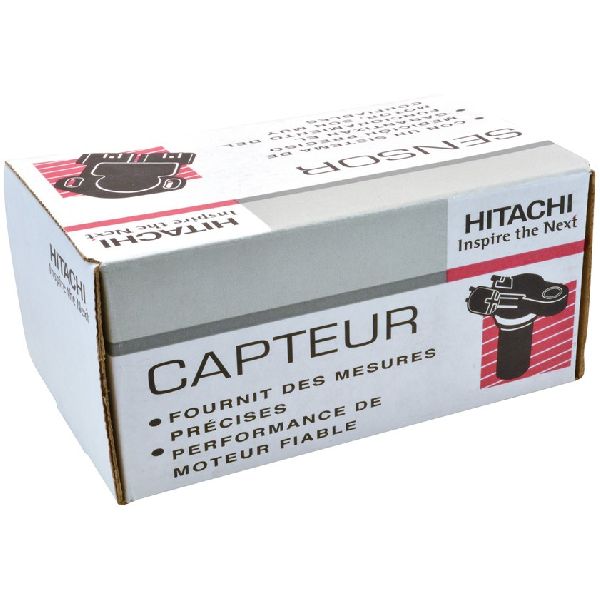
Trusted brands: Hitachi, Rostra, Bosch
OEM price range: $150-$250
Aftermarket price range: $80-$180 - Automatic Transmission Fluid (Nissan Matic-S) — Correct and clean fluid is essential for transmission operation. A fluid change is required for a solenoid replacement, and extensive flushing (12+ quarts) is needed to address contamination.
Related Codes That Often Appear With This One
- P0745 — Pressure Control Solenoid 'A' Malfunction. Both P0740 and P0745 can be triggered by widespread fluid contamination or electrical issues affecting the valve body.
- P1757 — Manufacturer-specific code often related to the Front Brake Solenoid. Its appearance with P0740 strongly suggests a systemic issue like SMOD affecting multiple solenoids.
- P17xx — Other manufacturer-specific transmission codes. The presence of multiple transmission codes often points towards a more significant internal failure or a systemic problem like SMOD.
Technical Service Bulletins (TSBs) & Recalls
- NTB10-126a: While not directly for P0740, this TSB discusses wheel bearing damage from impacts, which can sometimes be misdiagnosed as driveline vibrations similar to TCC shudder.
- NTB10-029f: Discusses driveline vibration on 4WD models, which could be confused with a TCC shudder. The diagnostic involves disconnecting the electric controlled coupling to isolate the source.
Platform-Specific Known Issues
- Preventative Radiator Bypass: → Shop Radiator Many owners of 2005-2010 models perform a "radiator bypass" as a preventative measure. This involves re-routing the transmission cooler lines to bypass the internal cooler in the radiator and rely solely on the external auxiliary cooler. This eliminates the risk of SMOD. However, it is often recommended as a temporary fix until a new, reliable radiator can be installed, as it may reduce cooling efficiency in high-load situations (towing, off-roading) and slow transmission warm-up in cold climates.
Mechanic-Grade Diagnostic Values
- TCC Solenoid Resistance — expected: Conflicting data exists. Some sources state ~23 ohms, while others state ~3.3 ohms. Technicians should be aware of this discrepancy, which may be due to different solenoid manufacturers (Bosch, Nachi, etc.) used over the years. An open circuit (infinite resistance) or a dead short (0 ohms) indicates failure.. Failure: A reading of 0 ohms (short) or infinite ohms (open).
- TCC Solenoid Current (Live Data) — expected: During slip, a scan tool should show 0.2-0.4 amps. When fully locked up, it should show 0.4-0.7 amps.. Failure: Current reading does not change when commanded, or is 0 amps when commanded on, indicating an open circuit.
- Other Solenoid Resistance (for comparison) — expected: Most other solenoids on the RE5R05A valve body have a resistance of 3.3 ohms.. Failure: A significantly different reading can help identify a mis-wired or internally shorted solenoid.
Hidden / Shadow Codes Worth Checking
- Ghost Codes (e.g., P0731): Technicians have noted that failing pressure switches on the TCM can set false or 'ghost' ratio error codes that are not the root cause of the problem. Widespread electrical issues from SMOD can trigger a variety of seemingly unrelated transmission codes. (see via Standard OBD-II scanner, but requires careful interpretation. The presence of multiple, sometimes intermittent, transmission codes alongside P0740 strongly points to a systemic electrical failure (like SMOD) rather than a single component failure.)
Scan Tool Commands That Help
- Nissan CONSULT or professional-grade scan tool (Autel, Snap-on, etc.): Active Test / Bidirectional Control for TCC Solenoid — After confirming fluid is clean, this test is used to command the TCC solenoid on and off (or vary its duty cycle) while monitoring live data like TCC slip RPM and solenoid current. If the solenoid can be commanded on and the slip RPM drops to near zero, the solenoid and hydraulic circuit are likely functional, pointing towards a wiring or TCM issue. If it doesn't respond, the fault is likely the solenoid or its internal wiring.
Wiring & Ground Locations
- TCM (Transmission Control Module) — For the 2005-2012 Xterra, the TCM is not a separate box in the cabin. It is integrated into the valve body assembly, located inside the automatic transmission oil pan.. Its location makes it highly vulnerable to damage from contaminated fluid (SMOD). Coolant attacks the circuit board and connectors, causing shorts and open circuits that directly trigger P0740. Access requires draining the fluid and removing the pan.
- Transmission Ground Points — While specific ground lug numbers (e.g., Gxxx) are not readily available, the main grounds are from the engine block to the chassis and from the battery to the chassis. A wiring diagram indicates the Transfer Control Unit is located behind the left side of the dash.. A poor ground connection can cause erratic voltage and unpredictable behavior in the transmission's electronic controls. In cases of SMOD, coolant contamination can create a short to ground directly on the TCM's circuit board inside the transmission.
Real Owner Repair Stories
- BobIsTheOilGuy forum user (2005 Xterra) — Owner learned of the SMOD issue before failure.
✅ What actually fixed it The owner performed a preventative radiator bypass at 40,000 miles, routing the transmission cooler lines to only use the external air cooler. The vehicle was sold at 93,000 miles, still running and shifting perfectly. This suggests the bypass can be a viable long-term preventative measure if done before contamination occurs. - Reddit r/XTerra user (2007 Xterra 4x4 with 100k miles) — Vehicle had been running on a radiator bypass for 50,000 miles and the owner wanted a permanent fix.
❌ Tried (didn't work) Running on bypass long-term was a concern.
✅ What actually fixed it The community recommended replacing the original radiator with a Koyo aftermarket radiator, which is known to be a direct-fit replacement that does not have the SMOD design flaw. The updated Nissan OEM radiator is also a safe option. - Reddit r/XTerra user (Gen 2 Xterra) — Concern about long-term viability of radiator bypass.
✅ What actually fixed it One user reported running a bypass for 7 years in Southern California with no issues, including light off-roading. However, another user pointed out that in cold climates, the bypass prevents the transmission fluid from warming up quickly, which can delay torque converter lock-up and higher gear shifts, negatively impacting fuel economy. The consensus is that replacing the radiator is the correct permanent repair. - NHTSA ODI #10758676 — While reported on a different model from the same manufacturer, an owner experienced issues between 20-30 MPH and a diagnostic test confirmed DTC P0740 for the torque converter, specifically identifying transmission part number 31036-3AA6B.
OEM Part Supersession History
21410-EA205, 21460-EA215, 21460-EA265→21460-9CA0E (also seen as 9CA2E)— The original Calsonic radiators had an internal transmission cooler that was prone to fracturing, causing coolant and ATF to mix (SMOD).
Heads up: Any radiator with the 'EA' prefix part numbers is considered a high risk for SMOD and should be replaced preventatively.Early 'Type 2' RE5R05A Valve Body/TCM→Late 'Type 2' RE5R05A Valve Body/TCM— Design changes were made to the valve body and TCM over the production run.
Heads up: Early (pre-~2007) and late style TCMs have different physical designs (raised metal edge vs. flat plastic) and are not interchangeable. Furthermore, there are variations in internal components like accumulator plugs and solenoid manufacturers (Bosch, Nachi, Mitsubishi) that must match the original for proper function. When replacing the valve body assembly, the part number must be an exact match.
Model Year Variations Within This Range
- 2005-2010: These years were fitted with the defective Calsonic radiator design that leads to SMOD. While some late 2010 models may have the updated part, any vehicle in this range should be inspected immediately.
- 2011-2012: These model years came from the factory with an updated radiator design (P/N 21460-9CA0E or similar) that resolved the SMOD issue. The risk of P0740 being caused by coolant contamination is dramatically lower for these vehicles.
- Mid-2004+ (All 2nd Gen Xterras): These vehicles use the 'Type 2' RE5R05A transmission, which integrates the TCM with the valve body inside the transmission pan. This differs from earlier Nissan/Infiniti models that used a 'Type 1' system with an external TCM located in the passenger cabin.
Diagnostic Flowchart
Used vs. New Parts: Buying Guide for This Vehicle
When a used part is the smart pick: Due to the high risk of latent SMOD damage, buying a used transmission or valve body/TCM assembly for this vehicle is extremely risky and generally not recommended. A used part should only be considered if it comes from a documented, low-mileage 2011+ donor vehicle that was not affected by the SMOD issue.
Donor-vehicle mileage cap: roughly under 80000 miles for the part to have meaningful remaining life.
What to inspect on the donor part:
- For a complete transmission: Must be from a 2011+ model year to avoid SMOD risk.
- Check the donor vehicle's VIN to confirm its production date.
- Inspect the fluid from the donor transmission if possible. Any sign of darkness, burnt smell, or discoloration is a red flag.
- NEVER buy a used radiator from a 2005-2010 model. Only a used radiator with a verified updated part number (e.g., 21460-9CA0E) from a 2011+ wreck is acceptable.
OEM-only on this vehicle (don't cheap out):
- Valve Body / TCM Assembly: While aftermarket solenoids are available, the complete valve body with its integrated computer is a complex, programmed part. Using a new or professionally remanufactured OEM unit is the safest path to ensure compatibility and avoid programming issues.
Aftermarket brands forum-validated for this vehicle:
- Radiator: Koyo is a highly recommended and forum-validated brand for a replacement radiator that resolves the SMOD defect. Denso and Spectra Premium are also frequently used.
Brands owners have reported issues with on this vehicle:
- Generic, unbranded 'white box' radiators. The cost savings are not worth the risk of another failure that could destroy a multi-thousand dollar transmission.
Real Owner Stories
Aggregated from forums and TSBs cited above. Mileages and costs reflect what owners reported in those sources.
2010 Nissan Xterra VQ40DE
Symptoms: Owner discovered SMOD (coolant mixed with transmission fluid).
What fixed it: Was quoted for a radiator replacement and system flush. Another user commented that even after flushing, the TCM can fail later due to trapped contamination.
Cost: $1300-$1300
Source hint: Reddit r/XTerra - "Smod found - 2010 model"
2008 Nissan Frontier VQ40DE
Symptoms: Experienced SMOD damage.
What fixed it: A dealer quoted $6,500 to fix the SMOD damage.
Cost: $6500-$6500
Source hint: Reddit r/nissanfrontier - "Should I worry about SMOD in my 2005 frontier XE that has 159000 miles?"
Related OBD-II Codes
Frequently Asked Questions
What is 'SMOD' and why is my 2005-2010 Xterra at risk for it?
My transmission fluid looks pink and milky, like a strawberry milkshake. What should I do?
I've heard about a 'radiator bypass' for the Xterra. Is this a good preventative measure?
My Xterra is shuddering at highway speeds. Is it definitely the torque converter?
What kind of transmission fluid does my 2005-2012 Xterra need?
Is my 2011 or 2012 Xterra safe from the SMOD radiator problem?
Helpful Videos
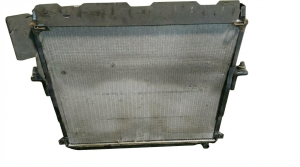
Used OEM Parts in Stock
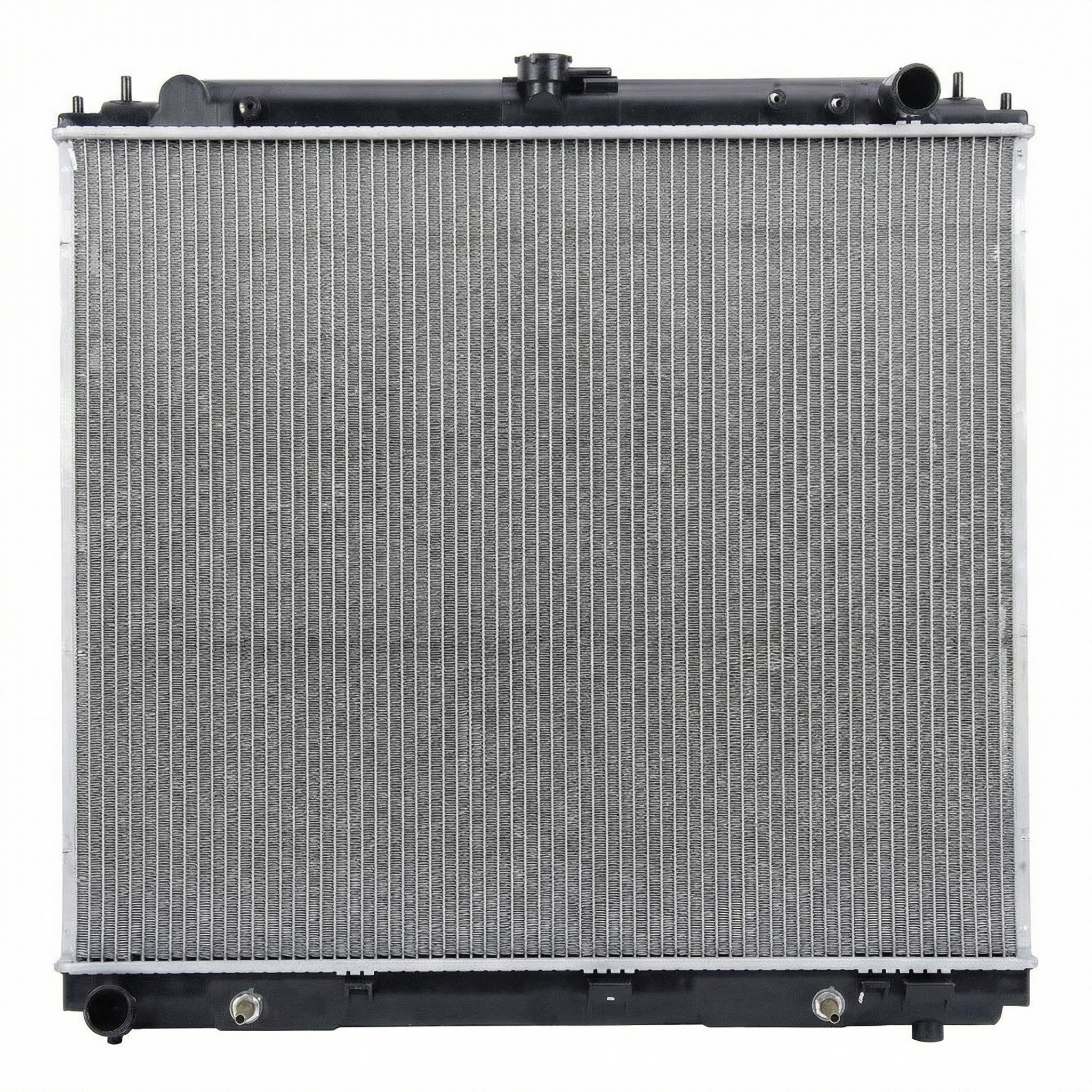
New Aftermarket Parts Available


The information in this article is provided for general reference and educational purposes only. Vehicle specifications, procedures, and part compatibility can vary by production date, trim level, and region. Always consult your vehicle's factory service manual and verify part numbers before purchasing or performing repairs. Safety-critical components such as airbags, seat belts, and braking systems should be installed by a qualified professional.
- Nissan Xterra:
- 🧭 Diagnostic Flowchart
- 🎬 Helpful Videos
- 🛍️ Shop This Part
- What's Unique About the 2005-2012 Nissan Xterra
- Symptoms You May Notice
- Most Likely Causes
- Rare But Worth Checking
- Diagnosis Steps
- Parts You'll Likely Need
- Related Codes That Often Appear With This One
- Technical Service Bulletins (TSBs) & Recalls
- Platform-Specific Known Issues
- Mechanic-Grade Diagnostic Values
- Hidden / Shadow Codes Worth Checking
- Scan Tool Commands That Help
- Wiring & Ground Locations
- Real Owner Repair Stories
- OEM Part Supersession History
- Model Year Variations Within This Range
- Used vs. New Parts: Buying Guide for This Vehicle
- Real Owner Stories
- 2010 Nissan Xterra VQ40DE
- 2008 Nissan Frontier VQ40DE
- Related OBD-II Codes
- Frequently Asked Questions
- 🎟️ Get 5% Off