

P0740 on 1997-2004 Porsche Boxster: Torque Converter Clutch Circuit Causes and Fixes
For a 1997-2004 Porsche Boxster, code P0740 almost always points to an issue with the Tiptronic automatic transmission's torque converter lock-up function. The most common culprits are low or degraded transmission fluid, or a failing torque converter clutch solenoid. A fluid and filter service should be the first step before considering more expensive repairs, as Porsche's 'lifetime' fluid recommendation often leads to neglect.
- P0740 on a 1997-2004 Boxster points to a problem with the Tiptronic transmission's torque converter lock-up system.
- The most common and least expensive place to start is with the transmission fluid; check the level and condition, and perform a service if it's old or low.
- A faulty TCC solenoid is the next most likely cause and can be replaced without removing the transmission.
- Do not assume the torque converter itself is bad until fluid and electrical causes have been ruled out.
- This is a job best left to professionals or highly experienced DIYers due to the complexities of servicing automatic transmissions.
What's Unique About the 1997-2004 Porsche Boxster
The 1997-2004 Boxster (986 generation) uses a ZF 5HP19 five-speed Tiptronic automatic transmission, which is also found in various Audi, BMW, and VW models of the era. While the transmission itself is not unique to Porsche, the factory's 'lifetime fill' recommendation for the fluid is a key point of contention. Many owners and specialists have found that this 'lifetime' fluid degrades, darkens, and loses its properties, leading to shifting issues and codes like P0740. Therefore, fluid condition is an especially critical first check on these vehicles, even if the service history doesn't call for a change. A simple drain and fill only replaces about 3.5 of the 9.0+ liters in the system, leaving old fluid in the torque converter.
Symptoms You May Notice
- Check Engine Light (CEL) may or may not be illuminated.
- Slight RPM fluctuation or surge of 100-200 RPM while cruising at a steady highway speed.
- Sensation of the car feeling like it's driving over a rumble strip at low speeds or light acceleration.
- Poor or harsh shifting, especially when the transmission fluid is cold.
- Sensation of the transmission slipping or lurching between gears.
- Reduced fuel economy.
- In some cases, the transmission may feel like it's downshifting and then correcting itself at highway speeds.
- Transmission may go into limp mode, getting stuck in 4th gear with the '4' and 'D' lights flashing.
- Immediately replacing the torque converter without first checking the fluid, filter, and solenoids. This is a very expensive mistake.
- Replacing the transmission without diagnosing the specific electrical or hydraulic fault, which is often repairable.
Most Likely Causes
- Low or Degraded Automatic Transmission Fluid (ATF) 🔴 High Probability → Shop Transmission Assembly Porsche's 'lifetime fill' recommendation often leads to fluid being neglected for over 100,000 miles. Over time, the fluid breaks down, becomes contaminated with clutch material, and can no longer provide the necessary hydraulic pressure or lubrication.
How to confirm: Check the transmission fluid level and condition. This must be done with the vehicle level and the transmission at a specific temperature (typically 30-40°C), following the correct procedure. Dark grey or black fluid indicates severe degradation and is a very common finding in cars with this code.
Typical fix: Perform a transmission fluid and filter change. A simple drain-and-fill replaces only a portion of the fluid; multiple changes may be needed to dilute the old fluid. Use only the correct specification fluid (Esso LT 71141 or equivalent).
Est. part cost: $150-$300 for fluid and a filter kit. - Faulty Torque Converter Clutch (TCC) Solenoid 🟡 Medium Probability → Shop Automatic Transmission Torque Converter This solenoid (also referred to as pressure regulator 4 or the EDS 4 solenoid) is an electronic component submerged in transmission fluid. It can fail electrically or become clogged with debris from old fluid.
How to confirm: A diagnostic scan tool can be used to command the solenoid on and off to check for response. An ohmmeter can be used to check the solenoid's internal resistance once the transmission pan is removed for access. The wiring harness to the solenoid should also be inspected for damage. The expected resistance is often in the 10-40 ohm range, but vehicle-specific data should be used.
Typical fix: Replace the faulty solenoid. This requires draining the fluid and removing the transmission pan and valve body. Solenoids are often replaced as a complete set.
Est. part cost: $100-$250 for a single solenoid, or $250-$400 for a complete kit. - Worn Torque Converter ⚪ Low Probability → Shop Automatic Transmission Torque Converter The internal lock-up clutch within the torque converter can wear out, especially in high-mileage vehicles or those subjected to frequent high-load conditions. This wear material contaminates the fluid and can clog solenoids and valve body passages.
How to confirm: This is typically a diagnosis of exclusion. If the fluid and solenoids are confirmed to be good but the problem persists (especially if a P0741 slip code is also present), the torque converter is the likely culprit. A large amount of metallic debris in the transmission pan is a strong indicator of internal mechanical failure.
Typical fix: Replace the torque converter. This is a major repair that requires removing the entire transmission from the vehicle.
Est. part cost: $600-$1500 for the part alone.
Rare But Worth Checking
- Faulty Valve Body: → Shop Transmission Valve Body The hydraulic control unit (valve body) contains a maze of passages and valves. A sticking valve or a worn pressure regulator bore can prevent the TCC solenoid from operating correctly, even if the solenoid itself is good. Kits are available to repair worn bores.
- Wiring or Connection Issues: An open circuit or short in the wiring leading to the TCC solenoid can trigger the code. This could be at the main connector on the transmission housing or the internal harness, which can become brittle over time.
Diagnosis Steps
- Verify the code with a quality OBD-II scanner that can read Porsche-specific transmission codes.
- Check the transmission fluid level and condition. This is the most critical first step. The procedure is temperature-sensitive and must be done with the engine running, car level, and fluid between 30°C and 40°C. 🎬 Watch: Critical tips for checking and changing Tiptronic fluid.
- If the fluid is low, top it off, clear the code, and test drive. If the fluid is dark, burnt, or contains debris, a fluid and filter change is necessary.
- Using an advanced scan tool, monitor the commanded TCC state versus the actual torque converter slip RPM. A large discrepancy (over 100 RPM) when lockup is commanded indicates a problem.
- If possible with the scan tool, command the TCC solenoid on and off to check for an audible click or change in engine RPM.
- If the solenoid is suspected, drain the fluid and remove the transmission pan to access the valve body and solenoids.
- Inspect the wiring harness inside the transmission for any signs of damage or brittle insulation.
- Test the resistance of the TCC solenoid (EDS 4) with a multimeter. A typical reading for a ZF 5HP19 solenoid is between 10-40 ohms. An open circuit (infinite resistance) or short (near zero ohms) indicates a failed solenoid.
- If the solenoid and wiring test good, the issue may be within the valve body (sticking valves, worn bores) or the torque converter itself.
- If significant metal debris is found in the pan, a failing torque converter or other internal transmission failure is likely.
Parts You'll Likely Need
- Transmission Filter and Pan Gasket Kit
(OEM #ZF 5HP19 Filter Kit)— Essential for a fluid service, which is the most common and necessary first step in addressing P0740.
Trusted brands: ZF, Vaico, Febi
OEM price range: $80-$120
Aftermarket price range: $40-$70 - Torque Converter Clutch (TCC) Solenoid / Solenoid Kit
(OEM #ZF 1060298033 (Full Kit), individual solenoids vary. The TCC solenoid is often black or blue.)— This is the specific solenoid that controls the lock-up clutch and is often the electrical component that fails. It is often sold as part of a 7-piece kit.
Trusted brands: Bosch, ZF
OEM price range: $250-$400 (Kit)
Aftermarket price range: $150-$250 (Kit) - Torque Converter — If the internal clutch has failed, the entire unit must be replaced. This is the most expensive component-level fix.
Trusted brands: ZF, Sachs
OEM price range: $1000-$1500
Aftermarket price range: $600-$900
Related Codes That Often Appear With This One
- P0741 — P0741 indicates 'Torque Converter Clutch Circuit Performance or Stuck Off.' While P0740 is an electrical circuit fault, P0741 indicates a mechanical problem (slippage). They often appear together when the solenoid fails to build pressure, leading to both an electrical fault detection and a mechanical slip.
- P0753 — P0753 is a 'Shift Solenoid 'A' Electrical' fault. Seeing this code along with P0740 can indicate a more widespread electrical issue within the transmission, such as a failing internal harness, a bad ground, or a problem with the TCM.
Platform-Specific Known Issues
- source — A user on RennTech.org with a 2000 Boxster S reported P0740 with symptoms of RPMs jumping by ~100 at 55 MPH. The dealer noted the fluid was 'dark gray to black' at only 57k miles. Another user in the same thread noted the code would appear after stressful driving like an autocross event, but daily driving was fine despite a persistent 'mini-downshift' feeling. This highlights how fluid degradation and driving style can trigger the code.
- source — An owner on 986forum.com experienced P0740 along with poor shifting when cold and a no-speedometer issue. This illustrates that P0740 can sometimes be part of a larger set of electrical gremlins. The initial advice from other users was to check and clean all electrical connections before replacing any solenoids, as a poor connection is a common cause for an 'open circuit' code.
Mechanic-Grade Diagnostic Values
- Resistance of TCC Solenoid (Pressure Regulator EDS 4) — expected: 6.5 Ohms. Failure: A reading of infinite Ohms (open circuit) or near-zero Ohms (short circuit).
- Resistance of Shift Solenoids (MV1, MV2, MV3) — expected: 30 Ohms. Failure: Significant deviation from the expected value.
- Resistance of Input/Output Speed Sensors — expected: 325 Ohms. Failure: Significant deviation from the expected value.
- Live Data: Max Transmission Temperature — expected: Typically below 220°F (104°C) during normal operation.. Failure: A max temperature reading of 225°F (107°C) or higher logged with the fault code can indicate excessive slipping and heat buildup.
Hidden / Shadow Codes Worth Checking
- Porsche-specific B, C, U-codes: While a generic P0740 is shown on standard OBD-II scanners, the Porsche dealer-level tools (PST2 or PIWIS) can read more specific fault codes related to the body, drivetrain, and other systems that may provide more context. For example, an ABS fault affecting the speed signal could indirectly impact transmission behavior. (see via Porsche System Tester 2 (PST2) or Porsche Integrated Workshop Information System (PIWIS) scanner.)
Scan Tool Commands That Help
- PIWIS / Durametric: Reset Shift Adapts / Tiptronic Adaptation — After replacing internal transmission components like the valve body or solenoids, or after a full transmission fluid flush. The transmission control module adapts to wear over time, and resetting these adaptations forces it to relearn shift pressures with the new components or fluid, which can resolve harsh shifting.
Wiring & Ground Locations
- Transmission Control Module (TCM/TCU) — Located in the rear trunk, mounted on the forward bulkhead behind a carpeted trim panel.. The TCM is the computer that sends the signal to the TCC solenoid. A faulty TCM or corroded connection at the module can cause a P0740 code.
- Main Transmission Connector — On the right-hand side of the transmission, located behind the transmission oil cooler. It is a round connector with a bayonet-style lock that you turn to release.. This is the primary electrical connection between the car's wiring harness and the transmission's internal harness, which leads to all the solenoids. Corrosion or damage here can interrupt the signal to the TCC solenoid.
- Ground Point 5 (GP5) — Designated as the primary 'Electronics ground' in Porsche technical manuals.. A poor electronics ground can cause erratic behavior in various control modules, including the TCM, leading to false codes or incorrect solenoid operation.
- Ground Point 14 (GP14) — The main body-to-engine ground strap. Often located near the starter.. A weak or corroded main ground can cause a host of electrical issues, including problems with transmission sensor readings and solenoid actuation.
Real Owner Repair Stories
- RennTech.org user 'Izzy' (Porsche 996 (with same ZF 5HP19 Tiptronic transmission)) — Recurring P0740 code that would return about 100 miles after being cleared. No major shifting issues noted.
❌ Tried (didn't work) Multiple drain-and-fills of the transmission fluid. The code kept returning.
✅ What actually fixed it Replacing the torque converter clutch pressure regulator solenoid (EDS 4). The user noted the old fluid was black despite being changed only 13,000 miles prior, likely due to heavy track use. - RennTech.org user 'dscheff' (2000 US Porsche Boxster S Tiptronic, 57k miles) — P0740 code, RPMs surging up by ~100 RPM at highway speeds (55 MPH), feeling like a mini-downshift. Dealer noted fluid was 'dark gray to black'.
❌ Tried (didn't work) Topping off fluid (.5 QT) by the dealer did not resolve the symptoms.
✅ What actually fixed it The thread does not contain a final confirmed fix from the original poster, but another user ('mickf') reports experiencing the exact same symptoms and occasional P0740 code for over 30,000 miles and 100 autocross events without a catastrophic failure, suggesting the condition can sometimes be chronic rather than immediately terminal.
OEM Part Supersession History
Varies by year→Varies— Component revisions by ZF.
Heads up: The ZF 5HP19 transmission used different combinations of colored solenoids throughout its production. For example, some early Porsche models used a set with blue and black solenoids, while other applications used green, yellow, and black. It is critical to visually inspect the colors of the existing solenoids on the valve body before ordering replacements. Ordering a kit based on vehicle year alone can result in receiving incompatible parts.
Model Year Variations Within This Range
- 2000-2004: Starting with the 2000 model year, the Tiptronic transmission was updated to the 'Tiptronic S' specification. This included software changes that allowed for temporary manual gear selection via steering wheel buttons even when the shifter is in 'D' (automatic). The torque converter lock-up clutch was also upgraded to allow for controlled variable slip, rather than being a simple on/off system. Additionally, a transmission fluid-to-water heat exchanger was added to improve cooling.
Diagnostic Flowchart
Other Known Issues on This Vehicle
Issues unrelated to this code that are worth knowing about as an owner of this generation:
- Intermediate Shaft (IMS) Bearing Failure 🔴 High — Failure rate is a subject of debate, often estimated between 1-8%, but the consequence is catastrophic engine failure. The risk is present on all 1997-2005 M96 engines. Dual-row bearings in 1997-1999 models have a lower failure rate. (Ref: A class-action lawsuit (Eisen v. Porsche) addressed this issue, but there was no official recall.)
- Air-Oil Separator (AOS) Failure 🟠 Medium — Common failure item, especially on cars approaching 80,000 miles. A failing AOS can cause excessive oil consumption, white or blue smoke from the exhaust, rough idling, and a high vacuum in the crankcase making the oil cap difficult to remove.
- Rear Main Seal (RMS) Leak 🟡 Low — A common oil leak that appears between the engine and transmission. While often a minor weep, it can contaminate the clutch on manual cars. A failing AOS can sometimes cause RMS failure due to excessive crankcase vacuum.
- Cracked Cylinder Liners / D-Chunk Failure 🔴 High — A less common but catastrophic failure, primarily affecting 2.5L engines. It involves a piece of the cylinder wall breaking off. It seems to occur more often in gently driven cars.
- Water Pump Failure 🟠 Medium — The original water pumps often had plastic impellers that can degrade and break apart, sending debris into the cooling system. It's considered a preventative maintenance item to be replaced with an updated metal-impeller version.
- Coolant Expansion Tank Cracks 🟡 Low — The plastic coolant expansion tank is prone to developing hairline cracks over time due to heat cycles, leading to coolant leaks and potential overheating.
Used vs. New Parts: Buying Guide for This Vehicle
When a used part is the smart pick: A complete, used valve body assembly (with solenoids) can be a cost-effective option if sourced from a low-mileage, verified running and driving donor vehicle. This is often cheaper than buying a new solenoid kit.
Donor-vehicle mileage cap: roughly under 80000 miles for the part to have meaningful remaining life.
What to inspect on the donor part:
- Verify the donor vehicle's mileage and running condition before the part was pulled.
- Inspect the electrical connector pins for any corrosion or damage.
- If possible, check the color of the solenoids to ensure they match what is required for your vehicle's model year.
- Avoid parts from vehicles that had known transmission failure or were involved in a severe impact.
OEM-only on this vehicle (don't cheap out):
- Torque Converter: Due to the high labor cost of replacement, using a used torque converter is very risky. A new or professionally remanufactured unit from ZF or Sachs is strongly recommended to avoid premature failure of the internal lock-up clutch.
Aftermarket brands forum-validated for this vehicle:
- ZF: The Original Equipment Manufacturer for the entire transmission and its internal components.
- Sonnax: The leading brand for high-quality valve body repair components, such as oversized regulator valves and sleeves to fix worn bores.
- Bosch: OEM supplier for many of the electronic solenoids.
- Febi / Vaico: Generally considered reliable aftermarket sources for filter kits and gaskets.
Real Owner Stories
Aggregated from forums and TSBs cited above. Mileages and costs reflect what owners reported in those sources.
2000 Porsche Boxster S — 57000 miles
Symptoms: RPMs jumping by approximately 100 RPM at 55 MPH; dealer found the transmission fluid was dark gray to black.
What fixed it: The context suggests fluid degradation was the primary issue, though the owner also noted the code appeared specifically after stressful driving like autocross.
Source hint: RennTech.org forum thread titled 'Fault code P0740'
1997-2004 Porsche Boxster
Symptoms: P0740 error accompanied by poor shifting when the transmission is cold and a non-functioning speedometer.
What fixed it: Checking and cleaning all electrical connections, as poor connections are a common cause for 'open circuit' codes before replacing solenoids.
Source hint: 986forum.com thread titled 'P0740 error, poor shifting when cold, no speedo'
Related OBD-II Codes
Frequently Asked Questions
Is the 'lifetime fill' recommendation for my 1997-2004 Boxster's transmission fluid accurate?
What specific transmission fluid should I use for my Boxster to resolve P0740?
My Boxster is stuck in 4th gear with '4' and 'D' flashing; is this related to P0740?
Can I test the TCC solenoid (EDS 4) myself on my 986 Boxster?
At what temperature should I check the transmission fluid level in my Boxster?
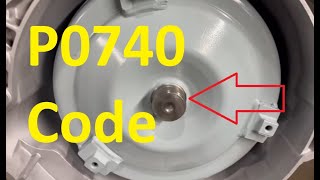
Helpful Videos
We Have This Part in Stock


The information in this article is provided for general reference and educational purposes only. Vehicle specifications, procedures, and part compatibility can vary by production date, trim level, and region. Always consult your vehicle's factory service manual and verify part numbers before purchasing or performing repairs. Safety-critical components such as airbags, seat belts, and braking systems should be installed by a qualified professional.
- Porsche Boxster:
- 🧭 Diagnostic Flowchart
- 🎬 Helpful Videos
- 🛍️ Shop This Part
- What's Unique About the 1997-2004 Porsche Boxster
- Symptoms You May Notice
- Most Likely Causes
- Rare But Worth Checking
- Diagnosis Steps
- Parts You'll Likely Need
- Related Codes That Often Appear With This One
- Platform-Specific Known Issues
- Mechanic-Grade Diagnostic Values
- Hidden / Shadow Codes Worth Checking
- Scan Tool Commands That Help
- Wiring & Ground Locations
- Real Owner Repair Stories
- OEM Part Supersession History
- Model Year Variations Within This Range
- Other Known Issues on This Vehicle
- Used vs. New Parts: Buying Guide for This Vehicle
- Real Owner Stories
- 2000 Porsche Boxster S — 57000 miles
- 1997-2004 Porsche Boxster
- Related OBD-II Codes
- Frequently Asked Questions
- 🎟️ Get 5% Off