

P0740 on 2014-2020 Ram 2500: TCC Solenoid and Torque Converter Guide
On a 2014-2020 Ram 2500, P0740 almost always indicates a failing torque converter or a faulty Torque Converter Clutch (TCC) solenoid, often complicated by hydraulic issues in the valve body or pump. The most common fix is replacing the torque converter and often the solenoid pack. This is a serious issue requiring professional diagnosis, with shop costs typically ranging from $1,200 to $3,500, and significantly more for a fully built transmission.
- P0740 on a 2014-2020 Ram 2500 is a serious code that means the torque converter clutch is slipping.
- The most likely cause is a failed torque converter, followed by the TCC solenoid. This is not a simple sensor or wiring issue in most cases.
- Do not ignore this code. Driving with a slipping TCC generates significant heat that can destroy the entire transmission.
- Diagnosis requires a professional scan tool to monitor TCC slip. Repair is not a DIY job as it involves removing the transmission.
- Always check the transmission fluid level and condition first, but be prepared for a major internal repair.
What's Unique About the 2014-2020 Ram 2500

On the Ram 2500, particularly those equipped with the 68RFE transmission, P0740 is a well-documented and common issue. Unlike a generic circuit code, on these trucks it almost always points to a mechanical or hydraulic failure rather than a simple electrical fault. Manufacturer service bulletins, like TSB #9004009, directly state that if the TCC solenoid is functioning, a P0740 code is indicative of torque converter failure. The stock torque converter is a known weak point, and this code is often the first sign of its demise, especially on trucks that tow or have higher mileage. Furthermore, wear in the 68RFE's valve body and pump assembly is a frequent underlying cause, leading to hydraulic pressure leaks that prevent the TCC from applying correctly.
Diagnostic Flowchart

Tap your situation to follow the diagnostic path that matches what you're seeing on this vehicle.
Generation note: The 2014-2020 year range covers the end of the third generation Ram (2014-2018) and the start of the fourth generation (2019-2020). While body styles and interiors differ, the primary powertrain components, including the 6.7L Cummins engine and the 68RFE transmission, were carried over. Therefore, the causes and fixes for P0740 are largely the same across these model years. The solenoid pack and its connector color/design changed for the 2019 model year, which is a critical distinction when ordering parts.
Symptoms You May Notice

- Check Engine Light is on
- Shuddering or vibration at highway speeds, especially under load.
- RPMs fluctuating while cruising at a steady speed
- Transmission overheating, especially when towing or on long drives.
- Noticeable decrease in fuel economy due to lack of TCC lockup.
- Transmission may have difficulty shifting into or holding higher gears (5th or 6th).
- On 6.4L HEMI models, the Multi-Displacement System (MDS) may be disabled.
- Replacing the TCC solenoid when the torque converter itself is the root cause of the failure and has contaminated the system.
- Replacing only the torque converter when worn bores in the valve body or pump are causing the hydraulic leak that prevents lockup.
- Performing a fluid and filter change with the expectation it will be a permanent fix, when it usually only masks a deeper mechanical problem for a short time.
Most Likely Causes

- Failed Torque Converter 🔴 High Probability → Shop Automatic Transmission Torque Converter The OEM torque converter is a known failure point, especially the internal clutch lining which can wear out or delaminate, causing slip and sending debris through the fluid. This is the most common cause if P0740 appears by itself, as confirmed by TSB #9004009 and expert consensus.
How to confirm: A technician will use a scan tool to monitor TCC slip RPM in real-time. If the slip is high (over 100 RPM) when lock-up is commanded, and the solenoid is known to be good, the converter is condemned. Finding excessive clutch material or metal shavings in the transmission pan is a definitive sign.
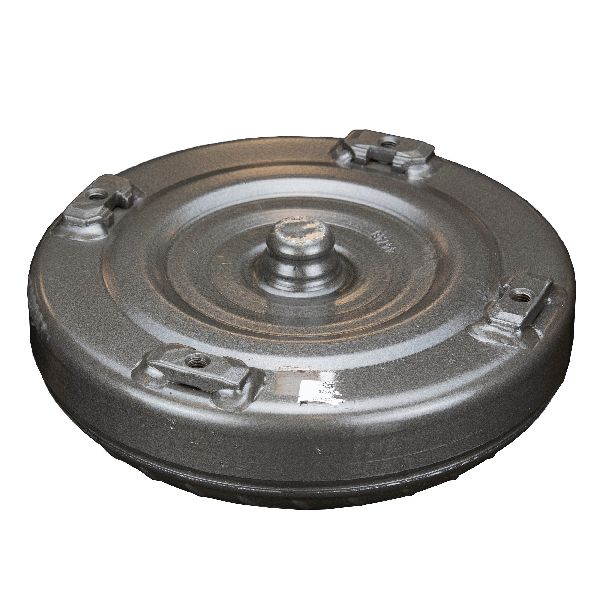
Typical fix: Replace the torque converter. This requires removing the transmission from the vehicle. Many owners opt for a heavy-duty aftermarket converter from brands like Revmax, SunCoast, or BD Diesel for improved durability.
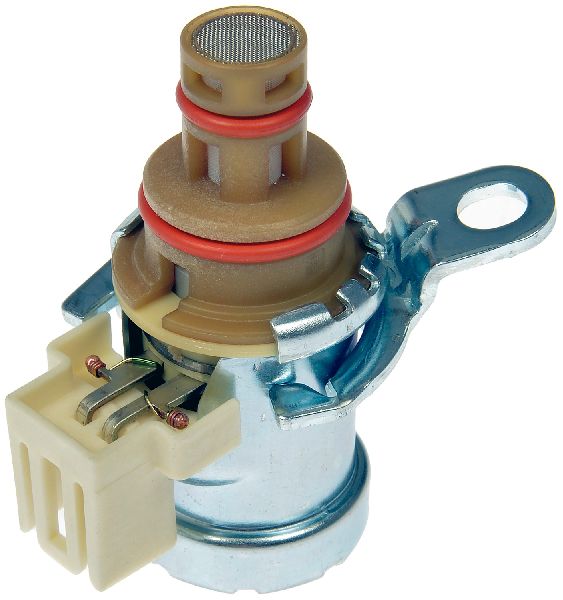
Est. part cost: $400-$1800 - Failed Torque Converter Clutch (TCC) Solenoid / Solenoid Pack 🟡 Medium Probability → Shop Automatic Transmission Torque Converter The solenoid, part of a larger block, controls the hydraulic fluid flow to engage the TCC. It can fail electrically or, more commonly, become clogged with debris from a failing converter or worn valve body.
How to confirm: A professional scan tool can command the solenoid on and off to check for a response. The solenoid's electrical circuit can also be tested for correct resistance (approx. 1.3 Ohms for most solenoids, 4.9 Ohms for the pressure control solenoid). However, forum users report that replacing the solenoid alone often fails to fix the issue if the root cause is mechanical wear or a bad converter.
Typical fix: Replace the entire solenoid pack/block. This is located inside the transmission oil pan on the valve body and can be done without removing the transmission. It is often replaced along with the torque converter.
Est. part cost: $150-$400 - Worn Valve Body or Transmission Pump 🟡 Medium Probability → Shop Transmission Assembly On the 68RFE, bores within the valve body (like the Solenoid Switch Valve bore) and the pump (TCC accumulator piston bore) can wear over time, causing internal hydraulic leaks. This prevents full pressure from reaching the TCC, causing slip even with a good solenoid and converter.
How to confirm: This is a complex diagnosis. A technician may perform hydraulic pressure tests at specific ports; low TCC apply pressure or high TCC release pressure (e.g., 20 psi instead of an expected 5 psi or less) points to internal leaks. Vacuum testing the individual bores of a removed valve body is another definitive test; worn bores will fail to hold a minimum of 18 in-Hg.
Typical fix: Repairing the worn bores with aftermarket kits (e.g., from Sonnax) or replacing the entire valve body or oil pump assembly. This is often done during a transmission rebuild.
Est. part cost: $500-$1500 - Low or Dirty Transmission Fluid ⚪ Low Probability → Shop Transmission Assembly Low fluid levels lead to insufficient hydraulic pressure to engage the TCC. Dirty or burnt fluid, often contaminated with clutch material from a failing converter, can clog solenoid passages and the filter. The required fluid is Mopar ATF+4 or a licensed equivalent.
How to confirm: Check the transmission fluid level and condition via the dipstick. The fluid should be at the correct level, bright red, and not smell burnt. Shimmery or dark fluid indicates internal wear.
Typical fix: Perform a transmission fluid and filter change. If the fluid is very dirty, this is almost always a temporary fix as the underlying cause (like a failing converter) will quickly contaminate the new fluid.
Est. part cost: $100-$250
Rare But Worth Checking
- PCM Software Issue: On some models, particularly those with the 6.4L HEMI and 66RFE transmission, a PCM software update (reflash) from a dealership has been documented to resolve an intermittent P0740 code after other repairs (like fluid changes) have failed.
- Wiring Harness Issue: Damage to the wiring leading to the transmission or the internal transmission harness can cause an electrical fault, though this would typically be accompanied by other electrical codes (like P0750) and is less common than internal hydraulic or mechanical failures.
Diagnosis Steps
- Check and verify the transmission fluid is at the correct level and in good condition (not burnt or full of debris). Use only Mopar ATF+4 or a licensed equivalent.
- Use a professional OBD-II scanner to check for any other transmission-related codes, especially P0868, P2764, or P0841, as they provide critical diagnostic clues.
- With the scan tool, monitor the 'TCC Slip Speed' or 'Torque Converter Slip' data PID while driving at a steady highway speed (e.g., 55-65 mph). When lock-up is commanded, this value should drop to near zero (± 20 RPM). If it remains high (e.g., >100 RPM for 10 seconds), there is a definite slip problem.
- If possible with the scan tool, perform a functional test by commanding the TCC solenoid on and off to verify its electrical operation.
- Inspect the wiring harness and connectors at the transmission for any visible damage, corrosion, or loose connections. Pay close attention to the line pressure sensor connector, which is a known point of corrosion.
- Drop the transmission oil pan and inspect for excessive metal shavings or clutch material. A small amount of fine grey material is normal, but large flakes, chunks, or a shimmery/glittery appearance in the fluid indicate severe internal damage.
- For advanced diagnosis, a technician may perform line pressure tests at the TCC apply and release ports to check for internal hydraulic leaks. High release pressure (above 5 psi) or low apply pressure points towards pump or valve body issues.
- If the valve body is removed, perform a vacuum test on the Solenoid Switch Valve (SSV) bore and TCC accumulator bores to check for wear. A bore that cannot hold at least 18 inches of vacuum is considered worn and requires repair.
Parts You'll Likely Need
- Torque Converter
(OEM #68516587AA (Part number can vary, this is an example kit number))— This is the most common cause of P0740 on these trucks, as confirmed by owner experiences and manufacturer TSBs. The internal clutch fails, causing slip.
Trusted brands: Mopar, Revmax, BD Diesel, SunCoast Converters, Randy's Transmission
OEM price range: $600-$1200
Aftermarket price range: $400-$1800 - TCC Solenoid / Solenoid Pack
(OEM #68456067AA (2019+ Blue Connector), 68376695AA (pre-2019 White/Gray Connector))— This solenoid controls the lock-up function and can fail electrically or get clogged with debris. It is often replaced along with the torque converter as a preventative measure.
Trusted brands: Mopar, Rostra, Sonnax (remanufactured)
OEM price range: $250-$400
Aftermarket price range: $150-$350 - Valve Body Repair Kit — Addresses common wear in the valve body bores that causes hydraulic leaks, which is a frequent root cause of P0740. Not fixing this can lead to repeat failures even with a new converter.
Trusted brands: Sonnax
OEM price range: N/A
Aftermarket price range: $100-$500
Related Codes That Often Appear With This One
- P0868 — This code for 'Line Pressure Low' is frequently cited alongside P0740 in Ram TSBs. [1806623, 1810122REVA, 18-101-22, 1805920] It indicates a broader hydraulic pressure problem within the transmission that can prevent the TCC from locking correctly, often pointing to a worn valve body or pump.
- P2764 — This code also relates to the TCC pressure control circuit. TSB #9004009 mentions it alongside P0740 as a potential indicator of torque converter failure.
- P0841 — A code for the transmission fluid pressure sensor ('A' Circuit Range/Performance) can appear with P0740, sometimes leading to a no-shift-from-park condition and pointing to a widespread hydraulic or electronic control issue.
- P0700 — This is a generic Transmission Control System Malfunction code. It simply means the TCM has stored a fault (in this case, P0740) and has requested the MIL to be turned on. It is almost always present with any specific transmission code.
Technical Service Bulletins (TSBs) & Recalls
- 9004009
- 1806623
- 1810122REVA
- 18-101-22
- 1805920
Platform-Specific Known Issues
- TSB #9004009 explicitly states that for vehicles exhibiting code P0740, if the TCC Solenoid is tested and found to be okay, the code is indicative of a torque converter failure and the torque converter should be replaced.
- Multiple TSBs (#1806623, #1810122REVA, #18-101-22, #1805920) link P0740 with P0868 (Line Pressure Low) on trucks with the 68RFE transmission, often related to broader PCM software updates.
- A detailed diagnostic in Gears Magazine on a 2016 Ram 2500 with a 6.7L and 68RFE found P0740 was caused by worn bores in the valve body and transmission pump, leading to low TCC apply pressure.
Mechanic-Grade Diagnostic Values
- TCC Solenoid (and most other shift solenoids) resistance — expected: ~1.3 Ohms. Failure: Open circuit (infinite resistance) or a value significantly different from spec.
- Pressure Control (PC) Solenoid resistance — expected: ~4.9 Ohms. Failure: Open circuit or a value significantly different from spec.
- TCC Release Port Pressure (at idle) — expected: 5 psi or lower. Failure: A reading higher than 5 psi, such as 20 psi, indicates an internal leak preventing full TCC apply.
- Transmission Line Pressure (stock, in gear, brake on) — expected: ~120 psi. Failure: Significantly lower pressure, especially if code P0868 is also present, indicates a pump, regulator valve, or major leak issue.
- Valve Body / Pump Bore Vacuum Test — expected: Holds a minimum of 18 in-Hg. Failure: Failure to hold at least 18 in-Hg of vacuum indicates a worn bore causing a hydraulic leak.
Scan Tool Commands That Help
- wiTECH or equivalent OE-level scanner: TCC Slip Speed PID Monitoring — This is the primary live data to watch during a road test to confirm if the torque converter is slipping when lock-up is commanded. A slip of over 100 RPM while locked will set P0740.
- wiTECH or equivalent OE-level scanner: Quick Learn — This procedure must be performed after replacing the valve body, solenoid pack, or entire transmission to reset clutch volume indexes (CVIs) and allow the TCM to learn the new components.
- wiTECH or equivalent OE-level scanner: Program Torque Converter Solenoid PI Curve — This specific routine is required after a new transmission installation to calibrate the torque converter solenoid pressure/current curve before the initial road test.
- wiTECH with Miller tool #8333 (Transmission Simulator): Pressure Switch Test — Used in advanced diagnostics to manually test the operation of the internal transmission pressure switches (L/R, 2C, 4C, UD, OD) to isolate faults within the solenoid/TRS assembly from wiring issues.
Wiring & Ground Locations
- Transmission Solenoid / TRS Assembly Connector — On the driver's side of the transmission case.. This is the main electrical connection for all solenoids. For P0740, the L/R-TCC solenoid is controlled here. A poor connection or corrosion can cause intermittent operation. Pin 2 is the L/R Solenoid Control circuit and Pin 10 is a key power feed.
- Line Pressure Sensor Connector — On the driver's side of the transmission case, near the main solenoid connector.. Corrosion on this specific connector is a known issue that can cause incorrect pressure readings and lead to various transmission faults, including P0868 which is often seen with P0740.
- Main Body & Engine Grounds — Key locations include the battery negative terminal to the chassis/fender, engine block to the frame, and various smaller grounds on the firewall and inner fenders.. Poor ground connections can cause floating voltages and erratic behavior from control modules and sensors, including the TCM. While not a primary cause of P0740, ensuring all main grounds are clean and tight is a crucial step in any electrical diagnosis.
Real Owner Repair Stories
- Turbo Diesel Register user 'Shadrach' (Ram with 68RFE, H&S tune, and aftermarket Torque Converter) — Intermittent P0740 and P0700 codes during a trip through mountains.
❌ Tried (didn't work) Visual inspection of transmission wiring connectors.
✅ What actually fixed it The final fix was not posted by the user, but an expert on the forum advised that the problem is almost certainly the torque converter (bad TCC clutch) or a sticking TCC control valve in the pump. The recommended permanent fix was to pull the transmission and replace both the pump assembly and the torque converter. - Turbo Diesel Register user 'Jlbaker114' (2014 Ram 6.7L with 68RFE, 140,000 miles, deleted & tuned.) — P0740 code that returns every 75-100 miles. Transmission not overheating.
❌ Tried (didn't work) Fluid and filter change (pan was clean, no metal found).
✅ What actually fixed it The final resolution was not posted, but a transmission expert on the forum stated that with only P0740 present (no other electrical codes), the most likely cause is an internal torque converter failure or a sticky valve in the pump, not the solenoid or wiring. The recommended repair was to remove the transmission to address the pump and converter.
"I Checked Everything" — The Actual Cause
- In the context of P0740, the equivalent of a 'smoke test clean' scenario is when standard parts are replaced without resolving the issue. In one documented case on a rebuilt 2008 68RFE, the technician installed a new torque converter, then replaced it a second time, vacuum-tested the valve body, and finally replaced the solenoid pack with a new OEM unit, but the P0740 code and no-lockup condition persisted, indicating a deeper, less obvious issue.
When the Usual Fixes Don't Work
- While the most common fixes are the torque converter and solenoid pack, there are documented cases where these repairs do not solve the problem. One owner reported rebuilding a 68RFE, replacing the torque converter twice, and installing a new OEM solenoid pack, yet the P0740 code and no-lockup condition remained. This highlights that deep-seated hydraulic issues, such as worn bores in the pump or valve body, or even hairline cracks, can mimic more common component failures and require a much more in-depth diagnosis beyond simple part replacement.
OEM Part Supersession History
Various (for 2007.5-2018 models with gray connector)→Mopar 68353383AB, now 68353383AC— Part revisions and updates by the manufacturer.
Heads up: These parts are for 2007.5-2018 models with the gray/white solenoid connector and are not compatible with 2019+ models.Unknown→Mopar 68456067AA— New part design for updated transmission.
Heads up: This solenoid block is for 2019 and newer 68RFE transmissions. It is not backward compatible with pre-2019 models.
Model Year Variations Within This Range
- 2019-2020: The transmission solenoid pack was changed for the 2019 model year. These trucks use a different part number (68456067AA) than the 2014-2018 models. The connectors are different, and the parts are not interchangeable.
- 2019-2020: For trucks with performance tuning, it is recommended to use TCM tuning to increase line pressure. On 2014-2018 models, an inline electronic pressure module was a common method, but this is not recommended for 2019+ models.
Helpful Videos

We Have This Part in Stock


The information in this article is provided for general reference and educational purposes only. Vehicle specifications, procedures, and part compatibility can vary by production date, trim level, and region. Always consult your vehicle's factory service manual and verify part numbers before purchasing or performing repairs. Safety-critical components such as airbags, seat belts, and braking systems should be installed by a qualified professional.
- Ram 2500:
- 🧭 Diagnostic Flowchart
- 🎬 Helpful Videos
- 🛍️ Shop This Part
- What's Unique About the 2014-2020 Ram 2500
- Symptoms You May Notice
- Most Likely Causes
- Rare But Worth Checking
- Diagnosis Steps
- Parts You'll Likely Need
- Related Codes That Often Appear With This One
- Technical Service Bulletins (TSBs) & Recalls
- Platform-Specific Known Issues
- Mechanic-Grade Diagnostic Values
- Scan Tool Commands That Help
- Wiring & Ground Locations
- Real Owner Repair Stories
- "I Checked Everything" — The Actual Cause
- When the Usual Fixes Don't Work
- OEM Part Supersession History
- Model Year Variations Within This Range
- 🎟️ Get 5% Off