

P0740 on 1998-2012 Toyota Corolla: Torque Converter Clutch Circuit Causes and Fixes
P0740 on a Toyota Corolla typically points to a faulty torque converter clutch (TCC) lock-up solenoid inside the transmission. The most common fix is to replace this solenoid and the transmission fluid. Expect a DIY cost of $100-$200 and a shop repair to be $300-$550.
- P0740 on a 1998-2012 Corolla means there's an electrical fault in the torque converter clutch solenoid's circuit.
- The most likely fix is replacing the TCC lock-up solenoid (Part No. 35250-12030), which is located inside the transmission oil pan.
- Always check the transmission fluid level and condition first, as low or dirty fluid is a common and easy-to-fix cause.
- Driving with this code can cause poor fuel economy and lead to transmission overheating, so it should be addressed promptly.
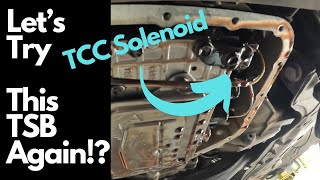
- For 2003-2008 models, be aware of TSBs that point to other potential causes like ECM software, though the solenoid remains the most probable culprit.
What's Unique About the 1998-2012 Toyota Corolla
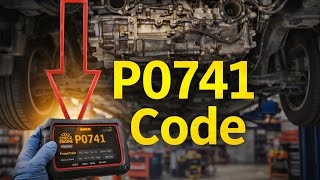
While P0740 is a generic code, the 9th generation Corolla (2003-2008) is particularly known for issues related to the torque converter clutch system, often setting the similar P0741 code. 🎬 Watch: A step-by-step guide to fixing the P0741 code. Toyota issued Technical Service Bulletins (TSBs) for these models that involve complex diagnostic paths, sometimes pointing to an ECM software re-flash or even an incorrect vehicle speed sensor gear. For owners of these specific years, the problem may be more nuanced than just a failed solenoid. The transmissions used, primarily the A245E and U341E, are shared with the Toyota Matrix and Pontiac Vibe, which exhibit identical P0740 failures.
Generation note: This range covers the 8th (1998-2002), 9th (2003-2008), and 10th (2009-2012) Corolla generations. Most documented issues and TSBs for TCC-related codes are specific to the 9th generation using the U341E transmission. While the fundamental causes are similar across generations, the 9th gen has specific documented issues with ECM software that can trigger related codes. The 8th gen often used the A245E transmission. The 10th gen continued with the U341E 4-speed automatic in some trims.
Symptoms You May Notice
- Check Engine Light is on
- Reduced fuel economy
- Engine RPM is higher than usual at highway speeds
- Shuddering or vibration at cruising speeds
- Harsh, delayed, or erratic shifting
- Vehicle may not shift into the highest gear
- Stalling when coming to a stop after highway driving
- Transmission overheating or a burning smell from the fluid
- Replacing the entire transmission when only a single, accessible solenoid has failed.
- Replacing the torque converter when the issue is a much cheaper electrical solenoid or wiring fault.
- Replacing the TCC solenoid when the transmission fluid is extremely low or degraded.
Most Likely Causes
- Faulty Torque Converter Clutch (TCC) Lock-Up Solenoid 🔴 High Probability → Shop Automatic Transmission Torque Converter This solenoid (Toyota part #35250-12030) is a very common failure point on the A245E and U341E transmissions. It operates in hot fluid and can fail electrically (open or shorted coil) or mechanically (sticking plunger) over time.
How to confirm: After dropping the transmission pan, the solenoid can be tested. With a multimeter, check the resistance between its two pins; it should be between 11-15 Ohms. An open circuit (infinite resistance) or a short (near zero resistance) confirms it's bad. You can also apply 12V directly to the pins and listen for an audible click, though some report the click is very faint.
Typical fix: Replace the TCC lock-up solenoid (designated 'SL'). This requires draining the fluid, removing the transmission pan, unbolting the old solenoid, and installing the new one.
Est. part cost: $70-$150 - Low, Old, or Dirty Transmission Fluid 🟡 Medium Probability → Shop Transmission Assembly Neglected fluid changes lead to fluid breakdown and contamination. Debris can clog the fine screen on the solenoid or cause the internal valve body passages to stick, leading to malfunction and triggering the code.
How to confirm: Check the transmission fluid dipstick (if equipped) or service plug. If the fluid is dark brown/black, smells burnt, or is below the 'Full' mark, it needs attention. Metal shavings in the pan are a sign of more serious internal wear.
Typical fix: Perform a transmission fluid and filter change. Use the correct fluid type: Toyota Type T-IV for 9th gen (U341E) and Dexron III for many 8th gen (A245E). 10th gen models with the U341E may specify Toyota WS fluid. This should be the first step if the fluid condition is poor.
Est. part cost: $50-$100 - Damaged Wiring or Connectors ⚪ Low Probability
How to confirm: Visually inspect the wiring harness leading to the transmission for any signs of heat damage, chafing, or corrosion at the main connector. Use a multimeter to test for continuity from the TCM/ECM connector to the transmission connector pins corresponding to the TCC solenoid.
Typical fix: Repair the damaged section of the wire or replace the faulty connector.
Est. part cost: $10-$50
Rare But Worth Checking
- Faulty Engine Control Module (ECM/PCM): → Shop Engine Control Module (ECM) For 2005-2008 models, TSB EG045-07 suggests that an ECM software issue can cause a related code (P0741). While P0740 is a circuit code, a faulty ECM driver circuit could mimic a circuit fault. This is rare but documented. Some 2005-2008 models were also recalled for engine stalling issues that involved ECM replacement.
- Internal Torque Converter Failure: → Shop Automatic Transmission Torque Converter While P0740 points to the electrical circuit, a complete mechanical failure of the lock-up clutch inside the torque converter can sometimes be related, often by shedding debris that clogs the solenoid and valve body. This is a major repair and usually presents with more severe symptoms like significant metal in the pan.
Diagnosis Steps
- Scan for codes and document the freeze frame data to see the conditions under which the code was set.
- Check the level and condition of the automatic transmission fluid. If it is low, dark, or smells burnt, perform a fluid and filter change first. This can sometimes resolve the issue on its own.
- Inspect the external transmission wiring harness and main connector for any visible damage, corrosion, or loose connections.
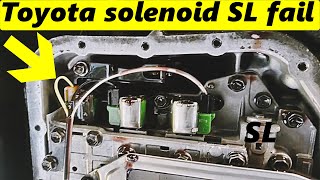
- If the fluid and external wiring are good, the next step is to gain access to the solenoid. Drain the transmission fluid and remove the transmission oil pan (typically held by 18-19 10mm bolts). 🎬 Watch: How to access and replace transmission shift solenoids.
- Locate the TCC lock-up solenoid (often labeled 'SL'). Visually inspect its wiring inside the pan.
- Disconnect the solenoid and test its resistance with a multimeter. Compare the reading to the manufacturer's specification (typically 11-15 Ohms for this platform). An open circuit (OL) or short circuit (near 0 Ohms) indicates a failed solenoid.
- If the solenoid tests good, the problem may lie in the internal wiring harness or, rarely, the ECM itself. Test for continuity from the main transmission connector to the solenoid connector.
- If the solenoid is faulty, replace it, install a new transmission pan gasket and filter, reinstall the pan, and refill with the correct type and amount of transmission fluid.
Parts You'll Likely Need
- Torque Converter Clutch (Lock-Up) Solenoid
(OEM #35250-12030)— This is the most common component to fail electrically, triggering the P0740 circuit code. It is also referred to as Solenoid SL.
Trusted brands: Toyota (Genuine), Aisin (OEM supplier), Rostra, Sunluway
OEM price range: $150-$260
Aftermarket price range: $70-$120 - Automatic Transmission Filter Kit
(OEM #35330-0W020)— This must be replaced whenever the transmission pan is removed to service the solenoid. The kit includes the filter and a new pan gasket.
Trusted brands: Toyota (Genuine), Wix, ATP, Fram
OEM price range: $40-$60
Aftermarket price range: $15-$30 - Automatic Transmission Fluid
(OEM #00279-000T4 (T-IV), 08886-02305 (WS))— A drain and refill (approx. 4 quarts) is required for the job. Using the correct fluid is critical. 9th Gen (U341E) uses T-IV. 10th Gen (U341E) uses WS. 8th Gen (A245E) often uses Dexron III/T-IV compatible fluid.
Trusted brands: Toyota (Genuine), Idemitsu (OEM supplier), Valvoline MaxLife ATF (often cited as compatible)
OEM price range: $8-$15 per quart
Aftermarket price range: $6-$10 per quart
Related Codes That Often Appear With This One
- P0741 — P0741 means 'TCC Performance or Stuck Off.' P0740 is an electrical circuit fault, while P0741 is a mechanical/performance fault. They are very closely related and can appear together if the circuit fault leads to a performance problem, or if debris is causing both electrical and mechanical issues.
- P0770 — This code points to a fault with Shift Solenoid 'E'. It can appear with P0740 if the root cause is widespread contamination from dirty fluid or internal transmission wear, affecting multiple solenoids and passages in the valve body.
Technical Service Bulletins (TSBs) & Recalls
- TC008-04 (for related code P0741): For 2004-2005 models, outlines a diagnostic procedure for a TCC malfunction that may involve the speed sensor, ECM, or solenoid.
- EG045-07 (for related code P0741): For 2005-2008 models, suggests a potential ECM re-flash to resolve TCC engagement issues.
- SB0030-15R1: Addresses excessive oil consumption on 2009-2011 models due to piston ring issues, a major known issue for the 10th generation.
Platform-Specific Known Issues
- Owner Experience: Solenoid is the Culprit 9/10 Times: Across multiple forums, the overwhelming consensus for P0740 on a 9th or 10th gen Corolla is a failed TCC solenoid (part #35250-12030). Many owners report successfully fixing the issue themselves by dropping the pan and replacing the solenoid, filter, and fluid. A common story involves first trying a fluid change, which may fix it for a short time before the code returns, confirming the solenoid itself is the ultimate point of failure.
- DIY Repair:
Documented NHTSA Reports
- NHTSA ODI #11712764 describes a situation where a Toyota vehicle felt unsafe when pulling into traffic due to delayed acceleration, with retrieved diagnostic codes including P0740 (Torque Converter Clutch Actuator Stuck On) and P0745.
- NHTSA ODI #11709274 reports a vehicle exhibiting P0740 (Torque Converter Clutch Circuit/Open) alongside multiple pressure control solenoid performance codes and throttle sensor issues.
Mechanic-Grade Diagnostic Values
- TCC Lock-Up Solenoid (SL) Resistance (U341E/A245E) — expected: 11 - 15 Ohms at 68°F (20°C). Failure: A reading of 0 Ohms (short circuit) or infinite/OL (open circuit) indicates a failed solenoid.
- TCC Lock-Up Solenoid (SL) Resistance (A245E, alternate spec) — expected: Approximately 12 Ohms. Failure: Significant deviation from 12 Ohms suggests a fault.
- ECM/PCM Voltage Check at TCC Solenoid Circuit — expected: The ECM/PCM expects to see ~12V on the control side of the circuit when the solenoid is off (not grounded). When commanded on, the ECM/PCM grounds the circuit and expects to see the voltage drop to near 0V.. Failure: Voltage that doesn't change when commanded, or is always at 0V (short to ground) or always at 12V (open circuit), indicates a wiring or ECM driver problem.
Scan Tool Commands That Help
- Toyota Techstream: Active Test: 'Control the Lock-Up' — This bidirectional command allows a technician to manually command the TCC solenoid ON and OFF while monitoring live data. It is used to confirm if the solenoid is mechanically functioning and if the wiring between the ECM and the solenoid is intact. While driving at a steady speed (e.g., 45 mph), commanding the lock-up ON should cause a noticeable drop in engine RPM, confirming the entire hydraulic and mechanical system is working. If the RPM does not drop, it points to a mechanical issue in the torque converter or a hydraulic blockage, even if the solenoid clicks.
- Toyota Techstream: Utility: 'Reset Memory' — After replacing transmission components like the TCC solenoid or the entire valve body, this function should be used to clear the transmission's learned adaptive values. This ensures the transmission relearns shifting parameters with the new components, preventing potential harsh shifting or performance issues after the repair.
Wiring & Ground Locations
- Engine Bay Ground Points (General) — Key grounds for the 1ZZ-FE/2ZR-FE engines are located on the engine block above the lift solenoids, on the firewall above the alternator, and from the transmission housing to the strut tower.. A poor or corroded ground connection for the engine or transmission can cause erratic voltage signals and communication errors between the ECM and transmission solenoids, potentially triggering a P0740 code by creating a floating ground or voltage drop that the ECM misinterprets as a circuit fault.
- U341E Transmission Internal Harness Connector — The U341E transmission in many Corollas uses a 9-pin main case connector for the internal wiring harness that connects to all solenoids.. When diagnosing a circuit fault, technicians must test for continuity and shorts between the pins for the SL solenoid at this external connector and the corresponding pins at the ECM. Knowing it's a 9-pin connector helps identify the correct wiring diagrams and test adapters.
- ECM Connector Pins (SL+, SL-) — On a 2005 Corolla with a U341E, the TCC solenoid (SL) is controlled by specific pins on the Engine Control Module (ECM). A wiring diagram is required to identify the exact pin numbers (e.g., E5-15, E5-25), which can vary by year and model.. To definitively rule out a wiring issue, a continuity test must be performed from the specific solenoid pins at the transmission connector directly to the corresponding SL+ and SL- pins at the ECM connector. This bypasses all intermediate connectors and confirms the integrity of the wire itself.
Real Owner Repair Stories
- ToyotaNation Forums (2005 Toyota Corolla, 1.8L (1ZZ-FE), U341E Transmission) — Check Engine Light with code P0740. No major drivability issues other than slightly higher RPM at highway speeds.
❌ Tried (didn't work) Replaced the TCC (SL) solenoid with a new aftermarket part., Performed a full transmission fluid drain and fill with Toyota T-IV fluid.
✅ What actually fixed it The code returned after replacing the solenoid. Upon closer inspection of the internal transmission wiring harness (the part inside the oil pan), a wire leading to the TCC solenoid connector was found to be brittle and broken right at the connector. The wire's insulation had become hardened from heat and fluid exposure, causing it to break with engine vibration. Repairing the broken wire with a new pigtail and butt connector solved the problem permanently.
OEM Part Supersession History
35250-12060→35250-12030— Part number consolidation and potential minor internal revisions by Toyota.
Heads up: The parts are interchangeable. If you search for the older -12060 number, you will be directed to purchase the -12030 part.
Model Year Variations Within This Range
- 1998-2002 (8th Gen): Primarily used the A245E 4-speed automatic. While the TCC solenoid function is identical, the specific part number may differ from the later U341E. Diagnosis is the same (check fluid, test solenoid resistance ~12 ohms), but fluid is typically Dexron III / T-IV compatible, not Toyota WS.
- 2003-2008 (9th Gen): Used the U341E 4-speed automatic. This generation is the most common for P0740/P0741 issues. The TCC solenoid is part #35250-12030 and requires Toyota T-IV fluid. ECM software issues causing related codes were also noted in TSBs for 2005-2008 models.
- 2009-2012 (10th Gen): Models with the 4-speed automatic continued to use the U341E transmission. The TCC solenoid part is the same, but the specified fluid was changed to Toyota WS (World Standard). Using T-IV in a WS transmission (or vice-versa) is not recommended and can cause shift quality issues.
Diagnostic Flowchart
Other Known Issues on This Vehicle
Issues unrelated to this code that are worth knowing about as an owner of this generation:
- Excessive Oil Consumption (1ZZ-FE & 2ZR-FE engines) 🔴 High — Very common on 2000-2002 (1ZZ-FE) and 2009-2011 (2ZR-FE) models, often starting around 60k-80k miles. Caused by faulty piston ring design. (Ref: TSB SB0030-15R1 addressed this for some 2009-2011 models.)
- Starter Failure / Stripped Starter Bolts 🟠 Medium — Common on 9th gen (2003-2008). The starter can fail prematurely, or the bolts holding it can strip the threads in the aluminum transmission case, requiring a thread repair kit (Heli-Coil).
- Check Engine Light for EVAP System (P0441, P0442, P0446) 🟡 Low — Frequent across all generations. Often caused by a faulty gas cap, but can also be a failed vacuum switching valve (VSV) or charcoal canister.
- Timing Belt Failure (8th Gen 1ZZ-FE, pre-2000) 🔴 High — The 1998-1999 1ZZ-FE is an interference engine. The timing belt has a service interval of 60,000-90,000 miles. If it snaps, it will cause catastrophic engine damage.
- ECM/PCM Failure (2005-2008) 🟠 Medium — Some 2005-2008 models were subject to a recall for an ECM that could develop cracks on the circuit board, leading to harsh shifting, engine stalling, or a no-start condition. (Ref: Toyota Safety Recall (late 2010))
Used vs. New Parts: Buying Guide for This Vehicle
When a used part is the smart pick: For this specific P0740 repair, sourcing a single used solenoid is generally not recommended due to the low cost of a new aftermarket part and the high labor involved in replacement. A used part makes sense only if you are replacing a larger assembly, such as the entire valve body or a complete transmission from a low-mileage, warrantied donor vehicle.
Donor-vehicle mileage cap: roughly under 100000 miles for the part to have meaningful remaining life.
What to inspect on the donor part:
- For a complete transmission: Ask for vehicle VIN to check history.
- Check the color and smell of the fluid at the donor's dipstick/cooler lines - it should be red/pink, not black or burnt-smelling.
- Ensure the salvage yard offers at least a 90-day warranty.
- Inspect the external case for cracks or heavy impact damage.
OEM-only on this vehicle (don't cheap out):
- Engine Control Module (ECM/PCM)
Aftermarket brands forum-validated for this vehicle:
- Aisin (for the TCC solenoid - they are the OEM supplier)
- Rostra (for solenoids)
- Wix (for transmission filter kits)
- Valvoline MaxLife ATF (widely cited by DIY communities as a suitable and high-quality replacement for Toyota T-IV and WS fluids)
Brands owners have reported issues with on this vehicle:
- Unbranded, 'white-box' solenoids from online marketplaces like eBay or Amazon without a clear brand name or warranty. These are frequently cited in forums as failing prematurely, causing the code to return.
Real Owner Stories
Aggregated from forums and TSBs cited above. Mileages and costs reflect what owners reported in those sources.
2005 Toyota Corolla
Symptoms: The user experienced a P0741 code (related to P0740) and sought help for a TCC malfunction.
What fixed it: Replacing the TCC solenoid (part #35250-12030) resolved the code.
Source hint: Toyotanation.com - Thread '2005 corolla p0741 code please help'
2004 Toyota Corolla
Symptoms: Owner reported the P0740/P0741 issue and found that a simple fluid change only fixed the problem for a short time before the code returned.
What fixed it: Dropping the pan and replacing the solenoid, filter, and fluid.
Source hint: ToyotaNation Forum: 'P0741 Finally Fixed!'
2003-2008 Toyota Matrix (1.8L 1ZZ-FE)
Symptoms: Owners of this platform mate reported identical P0740/P0741 codes caused by the same transmission failure.
What fixed it: Replacement of the TCC solenoid (35250-12030).
Source hint: ToyotaNation Forum
Related OBD-II Codes
Frequently Asked Questions
Which specific solenoid is usually responsible for the P0740 code on my 9th or 10th gen Corolla?
Is there a TSB for TCC issues on my 2005 Corolla?
What type of transmission fluid should I use for my 9th generation Corolla with the U341E transmission?
My 2006 Corolla is shifting harshly and stalling; could this be related to a recall?
Can I test the TCC solenoid myself before replacing it?
Does the 2009-2011 Corolla have any other major known issues I should watch for while fixing P0740?
Helpful Videos

We Have This Part in Stock

The information in this article is provided for general reference and educational purposes only. Vehicle specifications, procedures, and part compatibility can vary by production date, trim level, and region. Always consult your vehicle's factory service manual and verify part numbers before purchasing or performing repairs. Safety-critical components such as airbags, seat belts, and braking systems should be installed by a qualified professional.
- Toyota Corolla:
- 🧭 Diagnostic Flowchart
- 🎬 Helpful Videos
- 🛍️ Shop This Part
- What's Unique About the 1998-2012 Toyota Corolla
- Symptoms You May Notice
- Most Likely Causes
- Rare But Worth Checking
- Diagnosis Steps
- Parts You'll Likely Need
- Related Codes That Often Appear With This One
- Technical Service Bulletins (TSBs) & Recalls
- Platform-Specific Known Issues
- Documented NHTSA Reports
- Mechanic-Grade Diagnostic Values
- Scan Tool Commands That Help
- Wiring & Ground Locations
- Real Owner Repair Stories
- OEM Part Supersession History
- Model Year Variations Within This Range
- Other Known Issues on This Vehicle
- Used vs. New Parts: Buying Guide for This Vehicle
- Real Owner Stories
- 2005 Toyota Corolla
- 2004 Toyota Corolla
- 2003-2008 Toyota Matrix (1.8L 1ZZ-FE)
- Related OBD-II Codes
- Frequently Asked Questions
- 🎟️ Get 5% Off